

Yes, you can pursue a short sale on a rental property you do not live in, but approval depends on the lender, loan requirements, and your financial circumstances. Non-owner occupancy does not automatically disqualify the property. Approval to sell also does not automatically cancel the unpaid mortgage balance or end a tenant’s lease.
- Can I short sale a rental property I don't live in? Yes, subject to lender approval and loan requirements.
- Rental income, expenses, assets, and hardship documentation help the lender evaluate your request.
- A short-sale approval does not automatically forgive the remaining mortgage debt or terminate a lease.
- Shortsalesdoneright provides short-sale processing and lender negotiation; legal and tax questions require qualified professionals.
Can I short sale a rental property I don't live in?
You can request a rental-property short sale without moving into the property. The lender must agree to accept sale proceeds that fall short of the amount needed to pay off its loan and release its lien. Whether you remain responsible for a balance is a separate question.
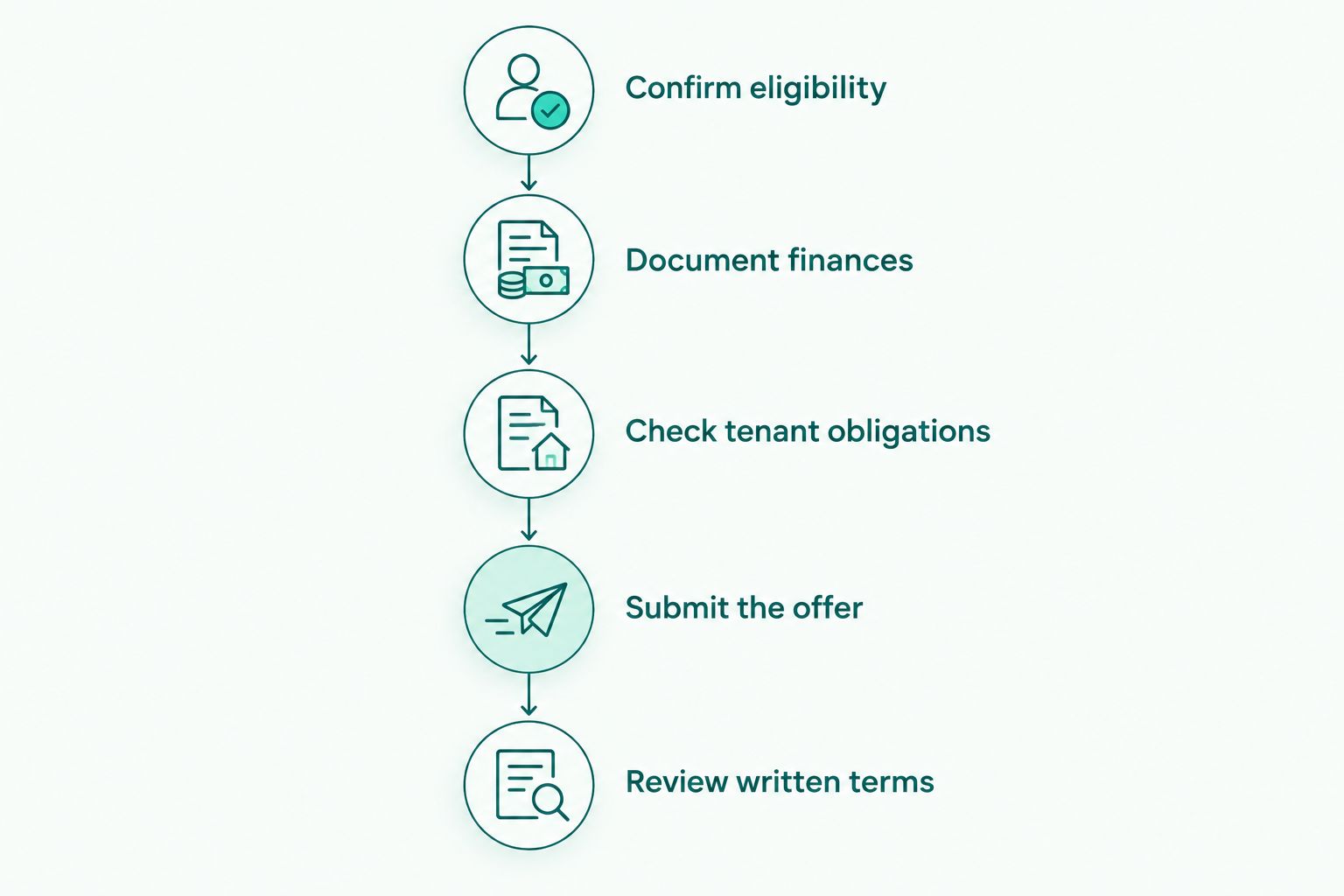
For a rental-property short sale in 2026, work through these steps:
- Confirm eligibility. Tell your mortgage servicer that the property is a rental. Ask which short-sale requirements apply to your loan and its owner or investor.
- Document finances. Gather the requested income, asset, debt, and property records. Include rental income, operating expenses, and an explanation of the hardship.
- Check tenant obligations. Have your agent and a qualified local attorney address the lease, access for showings, deposits, and any proposed possession date.
- Submit the offer. Your agent coordinates the purchase offer, estimated closing figures, and required lender package. Other lienholders need attention too.
- Review written terms. Before committing to close, confirm the approved transaction terms, treatment of any remaining debt, and conditions that must be satisfied.
Why this matters
A rental short sale involves more than finding a buyer willing to purchase below your mortgage balance. You must account for the lender’s requirements, your obligations to tenants, and the financial consequences of selling.
Shortsalesdoneright provides short-sale processing and lender negotiation services. Those services address the lender process; an attorney and tax professional address questions about personal liability, leases, and taxes.
Do not treat an accepted purchase offer as permission from the lender to complete a short sale. Your contract and lender approval are separate parts of the transaction.
What does the lender review on a rental property?
The lender evaluates the proposed sale against its requirements and the financial information you provide. An upside-down mortgage explains the shortfall, but it does not establish that the lender will accept it.
Rental income and operating expenses
Show what the property earns and what it costs to operate. Rent alone does not describe your position: mortgage payments, insurance, property taxes, maintenance, and other documented expenses affect the picture.
Use records rather than estimates wherever possible. If rent has stopped, provide the requested records showing the interruption rather than describing the property as vacant when a tenant still occupies it.
Your broader financial position
Expect questions about income, assets, debts, and the circumstances behind your request. A lender reviewing a rental-property short sale can consider information beyond that property’s monthly cash flow.
Negative equity is not the same as financial hardship. Explain what changed and support that explanation with the documents the lender requests. Do not assume that a property losing money establishes eligibility by itself.
Property value and the proposed transaction
The lender reviews the proposed proceeds and supporting property-value information. An offer below the mortgage balance is not automatically acceptable simply because it matches what you owe less than you hoped to recover.
Your agent should document property condition and relevant market evidence. Disclose the buyer’s relationship to you and follow any lender requirements concerning related-party transactions.
Why rental-property short-sale approval varies
There is no single nationwide approval rule for every investment-property loan in 2026. These factors affect the review:
- Loan requirements. The mortgage owner, investor, insurer, or guarantor can impose requirements that differ from another loan’s requirements.
- Documented hardship. The explanation for your financial difficulty must match the supporting records.
- Income and assets. Rental receipts and your wider financial position affect the lender’s evaluation.
- Property value and condition. The lender evaluates the proposed proceeds against its assessment of the property.
- Other liens. Additional mortgages, judgments, or other recorded claims can complicate the release of liens needed for closing.
- Requested terms. Treatment of the unpaid balance and any requested contribution need review before you accept the outcome.
A prior short sale on another property is not a reliable statement of what your lender will approve. Ask for the requirements that apply to this loan.
What if the property still has tenants?
An occupied rental needs a tenant plan before you promise possession to a buyer. A short sale does not, by itself, erase the lease. State and local law, lease terms, and the buyer’s intended use all matter.
Start with the signed lease, amendments, deposit records, and current rent ledger. Your agent needs accurate occupancy information for marketing and contract preparation; your attorney should address legal questions about notices, access, lease transfers, and termination.
Do not tell tenants to stop paying rent or move out based only on an anticipated approval. Likewise, do not promise a buyer an empty property unless you have a lawful, workable basis for doing so.
For a 2026 sale, have the closing team confirm how rent and deposits will be handled. Keep the lender, buyer, and closing team informed of changes that affect occupancy or the transaction.
The rental-property short-sale guide covers the broader landlord process. Resolve property-specific tenant questions with qualified local counsel.
Is a short sale the right option for your rental?
Compare the outcome you need, not just the name of the option. Selling, keeping the property, and transferring it to the lender solve different problems and carry different conditions.
| Option | Best for | Main advantage | Main limitation |
|---|---|---|---|
| Short sale | Owners seeking a sale when proceeds cannot cover the mortgage payoff | Provides a lender-reviewed route to sell despite the shortfall | Requires approval; remaining debt and taxes need separate review |
| Loan modification | Owners seeking to keep the rental under revised loan terms | Addresses the loan without selling the property | Eligibility and offered terms vary; rent and expenses still need to work |
| Sale with funds to cover the shortfall | Owners able and willing to fund the amount needed at closing | Allows a sale without asking the lender to accept a reduced payoff | Requires funds sufficient to satisfy the closing obligations |
| Deed in lieu | Owners exploring a property transfer to the lender | Offers an alternative to marketing and selling to a buyer | Requires lender agreement; other liens, occupancy, and debt terms need review |
Foreclosure also belongs in your discussion if payments are delinquent or legal proceedings have started. It is not a uniform financial outcome: state law, loan documents, and your circumstances affect the consequences.
A loan modification is not useful simply because it avoids a sale. Review whether the proposed payment and property expenses are sustainable. A short sale is not useful simply because it produces an approval letter; the terms must be acceptable too.
Will I still owe money after the rental short sale?
You can still owe a remaining balance unless the lender’s written agreement and applicable law resolve that liability. Permission to release a mortgage lien is not necessarily permission to walk away from the debt.
Ask your attorney to distinguish these points in the approval documents:
- Whether the lender will release its lien so the sale can close.
- Whether the lender releases you from personal responsibility for the unpaid balance.
- Whether you must make a contribution or sign a separate repayment agreement.
- Whether another lienholder retains a claim against you.
Do not rely on a verbal statement that the account will be settled. Have the written terms reviewed before you sign documents accepting obligations or proceed to closing.
Lender terms and state law vary. No processor, agent, or general article can promise forgiveness of your unpaid balance.
Will I owe taxes after selling the rental?
A rental short sale can create tax consequences even when you receive no cash at closing. Debt cancellation and the property sale require separate tax analysis; the mortgage balance alone does not determine your taxable result.
For a 2026 transaction, ask your tax professional to review your adjusted basis, rental depreciation, sale proceeds, and any canceled debt. IRS Publication 4681 explains canceled-debt rules, including exclusions that apply in qualifying circumstances. IRS Publication 544 addresses sales and other dispositions of assets.
Do not assume rules associated with a principal residence apply to a rental. Prior personal use, conversion to rental use, and your ownership structure can affect the analysis.
Schedule the tax review before accepting final terms. Bring purchase records, improvement records, depreciation schedules, loan information, and the proposed approval documents. Your tax professional can identify what else is needed.
What should you prepare before contacting the lender?
Build a file that matches your actual circumstances. Ask the servicer for its current requirements rather than treating a generic checklist as complete.
Commonly requested records include:
- A hardship explanation supported by relevant records.
- Income, bank, and tax documents requested by the lender.
- Mortgage statements and information about other liens.
- Leases, rental receipts, and property expense records.
- Listing information, the purchase offer, and estimated closing figures when available.
Keep copies of submissions and written responses. If the lender requests updated documents, check that the new records remain consistent with the hardship explanation and rental information.
Shortsalesdoneright prepares the full short-sale package for agents and provides a dedicated point of contact and weekly lender updates. Homeowners can also get help comparing a short sale with other options. Processing support does not replace legal or tax advice and does not guarantee approval.
Shortsalesdoneright is best suited to owners seeking short-sale processing and lender negotiation, not legal or tax representation. If you are ready to act, request help through the homeowner intake form on the site. Describe the property as a rental and disclose its occupancy accurately.
Request help with your rental
Discuss short-sale processing, lender negotiation, and alternatives for your rental property.
FAQ
Can I short sale an investment property in 2026?
Yes, you can request an investment-property short sale in 2026, subject to lender approval and applicable loan requirements. Non-owner occupancy does not automatically disqualify the property.
Do I have to move into my rental before requesting a short sale?
No, moving into the rental is not a general requirement for requesting a short sale. Report the property's actual occupancy and ask which requirements apply to your loan.
Can I request a short sale while my tenants still live there?
Yes, you can request a short sale while tenants occupy the property. The lease, state and local law, and proposed possession terms need review before you promise an empty property.
Can I short sale a rental if I am current on mortgage payments?
You can ask for a short-sale review while current, but approval depends on the lender's requirements and your documented circumstances. Do not deliberately miss payments to try to establish eligibility.
Does rental income stop me from qualifying for a short sale?
Rental income does not automatically rule out a short sale. The lender reviews the income alongside expenses, assets, hardship, and its loan requirements.
Does approval mean the lender forgives everything I owe?
No, short-sale approval does not automatically forgive the remaining debt. Have an attorney review the written terms and applicable state law before closing.
Will a rental short sale protect my credit score?
A rental short sale does not guarantee a particular credit-score outcome. Payment history and account reporting matter, so do not choose the transaction based on a promised score result.
One last thing
Read the debt language before celebrating the approval. A letter allowing the property to sell and a letter releasing your personal liability do different jobs, even when they arrive in the same document.
For your 2026 decision, resolve three questions before closing: Can the property transfer under the approved terms? What debt remains? What tax consequences need planning? Getting those answers matters more than receiving an approval with conditions you have not reviewed.