

There is no fixed amount of debt forgiven in a short sale: the amount depends on the unpaid balance, the proceeds applied to the loan, and whether the lender waives the remaining debt. Approval to sell the property does not, by itself, establish that you owe nothing afterward. Debt cancellation can also create tax consequences, even when the lender agrees not to collect the balance.
- How much debt is forgiven in a short sale depends on the lender’s written waiver, not just the sale approval.
- A lien release lets the property transfer; a deficiency waiver addresses your responsibility for the remaining debt.
- Shortsalesdoneright provides short-sale processing and lender negotiation help, not a guarantee of debt forgiveness.
- Review each mortgage separately and ask qualified professionals about state law and canceled-debt taxes.
Why this matters
Getting permission to sell and getting released from the debt are different outcomes. You need to know which outcome the lender’s documents actually provide before you agree to close.
For a homeowner reviewing options in 2026, that distinction matters more than the sale price alone. Shortsalesdoneright helps homeowners compare a short sale with other options. Have a qualified attorney review the proposed terms and a tax professional explain the potential tax treatment.
How much debt is forgiven in a short sale?
The amount forgiven is the unpaid debt the lender actually cancels, not automatically the difference between your mortgage balance and the buyer’s offer. The lender’s accounting, the proceeds credited to the loan, and the written settlement terms determine what remains and what is canceled.
Start with the unpaid loan balance. Then account for interest and charges included in the lender’s payoff calculation and subtract the proceeds actually applied to that loan. The remaining shortfall is the amount that needs to be addressed—not proof of forgiveness.
A lender can authorize a sale for less than the full payoff while retaining rights concerning the unpaid balance, subject to applicable law. Another approval can expressly waive that balance. The written terms must distinguish those outcomes.
| Possible outcome | Best for | Benefit | Limitation |
|---|---|---|---|
| Express waiver of the remaining balance | Homeowners seeking an exit without further collection on that loan | Addresses responsibility for the unpaid debt | Tax consequences still require separate review |
| Partial cancellation with a settlement obligation | Homeowners evaluating a negotiated resolution | Specifies what the lender cancels and what you must provide | Leaves an agreed obligation rather than a clean debt release |
| Lien release without an express debt waiver | Homeowners seeking to complete the property transfer | Allows the property lien to be released under the agreed terms | Does not, by itself, establish that personal liability ends |
These are possible approval terms, not promises that a lender will offer each option. State law can also affect whether a lender has a right to collect a deficiency.
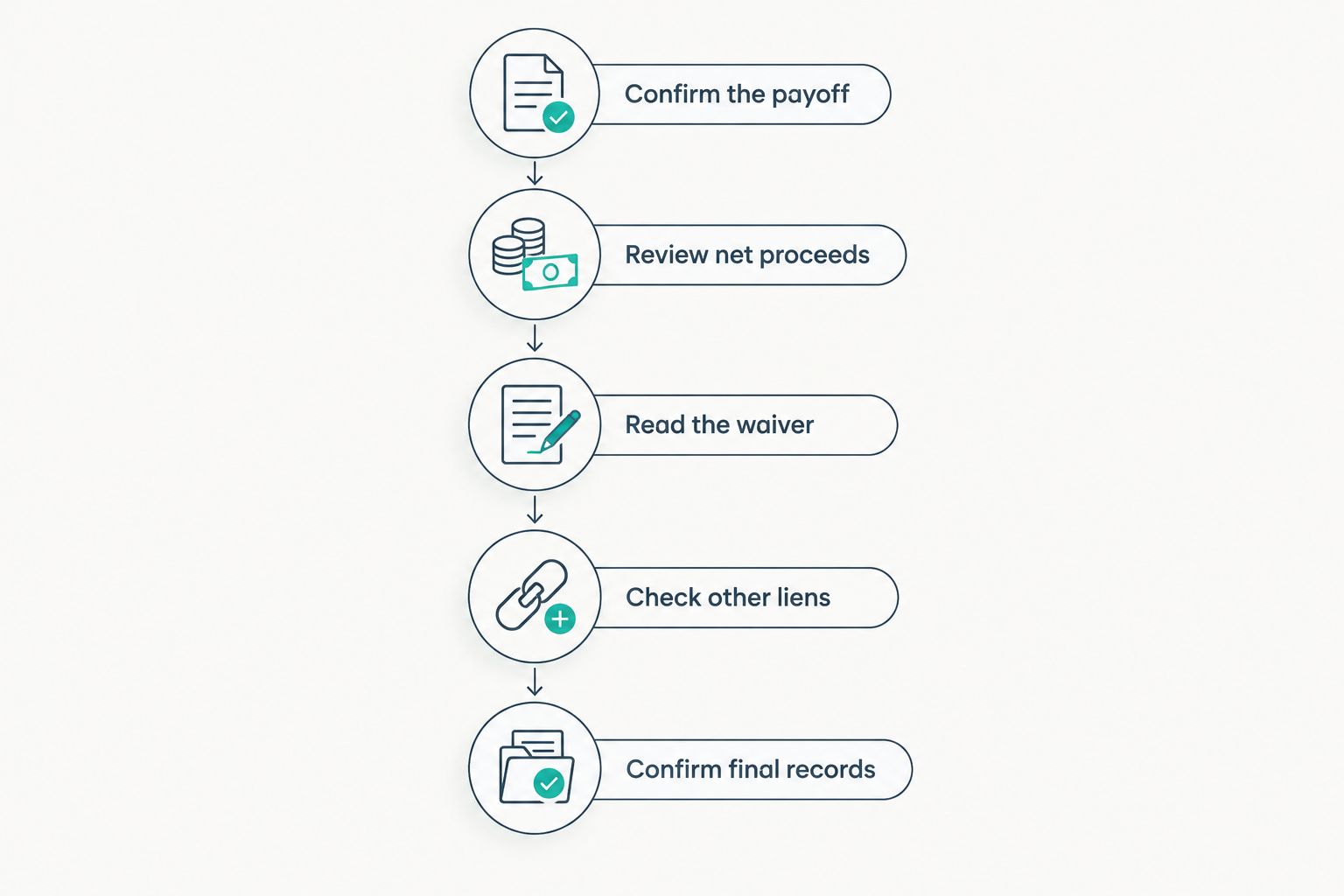
Check the amount in this order
- Confirm the payoff. Ask for the lender’s current accounting, including the charges it includes. A statement balance and a payoff figure serve different purposes.
- Review net proceeds. Identify how much of the closing proceeds will actually reach each lender after approved deductions.
- Read the waiver. Find the language addressing the unpaid balance and your personal responsibility. Do not substitute a verbal explanation for written terms.
- Check other liens. Review each mortgage or other lien separately. One lender’s agreement does not settle another creditor’s claim.
- Confirm final records. Keep the approval, closing statement, and subsequent lender correspondence together. Ask about any discrepancy between them.
Use this sequence when reviewing a 2026 approval letter. If you cannot identify what happens to the unpaid balance, ask for clarification before signing.
Full waiver: the remaining balance is canceled
A full waiver addresses the remaining balance on the specific loan covered by the agreement. Look for clear language stating that the lender releases you from further liability, rather than language limited to releasing its lien.
The benefit is a defined resolution of that loan’s unpaid balance. The limitation is scope: a waiver from one lender does not automatically cover another mortgage, another borrower, or a separate obligation.
Ask your attorney whether the agreement covers every borrower who needs a release and whether it contains conditions you must satisfy. Keep the final signed documents. An earlier proposal is not a substitute for the agreement that governs closing.
Partial cancellation: some debt remains your responsibility
A lender can propose canceling part of the shortfall while requiring a contribution or a separate repayment agreement. In that situation, the canceled portion and the amount you still owe are different figures.
The benefit is clarity if the agreement spells out both obligations. The drawback is that selling the home does not end every payment obligation connected to the transaction.
Do not describe the entire shortfall as forgiven when the agreement requires repayment of part of it. Review the repayment terms, any conditions for cancellation, and the consequences of failing to meet those conditions with your attorney.
No express waiver: selling does not establish forgiveness
A lien release concerns the lender’s claim against the property. A debt waiver concerns your responsibility for the unpaid balance. A document addressing only the lien does not answer both questions.
That does not mean the lender necessarily has an enforceable right to collect. State law and the specific loan circumstances affect that question. It means you should not infer debt forgiveness from the property transfer alone.
Ask a qualified attorney to explain the result in your state. If the approval wording is unclear, request clarification while there is still time to address it—not after the closing documents are signed.
Why short-sale debt forgiveness varies
The amount and treatment of unpaid debt depend on several distinct factors:
- Payoff balance. The lender’s payoff calculation establishes the debt being addressed, including applicable interest and charges.
- Net proceeds. The amount credited to the mortgage differs from the buyer’s offer when the transaction includes approved deductions.
- Written settlement terms. The agreement determines whether the lender cancels debt, requires a contribution, or retains rights concerning the balance.
- Additional liens. A second mortgage or another lien creates a separate issue that needs its own resolution.
- State law. Applicable law can affect deficiency collection and the legal effect of the transaction.
- Conditions in the approval. The agreement can make its terms dependent on completing the sale as specified.
Do not confuse the lender’s decision to approve the sale with its decision about the unpaid balance. For more context on the approval itself, review these reasons lenders reject short-sale offers.
Does a short-sale approval letter mean I owe nothing?
No. A short-sale approval letter means the lender has approved a transaction under stated conditions; it does not automatically mean the unpaid debt is waived.
Look for a direct answer to this question: after the required proceeds are received, can the lender pursue you for anything else? Ask your attorney to interpret language about release, satisfaction, collection rights, and any separate payment obligation.
Avoid relying on the document’s heading or a reassuring email summary. The operative terms matter more than the label on the letter.
Will I owe taxes on debt forgiven in a short sale?
Canceled mortgage debt can be taxable, but exclusions or exceptions can change the result. Bankruptcy and insolvency are examples of circumstances that require specific tax analysis; neither should be assumed to apply.
For a short sale completed in 2026, ask a qualified tax professional to evaluate the rules applicable to your cancellation and filing situation. Your state tax treatment also needs review.
A lender’s decision not to collect and the tax treatment of canceled debt are separate questions. A debt waiver does not establish that the cancellation is tax-free, and a tax exclusion does not replace a lender’s waiver.
What if I have a second mortgage?
A second mortgage needs its own review because the first lender cannot waive a different lender’s debt. Confirm both the release needed for the sale and the treatment of any unpaid balance on each loan.
An approval from the first mortgage lender is not a complete answer if another creditor still has a claim. Ask who must approve the transaction and which written documents address each obligation.
This is especially important when a proposed closing statement allocates proceeds among creditors. An agreed payment to a lienholder does not, by itself, tell you whether that creditor has canceled the rest of its debt.
Get help with the process, then verify the terms
Shortsalesdoneright is best for homeowners seeking short-sale processing and lender negotiation help. That service addresses the lender process; it does not replace legal advice about a deficiency or tax advice about canceled debt.
If you are ready to act, request help through the homeowner intake form on the website. Explain whether you have received an offer, an approval letter, or a foreclosure notice so the discussion addresses your current situation.
You should still have qualified professionals review the final terms. No processing service can promise lender approval, forgiveness of the unpaid balance, or a specific credit-score result.
Request short-sale help
Get help with short-sale processing and lender negotiation. Legal and tax questions need separate review.
FAQ
How do I find out exactly how much debt my lender will forgive?
Review the lender’s written settlement terms alongside its payoff calculation and the proceeds applied to the loan. Ask for clarification of the canceled amount, any remaining obligation, and the conditions attached to the agreement.
Is the difference between my mortgage and the sale price automatically forgiven?
No, the difference is not automatically forgiven. The lender’s accounting and the actual proceeds applied to the loan establish the shortfall, while the settlement terms and applicable law determine your remaining responsibility.
Can a lender approve a short sale and still pursue the balance?
Approval alone does not establish that the lender has waived the balance. Whether the lender retains an enforceable collection right depends on the agreement, applicable state law, and the loan circumstances.
Does a short sale forgive my second mortgage too?
A first mortgage lender’s agreement does not forgive a separate second mortgage. Review the second lender’s approval and debt-release terms independently.
Do I have to pay income tax on forgiven mortgage debt in 2026?
Canceled mortgage debt can be taxable in 2026, but an applicable exclusion or exception can change the result. Have a qualified tax professional review your circumstances, required reporting, and state tax treatment.
Can a short-sale negotiator guarantee that I will owe nothing?
No, a short-sale negotiator cannot guarantee that you will owe nothing. Lender decisions, the written agreement, and applicable law determine the debt outcome.
What documents should I keep after my short sale closes?
Keep the final lender approvals, settlement agreements, closing statement, lien-release records, and any later debt-cancellation or tax documents. These records help your attorney and tax professional evaluate what was agreed and what occurred.
One last thing
Before accepting a 2026 short-sale approval, ask for a plain answer to a precise question: what, if anything, will I still owe after closing? Have your attorney connect that answer to the actual written terms.
Then ask the same question for every other mortgage or lien involved. A completed sale and a complete debt resolution are not interchangeable. Shortsalesdoneright can help with the lender process; the final agreement still needs to answer the debt question.


