A landlord short sale is a lender-approved sale of rental property for less than the mortgage payoff, aimed at exiting an underwater investment. For landlords evaluating this option in 2026, the decision involves more than the loan balance: tenant obligations, rental income, other liens, and tax treatment all need separate attention.
- Short sale rental property decisions require separate reviews of lender terms, tenant obligations, and tax consequences.
- Shortsalesdoneright provides short sale processing and lender negotiation; lender approval is not guaranteed.
- Compare keeping the rental, a short sale, and other exits before committing to a sale.
- Require written terms addressing any unpaid balance; permission to sell is not automatic debt forgiveness.
Why a short sale matters for landlords
Negative equity and negative cash flow are different problems. A property can owe more than its sale value while still producing rental income. Another property can have manageable debt but lose money through vacancy, repairs, or operating expenses. Identify which problem you need to solve before choosing an exit.
A rental also carries obligations beyond your mortgage. An occupied property has lease terms, security deposits, access requirements, and tenant communications to manage. Selling does not make those responsibilities disappear.
For owners seeking help with lender communication, Shortsalesdoneright provides short sale services and helps homeowners compare a short sale with other options. Shortsalesdoneright short sale processing is best for owners seeking help preparing the lender package and handling lender negotiations. That assistance does not replace legal or tax advice.
Your 2026 decision should answer two separate questions: does selling address the property's financial problem, and are the lender's proposed terms acceptable? Lender terms and state law vary. Have qualified professionals review the consequences that apply to your ownership and location.
How to prepare a rental property short sale
1. Establish your financial starting point
Start with your own records. Build one property file containing the mortgage information, operating expenses, rental income, and evidence of the property's condition. Keep personal finances distinct from the rental's figures, while collecting both if the lender requests them.
Compare three figures: the loan payoff, the expected sale value, and the estimated proceeds after selling expenses. A mortgage statement balance is not a substitute for a current payoff statement. Your listing agent can prepare a market analysis and estimated seller proceeds; neither document guarantees the lender's valuation or approval.
Be clear about why continuing to own the property is difficult. A falling property value alone does not explain your ability to keep paying the loan.
- Request current payoff information for each mortgage.
- Gather the lease, rental ledger, and operating expense records.
- Document vacancy, repairs, and other claimed financial pressures.
- Ask an agent for comparable sales and estimated net proceeds.
- List every known lien rather than assuming the first mortgage is the only claim.
2. Compare keeping the rental with exiting
Write down what you want to achieve before contacting buyers. Do you need to stop an operating loss, address an unaffordable payment, or leave property management? Those goals lead to different conversations.
Start by asking your servicer which assistance options apply to an investment property in 2026. Do not assume a program described for an owner-occupied home also applies to your rental. Request the requirements directly, including how rental income and ownership structure affect the review.
Compare the consequences of keeping the property with the consequences of selling. A short sale requires lender agreement, but keeping the rental also requires a workable operating plan. Neither choice becomes sound simply because it avoids the other.
Use the comparison table below to organize the discussion, not to select an option without reviewing its conditions.
- Define whether your main goal is payment relief, a sale, or another exit.
- Ask about assistance specifically for non-owner-occupied property.
- Review the rental budget without assuming uninterrupted occupancy.
- Compare alternatives with your servicer and qualified advisers.
- Keep foreclosure notices and other deadlines visible throughout the review.
3. Assemble a complete lender package
Request the lender's document checklist and assemble the package yourself before paying for help you do not need. Match the owner's name, property address, loan details, and reporting periods across the documents. Explain inconsistencies rather than leaving the reviewer to guess.
Rental records deserve particular care. A lease shows agreed rent; a rental ledger shows what was actually received. Neither should be presented as the other. Include the supporting information requested by the lender rather than substituting a summary for required records.
If you prefer professional processing support, Shortsalesdoneright prepares the full short-sale package for agents and provides a dedicated point of contact and weekly lender updates. Coordinate that support through your listing agent. Processing organizes the submission; it does not determine the lender's decision.
Use a property file with these categories so updates remain easy to find.
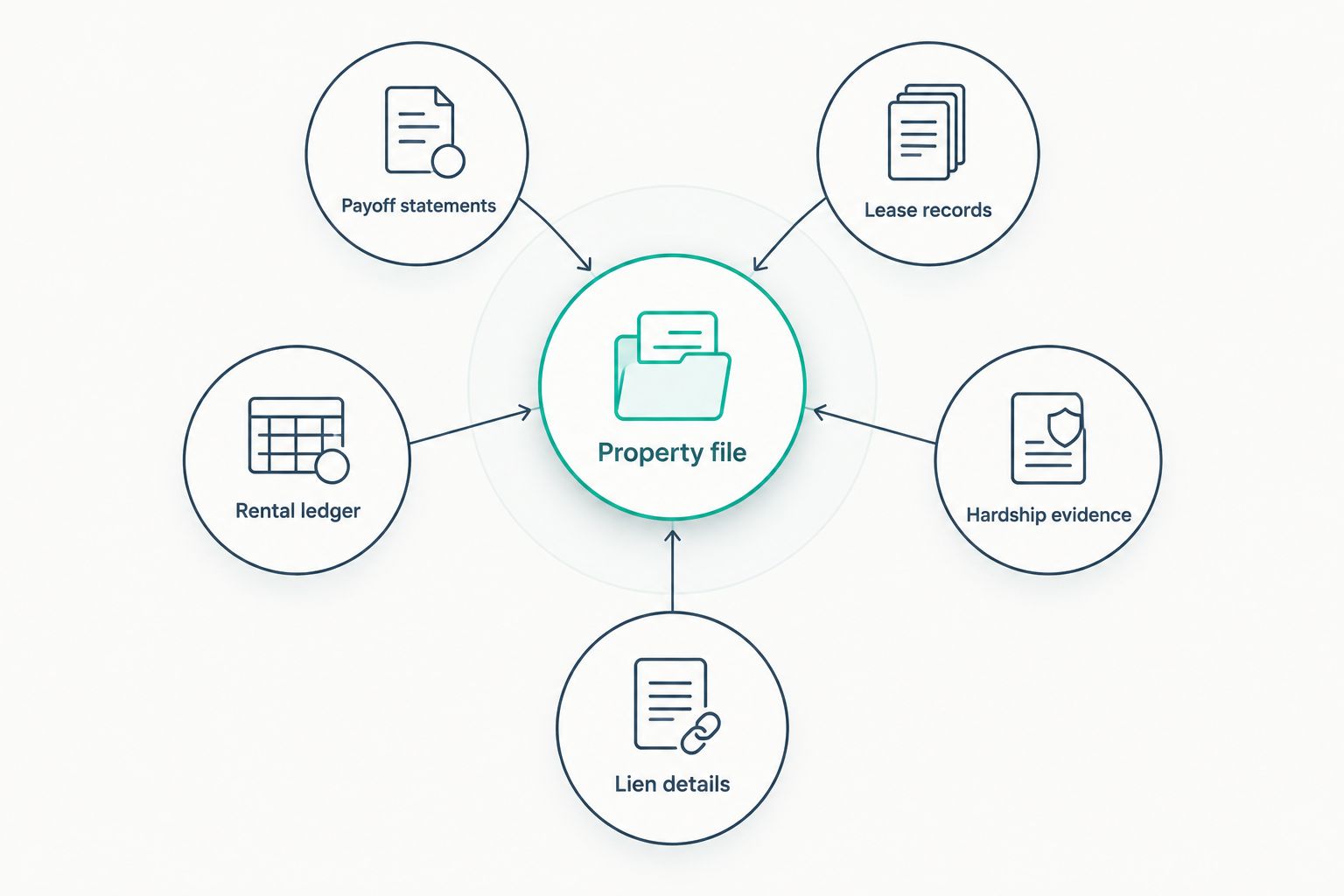
- Payoff statements: current information for each mortgage.
- Lease records: signed agreements and relevant amendments.
- Rental ledger: receipts, arrears, and vacancy records.
- Hardship evidence: documents supporting your explanation.
- Lien details: information about other claims affecting the sale.
For a broader checklist, review the guide to documents to include in a short-sale package.
4. Plan the sale around the tenancy
Read the lease before making promises about possession, showings, or move-out dates. Your buyer's plans do not determine your current obligations to the tenant. Have a local real estate attorney explain applicable notice, access, deposit, and lease requirements.
For an occupied rental listed in 2026, give your agent accurate information about rent, arrears, deposits, lease dates, and property condition. Disclose the actual situation rather than advertising an easy transition that has not been arranged.
Keep tenant communication separate from lender negotiation. The tenant needs accurate information about access and any agreed changes; the lender needs the required financial and sale documents. Neither conversation substitutes for the other.
A short-sale application does not itself authorize you to end a tenancy. Do not use the application as a reason to stop maintaining the property or responding to legitimate tenant concerns.
- Review the lease with your agent and local attorney.
- Follow applicable notice and access requirements for showings.
- Document security deposits and prepaid rent for closing review.
- Avoid promising vacant possession without a lawful, workable plan.
- Keep written records of agreed tenant arrangements.
5. Evaluate offers by terms, not headline amount
Ask your agent to explain the full offer before submitting it for lender review. The offered amount matters, but so do financing, contingencies, requested concessions, occupancy terms, and the buyer's ability to proceed.
Use an estimated settlement statement to show the proposed proceeds and expenses. Identify any additional lender or lienholder whose agreement is needed. Do not assume approval from the first mortgage holder resolves every claim against the property.
Keep a written record of what has been submitted, what the lender has requested, and which documents need updating. An incomplete response creates another task; an unanswered request leaves the review unresolved.
A buyer's signed contract is not lender approval. Your contract and communications should make the approval requirement clear. Ask your agent and attorney how the agreement handles deadlines, lender conditions, and an unsuccessful review.
- Review financing, contingencies, and tenant-related terms.
- Prepare an accurate estimate of seller proceeds.
- Identify the required lender and lienholder responses.
- Track outstanding requests and document expiration dates.
- Confirm that contract language addresses short-sale approval.
6. Review approval terms before committing to closing
Read the written approval as a set of conditions, not simply permission to move ahead. Confirm the approved transaction, required documents, closing deadline, and any seller contribution. Ask for written clarification when the terms do not match your understanding.
Separate release of the mortgage lien from release of personal liability for an unpaid balance. Those are different issues. Have a qualified attorney explain what the approval actually resolves under the applicable documents and state law.
Arrange two separate professional reviews when needed: legal review of the remaining obligations and tax review of the transaction. Rental property can raise questions about adjusted tax basis, depreciation, and canceled debt. Do not rely on an owner-occupied-home explanation for an investment property.
Shortsalesdoneright can assist with lender negotiation, but an attorney and tax professional should answer those legal and tax questions before you commit.
- Confirm the approved offer and closing conditions.
- Ask whether any unpaid balance remains your responsibility.
- Review all required lender and lienholder approvals.
- Have a tax professional assess the rental property's treatment.
- Reconcile deposits, rent, and possession arrangements before closing.
Request help with your short sale
Use the homeowner intake form to request help comparing options and communicating with your lender.
Compare your rental property options
Choose the option that addresses your actual constraint. Keeping ownership, reducing payment pressure, and ending ownership are different objectives. Ask your servicer which arrangements it will consider, then review the conditions before treating any option as available to you.
The comparison below describes the purpose and limitation of each route. It does not establish eligibility or predict the lender's decision.
| Option | Best for | Main benefit | Key limitation |
|---|---|---|---|
| Keep the rental under existing terms | Owners whose documented budget supports continued ownership | Preserves ownership and rental operations | Does not resolve negative equity or an unaffordable operating budget |
| Request loan assistance | Owners seeking payment relief while keeping the property | Opens a discussion about changing repayment terms | Investment-property eligibility and lender requirements vary |
| Sell without a short sale | Owners able to satisfy liens and selling expenses at closing | Avoids seeking approval to accept less than the mortgage payoff | Requires sufficient proceeds or other funds to close |
| Request a short sale | Owners seeking a sale when proceeds will not satisfy the mortgage | Creates a negotiated route to selling an underwater property | Requires lender agreement and review of remaining debt obligations |
| Request a deed in lieu | Owners seeking to discuss transferring ownership directly to the lender | Provides another proposed exit to evaluate | Requires lender agreement; liens, occupancy, and release terms need review |
Foreclosure also belongs in your legal review if proceedings have started. It is not interchangeable with a voluntary agreement. Ask an attorney what the notices mean, which deadlines apply, and how a pending short-sale request affects your particular case. Never assume the request pauses proceedings.
Common mistakes landlords make
Treating a rental like a primary residence
Do not copy an owner-occupied hardship package and leave out the rental operation. Accurately describe occupancy, ownership, income, and expenses. Ask the lender which investment-property requirements apply rather than assuming the same assistance rules cover both situations.
Confusing scheduled rent with received income
A signed lease does not prove that every payment arrived. Reconcile your rental ledger with supporting records and identify arrears separately. The same discipline applies to expenses: distinguish an actual repair bill from an estimate for future work.
Promising the buyer an empty property
A lender approval does not itself settle tenant possession. Confirm what the contract promises and whether you can meet those terms lawfully. Address lease obligations before accepting an offer built around vacancy.
Assuming the unpaid balance disappears
Permission to sell for less than the payoff does not automatically establish that every remaining obligation is forgiven. Ask for clear written terms and legal review. Do not base the decision on a verbal assurance from someone who is not providing that release.
Leaving tax questions until after closing
Rental-property tax treatment deserves its own review. Bring purchase records, improvement records, depreciation information, and the proposed transaction documents to your tax professional. An explanation written for a homeowner's principal residence is not a substitute for advice about your rental.
FAQ
Can I do a short sale on a rental property?
A rental property can be considered for a short sale, but the lender must agree to accept the proposed transaction. Ask for investment-property requirements and provide accurate rental income, expense, ownership, and hardship records.
Do I have to stop collecting rent during a short sale?
A short-sale application does not by itself change your lease or authorize changes to rent collection. Continue managing the tenancy under the lease and applicable law, and ask your attorney about any lender demands affecting rental income.
Can I start a short sale if my mortgage is current?
Ask your lender whether it will review a short sale while your mortgage is current. Do not deliberately miss payments to create eligibility; discuss your financial circumstances and the lender's requirements first.
Will a short sale erase the remaining mortgage debt?
A short sale does not automatically erase an unpaid mortgage balance. Have an attorney review the written approval, any release language, and applicable state law before you commit to closing.
Is a short sale better than foreclosure for a landlord?
A short sale is not automatically better than foreclosure for every landlord. Compare the proposed lender terms, remaining debt exposure, tenant obligations, tax treatment, and legal deadlines with qualified advisers.
Does selling my rental through a short sale remove the tenant?
A short-sale request does not itself remove a tenant or end a lease. Have a local attorney review possession, notice, access, and deposit requirements before promising anything to a buyer.
Who can help me prepare a rental property short sale?
A listing agent can handle the listing, and Shortsalesdoneright provides short sale processing and lender negotiation services. Use a qualified attorney for legal questions and a tax professional for rental-property tax consequences; processing support does not guarantee approval.
One last thing
Review the exit paperwork before celebrating the sale. The offer answers what the buyer proposes to pay. The lender approval addresses the conditions for accepting the transaction. Your lease and closing documents address other obligations. No single document answers every question.
Before a 2026 closing, put the proposed settlement statement, lender approvals, lease records, and professional advice together. Confirm that the ownership transfer, possession arrangements, and treatment of any remaining debt match the outcome you intend. Resolve discrepancies before signing, not after the property changes hands.