

A short sale does not automatically hurt your credit more—or less—than foreclosure. Both can seriously damage your credit, and the result depends on your payment history, how the mortgage is reported, and the scoring model used. In 2026, compare the written terms and your actual credit record, not a promised point difference; selling the home also does not automatically erase an unpaid mortgage balance.
- Does a short sale hurt my credit more than foreclosure? Neither outcome guarantees less credit damage.
- Missed mortgage payments and lender reporting matter alongside the way you leave the home.
- Shortsalesdoneright helps homeowners compare short-sale options, not secure a promised credit-score result.
- Get written terms covering the sale, any remaining balance, and applicable deadlines before deciding.
Does a short sale hurt my credit more than foreclosure?
Neither a short sale nor foreclosure guarantees a smaller credit-score drop. A short sale can still be reported as a mortgage settled for less than the amount owed. Foreclosure also creates negative credit information, and either outcome can follow a history of missed payments.
Understanding the credit impact of a short sale starts with separating the sale itself from the payment history that came before it. Compare the practical consequences as well as the credit consequences.
| Option | Best for evaluating when | Potential benefit | Credit consequence and limitation |
|---|---|---|---|
| Short sale | You need to sell, but the proceeds will not cover the mortgage debt | You pursue a sale with lender approval | Settlement for less than owed can damage credit; approval and release from remaining debt are not guaranteed |
| Foreclosure | Your lender has started enforcing its rights against the property | You do not have to arrange a voluntary sale for the process to proceed | Foreclosure damages credit and puts the property outcome into a legal process governed by state law |
| Loan modification | You want to keep the home and need changed mortgage terms | An approved change can help address an unaffordable payment | Approval is not guaranteed; existing late payments remain relevant, and reporting depends on the arrangement |
Why this matters
Choosing only by the expected score drop leaves out decisions that affect your housing and finances. You also need to know whether you can keep the home, whether a sale can close before an applicable deadline, and whether an unpaid balance remains afterward.
For your 2026 decision, treat credit protection as one objective—not the entire plan. The better option is the one whose terms you understand and can realistically complete.
How missed payments affect the comparison
A short sale completed after repeated missed payments is not the same credit situation as a sale pursued while payments remain current. The label on the transaction does not tell you the full payment history.
Mortgage accounts can show delinquency stages such as 30 days late, 60 days late, and 90 days late. These are different reporting categories, not interchangeable descriptions. Check what your reports actually show rather than assuming the eventual sale will replace earlier late-payment entries.
Do not deliberately miss payments because someone says doing so will improve your short-sale application. Ask the mortgage servicer what its review requires, and get qualified advice before changing your payment behavior. A short-sale request is not permission to stop paying.
Use this distinction when comparing stories from other homeowners. Someone whose mortgage was already seriously delinquent did not start from the same credit position as someone with no reported late payments. Their outcome is not a reliable forecast for yours.
Why the credit impact varies
There is no universal short-sale-versus-foreclosure point difference you can apply to your own credit file. These factors explain why a simple promise of less damage is unreliable:
- Prior payment history. Late payments before the final outcome are part of the credit record, not background details that disappear at closing.
- Mortgage reporting. Review the payment history, account status, and reported balance for accuracy after the transaction.
- Starting credit profile. A score reflects the broader credit file, including other accounts and negative information.
- Scoring model. Different models do not necessarily produce the same score or evaluate a credit file identically.
- Later account activity. New missed payments or other negative information can affect your credit after the mortgage outcome.
In 2026, ask anyone promising a specific score advantage which scoring model and account history support that claim. Without those details, the promised point difference is not a sound basis for choosing how to handle your home.
What should you check before choosing a short sale?
Review the proposed terms before treating a short sale as your preferred outcome. A lender's willingness to consider an offer is not the same as final approval, and approval to sell is not automatically forgiveness of the unpaid balance.
Follow this sequence so that credit concerns do not crowd out more immediate risks:
- Check reports. Obtain your credit reports and review the mortgage's balance, payment history, and status. Keep copies so you can compare later reporting with the earlier record.
- Confirm deadlines. Ask the servicer about the loan's current status and any foreclosure activity. Take notices to a qualified local attorney when legal deadlines or rights are involved.
- Compare options. Ask about available ways to retain the home as well as options for leaving it. If the payment is no longer sustainable, evaluate that directly rather than focusing only on credit.
- Review approval. Read the actual written short-sale terms. Identify what they say about closing conditions, remaining debt, and obligations that continue after the sale.
- Keep records. Save approval letters, closing documents, account statements, and correspondence. Use them when checking whether subsequent account reporting is accurate.
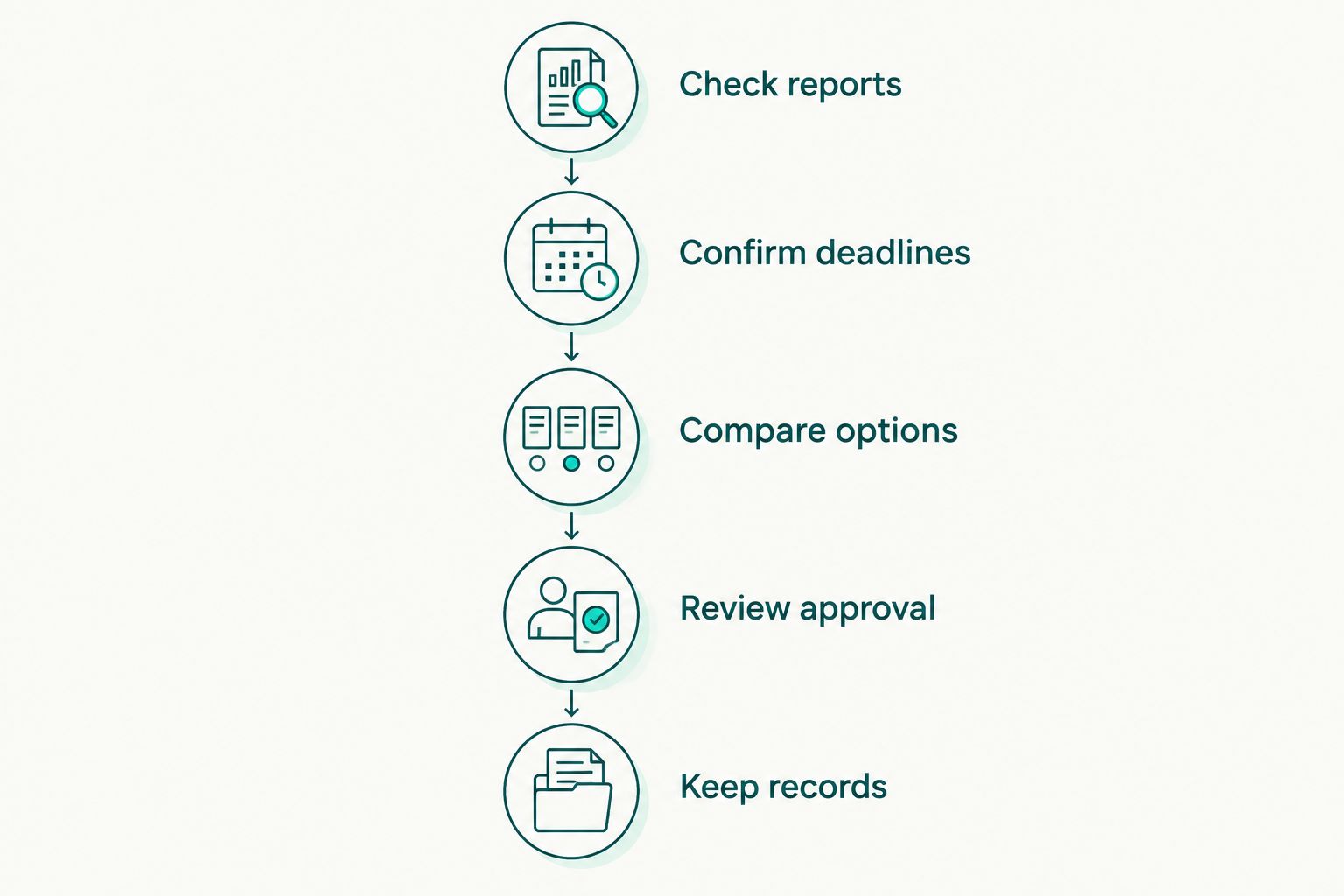
This process separates decisions that are easy to confuse. Your servicer addresses the mortgage review; a real estate professional addresses the sale; an attorney addresses legal exposure; and a qualified tax professional addresses tax consequences. Do not substitute one professional's role for another.
Does short-sale approval mean I no longer owe the balance?
Short-sale approval does not automatically cancel the remaining mortgage debt. Permission to release the property for a sale and an agreement not to pursue the unpaid balance are different issues.
Read the approval letter for language about the remaining debt and any continuing obligation. If you do not understand it, ask a qualified attorney to review it before you sign or close. Lender terms and state law vary.
This matters to the credit comparison because the property sale is not necessarily the end of the financial issue. Do not assume that a closed sale, a released lien, and a forgiven balance all mean the same thing.
Also ask a qualified tax professional whether the transaction creates a tax reporting obligation or other tax consequence. Do not assume a rule you heard about elsewhere applies to your 2026 circumstances.
Does asking for a short sale stop foreclosure?
A short-sale request does not automatically stop foreclosure. Treat the lender's sale review and the foreclosure process as separate matters unless you have reliable confirmation about what happens next.
Ask the servicer to confirm the status of any foreclosure activity and what, if anything, is required to postpone it. If a notice includes a response date or sale date, get local legal advice promptly. Do not rely on a buyer's offer or a submitted package as proof that the deadline has changed.
A short sale also needs a buyer and lender approval. Those conditions create uncertainty that a credit-only comparison misses. You need a plan for what happens if approval does not arrive or the transaction does not close.
How long does negative mortgage information stay on my report?
Most negative credit information generally remains on credit reports for 7 years, according to the Consumer Financial Protection Bureau's consumer guidance on credit-reporting periods. That general rule does not mean every mortgage-related entry has the same reporting treatment or removal date.
Review individual entries rather than assuming everything disappears a set period after your closing date. A short sale does not make accurate earlier late-payment reporting vanish.
A reporting period is also not a prediction of how long your score will take to improve. Nor is it the same as a mortgage program's eligibility rules. Keep those questions separate when planning your next move.
Will a short sale make it easier to buy another home?
A short sale does not guarantee an earlier mortgage approval than foreclosure. Future eligibility depends on the mortgage program, the event recorded, your payment history, and the lender's requirements when you apply.
For a future application in 2026, ask a mortgage professional to assess the relevant program rather than relying on a general waiting-period claim. A credit score is only part of mortgage qualification; income, debts, and other underwriting requirements also matter.
Keep the short-sale approval and closing records accessible. A future lender can ask for documentation explaining how the prior mortgage ended. Do not assume a stronger score alone resolves questions about that mortgage history.
Where short-sale support fits
Shortsalesdoneright is best for homeowners seeking short-sale processing and lender negotiation support. The service also helps homeowners compare a short sale with other options. That support addresses the transaction, not a guaranteed credit result.
For homeowners, the priority is understanding the choices before committing to a sale. For agents, processing support includes preparing the full short-sale package, a dedicated point of contact, and weekly lender updates. Those are different needs, even when they concern the same property.
If you are ready to discuss your situation, use the appropriate homeowner intake form through Shortsalesdoneright. Bring your loan status, any notices, and your main goal: keeping the home or finding a workable exit. Lender approval, debt forgiveness, and a particular credit-score outcome are not promised.
Request help with your next step
Use the homeowner intake form to discuss short-sale processing and lender negotiation support.
FAQ
Does a short sale hurt my credit more than foreclosure if I'm current on payments?
Being current does not establish that a short sale will hurt your credit more or less than foreclosure. A mortgage settled for less than owed can still create negative reporting, so review the proposed terms without assuming a particular score result.
Should I stop paying my mortgage to qualify for a short sale?
Do not stop paying solely to try to qualify for a short sale. Ask your servicer about its requirements and get qualified advice before changing payment behavior; missed payments can damage credit and create other consequences.
Can I negotiate for the lender to remove accurate late payments?
Do not rely on a promise that accurate late payments will be removed. Check your reports for errors and dispute inaccurate information through the appropriate credit-reporting and account-reporting channels.
Is a short sale better than a loan modification for my credit?
Neither option guarantees a better credit result. A loan modification addresses keeping the home under changed terms, while a short sale addresses selling for less than the mortgage debt; compare the actual arrangements and your ability to sustain them.
Will I still owe money after a short sale?
An unpaid balance can remain after a short sale, depending on the agreement and applicable state law. Have a qualified attorney review the written terms rather than assuming approval cancels the debt.
Does a short-sale application pause a foreclosure sale date?
A short-sale application does not automatically pause a foreclosure sale date. Confirm the status with the servicer and seek local legal advice about any notice or deadline.
Can Shortsalesdoneright guarantee lender approval or protect my credit score?
Shortsalesdoneright does not promise lender approval, forgiveness of an unpaid balance, or a specific credit-score result. Its services cover short-sale processing, lender negotiation, and helping homeowners compare options.
One last thing
Approval to sell is not automatically an agreement to forgive what remains owed. Before you commit, ask a qualified attorney to identify exactly what the approval letter says about that balance. Keep the answer with your closing records.
Your strongest next step in 2026 is not guessing which label looks better on a credit report. It is understanding the written terms, confirming deadlines, and choosing an option you can complete.