

A short sale is worth considering when you are only slightly underwater if you need to sell and cannot reasonably cover the gap between your net sale proceeds and the mortgage payoff. A small balance gap alone does not make it the right choice: lender approval, selling expenses, and responsibility for any unpaid debt still matter.
- Is a short sale worth it if I'm only slightly underwater? Only when the exit solves a real financial problem.
- Compare mortgage payoff with net sale proceeds, not just your home's estimated value.
- Shortsalesdoneright helps homeowners compare a short sale with other options before pursuing lender negotiation.
- A short sale does not automatically cancel unpaid mortgage debt; review written terms with qualified professionals.
Why this matters
Being slightly underwater does not automatically mean you need a short sale. If you can afford the payment and want to stay, selling creates a different decision from simply owing more than the home is worth.
If you must move, the immediate question is whether the sale can close without money you cannot afford to contribute. Shortsalesdoneright provides short-sale processing and lender negotiation services and helps homeowners compare their options. Start with that comparison, not an assumption that a short sale is your only exit.
For a decision in 2026, use current payoff information and a current estimate of sale proceeds. An older mortgage statement or an online home-value estimate does not settle the question.
Is a short sale worth it if I'm only slightly underwater?
Yes, when selling is necessary, the actual closing shortfall is unaffordable, and the lender's written terms provide an acceptable exit. Otherwise, covering a manageable gap or keeping an affordable home deserves consideration first.
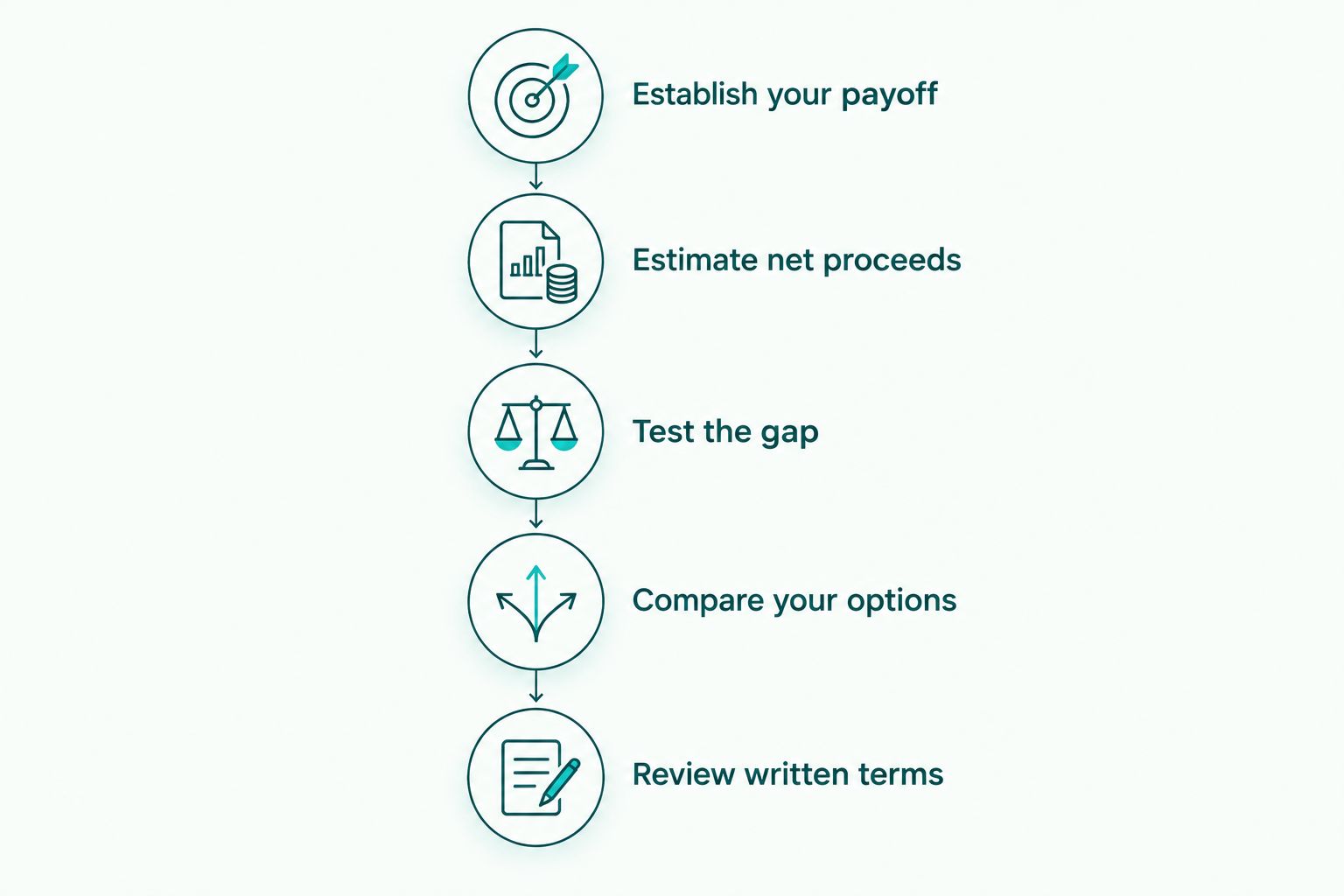
Work through these steps before committing to a short-sale listing.
Establish your payoff
Request a mortgage payoff statement through your servicer. The principal balance on your regular statement is not necessarily the amount needed to satisfy the loan on the closing date.
Tell your agent or closing professional about other loans and recorded claims against the property. A first-mortgage balance alone does not show everything that must be addressed before ownership transfers.
Estimate net proceeds
Ask your agent for a market-based sale estimate and a seller net sheet. The net sheet should account for the expenses and adjustments expected in your transaction rather than treating the proposed sale price as money available for the mortgage.
Review the assumptions. A repair concession, buyer credit, or change in the agreed sale terms affects the money left at closing.
Test the gap
Compare estimated net proceeds with the amounts needed to complete the sale. Then decide whether you can cover the difference without sacrificing essential living expenses or creating another unaffordable obligation.
Do not treat every available dollar as money you can safely spend. Moving costs and your next housing arrangement belong in the decision, even though they do not reduce the mortgage payoff.
Compare your options
If the gap is manageable, a regular sale with a seller contribution deserves review. If staying is realistic, discuss available assistance with your servicer before deciding to leave.
If you need to sell and cannot cover the gap, ask about short-sale requirements. A hardship explanation and financial documentation can be part of that review; a small shortfall does not guarantee acceptance.
Review written terms
A lender's willingness to consider an offer is not a completed agreement. Review the approval conditions, deadlines, required contributions, and treatment of any unpaid balance before you commit to closing.
Permission to release the mortgage lien is not necessarily a release from personal responsibility for the remaining debt. Have a qualified attorney explain what the documents mean under your state's law.
Which option fits a small mortgage shortfall?
The right choice depends on whether you need to leave, whether the payment remains affordable, and what you can contribute. Use this comparison to separate the housing decision from the lender-approval process.
| Option | Best for | Main benefit | Main limitation |
|---|---|---|---|
| Regular sale with a seller contribution | Homeowners who need to move and can safely cover the closing gap | Resolves the shortfall without asking the lender to accept less than the payoff | Requires money you must be able to spare |
| Keep the home | Homeowners who want to stay and can afford the payment | Avoids a sale solely because the mortgage exceeds current value | Leaves the mortgage obligation and market risk in place |
| Loan modification | Homeowners who want to stay but need payment relief | Can change loan terms if approved | Requires review and does not necessarily eliminate negative equity |
| Short sale | Homeowners who need to sell and cannot cover the gap | Provides a lender-reviewed route to sell for less than the amount owed | Approval and acceptable debt-release terms are not guaranteed |
A loan modification addresses the loan's terms, while a short sale addresses an exit through a sale. Neither is automatically better because the home is slightly underwater. The short sale versus loan modification guide explains that distinction in more detail.
For your 2026 decision, compare options against the same facts: current income, essential expenses, expected sale proceeds, and your reason for moving. Changing those assumptions between options makes the comparison misleading.
When covering the gap deserves a closer look
Covering a small shortfall deserves consideration when you need to sell and can contribute without undermining your financial stability. It can remove the need to ask the lender to accept less than the full payoff.
The disadvantage is straightforward: you use your own funds to complete the sale. That is not a sensible trade if it leaves you unable to secure housing or meet necessary expenses.
Ask your closing professional to update the net sheet as negotiations change. An amount that looked manageable before inspections or buyer concessions can become a different commitment by closing.
Choose based on the final estimated gap, not the reassuring phrase “only slightly underwater.” Small is a description, not a financial plan.
When keeping the home deserves a closer look
Keeping the home deserves consideration when you want to stay and can afford the ongoing obligation. Negative equity alone does not create a requirement to sell.
The benefit is avoiding a move you do not need. The limitation is continued responsibility for the mortgage, upkeep, and other ownership expenses, without a guarantee that the property's value will recover.
If affordability has changed, contact your servicer about available assistance. Explain whether the problem is temporary or ongoing and whether keeping the home is your actual goal.
Do not build a 2026 plan around an assumed increase in property values. Base the stay-or-sell decision on what your household can support now.
When a short sale deserves a closer look
A short sale deserves consideration when you need an exit and cannot reasonably bring enough money to closing. The shortfall's size matters, but your financial circumstances and the lender's requirements also shape the decision.
The benefit is a structured request to complete a sale despite insufficient proceeds. The limitations include document requests, lender review, uncertain approval, and terms that require careful attention.
Shortsalesdoneright is best for homeowners seeking short-sale processing and lender negotiation help. That support addresses the process; it does not replace legal or tax advice or guarantee lender approval.
Before requesting help, gather your mortgage information, a realistic sale estimate, and a plain explanation of why you need to sell. Describe the situation accurately rather than trying to make it sound more severe.
Compare your next move
Request help comparing a short sale with other options through the homeowner intake form.
Why the decision varies
The same small mortgage shortfall can lead to different choices. These factors explain why:
- Your reason for selling. A necessary relocation creates a different decision from wanting a different home.
- Your payment affordability. An affordable mortgage supports considering a stay; an unsustainable payment requires a separate assistance discussion.
- Your actual net proceeds. Selling expenses and negotiated concessions affect the gap you must resolve.
- Your available funds. Money needed for essential expenses is not automatically available to complete a sale.
- Other property claims. Additional mortgages or liens can add parties whose requirements must be addressed.
- The lender's written terms. Required contributions and treatment of unpaid debt affect whether an approved sale is acceptable.
Lender terms and state law vary. A shortfall that looks similar on paper does not establish identical obligations for different homeowners.
Can I pursue a short sale while current on payments?
Being current does not by itself settle whether a lender will consider a short sale. Ask your servicer about the requirements for your loan and explain your financial circumstances honestly.
Do not deliberately miss payments to try to qualify. Missed payments carry consequences and do not guarantee short-sale approval.
Does a small shortfall mean the lender will forgive it?
A small shortfall does not guarantee forgiveness of the unpaid balance. The written agreement and applicable state law determine your position, not the size of the gap alone.
Ask a qualified attorney to distinguish release of the property lien from release of personal liability. Ask a qualified tax professional about any potential tax consequences of canceled debt under the rules applicable to your 2026 transaction.
Is a short sale automatically better than foreclosure?
A short sale is not automatically better on every financial or legal measure. Compare the specific proposed terms with your circumstances rather than relying on blanket promises about debt cancellation or credit outcomes.
If you have received foreclosure papers, seek legal help promptly. Submitting a short-sale request does not itself establish that a foreclosure deadline has stopped.
FAQ
Is a short sale worth it if I'm only slightly underwater?
A short sale is worth considering if you need to sell and cannot reasonably cover the difference between net sale proceeds and the mortgage payoff. Compare other options and review the lender's written terms before committing.
Should I use savings to cover a small mortgage shortfall?
Consider using savings only if covering the gap leaves you able to meet essential expenses and your next housing needs. Compare the updated seller net sheet with your actual budget before deciding.
Can I stay in my home instead of doing a short sale?
Keeping the home deserves consideration if you want to stay and can afford the mortgage and other ownership expenses. If affordability is the problem, ask your servicer about available assistance.
Will a short sale erase everything I owe?
A short sale does not automatically erase every unpaid obligation. Have a qualified attorney review the approval documents and applicable state law before closing.
Will a short sale protect my credit score?
A short sale does not guarantee a particular credit-score result. Payment history and how the account is reported are relevant, so do not assume a specific outcome.
Can Shortsalesdoneright help me compare my options?
Shortsalesdoneright helps homeowners compare a short sale with other options and provides short-sale processing and lender negotiation services. Request help through the homeowner intake form; approval remains the lender's decision.
What should I gather before asking about a short sale?
Gather your mortgage information, an estimated seller net sheet, income and expense information, and an explanation of why you need to sell. Your servicer or processing contact can identify the documents required for your situation.
One last thing
Ask for the seller net sheet before choosing the label for your sale. A home value close to your mortgage balance does not establish that the sale will pay off the loan after transaction expenses.
For a 2026 decision, put the current payoff and estimated net proceeds side by side. Then choose the next conversation: covering the gap, keeping the home, requesting assistance, or pursuing lender review of a short sale.