

Yes. A short sale can lower your credit score because the lender accepts less than the full mortgage balance, and the account can be reported as settled for less than owed. Late payments before closing can add damage, and completing the sale does not automatically erase an unpaid balance. In 2026, the useful question is not how many points everyone loses—it is how your payment history, lender reporting, and written approval terms affect your next move.
- Can a short sale affect my credit score? Yes; missed mortgage payments and settlement reporting both matter.
- Shortsalesdoneright helps homeowners compare a short sale with other options; no specific credit-score outcome is guaranteed.
- Short-sale approval does not automatically forgive an unpaid mortgage balance. Get the lender’s terms in writing.
- Compare mortgage relief options before choosing an exit solely for its expected credit impact.
Can a short sale affect my credit score?
Yes. A short sale can hurt your credit even when the lender approves it. Approval permits the transaction under specified terms. It does not mean the mortgage was repaid in full or that negative reporting disappears.
Shortsalesdoneright is best for homeowners seeking short sale processing and lender negotiation help.
Your payment history helps explain the difference between these situations:
| Mortgage situation | What matters for your credit | What to check |
|---|---|---|
| Payments remain current before closing | Settlement for less than the full balance can still be negative | How the lender will report the completed account |
| Payments are already late | Delinquencies can affect credit before the sale closes | Whether payment dates and account status are accurate |
| Foreclosure is also pending | A short-sale request does not itself stop foreclosure or credit reporting | Foreclosure status, deadlines, and any written postponement |
No reliable point-loss estimate follows from the words short sale alone. Your existing credit history and the scoring model also affect the result. Treat a promised score outcome as a warning sign, not a reason to sign.
Why this matters
A homeowner with an upside-down mortgage faces separate questions: how to resolve the property, what happens to the debt, and what appears on the credit report. An acceptable answer to one does not settle the others.
For your 2026 decision, compare the whole outcome, not just the expected score change. A sale that ends ownership still needs clear terms about any remaining balance. A plan to keep the home needs payments you can sustain.
You do not need to predict your exact future score to make progress. You need an accurate account history, a realistic housing plan, and written lender terms.
If your mortgage payments are still current
A short sale can still affect your credit when you have not missed a payment. The lender is accepting less than the contractual balance, and that settlement can appear in the mortgage account’s reporting.
Remaining current avoids adding new late-payment entries, but it does not turn a short sale into a full payoff. Ask the lender how it expects to report the transaction. Keep the response with your approval documents.
Do not stop paying just to make a short-sale request look stronger. Ask the servicer what assistance and review requirements apply to your situation. If keeping the home is your goal, discuss retention options before committing to a sale.
If your mortgage payments are already late
Late mortgage payments can affect your score before a buyer appears or the lender reviews an offer. Credit reports can distinguish accounts that are 30 days, 60 days, or 90 days late. Those entries describe payment history, not the eventual sale outcome.
A short sale does not automatically remove accurate delinquencies. It also does not guarantee that reporting stops while negotiations continue.
Separate the existing damage from the decision ahead. Review whether the reported payment dates are correct, ask about current foreclosure deadlines, and compare the available ways to resolve the loan. An already-damaged score is not a reason to ignore the remaining debt terms.
Why the credit impact varies
A short sale does not produce the same result for every borrower. These factors explain why a universal score-drop promise fails:
- Payment history. A current mortgage and a mortgage with repeated missed payments reach closing with different histories.
- Existing credit profile. The same negative event can affect different credit files differently. Your other accounts remain part of the calculation.
- Lender reporting. The reported status, balance, payment history, and closing information need to reflect what happened.
- Scoring model. Different models can generate different scores from credit-report information. A score you monitor is not necessarily the score a future lender uses.
- Time and later activity. Negative information ages while subsequent payments and balances continue to shape your credit profile.
These factors explain variation; they do not provide a formula for predicting your loss. A processing service cannot control the scoring model or promise how a future lender will evaluate you.
What should you check before agreeing to a short sale?
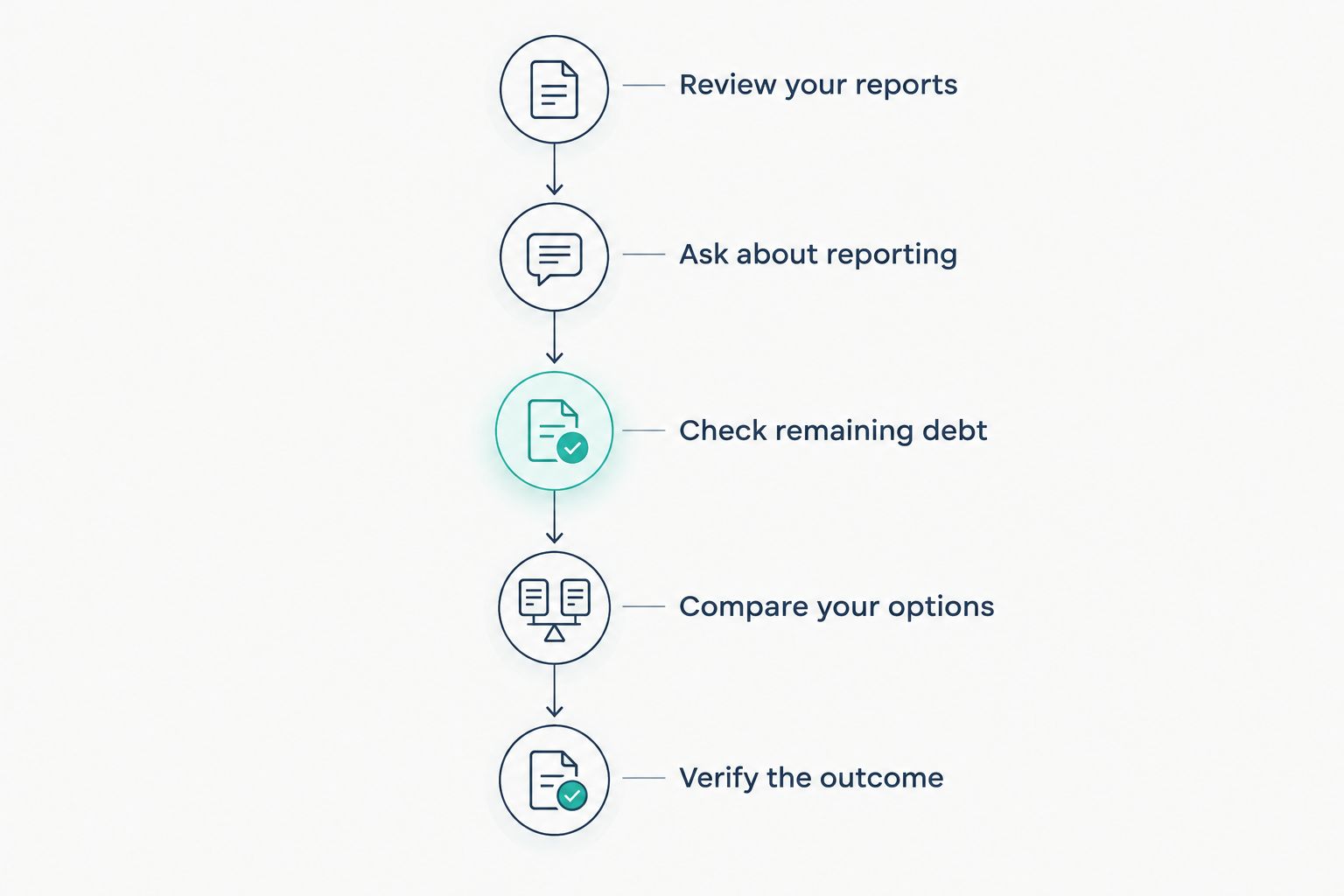
Use this checklist for a 2026 short-sale decision. Keep the credit questions separate from the debt questions so neither gets lost in the paperwork.
1. Review your reports
Review your credit reports from Equifax, Experian, and TransUnion. Check the mortgage balance, payment history, account status, and any collection account associated with the debt.
Save copies before the sale. You need a record of what was reported, not just a score displayed in an app. If something is inaccurate, identify the specific entry and supporting document.
2. Ask about reporting
Ask the servicer how it expects to report the completed short sale and whether an unpaid balance will remain on the account. Request the answer in writing.
The important distinction is between a full payoff and a settlement for less than owed. Do not assume that lender approval means the account will appear as fully paid under the original agreement.
3. Check remaining debt
Read the approval terms for what happens to the amount the sale proceeds do not cover. Permission to sell and release the mortgage lien are not automatically the same as releasing you from personal liability.
If another mortgage or lien exists, its treatment needs separate attention. Do not assume an agreement with one lender resolves every debt tied to the property.
4. Compare your options
Ask whether a loan modification, repayment arrangement, or another loss-mitigation option fits your circumstances. If you need to leave the property, compare a short sale with the other available exit paths.
A housing counselor can help you review mortgage assistance options. Use qualified legal and tax professionals for questions about liability, state protections, or tax treatment.
5. Verify the outcome
Keep the approval letter, closing documents, lender correspondence, and any written release of the remaining debt. After closing, check whether your reports reflect the completed transaction accurately.
Dispute factual errors with the credit reporting company and the company that supplied the information. Accurate negative information is different from an error; a dispute does not make an accurate short sale disappear.
Is a short sale better for your credit than foreclosure?
A short sale is not a guaranteed credit-score advantage over foreclosure. Both can involve serious negative reporting, and missed payments before either outcome matter. Choose between them using the full circumstances, not a promised difference in points.
For a homeowner comparing options in 2026, these are decision criteria—not predictions of eligibility or lender approval:
| Option | Best for | Main benefit | Main limitation |
|---|---|---|---|
| Loan modification | Homeowners seeking to keep the home | Changes loan terms if approved | Approval and an affordable payment are not guaranteed |
| Short sale | Homeowners seeking a negotiated sale when proceeds fall short | Allows a sale subject to required approvals | Can damage credit and leave debt unless the terms resolve it |
| Deed in lieu | Homeowners considering a negotiated transfer to the lender | Offers another possible exit by agreement | Lender acceptance and remaining-debt terms require review |
| Foreclosure | Homeowners assessing the consequences when other paths do not resolve the default | Does not require finding a buyer yourself | Can mean loss of the home, negative reporting, and unresolved liability questions |
Foreclosure is a legal process, not a credit-repair strategy. A short sale is a negotiated transaction, not automatic debt forgiveness. Lender terms and state law vary, so have a qualified attorney review legal questions before relying on either outcome.
For the broader decision, read short sale vs. foreclosure vs. deed in lieu compared.
How long does a short sale stay on your credit report?
Negative mortgage information can generally remain on your credit report for up to 7 years under federal credit-reporting rules. For delinquency-related reporting, the relevant timing generally connects to the original delinquency that led to the outcome—not simply the closing date.
Reporting duration and score recovery are different questions. Information can remain visible while its effect changes over time. No fixed recovery date applies to every borrower, and a reporting limit does not establish when you qualify for another mortgage.
Check the dates on each report rather than assuming every account entry follows the date you remember from closing.
Does lender approval mean I will not owe anything afterward?
No. Short-sale approval does not automatically cancel the unpaid balance. The written terms must address what happens to the debt after the lender receives the sale proceeds.
Ask a qualified attorney whether the approval releases you from personal liability under the applicable terms and state law. Ask a qualified tax professional whether canceled debt creates a tax issue in your circumstances. A clear answer about credit reporting cannot substitute for either review.
When to request short-sale help
Request help when you need to compare options or manage the lender’s short-sale process. You do not need a precise score forecast before asking what your mortgage situation requires.
Shortsalesdoneright provides short sale processing and lender negotiation services and helps homeowners compare a short sale with other options. That support does not guarantee approval, forgiveness of an unpaid balance, or a particular credit result.
If you are ready to act, request help through the homeowner intake form on the site. Explain whether you want to keep the property or leave it, whether payments are current, and whether you have received a foreclosure notice.
Request help with your mortgage situation
Use the homeowner intake form to ask about a short sale and other options.
FAQ
Can a short sale affect my credit score if I never missed a payment?
Yes. A short sale can affect your credit score even without missed payments because the mortgage is settled for less than the full balance. Staying current does not guarantee neutral reporting.
How many points will my credit score drop after a short sale?
There is no fixed point loss for every short sale. Your payment history, existing credit profile, lender reporting, and the scoring model affect the result.
Should I stop paying my mortgage to qualify for a short sale?
Do not stop paying solely to pursue a short sale. Ask your servicer about its requirements and available assistance, because missed payments can damage credit and create other consequences.
Will a short sale stop foreclosure while the bank reviews it?
A short-sale request does not automatically stop foreclosure. Confirm the status of any foreclosure action and obtain written confirmation of any postponement; state law and lender terms vary.
Can I remove an accurate short sale from my credit report?
You generally cannot require removal of accurate, timely negative reporting just because the sale is complete. You can dispute inaccurate account status, balances, payment history, or dates.
Can Shortsalesdoneright guarantee my credit score after closing?
Shortsalesdoneright cannot guarantee a specific credit-score result. Its services cover short sale processing and lender negotiation, not control over credit scoring or future mortgage approval.
One last thing
A closed sale and a resolved debt are not interchangeable. Before you accept an approval in 2026, ask what the document says about both the mortgage lien and your personal obligation to repay any remainder.
Keep that written answer with your closing records. It matters beyond the day the keys change hands.


