

No—a scheduled foreclosure sale does not automatically make it too late to start a short sale, but starting one does not stop the auction. You need the mortgage servicer to assess the request, confirmation of any sale postponement, and a qualified local attorney to explain the deadlines and protections that apply to your case.
- Is it too late to start a short sale after a foreclosure sale date is set? Not automatically.
- A short-sale submission does not itself postpone a foreclosure auction. Confirm the sale status separately.
- Shortsalesdoneright provides short-sale processing and lender negotiation, not a guarantee of approval or foreclosure postponement.
- Contact your servicer and a local foreclosure attorney immediately; do not wait for a buyer before checking deadlines.
Why this matters
A pending short sale and an active foreclosure can move forward at the same time. A listing, buyer's offer, or document submission is not proof that the auction has stopped.
Your first priority is to establish whether there is a workable path before the sale—not simply to get the home listed. Shortsalesdoneright is a short-sale processing option for homeowners who need lender-negotiation help while comparing their alternatives. You can request help through the homeowner intake available on Shortsalesdoneright.
For a sale scheduled in 2026, use the current notice and current servicer instructions. An old application or earlier conversation does not establish today's foreclosure status.
Is it too late to start a short sale after a foreclosure sale date is set?
Not necessarily. The answer depends on the foreclosure stage, applicable rules, lender requirements, and whether the transaction can proceed before the sale or after a confirmed postponement.
Take these steps immediately. Do not wait for one person to finish before contacting the others.
- Confirm the sale. Locate the latest foreclosure notice. Ask the servicer and the party conducting the sale to confirm its current date and status. Give your attorney copies of the notices.
- Contact the servicer. Ask for the department handling foreclosure alternatives. State that a sale date is set and that you want to explore a short sale. Ask what constitutes a complete application and how to submit it.
- Get legal advice. Ask a qualified attorney in the property's state to review the deadline, foreclosure process, and any available protection. A short-sale processor does not replace that advice.
- Prepare the package. Work with your agent and processor to collect the required financial documents, hardship explanation, property information, and any offer documents. Confirm what is missing rather than assuming submission means completion.
- Verify postponement. Ask whether the sale remains scheduled and request written confirmation of any change. Have your attorney resolve conflicting information before treating the auction as postponed.
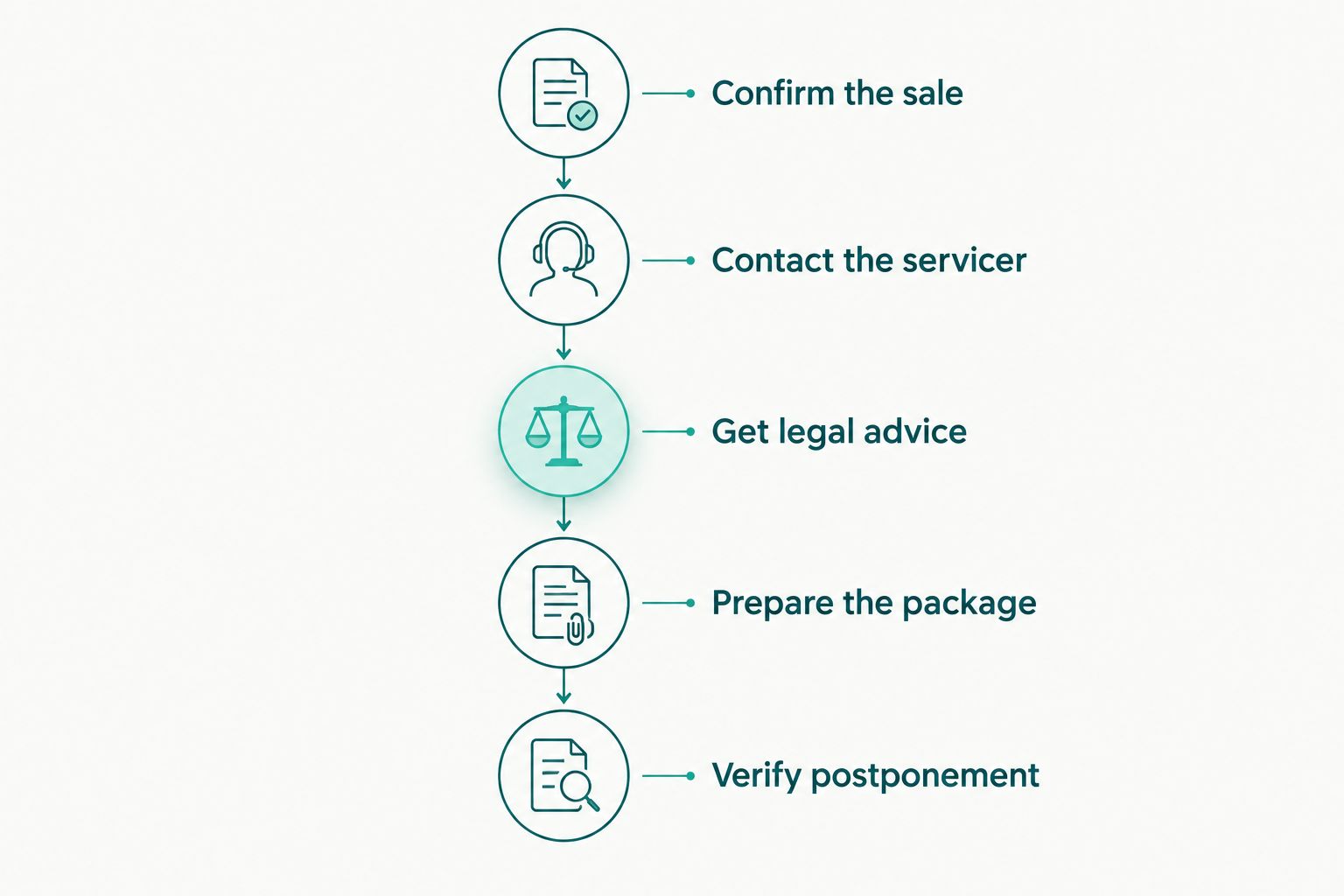
These steps establish what is possible; they do not promise extra time. Keep copies of submissions, delivery confirmations, document requests, and written responses so your agent and attorney can work from the same record.
What federal timing rules should I ask about in 2026?
Federal mortgage-servicing rules include protections tied to a complete loss-mitigation application, not merely an expression of interest in a short sale. Coverage, exceptions, prior applications, and the property's circumstances matter.
The Consumer Financial Protection Bureau's Regulation X, Section 1024.41, provides these timing rules for covered situations in 2026:
| Timing threshold | What the rule addresses | What you should confirm |
|---|---|---|
| More than 37 calendar days before the foreclosure sale | A complete application can trigger restrictions on conducting the sale while specified review requirements remain unresolved. | Whether your application is complete, the rule applies, and an exception affects your case. |
| At least 45 calendar days before the foreclosure sale | Receipt of a loss-mitigation application triggers acknowledgment requirements under the rule. | Whether the servicer received the application and identified missing items. |
| Within 5 business days after receipt, excluding Saturdays, Sundays, and legal public holidays | For applications meeting the acknowledgment threshold, the servicer generally must provide written acknowledgment stating whether the application is complete or incomplete. | What the acknowledgment says and what remains outstanding. |
These thresholds are not a guaranteed short-sale approval schedule. They also do not mean every borrower receives an automatic postponement. Ask your attorney how the rule applies before relying on a deadline calculation.
A complete application received more than 37 calendar days before the sale is materially different from an offer sent shortly before the auction. Have the servicer identify the application status, and have your attorney assess the legal consequences.
Do not use these thresholds as a reason to delay. Even when a federal protection does not apply, ask the servicer about available review procedures and have your attorney assess state-law rights.
What changes at each stage of the short sale?
Your next move depends on what is actually finished. Use the status below to describe your situation accurately when requesting help.
| Current status | Best for | Practical advantage | Limitation and next move |
|---|---|---|---|
| No application submitted | Homeowners just starting | You can identify requirements before submitting an incomplete file. | The sale remains scheduled unless its status changes. Contact the servicer and attorney now. |
| Application under review | Homeowners with a submitted file | The servicer has material to assess. | Review is not approval or postponement. Confirm completeness and sale status separately. |
| Buyer offer submitted | Homeowners with a proposed transaction | The lender can assess a specific sale proposal. | An offer does not bind the lender or stop foreclosure. Confirm outstanding approval requirements. |
| Written short-sale approval received | Homeowners preparing to close | Written terms establish what the lender has agreed to accept, subject to their conditions. | Approval can have deadlines and conditions. Confirm closing readiness and foreclosure status. |
What if I do not have a buyer yet?
You can ask about short-sale requirements before receiving an offer. Ask which documents the servicer will accept now and which parts of the review require a purchase contract.
Do not wait for a buyer to investigate the foreclosure deadline. Your agent can assess the listing while your attorney checks the legal position. Neither activity establishes that the sale will be postponed.
What if my application is already under review?
Ask whether the file is complete, who is responsible for the next decision, and whether anything remains outstanding. A file number or upload receipt only confirms part of the process.
For more on the review stage, see how long a lender takes to respond to a short-sale offer. Keep the foreclosure deadline separate from expectations about a response.
What if I already have written approval?
Read the approval with your agent, closing professional, and attorney. Check the closing deadline, required documents, treatment of other liens, and any language about the unpaid balance.
A short-sale approval letter is not automatically a foreclosure-postponement notice. Confirm both issues, particularly if the closing and auction dates are close together.
Why the remaining short-sale window varies
There is no single nationwide last day to start. These factors determine what your team must resolve:
- State foreclosure procedure. Court involvement, notice requirements, and rights after a sale differ. Get advice for the state where the property sits.
- Application completeness. Missing or outdated documents can leave the servicer without the information required for review. Ask for a specific missing-item list.
- Loan and investor requirements. The company collecting payments can be subject to requirements set by the mortgage owner or loan program. Ask which requirements govern your request.
- Other liens. A second mortgage or another recorded claim can require additional coordination before closing. Have the title professional identify the parties involved.
- Buyer readiness. Financing, inspections, and contract conditions affect whether the buyer can close within approved terms. Have your agent verify readiness rather than rely on assurances.
- Confirmed sale status. A pending request for postponement is different from an approved postponement. Resolve that distinction before planning around additional time.
Shortsalesdoneright provides short-sale processing and lender negotiation and helps homeowners compare a short sale with other options. For agents, the service includes preparing the full package, a dedicated point of contact, and weekly lender updates. Those services do not guarantee lender approval or suspend foreclosure.
Request help with your next step
Use the homeowner intake to request short-sale help. Tell your attorney about any scheduled auction.
Does submitting a short-sale offer stop the foreclosure auction?
No. Submitting an offer does not itself stop a foreclosure auction. A buyer's contract, an agent's submission, and a lender's decision are separate events.
Ask who has authority to confirm a postponement and how you will receive that confirmation. If you receive conflicting answers, send the records to your attorney rather than assume the more favorable answer controls.
Can I start a short sale if the auction is very close?
You can request a review, but a short sale is not a dependable emergency method for stopping an imminent auction. Contact your servicer and a qualified local attorney immediately, and tell both the exact sale date.
Do not spend the remaining time assembling a perfect package before raising the deadline. Explain what is ready, what is missing, and whether a buyer exists so the people advising you can assess the actual situation.
What if the foreclosure auction has already happened?
A completed auction changes the question from whether to start a short sale to what ownership rights and remedies remain. State law and the sale's legal status determine the answer.
Do not assume you can still sell the property or that every possible remedy has expired. Have a qualified local attorney review the sale documents before signing a listing agreement or accepting an offer.
What should I have ready for the first conversation?
For a 2026 review, start with the latest foreclosure notice and mortgage statement. Add any existing loss-mitigation correspondence, document requests, purchase contract, and short-sale approval letter.
Make the immediate questions clear:
- Sale status: Is the auction still scheduled, and who can confirm a change?
- Application status: What has the servicer received, and what is missing?
- Decision authority: Who reviews the short sale and who handles foreclosure scheduling?
- Next action: Who must do what next, and what deadline applies?
Keep your agent's responsibilities separate from your attorney's. Your agent handles the proposed transaction; your attorney advises on legal rights and foreclosure deadlines. Ask a qualified tax professional about potential tax consequences and an attorney about liability for an unpaid balance.
FAQ
Is it too late to start a short sale after a foreclosure sale date is set?
Not automatically. Contact your servicer and a qualified local attorney immediately to assess the application requirements, sale status, and applicable deadlines. Starting a short sale does not itself stop the auction.
Will listing my house stop the foreclosure sale?
No. Listing your house does not itself postpone foreclosure. Confirm any change to the sale separately and have your attorney review conflicting information.
Does the lender have to approve my short sale?
No. A lender is not required to approve every short-sale request. Any review protections that apply do not guarantee approval or acceptance of a buyer's offer.
Does applying more than 37 days before the auction protect me?
More than 37 calendar days is a federal timing threshold for certain protections involving a complete loss-mitigation application. Coverage and exceptions matter; ask your attorney whether Regulation X applies to your application and foreclosure.
Can a short-sale processor stop the auction for me?
Hiring a short-sale processor does not itself stop an auction. Processing and lender negotiation are separate from legal protections and confirmation that a sale has been postponed.
Will a short sale erase the mortgage balance I cannot pay?
Do not assume a short sale erases the unpaid balance. Lender terms and state law vary; have an attorney review the written agreement and a qualified tax professional assess possible tax consequences.
Who should I call first if my foreclosure auction is close?
Contact your mortgage servicer and a qualified local foreclosure attorney immediately. Give both the current sale notice, and involve your agent or processor without waiting for a buyer.
One last thing
Ask for separate confirmation of the short-sale status and the foreclosure-sale status. A positive update about one does not settle the other.
For your 2026 file, keep both answers in the same place with the latest supporting documents. That distinction helps everyone see what still needs action without mistaking progress for protection.