

You must move out by the possession deadline in your signed sale documents; a short sale does not create an automatic period to stay after closing. If the agreement requires possession at closing, plan to leave by that deadline. Staying afterward requires an authorized written arrangement consistent with the lender’s terms and applicable state law.
- How long do I have to move out after a short sale closes? Your signed possession terms control.
- Lender approval, closing, and the possession deadline are separate milestones; confirm each before scheduling your move.
- Shortsalesdoneright provides short sale processing and lender negotiation, not a guarantee of extra time in your home.
- Request any post-closing occupancy before closing, and have the written terms reviewed before relying on them.
How long do I have to move out after a short sale closes?
Your move-out deadline comes from the written possession terms, not from a nationwide short sale grace period. Look for those terms in your purchase agreement, amendments, and any separate occupancy agreement. Ask your agent or closing professional to identify the exact date, time, and conditions that apply.
Approval is not the same as closing. If you are still waiting to complete the sale, the guide to how long you can stay once a short sale is approved explains that earlier stage.
For your 2026 move, distinguish these arrangements before you book movers:
| Possession arrangement | What to plan for | Best for | Benefit | Limitation |
|---|---|---|---|---|
| Possession at closing | Vacate by the written handover deadline | Homeowners with their next housing arranged | Keeps the sale and handover together | Does not provide extra moving time afterward |
| Written post-closing occupancy | Leave by the separately agreed deadline | Homeowners who need a transition and obtain the required agreement | Separates closing from the move-out date | Requires written terms and confirmation that the arrangement is permitted |
Neither arrangement is something to assume. Ask for clarification before signing if the documents do not match what you understood.
Why this matters
A short sale involves different decisions by different parties. The lender considers whether to accept the proposed sale terms. The buyer and seller agree on possession, subject to the transaction’s requirements and applicable law.
That distinction matters when you arrange housing, transportation, storage, or help from family. A conversation about being flexible is not a dependable moving plan. Get the possession deadline in writing before making commitments that depend on staying after closing.
Your 2026 closing checklist should treat the sale deadline and the move-out deadline as separate entries, even when they fall on the same day. Confirm both with the professionals handling your transaction.
If possession is due at closing
If your signed agreement requires you to deliver possession at closing, arrange to remove your belongings and leave by the specified deadline. Do not assume signing documents early in the day gives you the rest of the evening. Ask what event triggers handover and what time you must be out.
Clarify what the property must look like when you leave. The contract can address belongings, debris, fixtures, and other delivery conditions. Your agent can help you locate those provisions rather than relying on a general idea of what “moved out” means.
Before closing, confirm:
- Departure: When everyone covered by the seller’s move-out obligation must leave.
- Belongings: What must be removed and what must remain with the property.
- Access: When and how to deliver keys, remotes, and access devices.
- Condition: What the agreement requires at handover.
Moving out before the deadline gives you room to handle ordinary moving problems. It does not change your contractual responsibilities, so confirm how to secure the property until possession transfers.
If you need to stay after closing
Ask about post-closing occupancy before the transaction reaches closing. Explain the actual need, such as a gap between the sale and your next housing arrangement. Then ask whether the buyer, lender requirements, and applicable rules permit an agreement.
A buyer’s verbal permission is not enough to build your move around. Have an appropriately qualified professional prepare or review written terms. Those terms should address the departure deadline, responsibility for the property, access, utilities, insurance, and what happens if you do not leave as agreed.
The buyer’s willingness does not answer every question. The buyer’s financing or insurance arrangements and the short sale lender’s conditions can affect whether continued occupancy is acceptable. Ask the closing team to resolve those issues before you rely on an extension.
For a 2026 sale, keep any signed occupancy agreement with your other closing documents. Make sure everyone responsible for the handover is working from the final version, not an earlier email or draft.
Why the move-out deadline varies
Your deadline depends on the transaction’s documents and circumstances. These are the factors to review—not reasons to expect an automatic extension:
- Purchase agreement: The possession provision establishes what the buyer and seller agreed to deliver.
- Written amendments: A properly completed change can alter an earlier possession arrangement. Confirm any required approvals.
- Lender conditions: Short sale approval terms can restrict the transaction’s structure or require further review of changes.
- Occupancy agreement: An authorized written agreement can specify a departure date after closing and the responsibilities during that stay.
- State law: Local rules affect occupancy rights, contract enforcement, and the steps available when a dispute occurs.
- Existing occupants: A tenant, co-owner, or other occupant can introduce rights and obligations that need separate legal review.
A delayed closing does not automatically settle the possession question. Ask whether the written deadline moves with closing or remains tied to a specific date. Do not interpret unclear language on your own when your housing depends on the answer.
Confirm your deadline before scheduling the move
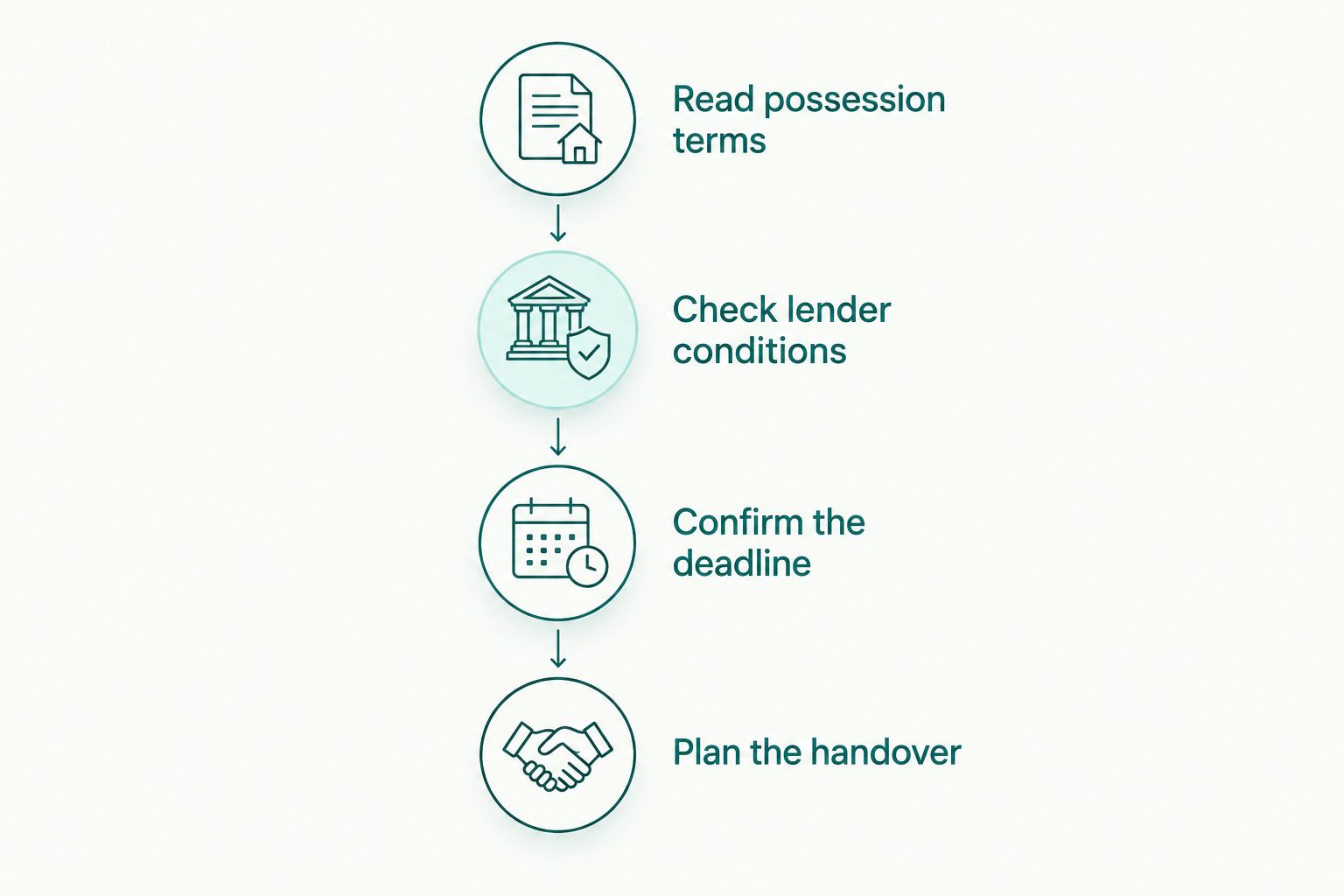
Use this sequence to turn a general closing plan into a usable handover plan. You do not need to interpret the documents alone; you need clear answers from the people responsible for them.
- Read possession terms. Find the provision that addresses possession, then check amendments and any occupancy agreement. Flag conflicting dates or unclear wording.
- Check lender conditions. Ask the short sale contact whether the proposed possession arrangement conflicts with approval terms or needs additional review.
- Confirm the deadline. Get the departure date, time, and handover instructions confirmed in writing. Ask a qualified attorney to resolve legal uncertainty.
- Plan the handover. Arrange transportation, remove belongings, and coordinate keys and access. Keep a backup plan if your next housing is not ready.
This sequence is especially useful when several people are communicating separately. A buyer’s message, an agent’s calendar entry, and a lender’s approval letter serve different purposes. Bring the relevant documents together before treating the move-out plan as final.
What if your next home is not ready?
Tell your agent as soon as you see a housing gap. Ask about an authorized occupancy agreement, but prepare an alternative that does not depend on the buyer accepting it. Temporary accommodation or separate storage can help you avoid making an uncertain extension your only plan.
Keep the request specific. Explain when you need to leave and what is preventing an earlier move. A clear request gives the parties something concrete to evaluate; it still does not guarantee consent.
If you are depending on relocation assistance, verify eligibility, conditions, and payment timing before committing those funds to your move. Do not treat an application or a conversation as an approved payment.
Your 2026 moving plan should remain workable if the requested extension is declined. Ask a housing counselor about local resources if you cannot identify a safe place to go, and seek legal advice promptly if a possession deadline is approaching.
Does short sale approval mean I have to leave immediately?
Short sale approval alone does not establish your move-out deadline. Review the approval conditions alongside your purchase agreement and any occupancy documents. The closing deadline and the possession deadline answer different questions.
Do not use the approval date as your departure date unless the applicable documents require that result. Ask your agent to explain which provision controls your handover.
Can the buyer let me stay after closing?
Post-closing occupancy requires more than an informal promise from the buyer. Confirm that the arrangement is permitted and put the agreed terms in writing before closing. Have a qualified professional review the responsibilities and consequences.
A friendly conversation can start the request. It should not be the document you rely on when deciding whether to move.
What happens if I miss the move-out deadline?
Missing the written possession deadline can create a contract or occupancy dispute. The consequences depend on your agreement, the facts, and state law. Contact your agent and a qualified local attorney immediately rather than assuming the buyer must allow more time.
Do not assume either that the buyer can remove you immediately or that you have a guaranteed additional stay. Those are legal questions that require advice about your situation.
Get help with the short sale, not promises about possession
Shortsalesdoneright is best for homeowners seeking short sale processing and lender negotiation support. Homeowners can get help comparing a short sale with other options, while agents can outsource preparation of the full short sale package and receive a dedicated point of contact and weekly lender updates.
Those services do not replace an attorney’s interpretation of possession rights or guarantee lender approval. Shortsalesdoneright short sale processing support also does not establish a right to stay after closing or guarantee forgiveness of an unpaid balance.
If you are ready to act, request help through the appropriate homeowner intake form on the site. Explain any housing gap early so it becomes part of the transaction discussion rather than a surprise at handover.
Request help with your short sale
Explain your short sale situation and any move-out concerns through the appropriate homeowner intake form.
FAQ
Do I automatically get extra time to move after a short sale closes?
No automatic nationwide short sale grace period determines your move-out date. Your signed possession terms and applicable state law govern; confirm the deadline before closing.
Where do I find my short sale move-out deadline?
Look in the purchase agreement, written amendments, and any separate occupancy agreement. Ask your agent or closing professional to identify the controlling date, time, and handover conditions.
Can I stay if the buyer says it is fine?
Do not rely on verbal permission to stay after closing. Confirm that continued occupancy is permitted and have the terms properly documented and reviewed before relying on them.
Does lender approval give me permission to stay after closing?
Lender approval does not by itself establish permission to remain after closing. Review its conditions together with your signed possession documents and obtain clarification about any conflict.
What if closing gets delayed but my moving date is fixed?
Ask whether the possession deadline is tied to closing or to a specific date. A closing delay does not resolve that question without reviewing the written terms.
Should I leave the keys when I sign the closing papers?
Follow the written handover instructions rather than assuming signing triggers key delivery. Confirm when possession transfers and who should receive keys, remotes, and other access devices.
Who can explain my legal rights if I cannot leave on time?
A qualified attorney in the relevant state can explain your possession rights and obligations. Contact your agent as well, but do not substitute transaction updates for legal advice.
One last thing
A move-out date without a handover time is still an incomplete moving plan. Ask whether you must be out before signing, upon a specified closing event, or at another expressly agreed time. Then confirm who receives the keys.
For your 2026 move, save those instructions somewhere you can reach after your belongings are packed. Shortsalesdoneright short sale support can help with processing and lender communication; legal and tax questions belong with qualified professionals. Lender terms and state law vary.