

Yes, you can pursue a short sale when your home is underwater with two mortgages, but each mortgage holder must agree to the treatment of its lien before the sale can close. Permission to sell does not automatically cancel either unpaid loan balance; lender terms and state law determine what remains your responsibility.
- Can I short sale my house if it's underwater on both mortgages? Yes, subject to required lender approvals.
- Both mortgage liens must be addressed before closing; approval from the first lender alone is not enough.
- A lien release and forgiveness of an unpaid balance are different; review each lender's written terms.
- Shortsalesdoneright provides short sale processing and lender negotiation for homeowners comparing their options.
Can I short sale my house if it's underwater on both mortgages?
Having two mortgages does not disqualify you from a short sale. The issue is whether the proposed sale can satisfy both lenders' closing requirements, even when the proceeds cannot pay everything owed.
Your short sale options with a second mortgage depend on the balances, lien priority, proposed sale proceeds, and each lender's response. Start with these steps:
- Confirm the debt. Obtain current payoff information for both mortgages rather than relying only on statement balances.
- Estimate the proceeds. Ask your agent and closing professional what remains after the proposed transaction's closing expenses.
- Request the necessary approvals. Each mortgage holder receiving less than its required payoff must accept the proposed treatment.
- Review the written conditions. Confirm lien releases, any remaining debt, deadlines, and closing instructions before proceeding.
For a sale considered in 2026, use current payoff information and current lender instructions. An old balance or an earlier conversation is not a substitute for written approval of the actual transaction.
Why this matters
Your lenders are not making a single shared decision. Each mortgage has its own loan documents, servicing process, and approval requirements.
That creates a common trap: the first mortgage holder approves the sale, but the second mortgage holder has not accepted its proposed payment. You still need a closing that addresses both liens.
Keep these questions separate throughout the process:
- Will the lender allow its lien to be released so the property can transfer?
- Will the lender forgive the unpaid balance, require repayment, or reserve rights allowed by law?
A sale approval answers neither question unless its written terms actually address it. Ask a qualified attorney to explain unclear language before you sign.
What does underwater with two mortgages actually mean?
Your home is underwater when its value is below the mortgage debt secured by it. With two mortgages, compare the home's value with the combined debt, then examine what each lender would receive from a sale.
The first mortgage does not have to be underwater on its own. Your sale proceeds might cover the first mortgage but leave too little for the second.
| Proposed sale outcome | What needs attention | Main limitation |
|---|---|---|
| First mortgage paid in full; second paid short | The second mortgage holder must accept its proposed treatment and release its lien | Paying the first mortgage does not resolve the second loan |
| Both mortgages paid short | Both mortgage holders must accept the transaction's treatment of their loans | Approval from either lender alone is insufficient |
| Both mortgage payoffs covered | Confirm all other liens and closing obligations | An estimated surplus is not a final closing calculation |
Ask the closing professional to check for other recorded claims as well. Mortgage statements alone do not establish that the property has no additional liens.
How do you get both mortgage holders to agree?
Treat the sale as a coordinated negotiation, not a sequence in which the second lender waits until everything else is finished. The proposed distribution of proceeds needs to work across the transaction.
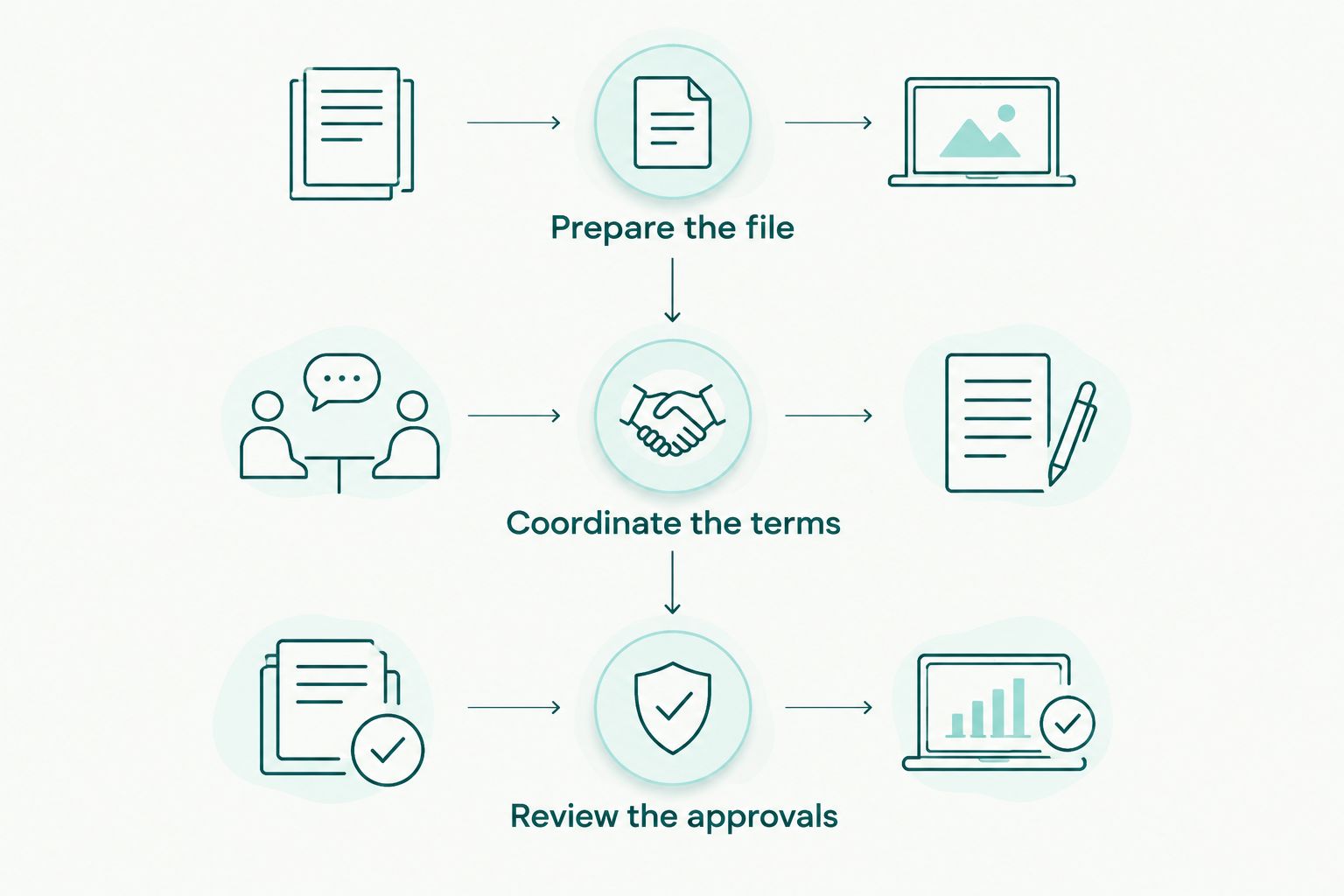
Prepare the file
Gather both mortgage statements, lender correspondence, financial records requested by the servicers, and any foreclosure notices. Explain your financial circumstances accurately and provide the documents each lender requests.
Keep copies of submissions. If a lender asks for an updated document, replace it rather than assuming an earlier version remains acceptable.
Coordinate the terms
Your agent, processor, and closing professional need a consistent proposed transaction. A payment offered to the second mortgage holder must fit the first mortgage holder's approval conditions and the closing statement.
Do not make a separate payment arrangement outside the disclosed transaction. Have proposed contributions reviewed and disclosed through the closing process.
Review the approvals
Compare the approval letters with each other and with the proposed closing statement. Check the buyer, property, permitted payments, deadlines, and conditions affecting your remaining obligations.
A 2026 closing needs approvals that remain valid for its actual closing date. If negotiations change the transaction, ask whether revised approval is required.
Why approval varies with two mortgages
Negative equity explains the financial problem. It does not establish that either lender will approve your proposed solution.
These factors shape the review:
- Property value. The lender's assessment of the property affects whether it accepts the proposed sale proceeds.
- Your financial circumstances. Requested hardship and financial documents help the lender evaluate your request.
- Lien priority. The order of recorded claims affects how the transaction must address them; have the closing professional verify it.
- Proposed distributions. The amount allocated to each mortgage must fit the required approvals.
- Other claims. Additional liens can create separate requirements before the property transfers.
- Timing. Approval deadlines, buyer deadlines, and foreclosure proceedings must be addressed together.
You cannot control every lender decision. You can keep the file accurate, answer requests promptly, and avoid treating an unresolved condition as an approval.
Does the second mortgage disappear after the short sale?
No. A short sale does not automatically erase the second mortgage debt. A lender can agree to release its lien without agreeing to forgive every remaining obligation, subject to applicable law.
Look for a clear explanation of how the lender will treat the unpaid balance. If the approval does not answer that question, ask for clarification before closing.
Do not assume the first mortgage lender's terms also apply to the second mortgage. Review each loan separately, including any agreement a co-borrower or guarantor signed.
For a proposed 2026 short sale, have a qualified attorney review the actual documents under the applicable state law. Direct questions about canceled debt and tax reporting to a qualified tax professional; a lender's sale approval is not tax advice.
Can one lender approve while the other refuses?
Yes. One mortgage holder can accept a short sale while another declines the proposed terms. The willing lender's approval does not remove the other lender's lien.
Ask what specifically prevents approval. The issue might involve the proposed distribution, missing documents, the lender's valuation, or another approval condition; address the stated issue rather than guessing.
If the terms change, confirm whether the other lender needs to review them again. A revised agreement with the second mortgage holder must still fit the first mortgage holder's conditions.
You are not required to treat an approval with unresolved debt consequences as a good outcome. Review the complete result, not just whether a lender says the sale can proceed.
Should I stop paying either mortgage to qualify?
Do not stop paying a mortgage solely to try to qualify for a short sale. Missed payments have consequences, and delinquency does not guarantee approval.
Ask each servicer how it reviews requests from borrowers in your circumstances. Explain whether your problem involves reduced income, an upcoming change, or payments you already cannot afford.
If you must choose among essential expenses, seek individual guidance from a HUD-approved housing counselor and qualified professionals. Keep any foreclosure notice in the discussion; pursuing a short sale does not by itself stop foreclosure proceedings.
Is a short sale the right choice if you want to keep your home?
A short sale is an exit from the property, not a way to keep it. If keeping the home is your priority, ask your servicers about available retention options before committing to a sale.
Compare the outcome you need with the conditions each option requires. None of these routes automatically resolves every mortgage or remaining debt.
| Option | Best for | Potential benefit | Main limitation |
|---|---|---|---|
| Short sale | Homeowners who need to sell despite negative equity | Creates a possible sale route when proceeds cannot cover required payoffs | Requires lender cooperation and careful review of remaining debt |
| Loan modification | Homeowners seeking to keep the property | Can change loan terms if approved | Approval and affordability are not guaranteed; another mortgage still needs attention |
| Deed in lieu | Homeowners exploring a transfer directly to the lender | Offers another possible exit to discuss with the servicer | Additional liens can complicate acceptance; debt terms still require review |
For your 2026 decision, compare written terms rather than labels. Ask what happens to the home, each loan, and any remaining obligation under every option you seriously consider.
What should you prepare before asking for help?
Make it easy to see the whole situation. A clear file helps the people assisting you identify questions before a buyer's deadline becomes urgent.
Gather:
- Current statements and account details for both mortgages.
- Letters about collection activity, foreclosure, or loss-mitigation requests.
- Financial and hardship documents requested by your servicers.
- Information about known additional liens or judgments.
- Any listing agreement, offer, or existing lender approval.
- Your goal: keep the home, sell it, or compare both paths.
Keep sensitive documents in the submission channel your service provider specifies. Do not send financial records to an unverified contact just because the message mentions your mortgage.
Shortsalesdoneright short sale processing is best for homeowners who want help coordinating lender negotiations. Its service can help you compare a short sale with other options, but it does not replace legal or tax advice and cannot guarantee lender approval.
To request help, visit Shortsalesdoneright and use the homeowner intake form. Explain that you have two mortgages and include any pending deadlines.
Get help with both mortgages
Ask for help comparing a short sale with other options and coordinating lender negotiations.
What should your agent handle differently?
Your agent needs to know about both mortgages before representing a proposed closing date as workable. Give the agent lender correspondence and permission to coordinate with the professionals handling the file.
Ask who is responsible for each submission, lender follow-up, and approval review. A buyer's willingness to wait does not resolve an unanswered lender condition.
For agents using Shortsalesdoneright short sale processing, the service includes preparing the full short-sale package, a dedicated point of contact, and weekly lender updates. Those services address coordination; they do not promise approval or a particular closing date.
As the homeowner, ask for updates that distinguish between documents submitted, a lender response received, and written approval issued. Those are different milestones.
FAQ
Can I short sale my house if both mortgages exceed its value?
Yes, you can pursue a short sale when the combined mortgage debt exceeds the home's value. Each mortgage holder must agree to the treatment needed to release its lien, and approval is not guaranteed.
Does the first mortgage lender negotiate for the second lender?
Do not assume the first mortgage lender negotiates on the second lender's behalf. Confirm the required approval and lien-release instructions with each mortgage holder.
Will I still owe money on my second mortgage after closing?
You can still owe money unless the lender's agreement and applicable law resolve that obligation. Have a qualified attorney review the treatment of the unpaid balance before closing.
Can I do a short sale if I am current on both mortgages?
Being current does not automatically rule out requesting a short sale. Ask both servicers about their requirements and document your financial circumstances without deliberately missing payments to seek approval.
Does applying for a short sale stop foreclosure?
Applying for a short sale does not by itself stop foreclosure proceedings. Ask the servicer about the status of the foreclosure and obtain legal advice promptly if you have received a notice.
Can Shortsalesdoneright help with two mortgage lenders?
Shortsalesdoneright provides short sale processing and lender negotiation services. Request help through the homeowner intake form and identify both mortgages, any notices, and your goal for the property.
Will a short sale in 2026 eliminate my tax liability?
A short sale in 2026 does not automatically eliminate tax liability. Ask a qualified tax professional to review any canceled debt and the rules that apply to your circumstances.
One last thing
Before agreeing to close, ask for a written answer about each loan's unpaid balance. The most important document is not necessarily the letter with the word approval at the top.
Ask your attorney to identify what releases the property and what resolves your personal obligation. Knowing the difference helps you judge whether the proposed sale actually meets your goal.