

Best overall: a net-and-certainty comparison matrix. Best for financing risk: a funding-readiness review. Best for competing deadlines: a timeline-first review. This 2026 guide explains how to compare short sale offers from multiple buyers without confusing the highest offer with the strongest closing plan.
- For how to compare short sale offers from multiple buyers, use a net-and-certainty matrix before ranking buyers.
- Compare estimated lender proceeds, funding evidence, contingencies, deadlines, and the buyer’s willingness to wait.
- Cash does not replace lender approval or resolve title problems.
- Shortsalesdoneright provides short sale processing for agents who want package preparation and lender negotiation support.
Why this matters
A short sale involves more than choosing the buyer you prefer. When sale proceeds will not fully repay the mortgage, the transaction requires the necessary lender approvals and an agreed path to closing.
The seller’s acceptance and the lender’s approval are separate decisions. A signed contract does not establish that the lender has accepted the proposed proceeds, closing expenses, or treatment of the unpaid balance.
For agents managing competing offers in 2026, compare the full contract before recommending a buyer. Shortsalesdoneright prepares the full short-sale package for agents and provides a dedicated point of contact and weekly lender updates.
Homeowners need a different decision: whether the proposed sale terms fit their situation. Lender terms and state law vary. Direct legal questions to a qualified attorney and tax questions to a qualified tax professional.
What makes the best short sale offer comparison
Use these 6 criteria before ranking offers. Keep each buyer’s information in the same order so a strong headline does not hide a weak condition.
- Estimated lender proceeds: Compare what remains after proposed expenses, credits, and other payments, using a consistent settlement estimate.
- Funding evidence: Check current proof of funds or financing documentation, including conditions that remain unresolved.
- Contract contingencies: Identify inspection, appraisal, financing, title, and other contractual exit rights.
- Deadline alignment: Compare approval periods, contingency dates, closing requirements, and any known foreclosure deadlines.
- Buyer commitment: Review earnest-money terms, response habits, and written agreement to the approval process.
- Submission readiness: Check signatures, addenda, supporting documents, and consistency between the contract and settlement estimate.
Do not turn these criteria into an automatic point system. An unresolved funding condition or incompatible deadline deserves attention even when the rest of an offer looks strong.
Short sale comparison methods at a glance
These are decision methods, not different lender programs. Start with the overall matrix, then use the more focused reviews to investigate the weakest part of each offer.
| Method | Best for | Standout feature | Key limitation |
|---|---|---|---|
| Net-and-certainty matrix | Most multiple-offer decisions | Places proceeds beside execution risks | Requires comparable documents |
| Funding-readiness review | Buyers with different financing arrangements | Separates funding claims from supporting evidence | Does not resolve lender or title issues |
| Timeline-first review | Transactions with competing deadlines | Exposes dates that cannot work together | A workable calendar does not establish acceptable proceeds |
| Backup-offer review | Preserving an alternative buyer | Documents a possible replacement path | Backup interest is not approval to substitute buyers |
1. Net-and-certainty matrix: best overall comparison
A net-and-certainty matrix places the economic terms and closing conditions beside each other. Use a separate column for every buyer, with matching rows for proceeds, funding, contingencies, deadlines, and missing documents.
If you receive 3 offers, review all 3 against the same settlement assumptions. Do not compare one buyer’s complete estimate with another buyer’s headline offer alone.
Net-and-certainty matrix pros:
- Makes requested credits and expense differences visible.
- Keeps funding and contract risks beside the financial terms.
- Gives the seller a clear basis for discussing trade-offs.
Net-and-certainty matrix cons:
- Incomplete estimates produce an incomplete comparison.
- No matrix predicts lender approval or guarantees closing.
Best for: Agents recommending an offer and homeowners who want to understand why the recommendation makes sense.
For a 2026 offer review, label estimates as estimates and record the date of every document. A funding letter or settlement worksheet should not look current simply because it sits in the newest email thread.
Verdict: Use this as your default. Select the most supportable overall package, not a winner based on one attractive term.
2. Funding-readiness review: best for financing uncertainty
A funding-readiness review checks whether buyers have documented a credible way to complete the purchase. Compare cash documentation with the actual status of financed offers rather than treating either label as decisive.
For a financed buyer, ask what underwriting, property, appraisal, or sale-of-another-home conditions remain. For a cash buyer, check whether the supporting funds match the purchasing party and whether the contract contains other conditions.
Funding-readiness review pros:
- Separates a buyer’s stated intentions from documentation.
- Identifies unresolved dependencies before submission.
- Helps explain why a financed offer deserves consideration beside cash.
Funding-readiness review cons:
- Funding evidence does not eliminate contractual exit rights.
- A buyer’s financial position can change during review.
Best for: Offers with different loan arrangements, incomplete financing information, or conditional cash claims.
Do not request unnecessary sensitive financial records through unsecured channels. Coordinate verification with the appropriate real estate, lending, and closing professionals.
Verdict: Use this when the biggest question is whether the buyer can fund the purchase. Do not automatically choose cash without examining the remaining terms.
3. Timeline-first review: best for competing deadlines
A timeline-first review places contract dates, lender requirements, financing milestones, and known legal deadlines on one calendar. It shows whether the proposed transaction has a workable sequence.
For each buyer, identify when approval is required, when cancellation rights apply, and how closing depends on written lender terms. Treat a promised quick closing differently from a documented ability to meet the actual approval conditions.
Timeline-first review pros:
- Exposes conflicting dates before they become missed deadlines.
- Clarifies which extensions require agreement.
- Helps the seller understand the proposed possession schedule.
Timeline-first review cons:
- A buyer’s flexibility does not control lender response time.
- Contract deadlines do not establish foreclosure protection.
Best for: Sellers facing a known deadline or offers with sharply different approval and closing provisions.
In 2026, do not treat a pending short sale as confirmation that a foreclosure action has stopped. If a sale date or legal notice exists, obtain qualified legal guidance and confirm the status through the appropriate parties.
Verdict: Use this when dates threaten the transaction. Resolve the conflict rather than assuming an extension will arrive.
4. Backup-offer review: best for preserving another option
A backup-offer review evaluates an alternative buyer while respecting the existing contract and applicable requirements. Record funding, contingencies, expiration terms, and the buyer’s willingness to remain available.
Discuss backup arrangements with your broker and, when legal interpretation is needed, an attorney. Do not promise the backup buyer that an existing approval automatically transfers to a replacement contract.
Backup-offer review pros:
- Keeps an alternative buyer’s terms organized.
- Identifies documents needed if the primary transaction ends.
- Gives the seller a clearer view of available choices.
Backup-offer review cons:
- The buyer can lose interest or become unavailable.
- A replacement buyer can require additional lender review.
Best for: Transactions where the selected offer has unresolved conditions and another buyer remains interested.
A backup offer is not permission to disregard the primary agreement. Confirm the contract status and required process before changing course.
Verdict: Hold as a documented alternative. Do not treat a backup offer as a completed replacement transaction.
Turn the comparison into a submission-ready decision
Use 2 passes: first compare the offers, then verify the chosen package. Separating those tasks keeps a promising recommendation from becoming an incomplete submission.
Collect documents
Gather the signed offer, relevant addenda, funding evidence, proposed settlement estimate, and lender-requested materials. Mark unresolved items clearly instead of treating a verbal assurance as a completed document.
Normalize terms
Place the same expense categories and contract provisions beside each other. Ask the closing professional to explain differences in settlement assumptions rather than silently changing an estimate yourself.
Resolve conditions
Ask each buyer for clarification through the proper channels. Record the answer in the appropriate written document when it changes contractual terms; an informal conversation is not a substitute for an amendment.
Confirm submission
Verify which contract and supporting documents the lender requires and how competing or backup offers must be handled. Follow your broker’s guidance, applicable duties, and lender instructions rather than assuming every lender uses the same process.
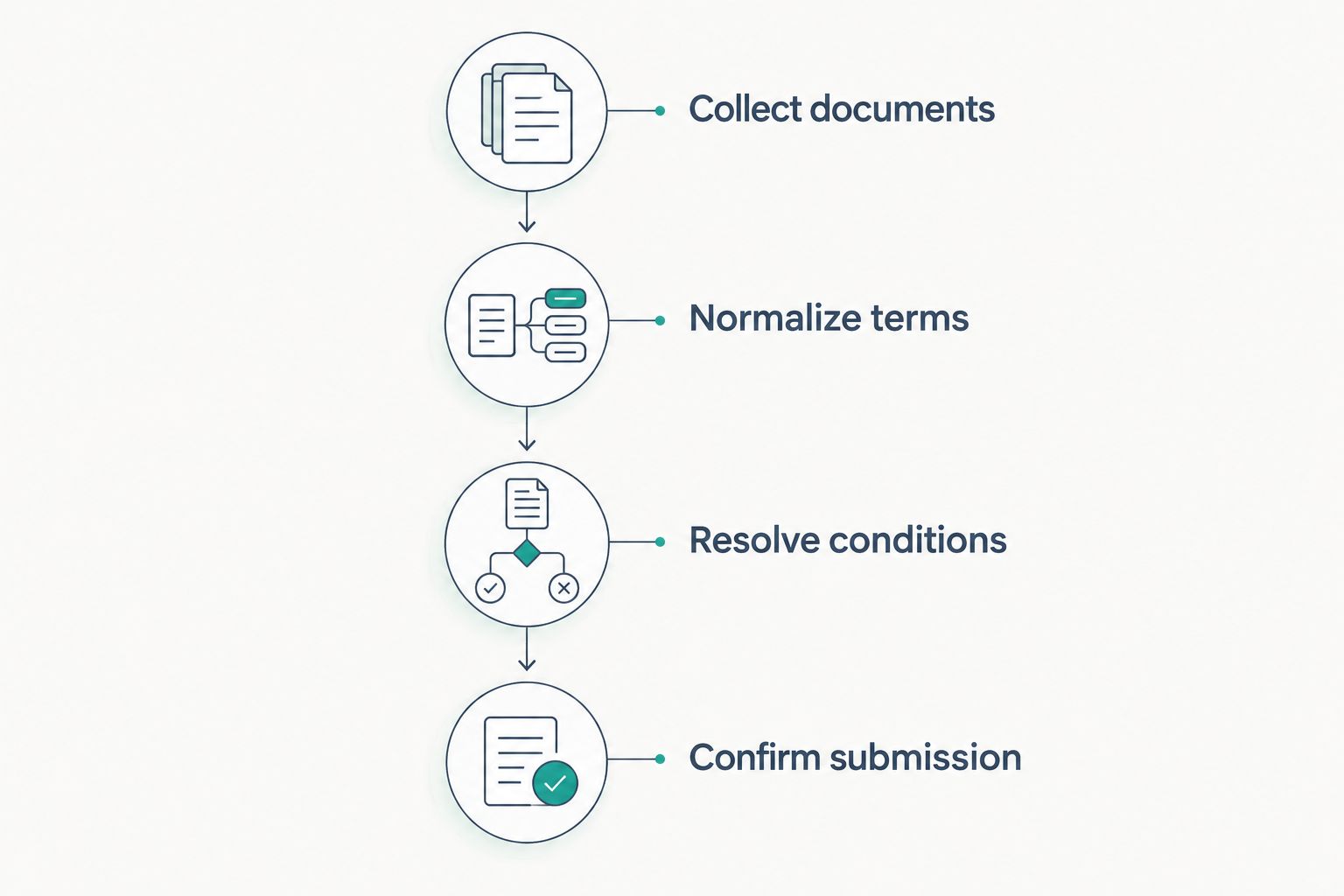
For the full document sequence, use the MLS listing to short sale package workflow. Keep the offer comparison with the file so the seller’s decision and unresolved questions remain easy to review.
Shortsalesdoneright is best for agents seeking short sale processing and lender negotiation support. The service supports package preparation and lender communication; it does not promise lender approval.
Request help with your short sale
Get help with package preparation and lender negotiation for your short sale.
How these methods are ranked
The net-and-certainty matrix ranks first because it covers all 6 comparison criteria. Funding-readiness and timeline-first reviews answer narrower questions, while backup-offer review supports a contingency plan rather than the initial selection.
This is a practical decision framework, not a claim that any method produces a measured approval rate. Use the documents and requirements for the actual transaction.
Which comparison method should you choose?
Choose the net-and-certainty matrix unless one unresolved issue demands a closer review. Then apply the funding or timeline method to that issue before making your recommendation.
For homeowners, ask your agent to explain the recommended offer in plain language: what the lender would receive, what must happen before closing, and what remains uncertain. For agents, record those answers and identify who owns each follow-up task.
FAQ
What’s the best way to compare short sale offers from multiple buyers?
Use a net-and-certainty matrix that compares estimated lender proceeds, funding evidence, contingencies, deadlines, buyer commitment, and submission readiness. Apply the same document standards and settlement assumptions to every offer.
Should I accept the highest short sale offer?
Do not choose solely on the highest offer amount. Compare proposed proceeds, requested credits, funding conditions, and contract deadlines before deciding with your agent.
Is a cash offer always better for a short sale?
No. Cash removes the need for a purchase mortgage, but it does not replace lender approval or eliminate inspection, title, or other contract conditions. Review proof of funds and the complete agreement.
Can the seller accept an offer before the lender approves it?
A seller can enter a contract that is subject to the required short sale approval, using the appropriate terms and forms. Seller acceptance does not establish lender approval; ask your agent and attorney to explain the agreement.
Can I switch buyers after short sale approval?
Do not assume approval transfers to a different buyer. Confirm the existing contract status and ask the lender what review and documents a replacement buyer requires.
Does short sale approval mean the remaining mortgage balance is forgiven?
No. Review the written approval and any separate agreements with a qualified attorney to understand the treatment of an unpaid balance. Lender terms and state law vary, and a qualified tax professional should address tax consequences.
Who can help my agent prepare the short sale package?
Shortsalesdoneright provides short sale package preparation and lender negotiation services for agents. A dedicated point of contact and weekly lender updates support communication, without a promise of approval.
One last thing
Ask what happens if the buyer walks away before asking which offer looks strongest. Read the cancellation provisions, earnest-money terms, and backup arrangements together. A reassuring buyer conversation does not replace the written contract.
For your 2026 decision, request a written side-by-side comparison and an explanation of unresolved terms. If you are ready for processing support, request help through the appropriate agent intake form on the website; homeowners should use the homeowner intake form for help comparing a short sale with other options.


