

Best first check: the lender’s written rejection reason. Best response to disputed value: documented property evidence. Best response to missing paperwork: a complete short-sale package. These explain why lenders reject short sale offers and help you fix the right problem before submitting again in 2026.
- Why lenders reject short sale offers depends on valuation, seller eligibility, paperwork, proceeds, liens, buyer readiness, and transaction rules.
- Shortsalesdoneright provides short sale processing and lender negotiation services for agents and homeowners.
- A rejected offer does not automatically mean the homeowner is ineligible for a short sale.
- Get the lender’s specific objection before changing the offer or resubmitting documents.
- Lender terms and state law vary; get legal and tax advice before accepting obligations.
Why this matters
A rejection can concern the offer, the homeowner’s eligibility, or the transaction itself. Those are different problems. Raising the offer does not fix an incomplete financial package, and sending more bank statements does not resolve a disputed property value.
For agents, the immediate job is to identify the objection and assign the next action. Shortsalesdoneright provides short sale processing and lender negotiation services for real estate agents and homeowners. You can start with Shortsalesdoneright when you need help preparing the package or handling lender communication.
For homeowners, the question is broader: does the proposed short sale address your situation on terms you understand? Do not confuse permission to sell with release from an unpaid mortgage balance.
What makes the best response to a rejected short sale
Choose the response that addresses the lender’s stated objection, not the easiest document to resend. Use these criteria for a 2026 submission:
- Specific objection: Identify what was rejected: eligibility, valuation, proceeds, documentation, or a transaction condition.
- Relevant evidence: Match each response to the objection. Property-condition evidence belongs in a valuation dispute.
- Complete package: Keep the financial documents, contract, authorizations, and requested supporting material consistent.
- Feasible closing: Confirm that buyer financing, title issues, and required approvals can be addressed.
- Acceptable obligations: Review contribution requests and unpaid-balance language before the homeowner accepts terms.
- Clear ownership: Assign 1 point of contact to track requests, responses, and unresolved conditions.
Short-sale rejection reasons at a glance
This is a troubleshooting order, not a ranking of how frequently lenders reject offers. Start with the written reason and use the matching response.
| Reason | Best for | Recommended response | Main limitation |
|---|---|---|---|
| Incomplete package | Missing or inconsistent documents | Reconcile and complete the submission | Complete paperwork does not establish eligibility |
| Disputed property value | Offers below the lender’s valuation | Submit relevant comparable sales and condition evidence | The lender decides whether to revise its valuation |
| Seller eligibility | Unclear hardship or financial position | Explain the situation with supporting records | Financial difficulty does not guarantee approval |
| Unacceptable proceeds | Disputed deductions or contribution terms | Review the estimated closing statement | Changing deductions does not resolve every objection |
| Unresolved liens | Additional creditors or title obstacles | Coordinate required releases and approvals | Separate creditors can impose different conditions |
| Buyer readiness | Financing or contract concerns | Document the buyer’s ability to close | Buyer readiness does not replace lender consent |
| Transaction restrictions | Relationship or program-rule concerns | Disclose facts and verify applicable requirements | Some transaction structures do not meet the rules |
1. Incomplete package: best first check for document-related rejection
A lender needs the requested information to evaluate a short sale. Missing signatures, inconsistent financial figures, outdated records, or an incomplete contract can leave that review unresolved. A file returned for missing information is not the same as a substantive denial of the offer.
Ask which document is missing or unacceptable. Then reconcile the package before resubmitting it, rather than sending disconnected attachments without explaining what changed.
Complete-package response pros:
- Gives the reviewer the requested information in a consistent submission.
- Makes the seller’s financial explanation easier to follow.
- Creates a clear record of what was supplied and when.
Complete-package response cons:
- Does not resolve a valuation dispute or guarantee approval.
- Requires the homeowner to provide accurate financial records.
Best for: Agents whose files have missing-document requests or conflicting information.
Shortsalesdoneright prepares the full short-sale package for agents and provides a dedicated point of contact with weekly lender updates. The homeowner still needs to supply accurate records and review the proposed terms.
Verdict: Hold resubmission until the requested package is complete.
2. Disputed property value: best response to a valuation objection
A lender can reject an offer because its valuation supports a different sale amount. The buyer’s offer alone does not establish the property’s value. Relevant comparable sales and documented condition issues give the lender something specific to review.
For a 2026 valuation dispute, explain why the evidence matches this property. Identify differences in condition, location, size, and features rather than submitting a collection of unrelated listings.
Valuation-response pros:
- Directly addresses the lender’s stated value concern.
- Connects repair needs to documented property conditions.
- Separates a supported offer from an unsupported negotiating position.
Valuation-response cons:
- The lender can retain its original valuation.
- Repair estimates and comparable sales need context to be useful.
Best for: Agents with relevant evidence that the lender’s valuation does not reflect the property.
Do not describe every repair as a reason for approval. Show the condition, explain its relevance, and ask how the lender accepts valuation-review requests.
Verdict: Hold an offer revision until you understand the valuation objection.
3. Seller eligibility: best response when hardship is unclear
Being upside down on a mortgage means the debt exceeds the property’s value. That fact alone does not establish that the homeowner meets the applicable short-sale requirements. The lender or mortgage investor can also consider hardship, income, assets, and other financial information.
The response should explain the homeowner’s situation accurately and connect it to supporting records. Do not exaggerate hardship or omit assets to make the application look stronger.
Eligibility-response pros:
- Addresses the seller’s circumstances rather than only the offer.
- Helps separate financial eligibility from document-completeness issues.
- Gives the homeowner a clearer basis for comparing other options.
Eligibility-response cons:
- A documented hardship does not guarantee acceptance.
- Financial disclosures can lead to requests for additional explanation or contributions.
Best for: Homeowners whose rejection concerns their financial position or stated hardship.
Ask whether the lender declined eligibility, requested further evidence, or proposed different terms. Those responses require different decisions.
Verdict: Wait for a clear eligibility explanation before pursuing the same offer again.
4. Unacceptable proceeds: best response to disputed closing deductions
The lender evaluates what it would receive from the proposed transaction, not just the headline offer. Closing deductions, creditor payments, and other proposed amounts affect those proceeds. An offer can therefore encounter an objection even when the parties agree on the purchase amount.
Review the estimated closing statement with the appropriate closing professional. Ask which deduction or requested contribution triggered the objection and whether the lender will consider a revision.
Proceeds-review pros:
- Identifies the disputed transaction terms.
- Shows how a proposed change affects the lender’s proceeds.
- Helps the homeowner understand contribution requests before accepting them.
Proceeds-review cons:
- Revising deductions does not resolve an eligibility denial.
- A requested contribution can make the proposed terms unacceptable to the homeowner.
Best for: Agents whose lender response references net proceeds, deductions, or seller contributions.
Do not promise that another party will absorb a disputed amount. Confirm agreement and document the revised terms.
Verdict: Hold acceptance until the closing figures and homeowner obligations are clear.
5. Unresolved liens: best response when another creditor blocks closing
A first-mortgage lender’s approval does not resolve every claim against the property. Additional mortgages, judgments, or other liens can require separate attention before the transaction closes. The required treatment depends on the claim, creditor, and applicable law.
Have the title or closing professional identify the relevant issues. Keep separate creditor responses organized so an approval from one party is not mistaken for approval from everyone.
Lien-coordination pros:
- Identifies obstacles that an offer revision alone cannot fix.
- Clarifies which parties must address releases or other conditions.
- Helps the closing team check whether the proposed settlement is workable.
Lien-coordination cons:
- Separate creditors can impose conflicting conditions.
- Releasing a lien does not necessarily release personal liability for the debt.
Best for: Transactions involving additional creditors or unresolved title matters.
In 2026, review both the property-release requirements and the homeowner’s remaining obligations. Ask a qualified attorney about language you do not understand.
Verdict: Wait until required creditor and title conditions are resolved.
6. Buyer readiness: best response to financing or contract concerns
A proposed short sale needs a buyer who can meet the contract and approval conditions. Unclear financing, missing signatures, unresolved contingencies, or conflicting contract terms can prevent the file from moving toward closing.
Confirm the buyer’s supporting information and check that the contract matches the submission. A lender’s approval conditions and a buyer’s financing requirements are separate; both need attention.
Buyer-readiness response pros:
- Makes the proposed transaction easier to evaluate.
- Identifies contract issues before the parties rely on approval.
- Gives the agent a specific basis for discussing next steps with the buyer.
Buyer-readiness response cons:
- Financing approval can remain subject to conditions.
- A ready buyer does not establish seller eligibility or lender acceptance.
Best for: Agents whose rejection identifies buyer documentation or contract concerns.
Avoid treating a buyer’s willingness to wait as proof of closing ability. Review the actual requirements and keep the buyer informed about unresolved conditions.
Verdict: Hold resubmission until buyer and contract issues are addressed.
7. Transaction restrictions: best response to relationship or rule concerns
Short-sale requirements can restrict relationships between parties or require disclosures about the transaction. A lender can object when the proposed arrangement does not meet the applicable rules. Do not assume a familiar buyer or a private side agreement is acceptable.
Ask for the specific restriction and disclose the relevant facts accurately. If the concern involves occupancy arrangements, related parties, resale plans, or payments outside closing, obtain appropriate professional guidance before proceeding.
Rules-review pros:
- Identifies whether the transaction structure meets the applicable requirements.
- Keeps disclosures consistent with the contract and closing documents.
- Prevents an offer revision from overlooking the actual objection.
Rules-review cons:
- Disclosure does not make a prohibited arrangement acceptable.
- Resolving the concern can require a different transaction structure.
Best for: Offers rejected over party relationships, certifications, or program conditions.
Never conceal a relationship or payment to make a submission appear eligible. Correct the structure or choose another lawful option.
Verdict: Skip any arrangement that depends on inaccurate disclosures.
How to respond without repeating the same rejection
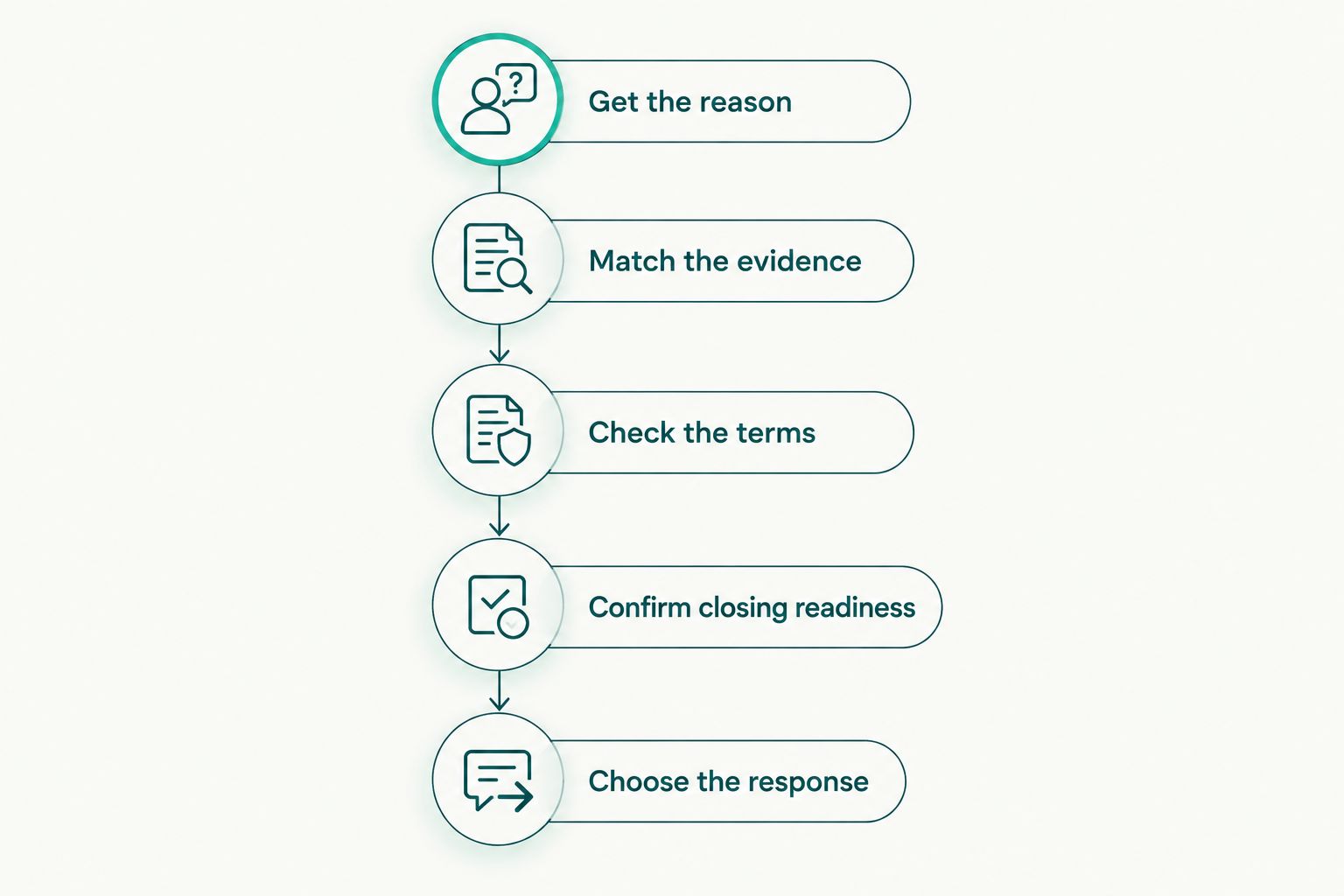
Use this sequence for your 2026 file. It keeps the offer, homeowner decision, and lender response connected.
- Get the reason. Request 1 written explanation identifying the objection and any available review process.
- Match the evidence. Supply documents that answer that objection, not an unrelated stack of records.
- Check the terms. Review proposed contributions, creditor conditions, and unpaid-balance language with the appropriate professionals.
- Confirm closing readiness. Check buyer requirements, title matters, and the revised closing statement.
- Choose the response. Resubmit, request review, consider revised terms, or compare another option based on the actual issue.
Keep a record of what changed and why. If the lender declines the revision, that record helps you distinguish a continuing objection from a new condition.
Which response should you choose?
Start with the written objection, then fix the matching issue. That is the default for an undecided agent or homeowner. Do not raise the offer, accept a contribution, or replace the buyer without knowing which change addresses the rejection.
This guide orders responses by their diagnostic purpose. It does not suggest that one rejection reason is more common than another, and it does not predict approval.
Shortsalesdoneright short sale processing is for agents who want help preparing the full package and managing lender communication. Homeowners can also request help comparing a short sale with other options; the decision should account for the proposed terms, not approval alone.
Request help with your short sale
Get help with package preparation, lender negotiation, or comparing your options.
FAQ
Why do lenders reject short sale offers?
Lenders reject short sale offers over issues such as valuation, seller eligibility, incomplete documents, unacceptable proceeds, unresolved liens, buyer readiness, or transaction rules. Get the specific objection before changing the offer.
Does a rejected short sale mean I cannot qualify?
A rejected offer does not automatically mean you cannot qualify for a short sale. Ask whether the lender rejected your eligibility, the proposed offer, or a condition of the transaction.
Should the buyer increase the offer after a short-sale rejection?
An increase only addresses the rejection if the objection concerns value or proceeds. It does not fix missing paperwork, seller eligibility, or prohibited transaction arrangements.
Can a real estate agent challenge the lender’s property valuation?
An agent can ask about the lender’s valuation-review process and submit relevant supporting evidence. Comparable sales and documented property conditions support the request, but the lender decides whether to revise its valuation.
Does short-sale approval forgive the remaining mortgage balance?
Short-sale approval does not by itself establish forgiveness of the remaining balance. Review the written terms with a qualified attorney because lender terms and state law vary.
Can another mortgage lender stop the short sale from closing?
An unresolved additional mortgage or lien can prevent the proposed closing from proceeding. Have the title or closing professional identify required releases and approvals, and ask an attorney about remaining debt obligations.
What does Shortsalesdoneright do for agents with rejected offers?
Shortsalesdoneright provides short sale processing and lender negotiation services, including full package preparation, a dedicated point of contact, and weekly lender updates. These services do not guarantee lender approval.
What should a homeowner do after a short sale is denied in 2026?
A homeowner should first get the specific denial reason and review whether it can be addressed. Compare revised short-sale terms with other options, and direct legal and tax questions to qualified professionals.
One last thing
Permission to sell and release from debt are different questions. Before accepting short-sale terms in 2026, have a qualified attorney explain the unpaid-balance language and a qualified tax professional review potential tax consequences. An approval letter is a document to understand, not just a milestone to celebrate.