

Yes. You can ask your mortgage servicer to reconsider a denied short sale offer, but a formal appeal process depends on your loan and the reason for denial; requesting another review does not itself stop foreclosure or guarantee approval.
- To appeal lender denial of short sale offer, ask your mortgage servicer for its reconsideration process and submission deadline.
- Match your response to the denial reason: valuation, missing documents, hardship, or proposed sale terms.
- A reconsideration request does not itself stop foreclosure; confirm deadlines separately.
- Shortsalesdoneright helps homeowners compare short sale options, without promising lender approval.
Can I appeal a lender's denial of a short sale offer?
You can request another review. Do not assume you have a guaranteed right to a formal short sale appeal. Ask the company handling your mortgage payments—the servicer—which process applies to your specific loan in 2026.
Start with the actual rejection, not a guess about what went wrong. These reasons lenders reject short sale offers help you organize the questions to ask, but your response must address your own file.
Use this sequence:
- Get the denial reason. Request written confirmation of what was rejected and why.
- Confirm the review route. Ask whether the servicer accepts reconsideration, a revised offer, a new submission, or escalation.
- Gather matching evidence. Correct the specific problem rather than sending the same package again.
- Submit through the required channel. Follow the servicer's instructions and retain proof of delivery.
- Confirm receipt and next steps. Ask whether the file is complete, who handles it, and what deadlines remain.
Keep foreclosure notices and contract deadlines alongside this checklist. A complete response is useful only if you also know which dates require separate action.
Why this matters
A denial tells you that the submitted transaction did not receive approval. It does not, by itself, explain whether the obstacle is the buyer's offer, the financial documents, the property valuation, or a restriction affecting the loan.
Those are different problems. Asking a buyer to improve an offer will not correct missing financial records, and resending financial records will not resolve a disagreement about the property's condition.
Your next move should answer the stated denial reason. Before spending more time on the transaction, find out what the servicer will consider and whether the buyer remains willing to proceed.
Which review route should you request?
The words appeal, reconsideration, and resubmission are not interchangeable across every servicer. Ask what each route means for your file, including whether it keeps the existing review open or requires a new submission.
| Route | Best for | Benefit | Limitation |
|---|---|---|---|
| Reconsideration | A specific error or overlooked evidence | Directly challenges the basis of the decision | Requires the servicer to accept another review |
| Revised submission | Changed documents or transaction terms | Gives the reviewer an updated proposal | Does not guarantee a different outcome |
| Escalation | An unresolved handling or communication issue | Requests attention from the appropriate review channel | Does not override the rules governing the loan |
Ask about reconsideration when you can identify what the original decision missed. Ask about resubmission when the underlying proposal has changed. Request escalation when you need an unresolved handling issue reviewed, not simply because you dislike the result.
For a 2026 submission, get the current instructions directly from the servicer. Do not rely on another homeowner's experience with a different loan or an old submission checklist.
What should you send with your reconsideration request?
Send a focused explanation with supporting records. Make it easy to connect each attachment to the reason for denial, and ask which documents need updating before you submit.
If the denial concerns property value
Ask how to submit a valuation dispute and what evidence the servicer accepts. Your agent can help assemble relevant comparable sales, documented property defects, inspection findings, and repair estimates when those materials address the disagreement.
Explain the connection. A repair estimate should identify the condition affecting the property, rather than appear as an unexplained attachment.
Do not assume that a valuation dispute entitles you to a new appraisal or a lower approved sale amount. Ask what review is available.
If the denial concerns missing or outdated documents
Request an itemized list of what is missing, incomplete, unsigned, or no longer current. Then check the package against that list before resubmitting it.
Use the guide to documents to include in a short sale package as preparation, not as a substitute for your servicer's instructions. Ask for confirmation that the corrected file is ready for review.
If the denial concerns financial hardship
Ask what part of the financial explanation was insufficient. Your response should connect the hardship explanation to the income, expenses, and other records the servicer requests.
Keep everything accurate and consistent. Do not exaggerate a hardship, omit requested information, or stop making payments to strengthen an application.
If the denial concerns transaction terms
Find out which term is unacceptable before asking the buyer to change the contract. The issue might concern the proposed amount the lender receives, requested concessions, or another condition of the transaction.
Have your agent coordinate proposed changes with the buyer's representative. Do not promise that a revised offer will secure approval, and do not accept new obligations without understanding them.
How do you organize an effective response?
Build the request around a short sequence: Denial reason, Supporting evidence, Requested review, Receipt confirmation. Keep the explanation brief enough that the reviewer can identify the issue without searching through the attachments.
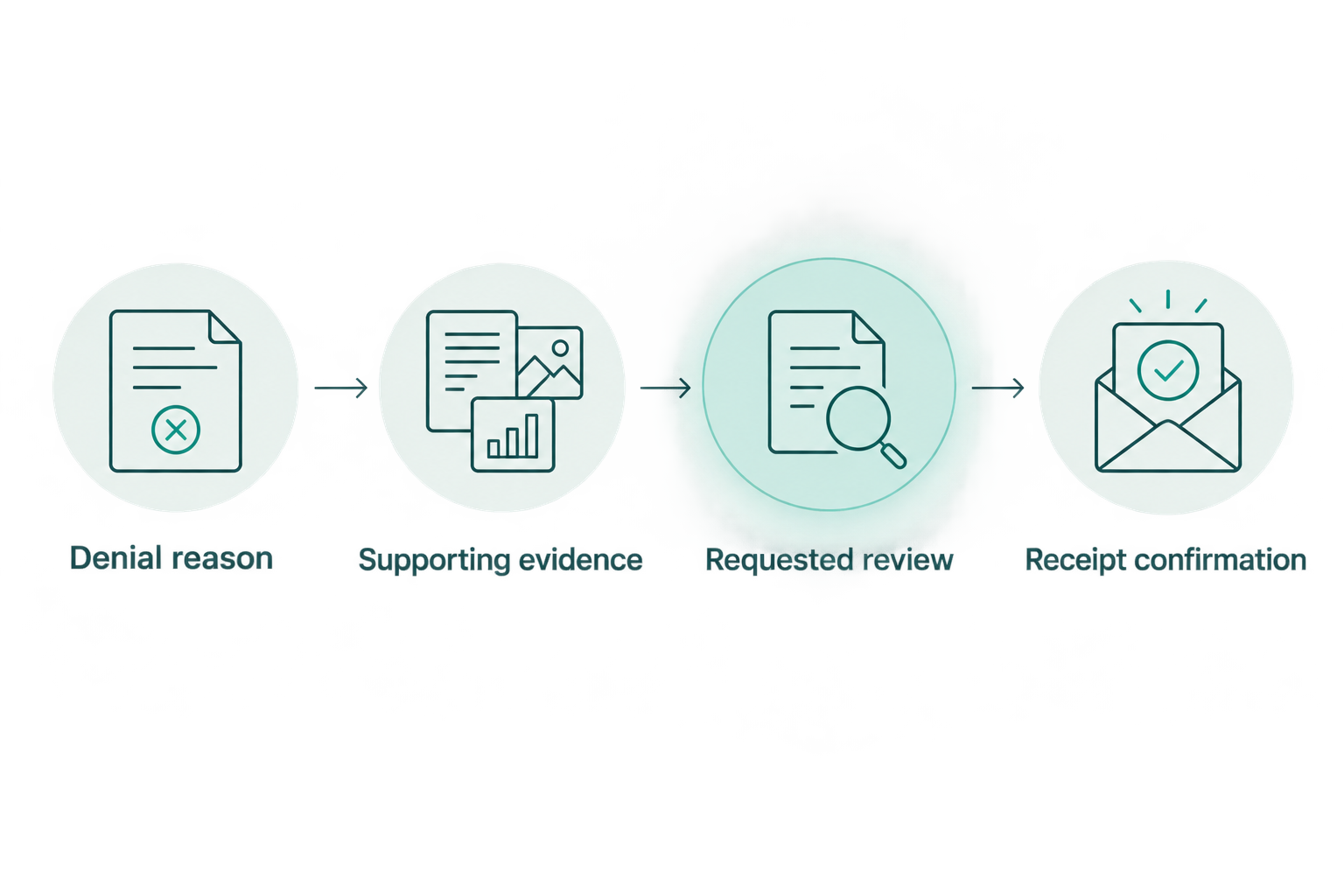
Your cover message should identify the property and loan using the servicer's approved secure process. State the denial date, the reason you received, and exactly what you want reviewed.
Organize attachments by issue. For example, separate property-condition evidence from updated financial records so the reviewer can find each item without guessing its purpose.
Finish by requesting confirmation of receipt, any remaining missing items, and the next required action. Save the submission and the response together.
For your 2026 file, keep a dated communication log. Record whom you contacted, what was requested, what you sent, and any deadline given. A log supports follow-up; it does not replace written approval or legal advice.
Why reconsideration outcomes vary
A stronger explanation is not a promise of approval. The result depends on the transaction, the loan requirements, and whether the response resolves the actual obstacle.
- Denial reason. A correctable omission requires a different response from a decision based on the rules governing the loan.
- Supporting evidence. Documents must address the disputed issue, not just add volume to the file.
- Current financial information. Ask whether previously submitted records need updating before another review.
- Buyer participation. Confirm that the buyer remains committed and can meet any revised contract requirements.
- Other claims against the property. Ask your closing professional whether additional approvals or releases are needed.
- Remaining deadlines. Foreclosure dates, contract terms, and submission instructions require separate attention.
Lender terms and state law vary. No nationwide checklist can determine your legal rights or guarantee that a particular request will be accepted.
Does requesting reconsideration stop foreclosure?
Do not treat a reconsideration request as a foreclosure hold. Ask the servicer for written confirmation of the foreclosure status and any postponement, and have a qualified local attorney assess your rights and deadlines.
If you have a sale notice or a scheduled auction, tell your attorney immediately. Do not wait for the short sale reviewer to respond before seeking legal guidance.
In 2026, keep foreclosure-related documents separate from ordinary transaction updates. A message saying the short sale is under review is not a substitute for confirmation about the foreclosure proceeding.
Should I submit the same offer again?
Do not resubmit an unchanged offer without asking what another review requires. If the decision rests on an error, explain the error and provide evidence; if the servicer requests changed terms, identify those changes clearly.
Before requesting a new signature or contract amendment, have your agent confirm the buyer's position. Repeated submissions without a clear purpose consume attention without addressing the denial.
What if the servicer will not reconsider?
Ask whether a new application, a revised transaction, or another mortgage-assistance option remains available. If you want to keep the home, say so plainly rather than continuing with a sale process that no longer matches your goal.
A HUD-approved housing counselor can help you discuss mortgage-assistance options. Take questions about foreclosure rights, an unpaid mortgage balance, or legal deadlines to an attorney; take tax questions to a qualified tax professional.
A denied short sale is a reason to reassess the plan, not a reason to ignore notices. Keep responding to required communications while you evaluate the next step.
Where processing help fits
Shortsalesdoneright is best for homeowners who want help comparing short sale options and agents who want short sale processing outsourced. For a homeowner facing denial, the immediate task is to understand the decision and identify what another review would require.
Shortsalesdoneright helps homeowners compare a short sale with other options. For agents, its services include preparing the full short sale package, a dedicated point of contact, and weekly lender updates.
That support organizes the process; it does not control the lender's decision. Shortsalesdoneright does not promise approval, forgiveness of an unpaid balance, or a specific credit-score result, and processing help does not replace legal or tax advice.
If you are ready to act, request help through the appropriate homeowner or agent intake form on the site. Have the denial notice and any active deadlines available so you can explain the immediate issue.
Request help with your next step
Discuss the denial and whether short sale processing help fits your situation.
FAQ
Can I appeal a lender's denial of my short sale offer?
You can request reconsideration, but a formal appeal process depends on your loan and the reason for denial. Ask your mortgage servicer which review route and deadline apply.
What should I ask for after my short sale is denied?
Ask for the specific denial reason and the instructions for another review. Also confirm the foreclosure status, required documents, and any submission deadline.
Do I need a higher buyer offer to get reconsideration?
Not every denial requires a higher offer. First establish whether the problem concerns transaction terms, property valuation, financial eligibility, or missing documents.
Will my foreclosure stop while the lender reviews my request?
A reconsideration request does not itself confirm that foreclosure has stopped. Request written status confirmation and ask a qualified local attorney about your rights and deadlines.
Can I challenge the lender's property valuation?
Ask your servicer whether it accepts a valuation dispute and what evidence it requires. Your agent can help organize relevant comparable sales and documented property-condition evidence.
Is there a standard short sale appeal deadline in 2026?
Do not assume a standard deadline applies to your short sale request in 2026. Ask the servicer for the deadline governing your file and have an attorney review any legal notices.
Does short sale approval mean I will owe nothing afterward?
Short sale approval alone is not a promise that every unpaid obligation is forgiven. Have an attorney review the written terms and ask a qualified tax professional about tax consequences.
One last thing
Ask what would need to change for the file to be reviewed again. That question turns a general rejection into a concrete next step—or establishes that you need a different plan.
Before you finish a call, repeat the requested action and ask for written confirmation. Leave with an instruction you can follow, not just reassurance that someone will look at the file.