

Yes. A new agent can handle a short sale without prior experience by working under broker supervision, getting experienced help, and confirming the lender’s requirements before making commitments. For a first short sale in 2026, the safest approach is to keep responsibility for the listing while getting qualified support for unfamiliar processing and negotiation tasks. Neither experience nor outside help guarantees lender approval.
- Can a new agent handle a short sale without prior experience? Yes, with broker supervision and experienced support.
- Shortsalesdoneright provides short sale processing and lender negotiation services for agents who want those tasks outsourced.
- A signed purchase contract does not replace written lender approval of the short sale.
- Lender terms and state law vary; send legal and tax questions to qualified professionals.
Can a new agent handle a short sale without prior experience?
Yes, but you should not treat your first short sale like a standard listing with extra paperwork. Set up supervision, assign responsibilities, and confirm the approval process before you promise the seller a path to closing.
If you want processing support, use the agent intake form on Shortsalesdoneright to request help. Explain that this is your first short sale and identify any known foreclosure deadlines.
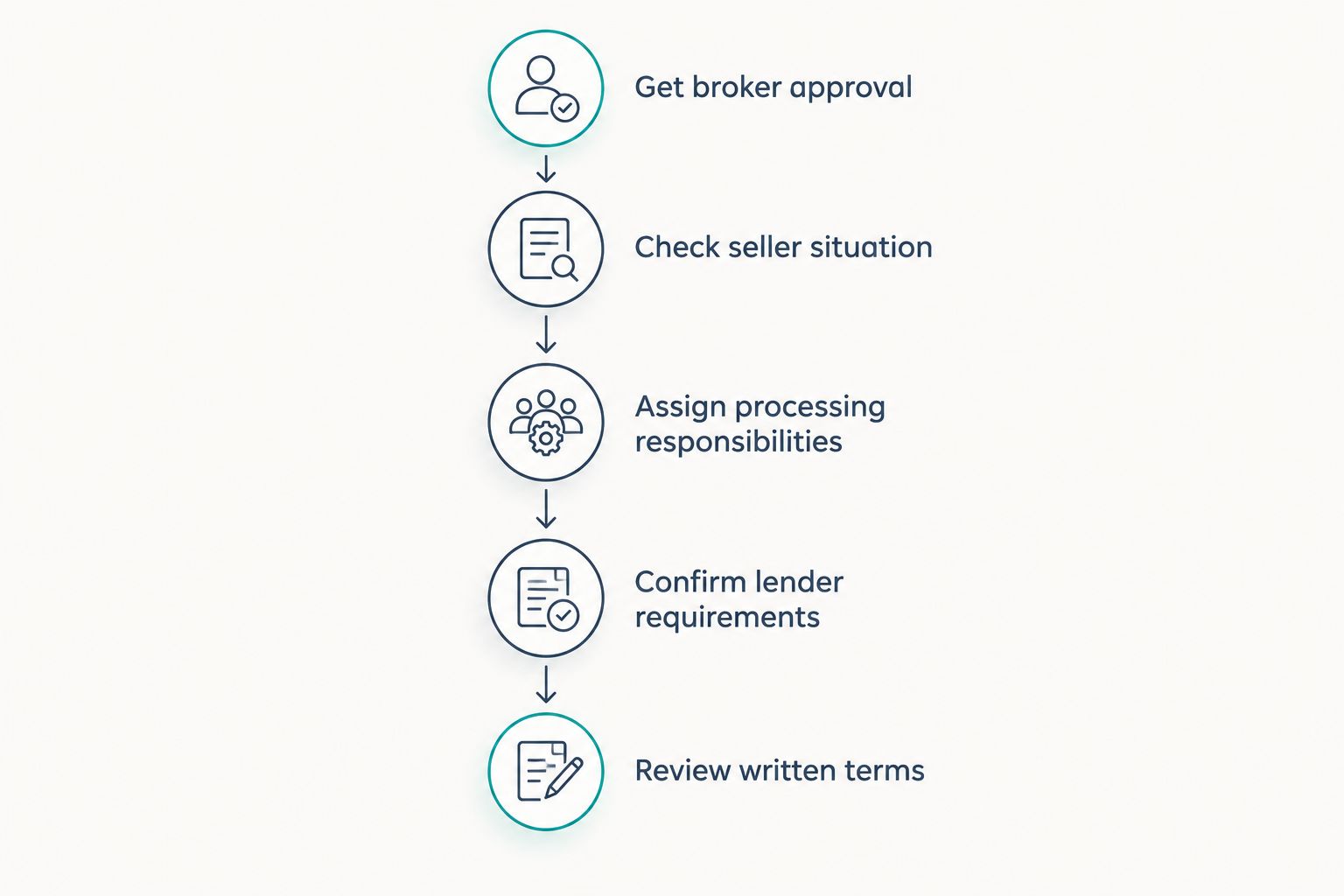
Get broker approval
Tell your supervising broker that you have not handled a short sale before. Ask who will review the listing documents, disclosures, purchase contract, and lender communications. Confirm your brokerage’s rules for outside processors and negotiators before involving one.
Do not leave supervision as an informal promise to ask questions later. Name the person who will review unfamiliar decisions and agree on when you must escalate an issue.
Check the seller’s situation
Ask about the mortgage, other loans secured by the property, payment status, and any notices the seller has received. Ask whether the seller wants to leave the home or is still exploring ways to keep it.
An upside-down mortgage alone does not establish that a short sale is the right choice. The homeowner needs room to compare options, including discussing retention options with the servicer when keeping the home is the goal.
Assign processing responsibilities
Decide who gathers documents, checks the package, submits information, follows up with the lender, and records responses. Obtain the authorization the servicer requires before anyone discusses the borrower’s account.
Keep these assignments specific. “The processor handles it” is not enough when nobody has confirmed who obtains an updated seller document or answers a lender request.
Confirm lender requirements
Get the current submission instructions from the mortgage servicer or its designated contact. Confirm which documents are required and whether the lender accepts an initial review before an offer.
Use the MLS listing to short sale package workflow to organize the handoffs. The lender’s actual instructions control what goes into the submission.
Review written terms
When approval arrives, check the approved terms against the contract and proposed closing documents. Identify the closing deadline, required contributions, permitted payments, and any language about an unpaid balance.
Send legal questions to the seller’s attorney and tax questions to a qualified tax professional. Do not tell the seller that approval automatically erases the remaining debt.
Why this matters
Your first short sale has responsibilities that sit outside ordinary marketing and offer negotiation. The seller accepts a purchase contract, but the lender must separately agree to the requested short payoff. Other claims against the property also need attention before closing.
For a new agent in 2026, the useful question is not whether you can learn the process. It is whether you have qualified support for decisions you do not yet understand. Take the listing only when you can name the people responsible for supervision, processing, and deadline review.
Which support arrangement fits your first short sale?
Choose support based on the work you can perform competently, not on a desire to manage everything yourself. Each arrangement has a benefit and a limitation.
| Support arrangement | Best for | Main benefit | Main limitation |
|---|---|---|---|
| Broker or experienced-agent supervision | New agents with hands-on support inside their brokerage | Keeps learning and review close to the listing work | You still need someone assigned to daily processing and lender follow-up |
| Outside processing and negotiation support | Agents who want document preparation and lender communication outsourced | Separates specialist processing work from your listing responsibilities | Requires clear handoffs; it does not transfer every agent duty or guarantee approval |
| Referral to an experienced agent | Agents without adequate supervision or processing support | Gives the seller a representative prepared to manage the file | You give up direct control of the listing; any referral arrangement needs broker review |
Supervised handling: best for hands-on learning
This approach fits when your broker or an experienced colleague will actively review the file. You need practical involvement, not just permission to call if something goes wrong.
Ask who checks the package before submission and who reviews lender conditions. If the answer is still “you,” supervision has not filled the experience gap.
Outsourced processing: best for separating the workload
Shortsalesdoneright short sale processing includes preparing the full short-sale package for agents, a dedicated point of contact, and weekly lender updates. Those services address the document preparation and follow-up work that a new agent must otherwise organize.
Shortsalesdoneright is best for real estate agents who want short sale processing and lender negotiation outsourced. The limitation is clear: you still need broker supervision, accurate seller information, and qualified advice for legal or tax questions. Processing support does not promise an approval or closing date.
Referral: best when support is missing
Refer the seller when you cannot obtain adequate supervision or confidently coordinate the work. A referral is a responsible choice when the alternative is learning essential steps while the seller faces an unresolved deadline.
Discuss the handoff with your broker. Make sure the seller understands who will represent them and who will communicate next.
Why the difficulty of a first short sale varies
Your experience level is only part of the picture. Before accepting a short sale listing in 2026, review these file-specific factors with your broker:
- Lender requirements. Submission instructions and required financial information differ. Confirm the actual requirements instead of copying another agent’s old package.
- Other property claims. A second mortgage, unpaid taxes, or other liens can introduce additional parties and terms that need review.
- Foreclosure status. A notice or scheduled sale creates a separate issue. Do not assume a short sale submission stops foreclosure activity.
- Document readiness. Missing signatures, incomplete financial information, or unanswered requests leave the file without information the lender needs.
- Seller circumstances. Divorce, an inherited property, or bankruptcy can require professional advice beyond your role as an agent.
- Contract and approval terms. Buyer deadlines and lender conditions must work together. Identify conflicts before anyone relies on a closing date.
None of these factors automatically rules out a short sale. They tell you what help to arrange and which questions must be answered before you proceed.
What should you tell the homeowner before taking the listing?
Tell the homeowner what you will handle, who will support you, and what remains outside your control. Be direct about your experience without making the seller responsible for training you.
Explain that you will manage the listing under broker supervision and identify the person handling lender communication. Describe how requests will reach the homeowner and how you will track responses.
Set clear boundaries around the outcome:
- The lender decides whether to accept the proposed short payoff.
- A buyer’s offer does not guarantee lender approval.
- An unpaid balance requires careful review of the written terms and applicable law.
- Credit consequences depend on the homeowner’s circumstances; do not promise a specific score result.
- Legal and tax questions belong with qualified professionals.
A homeowner who wants to keep the property also needs to consider alternatives with the appropriate professionals and mortgage servicer. Your job is to explain the proposed sale, not steer every distressed homeowner toward one outcome.
What should be ready before you submit the package?
Use the lender’s current checklist as the source of truth. Depending on its requirements, the package can include borrower authorization, financial information, a hardship explanation, listing documents, an offer, and proposed transaction figures.
Check consistency as well as completeness. Names, property details, signatures, contract terms, and financial documents should tell the same story. Ask the processor to flag discrepancies rather than passing them along unexplained.
For your first file in 2026, maintain a simple tracking sheet:
| Track this | Record this information | Why it matters |
|---|---|---|
| Responsibility | The person assigned to each task | Prevents unassigned work |
| Submission | What was sent and how it was sent | Establishes a clear file history |
| Lender requests | The exact request and stated deadline | Keeps follow-up tied to the actual requirement |
| Outstanding items | What remains missing and who must provide it | Makes the next action clear |
| Written terms | Approval conditions and closing requirements | Supports review before closing |
This record is a coordination tool, not a substitute for the brokerage’s transaction file or the lender’s submission system. Store sensitive borrower information only through the channels your brokerage and service providers authorize.
Can I handle lender negotiation myself as a new agent?
Yes, if your broker permits it and you have the competence, authorization, and support the work requires. Lack of prior experience is a reason to obtain supervision, not a reason to improvise answers to lender conditions.
Before taking this role, establish who reviews unfamiliar requests and disputed terms. If you cannot explain the limits of your authority, get experienced help before responding on the seller’s behalf.
Does hiring a processor remove my responsibility as the agent?
No. Hiring a processor does not automatically transfer your listing, disclosure, communication, or contract responsibilities. Define the scope in writing and confirm it with your broker.
Keep marketing decisions, buyer communication, and seller representation assigned to the appropriate licensed people. Ask about the provider’s authority and applicable state requirements rather than assuming every negotiator performs the same role.
Should I take my first short sale if foreclosure is already scheduled?
Only proceed after promptly involving your broker and directing the homeowner to qualified legal help about the foreclosure deadline. Do not promise that listing the property, submitting an offer, or hiring a processor will stop the sale.
Track the foreclosure issue separately from short sale review. Ask for written confirmation of any reported postponement instead of treating a pending application as protection.
Request help with your first short sale
Use the agent intake form to request processing and lender negotiation support.
FAQ
Can a brand-new real estate agent list a short sale?
Yes, a brand-new agent can list a short sale with appropriate broker supervision and competent support. Confirm brokerage policies, state requirements, and the plan for processing before accepting the assignment.
Do I need a special short sale certification in 2026?
Do not assume a short sale certification establishes legal authority or competence. Ask your broker which licensing rules, training requirements, and brokerage policies apply to your role in your state in 2026.
What does a short sale processor do for a new agent?
A short sale processor organizes the work covered by the service agreement, such as package preparation and lender follow-up. Shortsalesdoneright short sale processing includes full package preparation for agents, a dedicated point of contact, and weekly lender updates.
Can I promise my seller that the lender will approve the short sale?
No. A lender decides whether to approve the proposed short payoff and on what terms. Explain the process without promising approval, debt forgiveness, or a specific credit-score result.
Will submitting a short sale package stop foreclosure?
Do not assume submitting a short sale package stops foreclosure. The homeowner needs qualified legal advice about any notice or sale date and written confirmation of any reported postponement.
Who should explain whether the seller will still owe money?
A qualified attorney should explain potential remaining debt under the written lender terms and applicable state law. Direct questions about cancellation-of-debt taxes to a qualified tax professional.
What should I do if my broker cannot help with my first short sale?
Arrange qualified support that your broker approves, or discuss referring the seller to an experienced agent. Do not accept unfamiliar responsibilities without a workable supervision and processing plan.
One last thing
Do not confuse lender approval with a closing-ready file. Read the approval alongside the contract and proposed closing documents. Confirm that the people responsible for closing have identified the conditions they must satisfy.
Before accepting your first short sale, name the person who reviews unfamiliar terms and the person who tracks unresolved requests. If either role is blank, arrange support before making commitments to the homeowner.