

Yes—outsourcing short sale processing is worth it for a small brokerage when package preparation and lender follow-up take agents away from clients, listings, and negotiations. It is not a substitute for broker oversight, and hiring a processor does not guarantee lender approval or eliminate the seller’s legal and tax questions.
- Is outsourcing short sale processing worth it for a small brokerage? Yes, when lender follow-up displaces client work.
- Shortsalesdoneright fits brokerages seeking full short-sale package preparation, a dedicated contact, and weekly lender updates.
- Keep brokerage oversight, seller advice, and transaction decisions separate from outsourced processing.
- Choose written responsibilities and documented updates, not promises of lender approval.
Is outsourcing short sale processing worth it for a small brokerage?
Outsource the processing work when your brokerage cannot give it a consistent owner without disrupting agent responsibilities. Keep it in-house when an experienced staff member already handles the work reliably and has capacity for lender requests.
The decision is about responsibility, not brokerage size alone. An occasional short sale still needs document collection, package preparation, follow-up, and clear communication. Compare how those tasks get handled under each arrangement.
| Processing arrangement | Best for | Main advantage | Main drawback |
|---|---|---|---|
| Outsourced processing | Brokerages whose agents need help with packages and lender follow-up | Gives the administrative and lender-facing work a defined owner | Requires a clear handoff and ongoing brokerage oversight |
| In-house processing | Brokerages with an experienced, available staff member | Keeps daily coordination within the brokerage | Depends on internal capacity and backup coverage |
Shortsalesdoneright provides short sale processing and lender negotiation services. Its agent support includes preparing the full short-sale package, a dedicated point of contact, and weekly lender updates. Those are specific responsibilities to compare against the work your agents currently handle.
Why this matters
A short-sale listing puts different kinds of work on the same agent’s desk. Marketing the property and advising the seller require agent attention. Collecting documents and tracking lender requests require a repeatable process.
When those responsibilities blur, the agent becomes the default contact for everything. The broker then has to determine whether a file is waiting on the homeowner, the lender, or an unfinished internal task.
For your 2026 operating plan, separate those responsibilities before deciding who should perform them. Outsourcing earns its place when the service takes ownership of defined work—not when it merely adds another person to an email thread.
The homeowner’s decision remains separate. A seller weighing a short sale against keeping the home needs an explanation of available options, not pressure to enter your brokerage’s preferred workflow.
What should outsourced short sale processing cover?
Start with the scope of work. A service name alone does not tell you who gathers missing documents, submits updates, or explains a new lender request to the listing agent.
Use these responsibilities to evaluate the proposed handoff:
- Package preparation: Establish who assembles the lender’s requested documents and checks the package for missing items.
- Lender communication: Identify who submits information, follows up, and records the lender’s response.
- Request tracking: Assign each outstanding item to someone who can obtain or resolve it.
- Agent updates: Agree on what the listing agent receives and how urgent developments are escalated.
- Closing coordination: Establish who shares lender conditions with the agent and closing professionals.
Do not assume every provider includes every task. Ask for the scope in writing and identify anything that remains with the brokerage.
For a closer look at the handoff, use the MLS listing to short-sale package workflow. Your goal is a complete transfer of responsibility for agreed tasks, not a transfer of every decision.
When outsourcing is the better fit
Outsourcing is the better fit when the brokerage needs processing support but cannot assign consistent internal coverage. That includes an agent who can manage the listing but needs help preparing the package and maintaining lender contact.
Look at actual file activity. Are agents repeatedly gathering the same missing information? Does lender follow-up stop when an agent is showing homes? Does the broker need to chase several people to learn what happens next?
Those observations identify the work to delegate. They do not establish a guaranteed financial return, but they give you a concrete scope to evaluate.
Shortsalesdoneright is best for small brokerages seeking full short-sale package preparation and lender negotiation support. The service’s dedicated contact and weekly lender updates address specific coordination needs. The brokerage still needs to oversee the transaction and decide how updates reach the seller.
The limitation matters: adding a processor will not resolve a seller’s unwillingness to provide documents or require a lender to accept an offer.
When keeping processing in-house makes sense
In-house processing is best for a brokerage with an experienced owner for the work and dependable backup. Keeping the process internal gives the broker direct access to the person managing the package and follow-up.
That arrangement needs more than willingness. The assigned person needs time to handle requests, document communications, and keep the agent informed. A staff member who is already overloaded does not become available because processing appears in the job description.
Ask what happens during an absence. If nobody can identify the latest request or locate the submitted package, the process depends too heavily on one person.
For a 2026 staffing decision, compare the responsibilities your team can actually cover with the responsibilities a provider agrees to take. Do not outsource a functioning process merely because another brokerage does. Do not keep a failing process solely because your team has always handled it.
Why the value of outsourcing varies
The value of outsourced short sale processing depends on the work transferred and the work your brokerage retains. Evaluate these factors before choosing an arrangement:
- Agent workload: Processing support matters most when document preparation and lender follow-up compete with listing and client responsibilities.
- Internal experience: A brokerage with an experienced processor has a different need from an agent handling an unfamiliar file.
- Package readiness: Missing seller documents still need an owner, even when a provider prepares the package.
- Lender requirements: Requests and approval terms differ by lender and file. A processor cannot promise uniform treatment.
- Communication ownership: A dedicated contact helps only when agents know where to send questions and who informs the seller.
- Transaction circumstances: Additional loans, title issues, or an approaching foreclosure event require attention beyond routine package assembly.
Keep the last distinction clear. Processing support and legal advice are different services. Lender terms and state law vary. Refer questions about foreclosure deadlines, personal liability, and legal rights to a qualified attorney; direct tax questions to a qualified tax professional.
How should you hand off a short-sale file?
Use a written sequence that makes ownership visible. In 2026, the practical test is whether another authorized team member can understand the file without reconstructing scattered conversations.
- Confirm scope. Identify the processing tasks, the brokerage’s retained responsibilities, and the person authorized to communicate with the lender. Establish what permission the lender requires before sharing information.
- Gather documents. Obtain the lender’s current requirements and assign responsibility for missing items. Give the seller a clear request rather than overlapping instructions from several people.
- Prepare package. Assemble the requested materials and identify unresolved questions before submission. Keep the listing agent informed about anything that prevents completion.
- Track requests. Record lender responses, outstanding documents, and the next responsible person. A status update should distinguish a submitted item from an item still being collected.
- Review terms. Route written lender conditions to the agent and appropriate closing professionals. Give the homeowner room to obtain legal and tax advice before accepting obligations.
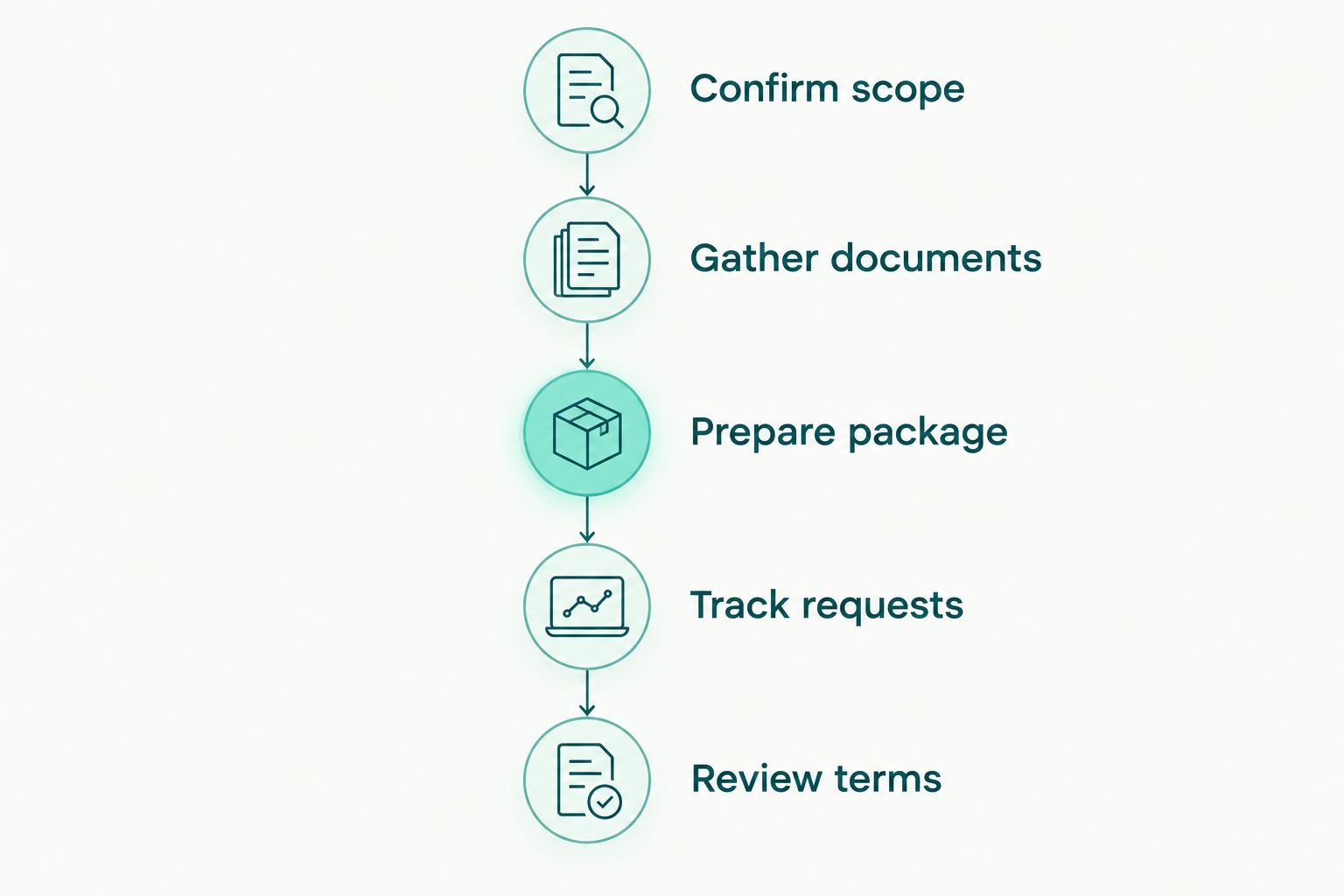
The sequence does not promise approval. It gives your brokerage a way to see what has happened, what remains open, and who must act next. Keep that record accessible to the people authorized to manage the transaction.
What should you ask before choosing a processor?
Ask operational questions before discussing a start date. The answers should describe the service you will receive, not just the provider’s confidence in handling difficult files.
- Who prepares the full package, and who obtains missing seller documents?
- Who is the dedicated contact, and what happens when that person is unavailable?
- What does a regular update include when the lender has not responded?
- How are urgent requests or approaching deadlines brought to the broker’s attention?
- How are documents shared, accessed, and retained?
- What happens if the seller withdraws or the lender declines the request?
Ask for written engagement terms and clear responsibilities before sending a file. Confirm any required authorizations and have the appropriate professional review legal questions about the arrangement.
Reject promises of guaranteed lender approval, guaranteed debt forgiveness, or a specific credit-score outcome. A processing provider controls its own work. It does not control the lender’s decision, state law, or how a transaction affects an individual homeowner.
How do you know whether the arrangement is working?
Judge the process by observable work. Can the agent locate the current package? Is the latest lender request documented? Does every outstanding item have an owner? Can the broker explain the next action without chasing the entire email chain?
For your 2026 review, distinguish service performance from lender outcomes. A lender’s refusal does not, by itself, prove the processor failed. A favorable decision does not excuse missing records or unclear communication.
Review whether the agreed package preparation occurred, updates arrived as promised, and urgent issues reached the right person. Then ask agents whether they still duplicate the delegated work.
If agents continue contacting the lender because they cannot obtain usable updates, address the overlap. Outsourcing has not solved the coordination problem when your brokerage must maintain a parallel process to understand the file.
Can a processor guarantee that the lender approves the sale?
No processor can guarantee lender approval. The lender decides whether to accept the proposed transaction and on what terms. Keep approval expectations separate from promises about package preparation, communication, and follow-up.
Does outsourcing remove the listing agent’s responsibilities?
No—outsourcing transfers agreed processing tasks, not the entire listing relationship. The agent still manages the responsibilities retained under the brokerage’s engagement, including seller communication and transaction decisions within the agent’s role.
Is outsourcing worthwhile for an occasional short-sale listing?
An occasional short-sale listing can justify outsourcing when nobody internally can own the processing work consistently. Low volume alone does not settle the decision; compare the file’s needs with your team’s actual experience and capacity.
FAQ
Is outsourcing short sale processing worth it for a small brokerage in 2026?
Yes, when package preparation and lender follow-up displace agent work and the provider takes clear responsibility for those tasks. Keep processing in-house when an experienced team member has reliable capacity and backup.
What's the main benefit of hiring a short-sale processor?
The main benefit is assigning package preparation and lender follow-up to a defined owner. The brokerage still needs clear oversight and a plan for communicating with the homeowner.
What does Shortsalesdoneright handle for real estate agents?
Shortsalesdoneright provides full short-sale package preparation, a dedicated point of contact, and weekly lender updates. Its services include short sale processing and lender negotiation.
Will a short-sale processor make the lender respond faster?
Hiring a processor does not guarantee a faster lender response. Evaluate the provider on documented submissions, follow-up, and communication rather than a promised lender timeline.
Can I outsource processing after the property is already listed?
An existing listing does not replace the need to define a processing handoff. Review the file's current status, required authorizations, missing documents, and deadlines before engaging a provider.
Does approval mean the homeowner's unpaid balance is forgiven?
Do not assume approval forgives the unpaid balance. Lender terms and state law vary; the homeowner should have a qualified attorney review the written terms and consult a qualified tax professional about tax consequences.
Where should a brokerage request short-sale processing help?
Request help through the agent intake form on the service provider's website. Identify the listing's status and any known deadlines so the requested support is clear.
One last thing
A weekly update is not the same as weekly lender progress. When the lender has not responded, a useful update still identifies the last contact, outstanding items, and the next action. Ask for that distinction before you hand over a file.
Make it part of your 2026 processing expectations. Your agents need a usable status, not an assurance that someone is working on it. If you are ready to delegate, request help through the agent intake form on the website and explain where the file currently stands.
Request short-sale processing help
Use the agent intake form to discuss package preparation and lender negotiation support.