

Yes. You can pursue a short sale after missing mortgage payments, but your lender must approve accepting less than the amount owed. Missed payments alone do not qualify you, and starting a short sale does not automatically stop foreclosure or erase an unpaid balance.
- Can I short sale my house if I have already missed payments? Yes, subject to lender approval.
- Shortsalesdoneright helps homeowners compare short-sale options and provides lender negotiation services.
- Confirm foreclosure deadlines separately; a short-sale request does not automatically pause them.
- Get the treatment of any remaining mortgage debt in writing before closing.
Can I short sale my house if I have already missed payments?
Yes. Being behind on payments does not, by itself, rule out a short sale. The lender reviews your circumstances, the proposed sale, and its requirements before deciding whether to accept a reduced payoff.
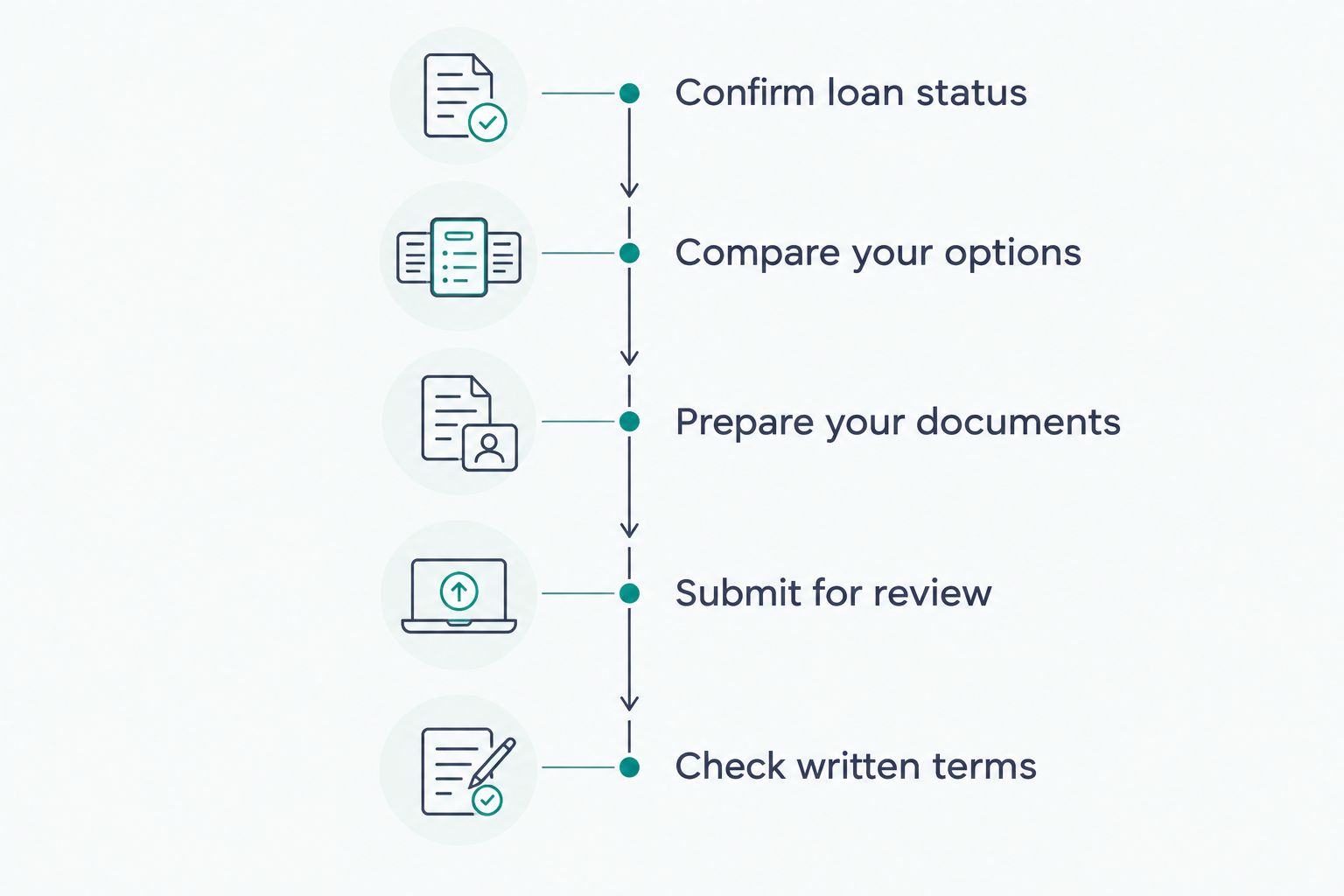
Use this sequence to establish whether a short sale fits your situation in 2026. If you need help comparing options, Shortsalesdoneright provides homeowner support and lender negotiation services.
- Confirm loan status. Ask your mortgage servicer how far behind the account is, whether foreclosure has started, and whether a sale date exists.
- Compare your options. Explain whether you want to keep the home or leave it. Ask about available retention options before committing to a sale.
- Prepare your documents. Request the current short-sale checklist and gather the financial records needed to explain your hardship.
- Submit for review. Coordinate the listing, offer, and supporting package with your agent and the lender's requirements.
- Check written terms. Review the approval conditions, closing deadline, and treatment of any unpaid balance before proceeding.
These are decision points, not a promise of approval. Lender terms and state law vary.
Why this matters
After missed payments, you need answers to separate questions: whether a short sale is possible, whether it is your preferred option, and whether enough time remains to complete it. A positive answer to the first question does not settle the others.
Treat your 2026 short-sale review and any foreclosure deadlines as separate matters. Keep responding to lender requests, but do not interpret a document upload, an assigned negotiator, or a buyer's offer as confirmation that foreclosure has stopped.
Your immediate task is to establish your actual loan status, not wait for another missed payment. Save notices and written messages together so your agent and legal adviser can work from the same information.
What missed payments do—and do not—show
Missed payments show that your mortgage account is delinquent. They do not tell the lender everything it needs to know about your ability to keep paying, the property's value, or the proposed sale.
Explain the reason for the missed payments plainly. A loss of income, changed household circumstances, or another documented hardship needs an accurate timeline and supporting records—not a more dramatic description.
The lender also needs to evaluate the transaction. Your agent's pricing analysis and the buyer's offer address different questions from your financial documents. A well-explained hardship does not replace an acceptable offer, and an offer does not replace the required financial information.
Do not deliberately miss additional payments to make your situation look more serious. Ask your servicer what its review requires and get advice about the consequences of any payment decision.
What to gather before requesting a short sale
Ask for the lender's current requirements rather than relying on someone else's checklist. Use these categories to organize the conversation, then supply the documents requested for your loan.
- Mortgage information: Your latest statement, account details, lender correspondence, and any default or foreclosure notices.
- Hardship explanation: What changed, when it changed, and why the mortgage is no longer manageable.
- Financial records: Requested income documentation, bank statements, tax records, and a current picture of household expenses.
- Property information: Your agent's market analysis, property condition information, and listing or offer documents when required.
- Other claims against the property: Details of additional mortgages, a home equity line of credit, or other liens for review.
Keep copies of what you submit. Record the submission date and ask whether the package is complete; sending documents and receiving confirmation of a complete file are different events.
If the lender requests updated records during the 2026 review, respond with current information. Do not assume an earlier submission satisfies a later request.
Why short-sale eligibility and outcomes vary
No single missed-payment threshold answers every homeowner's question. These factors shape the review and the decisions you need to make:
- Loan requirements. The servicer and the mortgage owner or applicable loan program determine the requirements for review.
- Your documented hardship. The lender evaluates the circumstances you explain and the financial information you provide.
- Property value and the offer. The lender evaluates the proposed sale, not just the fact that payments are overdue.
- Additional liens. Other claims against the property need attention before a transaction can close.
- Foreclosure status. Existing notices and scheduled actions affect the time available to pursue a sale.
- Approval conditions and state law. Written terms and applicable law affect the closing and any remaining obligations.
Ask for the requirements that apply to your mortgage. Advice based on another homeowner's lender, state, or loan type is not a substitute for your own review.
Should you choose a short sale or try to keep the home?
Start with your goal. If you want to stay and can support a workable payment arrangement, ask about options for keeping the home before choosing a sale. If keeping the property is no longer realistic, compare exit options and their consequences.
The table below identifies whom each option is best suited to consider. It does not establish eligibility or recommend an option without reviewing your circumstances.
| Option | Best for | Potential benefit | Main limitation |
|---|---|---|---|
| Short sale | Homeowners who need to sell but cannot cover the mortgage payoff from sale proceeds | Provides a route to sell with lender consent | Requires approval; remaining debt needs separate review |
| Loan modification | Homeowners seeking to stay with changed mortgage terms | Changes loan terms if approved | Approval and revised terms are not guaranteed |
| Repayment plan | Homeowners able to resume payments and address arrears | Offers a structured way to catch up if agreed | Requires an affordable repayment arrangement |
| Forbearance | Homeowners asking about temporary payment relief | Addresses a temporary hardship if approved | Does not automatically forgive missed payments |
| Deed in lieu | Homeowners considering transferring ownership to the lender | Provides another possible exit if accepted | Lender acceptance, title issues, and debt terms need review |
For your 2026 decision, compare what each approved arrangement would require from you—not just its name. Ask what happens to missed payments, when obligations come due, and whether the proposal matches your household budget.
A short sale is an exit from ownership. Do not choose it solely because someone says it is always better than another option.
Can I still request a short sale after a foreclosure notice?
You can ask about a short sale after receiving a foreclosure notice, but you must establish the current deadline and whether the lender will review the request. A request alone does not cancel a scheduled action.
Tell your agent and any processing contact about the notice immediately. Read the guide to requesting a short sale after a foreclosure notice, then confirm your own status directly with the servicer and a qualified local attorney.
Ask these questions:
- Has a foreclosure sale been scheduled?
- What documents are required for a short-sale review?
- Will the request affect the scheduled action, and who can confirm that in writing?
- What legal response deadlines remain in effect?
Do not rely on a buyer, listing agreement, or verbal reassurance as proof that a deadline has changed.
Will a short sale erase everything I owe?
A short sale does not automatically erase the unpaid mortgage balance. Approval to sell and release the mortgage lien is not necessarily the same as releasing you from personal responsibility for remaining debt.
Ask a qualified attorney to review the approval language before you agree to the closing. The review should address the remaining balance, any required contribution, and whether the lender retains a right to seek payment.
Have additional mortgage or lien agreements reviewed too. Do not assume the first lender's approval resolves another creditor's claim.
For a closing in 2026, direct tax questions to a qualified tax professional. Canceled debt can have tax consequences, and the treatment depends on your circumstances and applicable law. Do not build your plan around an assumed tax exclusion or automatic forgiveness.
How will missed payments and a short sale affect my credit?
Missed mortgage payments and a short sale can affect your credit, but there is no reliable universal point loss for your situation. Your existing credit history and the information reported matter.
Ask how the account will be reported, and review your credit reports for accuracy after the transaction. Do not accept a promised score outcome or a guaranteed date for qualifying for another mortgage.
If buying again is part of your plan, speak with a mortgage professional about the requirements relevant to your next application. Approval for a future loan involves more than the date of the short sale.
What help should a homeowner expect?
Shortsalesdoneright short-sale support is best for homeowners who need help comparing options and communicating with lenders. Its services include short-sale processing and lender negotiation; the lender still decides whether to approve the transaction.
For a homeowner, useful help starts with understanding your goal and identifying what the lender needs. You should know who is handling communication, which documents remain outstanding, and which decisions require your attention.
Agent-facing processing support addresses a different need. That service includes preparing the full short-sale package, a dedicated point of contact, and weekly lender updates. It supports the agent's transaction work rather than replacing your legal or tax advisers.
Before requesting help, gather your latest statement and any foreclosure notices. Explain whether your priority is keeping the home, selling it, or understanding the available choices.
Request help with your next step
Ask about homeowner options and lender negotiation. Have your mortgage statement and notices ready.
FAQ
Can I short sale my house if I have already missed payments?
Yes, you can pursue a short sale after missed payments, subject to lender approval. The lender reviews your circumstances and the proposed transaction; delinquency alone does not establish eligibility.
Should I wait until I miss another mortgage payment?
Do not miss another payment solely to pursue a short sale. Contact your servicer now to discuss your circumstances and the requirements for available options.
Does submitting a short-sale package stop foreclosure?
Submitting a short-sale package does not automatically stop foreclosure. Confirm the current foreclosure status and get written confirmation of any change to a scheduled action.
Can I stay in my home while requesting a short sale?
A short-sale request alone does not determine how long you can remain in the home. Your foreclosure status, any agreements, and applicable state law require separate review.
Will the lender forgive the remaining mortgage balance?
The lender does not automatically forgive the remaining balance by approving a short sale. Have a qualified attorney review the written terms and applicable state law before closing.
Can I ask about a loan modification instead?
Yes, ask your servicer about a loan modification if your goal is to keep the home. Compare the proposed obligations with your budget rather than assuming approval or affordability.
How can Shortsalesdoneright help if I am behind?
Shortsalesdoneright provides short-sale processing and lender negotiation services and helps homeowners compare a short sale with other options. Approval remains the lender's decision, and legal and tax questions belong with qualified professionals.
One last thing
Ask for confirmation that your file is complete—not just confirmation that it was received. An acknowledgment tells you documents arrived. It does not establish that the lender has everything needed to evaluate the request.
Keep a dated record of requests, submissions, and responses. Before closing, compare the final transaction documents with the written approval and have unresolved debt or legal questions reviewed. The goal is an understood agreement, not simply a signature.