

An agent knows a lender has assigned a short-sale negotiator when the lender explicitly confirms an assigned person or team through its verified portal, written communication, or an authenticated phone conversation. A submission receipt or document request is not enough; confirm who owns the review, how to contact that person or team, and what happens next.
- How does an agent know if a lender has assigned a negotiator? Obtain explicit lender confirmation, not a submission receipt.
- Record the assigned person or team, verified contact channel, current task, and next follow-up.
- Negotiator assignment is not short-sale approval and does not establish a closing date.
- Shortsalesdoneright provides short-sale processing for agents who want package preparation and lender follow-up handled externally.
How does an agent know if a lender has assigned a negotiator?
Ask the lender to confirm assignment against the actual short-sale file. Get the person's name or responsible team's identity, the file reference, and the approved communication channel. If the lender cannot identify an assigned reviewer or team, report the assignment as unconfirmed.
For agents seeking outside help, Shortsalesdoneright provides short-sale processing and lender negotiation services. Whether you handle the file yourself or outsource processing, use the same confirmation standard.
Confirm assignment in this order
- Verify authorization. Ask whether the lender has accepted the homeowner's authorization for you to discuss the loan and short-sale request.
- Check the file. Match the lender's response to the correct property and file reference through its approved channel.
- Ask about ownership. Request explicit confirmation that a person or team owns the short-sale review, rather than merely receiving documents.
- Confirm next steps. Ask what that reviewer needs now and how future questions should reach the responsible party.
- Save the evidence. Keep the portal message, written response, or dated call note in your transaction record.
Do not fill gaps with assumptions. A representative who answers the phone is not necessarily the assigned negotiator, and a name displayed beside a task does not by itself explain that person's role.
Why this matters
Assignment tells you where to direct follow-up. It does not tell you whether the lender will accept the offer, release its lien on acceptable terms, or finish before a contract deadline.
For your 2026 transaction checklist, separate submission, assignment, review, and approval. Those labels answer different questions. Reporting them accurately lets the seller and buyer understand what has happened without mistaking movement for a decision.
The practical benefit is clearer communication: you can identify the outstanding task, name who is responsible for it, and explain what remains unresolved. That is more useful than telling everyone the file is progressing without supporting detail.
Which confirmation method should an agent use?
Use the lender's verified communication channels. The strongest record connects an explicit assignment statement to the correct file and explains how to reach the responsible reviewer or team.
| Confirmation method | Best for | Advantage | Limitation |
|---|---|---|---|
| Verified portal message | Keeping assignment evidence with the file | Creates a written record you can retain | A generic status label does not explain the reviewer's role |
| Written lender response | Clarifying the assigned person's responsibilities | Lets you request precise confirmation | Verify the sender through an established lender channel |
| Authenticated phone call | Resolving unclear or conflicting updates | Lets you ask follow-up questions immediately | Requires careful call notes and a request for written confirmation |
Use written confirmation when you can obtain it, and document authenticated calls when you cannot. Do not assume a lender offers direct email access or a personal extension. Ask which communication route applies to that file.
If the portal and a representative give different answers, ask the lender to reconcile them. Until that happens, describe the conflict rather than choosing the more encouraging update.
What should the agent ask the lender?
Keep the conversation focused on assignment, authority, and the next action. Ask these questions rather than requesting a general status update:
- Has a negotiator or review team been assigned to this short-sale request?
- What is the assigned person's or team's role?
- Does that assignment cover document intake, offer review, or another task?
- What channel should the authorized agent use for follow-up?
- Is anything outstanding before the assigned reviewer can proceed?
- What next step or follow-up instruction should be recorded?
Ask the lender to distinguish a contact person from a decision-maker. Knowing who handles communication does not establish who can approve the short sale. If the representative cannot explain the person's authority, leave that authority unconfirmed in your notes.
For a 2026 call log, record the date, representative's identity, confirmed assignment, outstanding request, and follow-up instruction. Keep full loan identifiers and sensitive homeowner documents in the lender's approved secure system, not in a general transaction update.
How should an agent record the assignment?
Use a short record that someone else in your brokerage can understand without reconstructing the conversation. Separate the lender's confirmed statement from the action you plan to take.
Assignment record
- File identity: Property reference and secure location of the lender's file identifier.
- Assignment evidence: Portal message, written communication, or authenticated call note.
- Assigned contact: Person or team, stated role, and verified communication channel.
- Current task: What the lender says is under review or still outstanding.
- Next follow-up: The instruction received and the person responsible for acting.
If the lender provides no next-contact instruction, ask for one. Do not turn your own reminder date into a lender commitment when updating the seller.
A useful 2026 transaction record preserves both the assignment and any later change. If a file transfers, retain the earlier communication and add the new ownership confirmation. Do not overwrite the history and lose track of an unresolved request.
What happens after the agent confirms assignment?
Treat confirmation as the start of directed follow-up, not the end of verification. Match your next action to what the assigned reviewer actually requests.
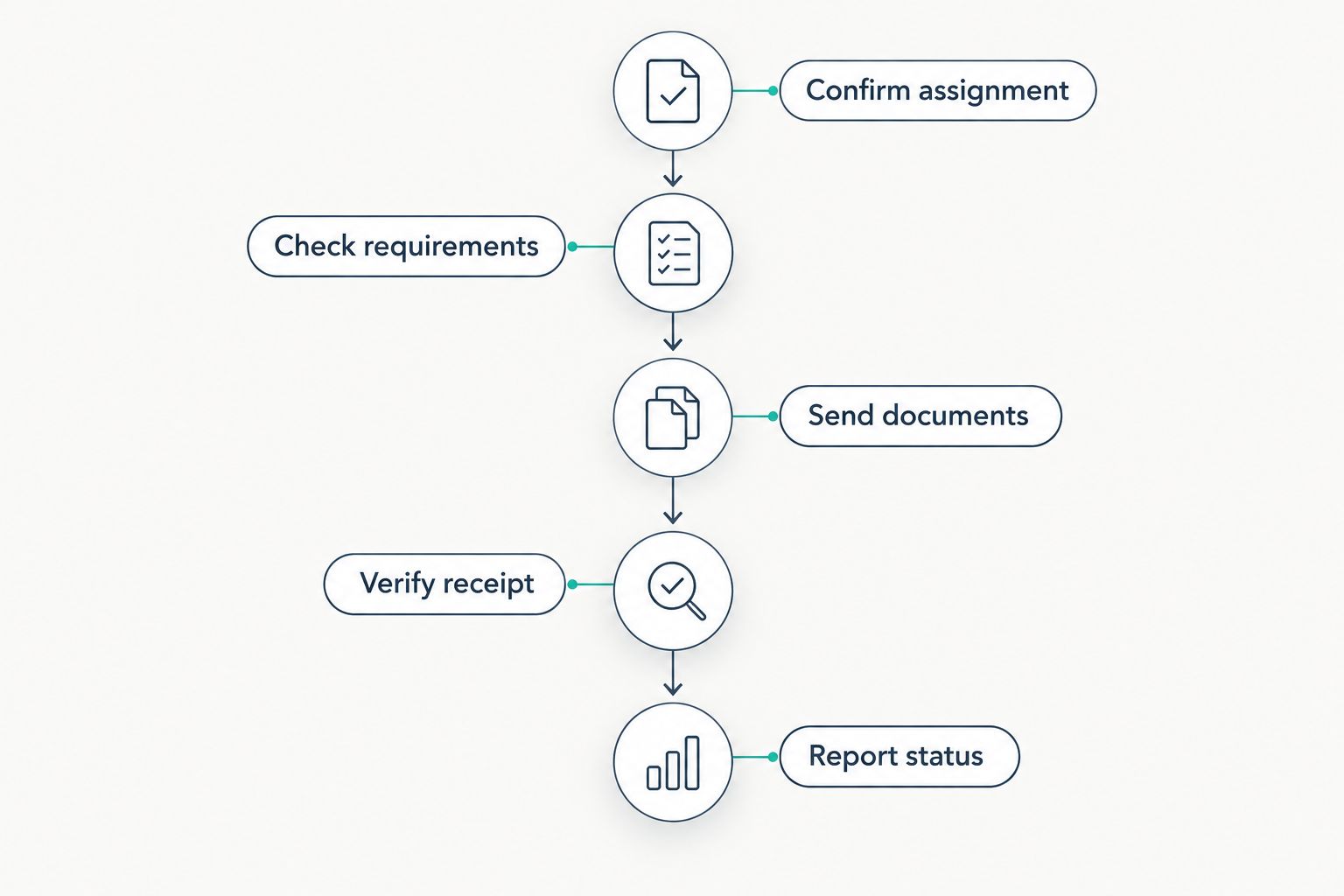
- Confirm assignment. Identify the responsible person or team and save the supporting communication.
- Check requirements. Ask which documents, explanations, or transaction items remain outstanding.
- Send documents. Use the lender's approved submission channel and retain the submission record.
- Verify receipt. Ask whether the submitted material reached the correct file and addressed the request.
- Report status. Tell the seller what is confirmed, what remains open, and who acts next.
A successful upload is evidence of submission, not proof that a reviewer accepted the document as sufficient. Keep those milestones separate in your updates.
When the lender requests a replacement document, clarify what needs correction before resubmitting. Ask whether the earlier version should remain in the file and follow the lender's instructions rather than sending competing versions without explanation.
Why assignment details vary
A single status label cannot answer every question about file ownership. Check these distinctions with the lender rather than assuming all short-sale files follow the same process:
- Role: Determine whether the named contact handles intake, document collection, review, or negotiation.
- Communication channel: Confirm whether follow-up belongs in a portal, through a department, or with a named contact.
- Authorization: Verify that the lender recognizes your permission to receive file information.
- File scope: Establish which loan or lien the assignment concerns when the property has multiple secured debts.
- Outstanding requirements: Ask whether the assigned reviewer is waiting for something before proceeding.
- Reassignment: Confirm whether the previously identified person or team still owns the file.
These are verification questions, not reasons to predict a delay. Build them into your 2026 checklist so every status update answers the same basic question: what does the lender actually confirm?
What if the lender says the file is under review?
Under review is not explicit confirmation of an assigned negotiator. Ask what is being reviewed, which person or team owns that task, and whether assignment has occurred.
Do not treat a document request, valuation appointment, or general acknowledgment as a substitute for that answer. Each establishes only the event it describes unless the lender also confirms assignment.
What if no negotiator has been assigned?
An unassigned file needs a clear next step, not an assumed approval timeline. Ask the lender to confirm receipt, identify outstanding requirements, and explain how the authorized agent should follow up on assignment.
Keep your seller update factual. State that assignment remains unconfirmed and describe the action being taken; do not present an internal reminder as a promised lender response date.
Does assignment mean the lender approved the short sale?
Negotiator assignment does not mean short-sale approval. Review the lender's actual written decision and conditions before representing the transaction as approved.
Assignment also does not establish that a foreclosure action has stopped, that an unpaid balance will be forgiven, or that the homeowner will receive a particular credit result. Lender terms and state law vary; direct legal and tax questions to qualified professionals.
When should an agent outsource lender follow-up?
Shortsalesdoneright is best for real estate agents who want short-sale package preparation and lender follow-up handled externally. Its agent services include preparing the full short-sale package, a dedicated point of contact, and weekly lender updates.
The benefit is a defined processing contact and regular reporting while you manage the listing and transaction. The limitation is equally clear: a processor does not control lender assignment, approval, or the lender's terms. You still need verified status information before making commitments to transaction participants.
If you are ready to request help, use the agent-appropriate intake form through the website. Keep homeowner information within the designated intake and document-submission channels.
Request short-sale processing help
Ask about package preparation, a dedicated point of contact, and weekly lender updates.
FAQ
How do I verify that the person emailing me is the lender's negotiator?
Verify the person's role through the lender's established portal or another independently verified lender channel. Do not send homeowner financial documents to an unverified address.
Is a portal status saying assigned enough to update my seller?
Report the portal's exact status, but confirm what the assignment covers before calling it negotiator assignment. Record the responsible person or team and the next requested action.
Can a lender assign a team instead of giving me a negotiator's name?
Ask the lender whether the named team is responsible for the short-sale review. If the lender confirms team ownership, document that arrangement rather than implying that an individual negotiator has been named.
How long after assignment will the lender approve the short sale?
Assignment alone does not establish an approval timeline. Ask the lender about the file's outstanding requirements and next review step, and keep those separate from contract deadlines.
Does a lender negotiator replace the agent's short-sale processor?
A lender negotiator and an agent's processor have different roles. Confirm the lender contact's responsibilities; the agent's processor handles the agreed submission and follow-up work rather than making the lender's decision.
What should I do if the assigned negotiator changes?
Confirm the new person or team's ownership through a verified lender channel. Ask which requests remain open and whether previous submissions are visible in the file.
Can Shortsalesdoneright guarantee lender assignment or approval?
No lender assignment or approval is guaranteed. Shortsalesdoneright provides short-sale processing and lender negotiation services, while lender terms and state law vary.
One last thing
The most useful follow-up question is not whether the file is moving; it is what specific action comes next. An assigned name without a task, verified contact route, or follow-up instruction leaves you with little to report.
Before closing your next lender conversation, read back the assignment and next action for confirmation. Then update the seller using those facts—not an estimated decision date the lender never supplied.


