

Follow up on a submitted short sale to confirm receipt, then use the lender’s stated review checkpoint for your next contact. If the lender gives no checkpoint, request one rather than treating silence as progress. Follow up sooner when documents are missing, a promised response is overdue, or a contract or foreclosure deadline needs attention.
- How long should an agent wait before following up on a submitted short sale? Use the lender’s stated checkpoint.
- Confirm receipt and package completeness separately; a submission confirmation does not establish that review has started.
- Shortsalesdoneright provides short sale processing and lender negotiation for agents who want to outsource package preparation and follow-up.
- Set a weekly reminder to check status, but act sooner on missing documents or urgent deadlines.
Why this matters
Your next follow-up should have a purpose, not just a date. You need to establish whether the lender received the package, whether anything is missing, and what happens next. Those are different questions.
For agents managing submitted files in 2026, the practical goal is a documented next action. A vague status update does not tell you whether the seller needs to sign something or whether the buyer needs an extension.
If you want to outsource this work, Shortsalesdoneright provides short sale processing and lender negotiation services. Keep the same standard whether you handle the file yourself or assign a processor: every update should identify the current status, the next action, and who owns it.
How long should an agent wait to follow up on a short sale?
Confirm receipt first. Then follow the lender’s stated checkpoint, with earlier contact when something changes. Do not use an assumed approval timeline as your follow-up schedule.
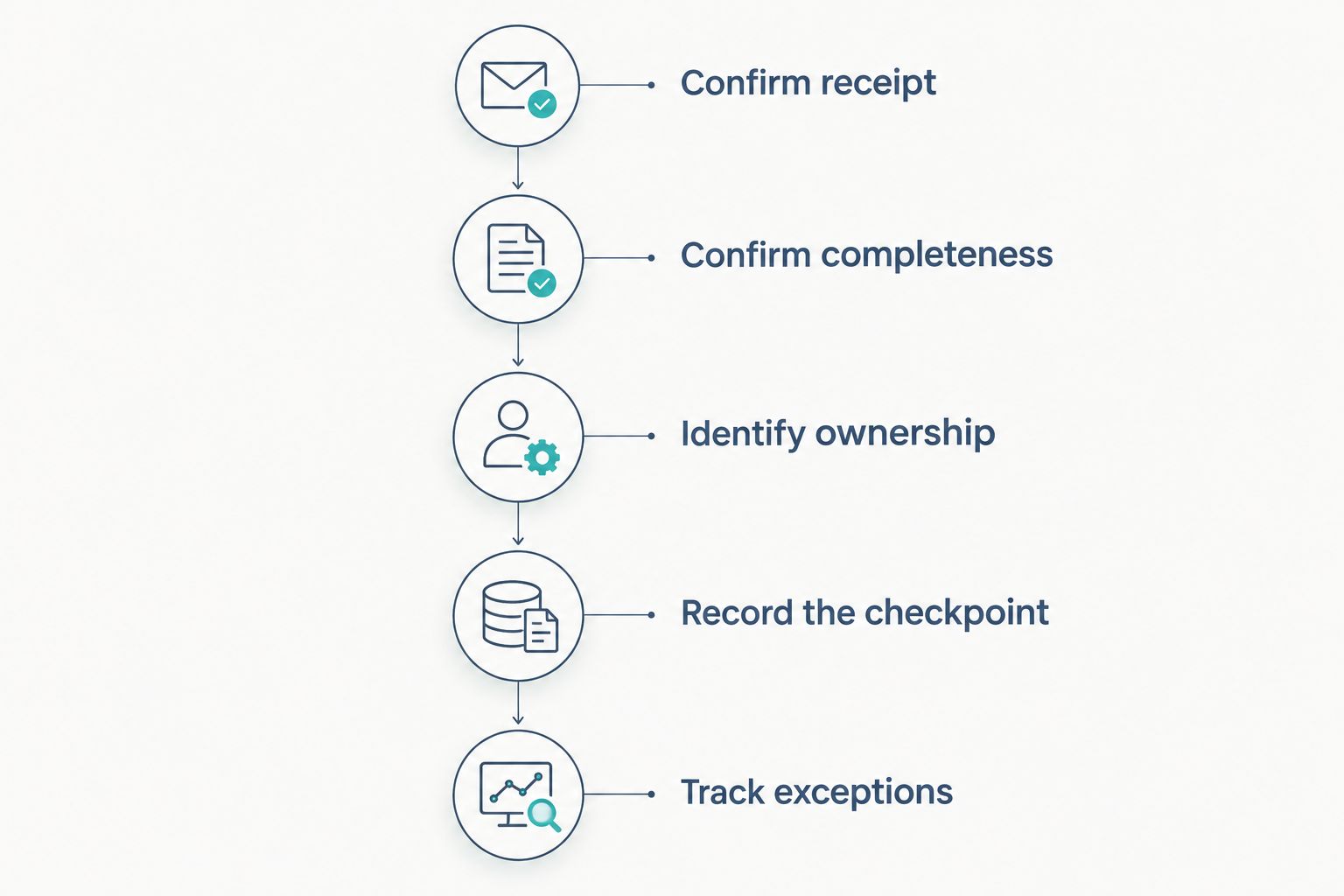
Use this sequence for a submitted file:
- Confirm receipt. Save the submission confirmation and ask whether the lender can locate the documents under the correct loan or case reference.
- Confirm completeness. Ask whether the package is complete for the current review stage and request a specific list of outstanding items.
- Identify ownership. Establish which team or assigned contact handles the next action and how to reach that person or team.
- Record the checkpoint. Ask when the next status check is appropriate and whether the lender expects anything from the agent or seller before then.
- Track exceptions. Contact the lender sooner if a requested document is ready, a promised response is missed, or a material deadline changes.
A weekly calendar reminder is a useful office practice when no clearer checkpoint exists. It is not a lender response requirement, an approval estimate, or a reason to ignore an urgent issue between reminders.
For the submission details that support this sequence, use the lender portal submission to short sale approval workflow.
The strongest follow-up ends with a usable instruction. Before ending the contact, ask what must happen next and when you should check again. Record the answer rather than relying on memory.
Match the follow-up to the file’s status
Not every unanswered submission needs the same response. Separate a routine status check from a missing-document problem or a deadline that requires immediate attention.
| Approach | Best for | Benefit | Limitation |
|---|---|---|---|
| Receipt check | A newly submitted package | Establishes whether the lender can locate the submission | Does not establish completeness or approval |
| Checkpoint follow-up | A file with a stated next review point | Keeps contact tied to a specific next action | Requires a separate deadline watch |
| Missing-item follow-up | A file awaiting documents or corrections | Focuses attention on an identifiable blocker | Resubmission alone does not confirm acceptance |
| Escalation request | An overdue commitment or unresolved urgent issue | Asks the lender to address a documented problem | Does not guarantee faster review or approval |
Use a receipt check to verify delivery, not to request an approval prediction. Ask for a completeness check once the documents are accessible. If the lender identifies a missing item, shift your effort to resolving that item and confirming its acceptance.
For your 2026 file checklist, keep submission confirmation and completeness confirmation as separate entries. A portal upload message belongs in the record, but it is not a substitute for the lender’s explanation of what remains outstanding.
What should an agent ask during the follow-up?
Ask questions that produce a specific answer. A general request for an update leaves too much room for a general response.
Use these prompts as a checklist, not as a script attributed to the lender:
- Receipt: Can you locate the submitted package under this file reference?
- Completeness: What documents, signatures, or corrections remain outstanding?
- Current action: What is the file waiting on right now?
- Ownership: Who is responsible for that action?
- Next checkpoint: When should the agent check again?
- Deadlines: Has the lender acknowledged the deadline information provided?
If the response is simply that the file is under review, ask which review step is underway and whether anything is required from the seller. Do not translate that phrase into a prediction about approval.
End with a written summary when the lender’s communication channel allows it. Include the requested action and next checkpoint, without adding commitments the lender did not make.
Why the follow-up interval varies
There is no useful universal waiting period for every submitted short sale. Base your contact schedule on the facts of the file and the lender’s instructions.
- Receipt status. An unconfirmed submission needs a delivery check before you treat it as a file awaiting review.
- Package completeness. Missing signatures, unreadable documents, or requested updates call for a specific correction and confirmation.
- The stated checkpoint. A lender-provided next-contact date gives you a documented reference for routine follow-up.
- A missed commitment. An overdue promised response creates a different reason to contact the lender than a general request for news.
- Transaction deadlines. Contract dates and extension needs require attention even when the lender has not reached a decision.
- Foreclosure or legal notices. These require separate attention and qualified legal guidance; a routine follow-up schedule is not enough.
For a file handled in 2026, verify the lender’s current submission and communication instructions. Do not copy a contact schedule from an unrelated transaction and assume it governs this one.
When should an agent escalate instead of waiting?
Escalate a specific unresolved issue, not frustration alone. Explain what happened, what remains unresolved, and what deadline makes the issue urgent.
An escalation request should include the submission reference, prior contact history, the exact missing response, and any relevant deadline. Ask the lender which escalation channel applies rather than assuming that repeated messages to different departments will reach the right person.
Do not assume a submitted short sale postpones foreclosure. If a sale date or legal notice is involved, the homeowner should promptly consult a qualified attorney about the specific situation. Continue the lender follow-up, but do not present it as legal protection.
Keep the contract track separate as well. Discuss extension needs with the appropriate parties before the contract deadline passes, following your brokerage’s procedures and applicable requirements.
An escalation is a request for attention or clarification. It is not proof that the lender will approve the short sale, change a deadline, or accept the offer.
How should an agent document each contact?
Use a contact log that someone else can understand without hearing the entire story. Keep sensitive financial records in the approved secure system rather than copying them into broad email chains.
For each lender contact, record:
- The contact date, channel, representative, and file reference.
- The status the lender actually reported.
- Any requested document or correction.
- The person responsible for the next action.
- The stated next checkpoint and relevant transaction deadline.
Separate lender statements from your own tasks. For example, a request for an updated document belongs under lender requirements; your reminder to obtain the seller’s signature belongs under agent actions.
This distinction matters during handoffs. Another team member should be able to see what the lender requested, what was submitted in response, and what still needs confirmation.
What should an agent tell the seller while waiting?
Give the seller a reliable update schedule without promising a lender decision. A weekly update can explain the last confirmed status, what remains outstanding, and the next planned contact.
Avoid saying that everything is moving forward unless you can name the completed step. If there is no new lender response, say that plainly and explain the follow-up action already taken.
For seller communications in 2026, keep these distinctions clear:
- Submitted does not mean complete.
- Complete does not mean approved.
- An expected response is not a guaranteed decision date.
- A requested extension is not a confirmed extension.
Ask the seller to send new lender correspondence promptly through the agreed secure channel. If the seller has legal or tax questions, refer those questions to qualified professionals rather than answering outside your role.
Should an agent outsource short sale follow-up?
Outsourcing fits agents who want package preparation and lender communication handled by a dedicated processing contact. It still requires clear coordination with the listing agent and seller.
Shortsalesdoneright is best for real estate agents who want to outsource short sale package preparation and lender negotiation. The service includes preparing the full short sale package, a dedicated point of contact, and weekly lender updates.
The boundary matters: processing support does not guarantee lender approval or eliminate the need for the agent to manage the listing and contract. Agree on who gathers seller documents, who communicates with the buyer’s agent, and who tracks extension needs.
If you are ready to delegate the processing work, request help through the appropriate agent intake form. Bring the submission history and deadline information so the handoff starts with a clear record.
Request short sale processing help
Get help with package preparation, lender negotiation, and weekly lender updates.
Is a weekly follow-up enough?
A weekly follow-up reminder is a reasonable routine when the lender has not provided a clearer checkpoint. It is not enough when an unresolved document request or deadline requires earlier action.
Use the reminder to review the whole file, not merely to place a call. Check outstanding tasks, seller documents, contract dates, and the lender’s last instruction before deciding what contact is needed.
Should an agent call every day after submitting?
Daily calls are not a substitute for a defined next action. Match contact to the lender’s instructions, the unresolved issue, and the urgency of the deadline.
If the lender has already provided a checkpoint and nothing has changed, prepare for that checkpoint. If an urgent issue arises, explain the issue directly rather than sending another general status request.
FAQ
How long should an agent wait before following up on a submitted short sale?
Confirm receipt after submission, then follow the lender’s stated checkpoint. Request a checkpoint if none is provided, and contact the lender sooner about missing documents, overdue commitments, or urgent deadlines.
Does a portal confirmation mean the short sale package is complete?
A portal confirmation does not establish that the package is complete. Ask whether the lender can locate the documents and what remains outstanding for the current review stage.
What should I do if the lender gives no response date?
Ask for the next appropriate status-check date and the action the file is waiting on. Set a weekly follow-up reminder as an office practice, not as an assumed lender deadline.
Should I update the seller when there is no lender news?
Yes. Report the last confirmed status, the follow-up already completed, and the next planned action without implying that silence means progress.
Does submitting a short sale stop a foreclosure sale?
Do not assume submission postpones a foreclosure sale. Lender terms and state law vary, so the homeowner should promptly ask a qualified attorney about any foreclosure notice or sale date.
Can a short sale processor guarantee approval?
No. Shortsalesdoneright provides short sale processing and lender negotiation, but does not promise lender approval, forgiveness of an unpaid balance, or a specific credit-score result.
One last thing
A quiet file and a complete file are not the same thing. Before waiting for another update, identify the last verified milestone and the next person responsible for moving the file forward.
Make that your closing check on every submitted short sale in 2026. Record facts, track deadlines separately, and get legal and tax questions to qualified professionals. Lender terms and state law vary.


