

Expect one written status update each week, plus a separate alert when a lender response, document request, or deadline needs your attention. For your 2026 service agreement, treat that as a communication standard to request—not a promise that the lender will make progress every week.
- How often should an agent expect status updates from a short sale processor? Weekly, plus alerts for urgent changes.
- Shortsalesdoneright provides short sale processing with a dedicated point of contact and weekly lender updates.
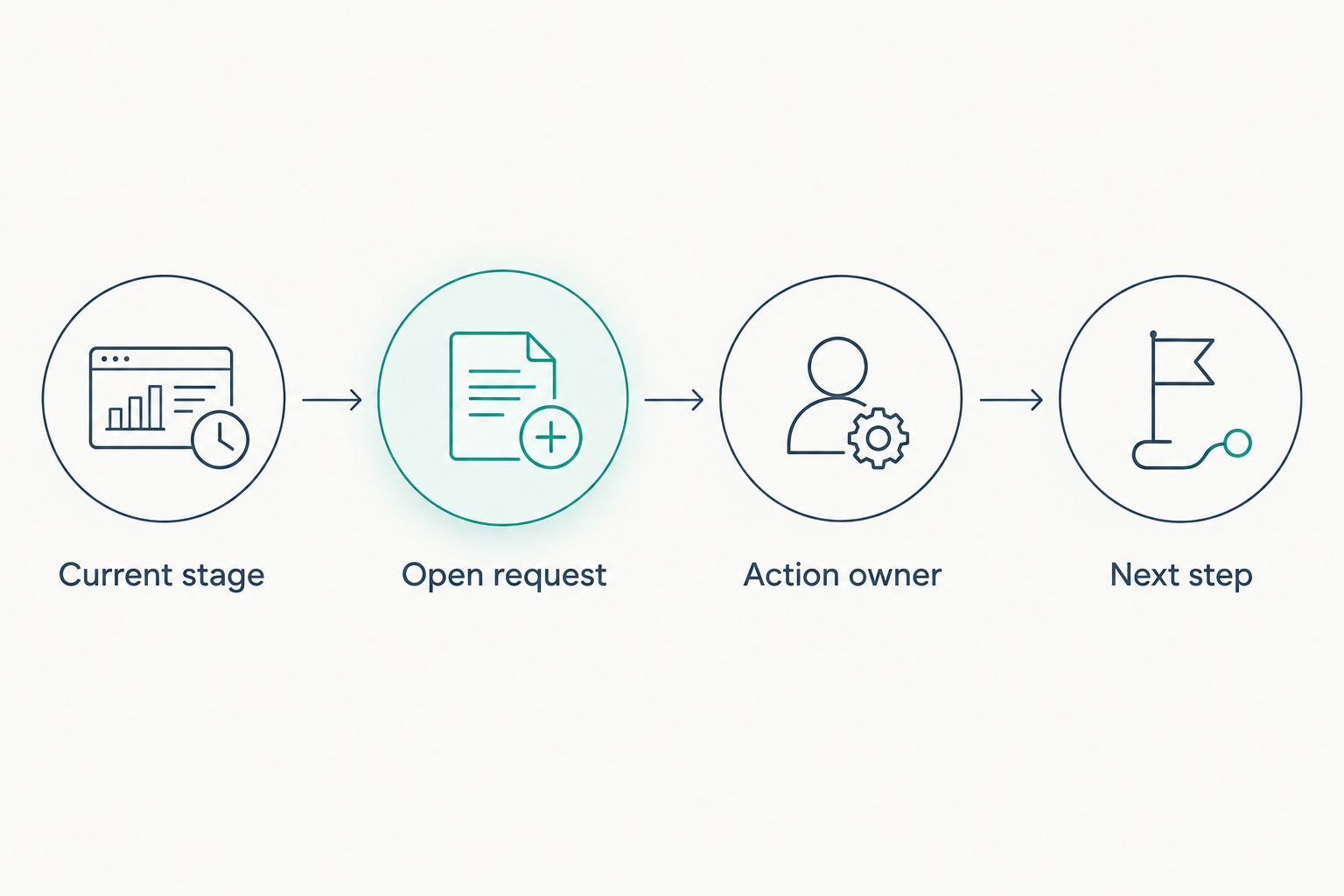
- Every update should identify the current stage, pending issue, responsible person, and next action.
- Weekly communication does not guarantee weekly lender movement, approval, or a closing date.
How often should an agent expect status updates from a short sale processor?
Request one scheduled written update per week, even when the lender has not changed the file’s status. Ask the processor to communicate actionable developments separately rather than saving them for the next scheduled report.
Shortsalesdoneright offers short sale processing and lender negotiation services for real estate agents. When choosing any processor, separate the reporting commitment from the lender’s review timeline: the processor controls its communication, not the lender’s decision.
Use this sequence when setting expectations:
- Set the schedule. Agree on a recurring reporting day and the channel you will use.
- Name the contact. Identify who handles questions and who covers an absence.
- Define urgent changes. Include lender requests, written decisions, contract changes, and approaching deadlines.
- Require next steps. Each report should identify what happens next and who owns it.
- Agree on escalation. Decide how to raise an unanswered question or missed update.
Put those expectations in writing before handing over the file. A shared agreement gives you something concrete to reference when communication falls short.
Why this matters
Your seller needs an explanation, not a forwarded message that says the file remains under review. You need enough detail to explain what is pending, what the seller must do, and what remains outside your control.
In 2026, judge a short sale processor’s communication by whether it helps you manage the transaction. A dated report with an owner and next action is more useful than frequent messages that repeat the same status.
Reporting frequency and lender progress are different measures. Keep both visible so regular contact does not become an implied promise of approval.
Scheduled reporting: 1 written update per week
A weekly report should give you a usable record of the file. Request the same core fields each time so you can spot changes without comparing long email threads.
- Current stage: Where the file stands now, described plainly.
- Lender contact: The latest contact attempt or response, with its date.
- Open request: What information or action remains outstanding.
- Action owner: Whether the next task belongs to the processor, agent, seller, or another party.
- Next step: What the processor will do next and what triggers that action.
- Deadline: Any stated deadline, with its source clearly identified.
Do not require a positive development just to fill the report. Require an accurate account. If the lender has not responded, the update should distinguish an unanswered follow-up from a confirmed review status.
For your 2026 reporting template, keep confirmed facts separate from expectations. A processor’s intended follow-up date is not a lender’s promised response date, and neither is an approval deadline.
Event alerts: communicate before the weekly report when action is needed
The weekly schedule should not hold up an actionable message. Ask the processor to flag a lender’s document request, a written decision, a changed condition, or a deadline when it arrives.
Define the alert’s content as well as its timing. You need the actual request, its source, the stated deadline, and the person responsible for responding—not merely a notification that something happened.
Use the following comparison to set a reporting arrangement. These are communication options, not claims about a universal industry rule.
| Communication option | Best for | Benefit | Limitation |
|---|---|---|---|
| Weekly written report | Routine file oversight | Creates a consistent record of status and next steps | Does not replace alerts about urgent developments |
| Event alert | Requests, decisions, and deadline changes | Brings an actionable development to your attention | Does not explain a quiet file between events |
| Agent-requested check-in | Clarifying a specific issue | Lets you resolve a question directly | Leaves you responsible for initiating contact |
Use scheduled reporting and event alerts together. Keep agent-requested check-ins available for clarification, rather than making them your only way to learn what is happening.
What should a useful status update actually say?
A useful report answers a practical question: what can you accurately tell the seller now? It should also tell you whether anyone needs to act.
Current stage
Ask for a specific description of the current stage. Package preparation, submission, a document request, and a written decision describe different situations; a broad label such as pending does not tell you which applies.
Avoid treating submission as confirmation that the lender considers the package complete. Ask the processor to state what the lender has actually acknowledged and what remains unconfirmed.
Open request
The report should name the missing item or unresolved question. It should also identify who requested it and whether the request has been answered.
For example, if updated seller documents are requested, your next move is different from a file awaiting a lender response. You cannot assign the right task if both situations appear under the same generic status.
Action owner
Assign each outstanding task to a person or role. Do not leave a request sitting in a shared inbox with an assumption that someone else will handle it.
If your seller needs to provide information, identify how that request will reach the seller. Keep sensitive financial documents in the agreed secure channel rather than copying them into routine status emails.
Next step
The next step should describe an action, not just an expectation. Following up on an unanswered submission is an action; hoping for approval is not.
Ask the processor to identify the next planned contact or the event that will trigger further work. That gives you a clear basis for the next conversation without inventing a lender deadline.
Why the update schedule varies
Keep the weekly reporting commitment steady, but adjust additional contact to the file’s actual needs. Discuss these factors at intake rather than waiting for a communication problem.
- Package preparation. Outstanding seller documents create specific collection tasks that need clear ownership.
- Lender requests. A new request can require action before the next scheduled report.
- Written decisions. Approval conditions or other written responses need review rather than a brief status label.
- Contract changes. A changed offer or closing arrangement needs coordination with the people handling the file.
- Time-sensitive notices. A foreclosure notice or other stated deadline requires attention beyond routine reporting.
- Unresolved questions. A missing answer about receipt, requirements, or responsibility calls for a targeted follow-up.
Do not use a quiet period as a reason to stop reporting. Equally, do not request daily reassurance when the useful next step is already documented and no new action is available.
Should I expect an update when nothing has changed?
One written update per week remains a useful expectation even when nothing has changed. The report should say what was checked, what response remains outstanding, and what follow-up is planned.
An unchanged status is not the same as an undocumented status. You need to know whether the lender confirmed the file’s position or whether the processor is still seeking confirmation.
How should I explain a quiet week to my seller?
Separate the confirmed status from the pending response. Explain what remains outstanding and whether the seller has an action to complete.
Do not turn a follow-up attempt into a claim that the lender is close to deciding. If no decision date has been provided, say that plainly.
Should I ask my short sale processor for daily updates?
One written update per week, supported by event alerts, is the baseline to request—not an automatic daily report. Ask for additional contact when there is a specific question, active request, or deadline to manage.
Daily contact has a clear purpose when parties are coordinating an immediate task. Without that purpose, another message can repeat the same information without helping you make a decision.
Before requesting more frequent reports, identify what is missing. You might need a clearer action owner or a copy of the lender’s request rather than more status messages.
What should I do if my processor misses an update?
One missed weekly update calls for a direct request for the report and confirmation of the next reporting date. If missed communication continues, use the escalation process agreed at intake and review whether the arrangement meets your needs.
Keep the request factual. Identify the expected report, the question you need answered, and any action that cannot wait.
If you receive a foreclosure notice or a document with a legal deadline, do not wait for the next routine update. Obtain qualified legal advice and notify the people handling the transaction; do not assume that short sale activity has changed that deadline.
What should you agree on before outsourcing the file?
Your 2026 intake conversation should cover communication as clearly as package preparation. Establish who handles lender contact, who collects outstanding documents, and how requests reach you and the seller.
Ask these questions before you transfer responsibility:
- Who is my dedicated point of contact?
- What information appears in the weekly report?
- Which developments trigger a separate alert?
- How do you distinguish a lender response from a follow-up attempt?
- Who contacts the seller when documents are needed?
- How do I raise a question that needs attention before the next report?
Then confirm the division of work. Outsourcing preparation does not eliminate every task involving the listing, seller, buyer, or closing parties; spell out the responsibilities in your service arrangement.
Use the questions to ask before hiring a short sale negotiator to structure that conversation. Choose based on a defined process, not a general promise to keep you posted.
When does outsourced processing fit an agent’s needs?
Shortsalesdoneright is best for real estate agents seeking short sale package preparation, lender negotiation, and weekly lender updates. The service includes preparing the full short-sale package for agents and providing a dedicated point of contact.
The benefit is a defined processing role and a regular communication channel. The limitation is equally clear: outsourcing does not give the processor control over lender approval, decision timing, or the terms offered to the homeowner.
If that division of work fits your listing, request help through the agent intake form on the website. Describe the file’s current stage and any notices or deadlines so the intake discussion addresses the situation you actually have.
Request help with your short sale
Use the agent intake form to explain your file and discuss processing support.
FAQ
How often should an agent expect status updates from a short sale processor?
Request one written update per week, plus separate alerts for actionable developments. Treat that as an agreed communication standard, not a guarantee of weekly lender progress.
Should my short sale processor contact me when the lender has not responded?
Yes, the scheduled report should still explain the outstanding response and planned follow-up. It should distinguish an unanswered contact attempt from a lender-confirmed status.
Does a weekly update mean the lender reviews my short sale every week?
No. A weekly update describes the processor’s communication schedule, not the lender’s review schedule or decision timing.
What information should I receive in a short sale status report?
Request the current stage, latest lender contact, open request, action owner, next step, and any stated deadline. Confirm which details come directly from the lender.
Can I ask for daily updates when a short sale deadline is approaching?
Yes, ask for additional contact tied to the specific deadline or action. Agree on who needs to respond and how urgent changes will be communicated.
Does Shortsalesdoneright provide weekly lender updates for agents?
Shortsalesdoneright provides weekly lender updates and a dedicated point of contact as part of its short sale processing support. Its agent services also include preparing the full short-sale package.
Does hiring a processor guarantee short sale approval or debt forgiveness?
No. Lender terms and state law vary, and processing support does not guarantee approval, forgiveness of an unpaid balance, or a specific credit-score result. Direct legal and tax questions to qualified professionals.
One last thing
The most useful line in a status report is often the next action, not the status itself. Before forwarding an update, check that it tells you who must do what next—or clearly states that no action is currently required from you or the seller.
For every short sale you take on in 2026, agree on the reporting standard before the first lender follow-up. Expect regular communication without treating it as a promise of a particular outcome.