

Yes, you can request a short sale while you are current on mortgage payments, but your lender must approve the sale and your loan's rules determine eligibility. Being current does not automatically disqualify you, and being underwater does not automatically qualify you. Approval to sell also does not necessarily release you from responsibility for an unpaid balance; get those terms reviewed before you agree.
- Can I short sale my house if I'm current on payments? Yes, subject to lender approval and loan-specific eligibility.
- Do not miss mortgage payments just to pursue a short sale.
- Document why keeping up with payments is no longer sustainable, even if you have not fallen behind.
- Shortsalesdoneright provides short sale processing and lender negotiation help; approval and debt-release terms remain lender decisions.
Why this matters
You do not need to manufacture a missed-payment history before asking about your options. If you are using savings to cover the mortgage or facing a documented income change, explain that situation before making a payment decision that creates additional problems.
Start with your actual finances, not a strategy to look more distressed. For a short sale request in 2026, ask your mortgage servicer which requirements apply to your specific loan. You can also use Shortsalesdoneright to request help through the homeowner intake form and compare a short sale with other options.
Can I short sale my house if I'm current on payments?
Yes. Current payments do not create a universal ban on short sales. The key question is whether your lender or loan investor permits a short sale under your circumstances, including a hardship that threatens your ability to keep paying.
Use this sequence to establish where you stand:
- Check your balance. Request current payoff information and identify any other loans secured by the property.
- Estimate sale proceeds. Ask a real estate agent to assess the property's likely selling range and prepare an estimated closing statement.
- Explain your hardship. Show what has changed and why your current payment record does not reflect a sustainable situation.
- Ask about eligibility. Contact your servicer's mortgage-assistance team and ask whether it reviews short sales for borrowers who remain current.
- Review the terms. Before committing, understand the approval conditions, treatment of any unpaid balance, and your remaining obligations.
These are preparation steps, not approval milestones. Your lender can request additional information or determine that another option fits its requirements.
What does being current actually prove?
Being current shows that you have made the required payments through the applicable due dates. It does not explain how you funded those payments or whether you can continue making them.
For example, a homeowner who has lost income might still be paying from savings. That homeowner should document the income change and account balances rather than assume the payment history tells the full story. The lender still decides whether the circumstances meet its criteria.
What does a lender review besides missed payments?
A short sale request needs more than a statement that you want to sell. Give the lender a clear account of the property, the debt, and the reason a normal payoff is not workable.
Your hardship and its timing
Explain what changed, when it changed, and how it affects your ability to keep the home. Examples include job loss, reduced income, divorce, or an unavoidable relocation, but no example guarantees eligibility.
Distinguish an existing hardship from a concern about the future. If a change is approaching, provide documentation rather than treating a prediction as an established fact.
Your finances and available funds
Prepare an accurate picture of income, expenses, savings, and other assets. A lender's assessment is not limited to whether your last mortgage payment arrived.
Do not leave out an account because you believe it should not matter. Explain the facts and ask how the lender evaluates them. A complete submission lets the reviewer assess the situation without relying on conflicting fragments.
The property and proposed sale
The lender will evaluate the proposed transaction, including the property's value and the amount it would receive. Your agent's pricing analysis and estimated closing statement help explain the proposed sale.
An offer that works for you and the buyer still needs the required lender approvals. Keep contract deadlines and lender review requirements aligned with your agent's guidance.
Why short sale eligibility varies
For a 2026 request, there is no single eligibility checklist that replaces your loan's requirements. These factors shape the review:
- Loan ownership and program rules. Your servicer handles the account, but the loan owner or applicable program can determine approval requirements.
- The nature of the hardship. Explain whether the financial problem is temporary, ongoing, or tied to an upcoming documented change.
- Your financial position. Income, expenses, assets, and other obligations help establish what you can sustain.
- Property value and sale proceeds. The proposed sale must be evaluated against the debt and the lender's requirements.
- Other secured debts. Additional mortgages or liens can require separate negotiations and releases.
- State law and approval language. These affect the legal questions surrounding the transaction and any remaining balance.
Ask for requirements tied to your loan, not general advice from another homeowner's experience. A neighbor's approval does not establish your eligibility or the terms you will receive.
Should I stop paying my mortgage to qualify?
No. Do not deliberately miss payments just to pursue a short sale. Missing payments creates delinquency and can bring consequences without producing an approval.
If a representative says you must be behind, ask which rule applies to your loan and whether the lender evaluates borrowers facing an imminent inability to pay. Request an explanation you can review with a qualified housing counselor or attorney.
If you genuinely cannot afford the next payment, say so promptly. That is different from choosing to default as an application tactic. Ask the servicer about available assistance and explain your immediate financial limits.
For 2026 planning, separate the payment decision from the sale request. You need clear guidance on both; an open short sale file does not itself change your mortgage obligations.
What should I prepare before contacting the lender?
Build a file that tells a consistent story. Ask the servicer for its current document requirements before submitting sensitive financial records.
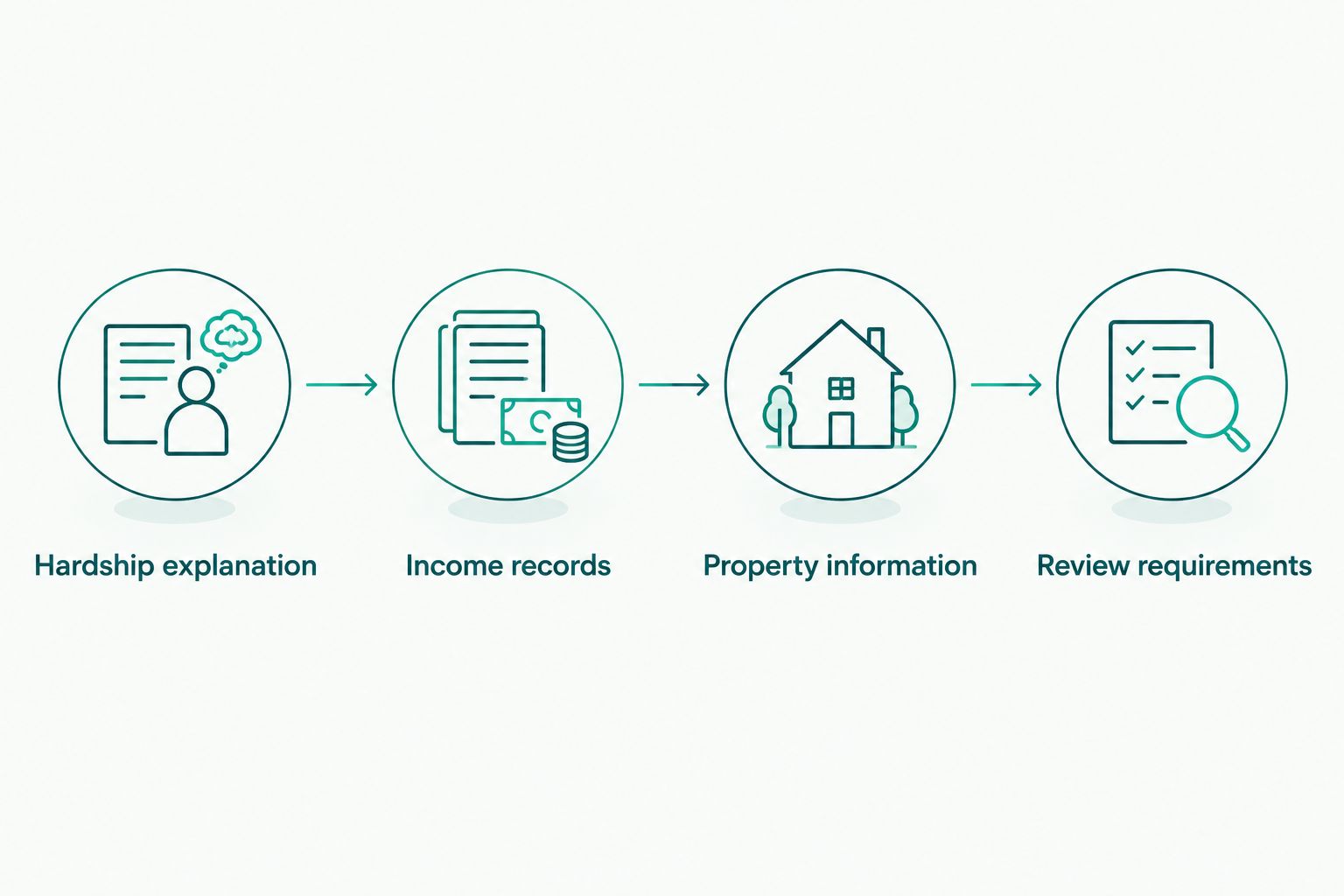
- Hardship explanation: Describe the change in circumstances and why continuing payments is unsustainable.
- Income records: Gather the records the lender requests to verify your current earnings or income loss.
- Account statements: Provide requested statements that show available funds and support your explanation.
- Expense information: List recurring obligations accurately, including housing expenses beyond the mortgage payment.
- Property information: Work with your agent on the listing, valuation support, and transaction documents the lender requires.
Keep copies of submissions and record requests for corrections. If a document changes during review, ask whether an updated version is required rather than assuming the original remains sufficient.
The preparation sequence is straightforward: document the hardship, establish the financial picture, assess the property, and confirm the applicable review requirements. Keep each part consistent with the others.
A hardship letter is not a substitute for supporting records. Use the letter to explain the documents, especially where continued payments might otherwise make the hardship unclear.
Is a short sale the right option if I can still pay?
A short sale fits a different goal from assistance designed to help you stay. Start by deciding whether keeping the home is financially realistic and whether you actually want to remain there.
Use this comparison to frame the conversation, not to select an option before checking eligibility. Each route has limitations.
| Option | Best for | Main benefit | Main limitation |
|---|---|---|---|
| Short sale | Homeowners who need to sell but cannot cover the full payoff through sale proceeds | Creates a path to request a lender-approved sale | Approval and treatment of remaining debt are not automatic |
| Loan modification | Homeowners who want to stay and need a sustainable payment arrangement | Changes approved loan terms | Eligibility and the resulting terms require lender review |
| Forbearance | Homeowners facing a temporary payment disruption | Provides an agreed temporary payment pause or reduction | Does not erase the missed-payment obligation |
| Full-payoff sale | Homeowners whose proceeds and available funds can cover the required payoff | Avoids requesting acceptance of a short payoff | Requires enough money to complete the transaction |
If you can afford the home and simply prefer to move, ask how the lender evaluates that situation before assuming a short sale is available. Being underwater alone does not establish a qualifying hardship.
For a 2026 decision, compare the obligations attached to each option, not just the immediate relief. A temporary payment arrangement and a permanent exit solve different problems.
Does short sale approval erase the remaining mortgage debt?
No. Short sale approval does not automatically mean the unpaid balance is forgiven. Permission to complete the sale and release the property's lien must not be confused with a release from personal responsibility for remaining debt.
Ask a qualified real estate attorney to review the approval language before you sign. Lender terms and state law vary, including the rules that affect a lender's ability to pursue a remaining balance.
There can also be tax questions when debt is canceled. Ask a qualified tax professional how the actual terms apply to you. Do not rely on a general claim that every short sale is tax-free or that every remaining balance disappears.
Will staying current protect my credit during a short sale?
Staying current does not guarantee that a short sale will have no credit impact. Payment history and the reporting of the completed transaction are separate issues.
Ask how the account will be reported, and do not accept a promised score change as part of the decision. Your credit history and the final reporting matter; no service provider can promise a specific result here.
Keep copies of the approval and closing records. After the transaction, review your credit reports and dispute inaccurate information through the appropriate reporting channels.
When should you request processing help?
Request help when you need a clearer view of the paperwork, lender communication, or options before deciding to sell. You do not need to create a delinquency first.
Shortsalesdoneright is best for homeowners seeking short sale processing and lender negotiation help. The service also helps homeowners compare a short sale with other options. It does not replace legal or tax advice, and it cannot promise lender approval or forgiveness of an unpaid balance.
Bring your loan information, hardship explanation, and questions to the conversation. Tell the processor that you are current so the review starts with your actual circumstances.
Request help with your next step
Explain your situation through the homeowner intake form before deciding whether to pursue a short sale.
FAQ
Can I short sale my house if I'm current on payments?
Yes, you can request a short sale while current on payments, subject to your loan's eligibility rules and lender approval. Explain the hardship and why continued payments are not sustainable.
Do I have to miss a payment before asking for a short sale?
No universal rule requires you to miss a payment before asking about a short sale. Ask your servicer which requirements apply to your loan, and do not deliberately become delinquent to qualify.
Can I qualify for a short sale just because my house is underwater?
Being underwater does not automatically qualify you for a short sale. The lender also evaluates your circumstances, finances, and proposed transaction under the applicable requirements.
What if I am paying my mortgage from savings after losing my job?
Explain that your payments are coming from savings and document the income loss. Being current does not show whether those payments are sustainable, but the lender still determines eligibility.
Will a short sale forgive everything I still owe?
A short sale does not automatically forgive the remaining debt. Have a qualified attorney review the approval terms and applicable state law before you commit.
Is a short sale better than a loan modification if I want to stay?
A loan modification addresses keeping the home, while a short sale involves selling it. Compare eligibility and obligations with your servicer before choosing a route.
Who can help me understand the short sale paperwork?
Shortsalesdoneright provides short sale processing and lender negotiation services for homeowners and real estate agents. Direct legal questions to a qualified attorney and tax questions to a qualified tax professional.
One last thing
Your next payment date and your ability to sustain the mortgage are different questions. Before requesting a short sale in 2026, write down where the next payment will come from and what changes after that source is exhausted. That explanation makes your situation clearer than a current account status alone.


