

Best overall: a complete lender-ready package. Best for protecting the seller’s decision: written approval-term review. Best for delegating bank follow-up: outsourced processing. These short sale listing best practices for realtors prioritize document control, clear responsibilities, and informed seller decisions in 2026; Shortsalesdoneright provides short sale processing and lender negotiation services for agents who want help with the bank-facing work.
- Short sale listing best practices for realtors start with a complete package, seller authorization, and accurate property information.
- Shortsalesdoneright is best for realtors seeking short sale processing and lender negotiation support.
- Set buyer expectations around lender review, not an agent-promised approval date.
- Review unpaid-balance terms with qualified counsel before the seller accepts a short sale approval.
Why this matters
A short sale asks a mortgage lender to accept sale proceeds below the amount owed. Listing the property does not establish that the lender will accept the offer or release the seller from an unpaid balance.
Your job is to keep the listing, contract, and lender submission aligned. The seller needs clear choices. The buyer needs accurate expectations. You need a file that shows what was submitted, what remains outstanding, and who owns the next action.
For a 2026 short sale listing, separate marketing progress from lender progress. An accepted purchase offer and lender approval are different events. Treating them as interchangeable creates confusion precisely when the parties need clarity.
What makes the best short sale listing practices
Rank each practice by the problem it solves, not by how much paperwork it creates:
- File completeness: Does it address the lender’s requested documents before submission?
- Seller understanding: Does it distinguish selling the property from resolving the remaining debt?
- Clear ownership: Does every request have an assigned person and a recorded status?
- Buyer readiness: Does the buyer understand the approval condition and contract obligations?
- Decision quality: Does it send legal and tax questions to qualified professionals?
- Repeatability: Can you use the same workflow without treating every lender’s requirements as identical?
The ranking below follows the transaction from seller qualification through closing. Each practice owns a distinct job; none replaces the others.
Short sale listing practices at a glance
| Practice | Best for | Standout feature | Key limitation |
|---|---|---|---|
| Complete lender-ready package | Submission readiness | One organized set of requested documents | Requirements differ by lender |
| Seller qualification and authorization | Listing suitability | Separates seller goals from assumptions | Does not establish eligibility |
| Evidence-based pricing | Defensible market positioning | Connects price to comparable sales and condition | Lender valuation can differ |
| Approval-aware buyer screening | Contract expectations | Identifies buyers prepared for lender review | Cannot guarantee buyer retention |
| Assigned lender communication | Follow-up ownership | One contact and a documented request log | Updates do not equal approval |
| Written approval-term review | Seller decision protection | Checks conditions and unpaid-balance language | Requires qualified legal and tax advice |
| Closing-condition control | Execution after approval | Matches closing actions to written terms | Approval can include deadlines and conditions |
1. Complete lender-ready package: best for submission readiness
A complete package gives the lender the information it requests to evaluate the proposed sale. Build it around that lender’s current checklist, not a packet copied from a previous transaction.
Use the short sale package document guide to organize your preparation. Confirm the actual requirements with the lender or assigned processor before treating the file as ready.
Best for: Realtors who need a repeatable submission workflow.
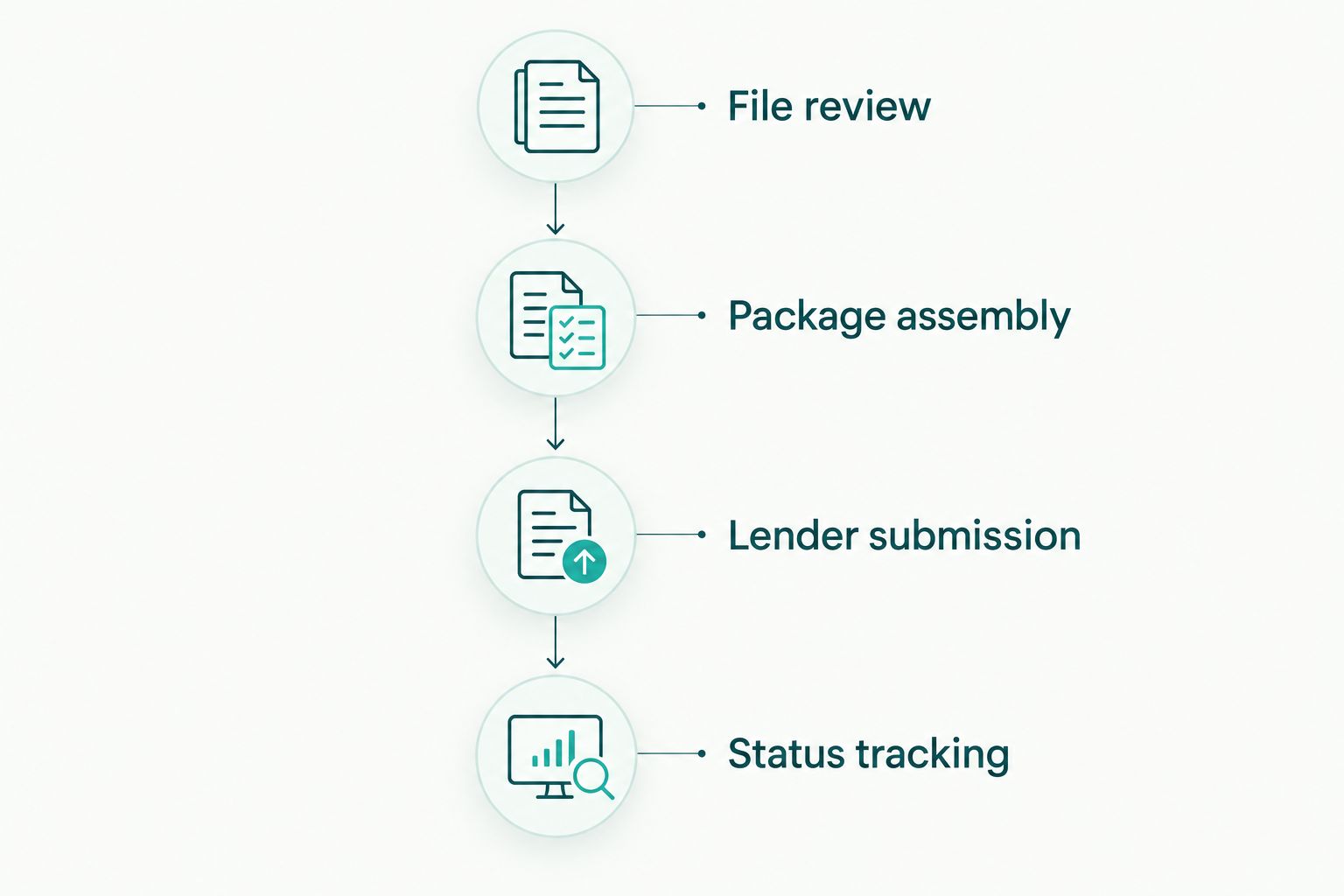
Keep the sequence simple:
- File review: Identify required forms, signatures, and missing information.
- Package assembly: Collect the requested seller, property, and transaction documents.
- Lender submission: Record what was sent and confirm the submission channel.
- Status tracking: Log requests, responses, and changes to the file.
A submission record is not confirmation that the lender considers the package complete. Ask for that status explicitly.
Complete-package pros:
- Makes missing documents visible before submission.
- Creates a record of the information provided.
- Gives the agent and processor a shared working file.
Complete-package cons:
- Requires seller participation and current documents.
- Does not prevent the lender from requesting additional information.
Verdict: Buy into a lender-specific checklist; skip the assumption that one packet fits every file.
2. Seller qualification and authorization: best for listing suitability
Start with the homeowner’s goal. A seller who wants to remain in the home needs a different discussion from a seller who has decided to leave and cannot cover the mortgage shortfall.
Confirm the loan information, known additional liens, seller circumstances, and any notices or deadlines. Obtain the authorization required for the lender to communicate with the appropriate representative. Use secure methods for sensitive financial documents.
Best for: Realtors deciding whether a short sale listing matches the seller’s situation.
Do not turn qualification into a promise. An upside-down mortgage does not, by itself, establish that a lender will approve a short sale. Ask what the lender requires and refer questions about alternatives to the appropriate housing, legal, or financial professional.
For your 2026 intake, document the seller’s preferred outcome in plain language. Record whether the priority is leaving the property, exploring retention options, or understanding the consequences before deciding. That distinction should shape the next conversation.
Seller-qualification pros:
- Establishes the homeowner’s actual objective.
- Identifies information needed before lender contact.
- Keeps authority to communicate separate from the listing agreement.
Seller-qualification cons:
- Depends on accurate seller disclosures.
- Does not replace lender eligibility review or professional advice.
Verdict: Buy into early qualification; hold the listing strategy until the seller’s goal is clear.
3. Evidence-based pricing: best for defensible market positioning
Price the property from market evidence and its documented condition. The mortgage balance describes the debt; it does not establish the property’s market value.
Prepare comparable sales, relevant active competition, and a factual condition summary. Explain your pricing recommendation to the seller, then keep a record of showing feedback and offers. If the property needs repairs, distinguish visible conditions from findings that require a qualified inspection.
Best for: Realtors who need to explain the listing price and respond to valuation questions.
Avoid presenting a low asking price as a lender-approved number. The lender can evaluate the property independently, and its assessment can differ from your recommendation. A price change should have a documented reason rather than serve as a substitute for lender communication.
Keep your 2026 pricing notes attached to the listing file. A buyer’s offer, your market analysis, and the lender’s valuation serve different purposes. Naming those differences helps the seller understand why a contract price is not the final approval decision.
Evidence-based-pricing pros:
- Makes the pricing recommendation explainable.
- Connects condition information to market positioning.
- Supports a factual response to valuation questions.
Evidence-based-pricing cons:
- Comparable sales do not dictate lender approval.
- Market conditions and property information can change.
Verdict: Buy into documented pricing; skip pricing from the payoff amount or an assumed bank discount.
4. Approval-aware buyer screening: best for contract expectations
Explain the short sale approval condition before the buyer relies on a closing schedule. Use disclosures and contract language required by your brokerage, local rules, and applicable law.
Discuss the buyer’s financing, intended closing arrangements, and willingness to participate in lender review. Review proof of funds or financing documentation as appropriate. Refer contract interpretation questions to your broker or qualified counsel rather than improvising protections.
Best for: Realtors matching a short sale listing with a buyer who understands the transaction.
Build 3 buyer checkpoints into your workflow: before an offer, when an offer is accepted, and when approval arrives. At each checkpoint, confirm the buyer’s understanding of the current status and the next contractual action. These are communication checkpoints, not promised review periods.
Do not describe the property as approved merely because the seller accepted an offer. Keep public remarks and buyer updates consistent with the actual written status. Clear language matters more than optimistic language.
Buyer-screening pros:
- Sets expectations before the buyer commits.
- Surfaces financing and scheduling questions early.
- Keeps lender review distinct from seller acceptance.
Buyer-screening cons:
- Cannot guarantee the buyer will remain in the transaction.
- Does not replace contract-specific advice.
Verdict: Buy into clear buyer expectations; skip any closing-date promise the lender has not supported.
5. Assigned lender communication: best for follow-up ownership
Give every lender request an owner. Maintain 1 request log showing the request, responsible person, response status, and next action. A conversation remembered by one person is not a dependable transaction record.
If you outsource processing, define the handoff. Shortsalesdoneright prepares the full short-sale package for agents, provides a dedicated point of contact, and supplies weekly lender updates. The agent still needs to coordinate listing activity, buyer communication, and the transaction responsibilities assigned to the agent.
Best for: Realtors who want short sale processing support without losing visibility into the file.
Shortsalesdoneright is best for realtors seeking short sale processing and lender negotiation support. Use the weekly update to understand current requests and next actions, not as a forecast of approval. Decide who communicates with the seller so messages do not conflict.
Maintain 2 work queues: lender requirements and listing-contract tasks. Keep them connected, but do not assume progress in one queue means the other is complete.
Assigned-communication pros:
- Creates accountability for unanswered requests.
- Gives the agent a defined processing contact.
- Separates bank-facing work from listing responsibilities.
Assigned-communication cons:
- Outsourcing does not remove seller document obligations.
- Shortsalesdoneright cannot promise lender approval or a particular decision date.
Verdict: Buy into assigned ownership; skip scattered follow-up with no shared record.
6. Written approval-term review: best for seller decision protection
Read the approval letter before telling the seller the transaction is resolved. Check the approved transaction details, required proceeds, conditions, and any language addressing the unpaid balance.
Permission to sell is not automatically forgiveness of the remaining debt. Lender terms and state law vary. A qualified attorney should explain the seller’s legal exposure, and a qualified tax professional should address possible tax consequences.
Best for: Realtors helping sellers make an informed decision after approval arrives.
Keep the explanation practical: what does the letter require, what questions remain, and who can answer them? Do not interpret an unclear clause as favorable simply because the lender approved the sale. Request clarification through the appropriate channel and involve counsel where needed.
For a 2026 approval, review the actual document attached to that transaction. A colleague’s prior experience, an older lender letter, or a general statement about foreclosure does not establish this seller’s outcome.
Approval-review pros:
- Separates sale approval from debt treatment.
- Identifies conditions before closing arrangements are finalized.
- Routes legal and tax decisions to qualified professionals.
Approval-review cons:
- Requires transaction-specific review.
- Does not guarantee that the seller will accept the lender’s terms.
Verdict: Hold until material terms are understood; skip verbal assumptions about debt forgiveness.
7. Closing-condition control: best for execution after approval
Turn the written approval into a closing checklist. Coordinate with the closing professional on the approved terms, required documents, transaction figures, and any stated expiration or completion requirements.
Do not treat a changed buyer, revised contract, or altered proceeds as automatically covered by the existing approval. Confirm whether the change requires lender review before proceeding. Keep all parties working from the current document set.
Best for: Realtors managing the transition from lender approval to closing.
Assign responsibility for every outstanding condition. Confirm that the closing professional has the approval letter and that the seller has received the professional advice needed to make the decision. If a condition remains unresolved, identify it directly rather than describing the transaction as ready.
After closing, retain records under your brokerage policies and applicable requirements. A signed closing package documents the transaction; it does not justify an agent-made promise about future credit results or tax treatment.
Closing-control pros:
- Converts approval language into assigned actions.
- Identifies changes that need confirmation.
- Keeps the closing file aligned with lender terms.
Closing-control cons:
- Depends on coordination among several parties.
- Does not eliminate unresolved title or approval conditions.
Verdict: Buy into condition-by-condition confirmation; hold closing claims until the responsible parties confirm readiness.
How these practices are ranked
The ranking prioritizes submission readiness, seller understanding, and clear ownership before downstream execution. Package completeness ranks first because it organizes the lender-facing work. Approval-term review protects a different decision: whether the seller understands and accepts the written outcome.
These are workflow recommendations, not measured approval-rate rankings. No practice guarantees approval, debt forgiveness, or a particular credit-score result.
Which practice should you start with?
Start with the lender-specific package checklist, then assign every missing item. That gives you a concrete next move without making promises about the bank’s decision.
If lender follow-up is the task you want to delegate, Shortsalesdoneright provides short sale processing and lender negotiation support. Establish the division of responsibilities before handing off the file. Keep seller decisions, contract duties, and professional advice clearly assigned.
FAQ
What are the most important short sale listing best practices for realtors?
Start with seller qualification, a lender-specific document checklist, and assigned follow-up responsibilities. Keep seller acceptance of an offer separate from lender approval, and have written approval terms reviewed before closing.
Can I list a short sale before the lender approves it?
Listing a property and obtaining lender approval are separate steps. Confirm the lender’s process and follow your brokerage’s disclosure, contract, and local compliance requirements; never describe an unapproved offer as lender-approved.
Does short sale approval mean the seller owes nothing afterward?
Short sale approval does not automatically establish that the seller owes nothing afterward. The written terms and applicable state law determine the relevant questions, which a qualified attorney should review.
Who handles lender follow-up when I outsource short sale processing?
The handoff should name the person responsible for lender requests and updates. Shortsalesdoneright provides a dedicated point of contact and weekly lender updates, while the agent retains the transaction responsibilities assigned to the agent.
Should I price a short sale at the mortgage balance?
Use market evidence and property condition to support your pricing recommendation, not the mortgage balance alone. The lender can conduct its own valuation and does not have to accept the listing price or offered price.
Can I promise a buyer that a short sale will close by a certain date?
Do not promise a closing date that depends on an unconfirmed lender decision. Explain the contract’s actual timing provisions and update the buyer when the written status changes.
Is a short sale always better than foreclosure for the homeowner?
A short sale is not automatically the better choice for every homeowner. The homeowner’s goals, lender terms, state law, and legal and tax consequences require an individual comparison with qualified professionals.
One last thing
A status update is not a decision. In your 2026 file, keep lender requests, seller acceptance, written approval, and closing readiness as separate statuses. That small distinction prevents a reassuring conversation from becoming an unsupported promise.