

The strongest reason to request a short-sale review is a mortgage balance your sale proceeds cannot cover, paired with a documented reason you cannot sustain the loan. If you are asking “do I qualify for a short sale” in 2026, Shortsalesdoneright helps homeowners compare a short sale with other options; the lender decides whether to approve the sale.
- Do I qualify for a short sale? Negative equity and documented hardship support a lender review, not automatic approval.
- An upside-down mortgage alone does not establish that you qualify for a short sale.
- Shortsalesdoneright helps homeowners compare short-sale options and handles lender negotiation.
- Review the unpaid balance, other liens, and written approval terms before agreeing to close.
Why this matters
A short sale means selling your home for less than the amount needed to pay off the mortgage, with the lender's approval. It is not simply accepting a low offer. The lender must agree to the transaction and the treatment of its lien.
Your first job is to establish whether a short sale addresses your actual problem. If you want to keep the home, ask about mortgage assistance before committing to an exit. If you need to sell, establish whether the proceeds would cover what you owe.
Shortsalesdoneright is a fit for homeowners who need help comparing a short sale with other options. Processing support does not replace the lender's decision or legal and tax advice.
What makes a strong short-sale review request?
For a 2026 short-sale review, organize the evidence around these criteria rather than looking for a universal qualification score:
- Sale proceeds: Can a supported sale amount cover the mortgage payoff and transaction expenses?
- Hardship: What changed, and how does it affect your ability to pay?
- Financial capacity: What do your current income, expenses, savings, and assets show?
- Property value: Does your agent's market analysis support the proposed sale amount?
- Other liens: Which additional creditors or claims must be addressed before closing?
- Available alternatives: Would mortgage assistance or another exit better meet your needs?
Lender requirements and state law vary. Treat these as preparation criteria, not a promise that a particular hardship or equity position guarantees approval.
Short-sale qualification signs at a glance
These 6 signs are ranked by their usefulness in deciding whether to request a review. They are not separate eligibility programs, and several can apply to the same homeowner.
| Sign | Best for | What it establishes | Key limitation |
|---|---|---|---|
| Sale proceeds fall short | Homeowners unsure whether a normal sale works | A potential gap between proceeds and debt | Negative equity alone does not establish hardship |
| Income has fallen | Households facing an income interruption | A documented change in payment capacity | The lender reviews the full financial picture |
| Necessary expenses have increased | Households with new essential obligations | Why the mortgage no longer fits the budget | Expenses need supporting records |
| A necessary move creates a shortfall | Homeowners who need to leave the property | Why selling is part of the proposed solution | Moving alone does not establish qualification |
| Payment difficulty is documented | Homeowners struggling with the existing loan | Evidence of a payment problem | Delinquency does not guarantee approval |
| Financial records support the request | Homeowners ready to submit a package | A reviewable explanation of the hardship | Complete paperwork cannot guarantee acceptance |
1. Sale proceeds fall short: best for checking negative equity
The starting question is whether a sale would leave enough money to pay off the mortgage after transaction expenses. Compare a current payoff statement with a supported estimate of net sale proceeds, not an online home-value estimate alone.
An upside-down mortgage is a reason to investigate. It does not, by itself, answer whether the lender will accept less than it is owed.
Best for: Homeowners who do not know whether they can sell without a mortgage shortfall.
Negative-equity evidence advantages:
- Establishes why a standard sale needs closer review.
- Gives your agent a concrete gap to explain.
- Separates the property-value problem from the payment problem.
Negative-equity evidence limitations:
- A value estimate is not an accepted purchase offer.
- The lender still evaluates your finances and proposed terms.
Verdict: Request a payoff statement and a net-proceeds estimate before assuming you need a short sale. If a normal sale can cover the debt, investigate that route first.
2. Income has fallen: best for explaining reduced payment capacity
A job loss, reduced working hours, or a decline in self-employment income can help explain why the mortgage has become difficult to maintain. The useful evidence shows what changed and what your household receives now.
Gather records appropriate to your situation, such as pay statements, employment notices, benefit documentation, or business income records. Follow the lender's requested document list rather than assuming one document establishes the whole case.
Best for: Homeowners whose current income no longer supports the existing mortgage payment.
Income-change evidence advantages:
- Connects the hardship to payment capacity.
- Supports a clear timeline of the change.
- Helps you evaluate whether retaining the home is realistic.
Income-change evidence limitations:
- A temporary interruption and an ongoing reduction present different financial pictures.
- Other household income and assets remain relevant to the review.
Verdict: Document the change, then ask about both short-sale review and home-retention assistance. If keeping your home is the goal, do not treat a sale as the default.
3. Necessary expenses have increased: best for budget-driven hardship
A household can face mortgage hardship without a reduction in earnings. Medical obligations, caregiving responsibilities, or other necessary expenses can change what is left for housing.
Show the expense and its effect on your current budget. A clear monthly financial statement is more useful than a general statement that everything has become expensive.
Best for: Homeowners whose essential obligations have changed their ability to maintain the mortgage.
Expense-change evidence advantages:
- Explains a hardship that income records alone do not show.
- Connects supporting documents to the household budget.
- Helps identify whether a payment adjustment would address the problem.
Expense-change evidence limitations:
- The lender determines how the expenses affect its review.
- A difficult budget does not establish that a short sale is the right solution.
Verdict: Submit a consistent budget with supporting records. Describe necessary obligations plainly; do not exaggerate them or omit income to strengthen the request.
4. A necessary move creates a shortfall: best for required relocation
A move connected to employment, household changes, or caregiving can make selling necessary. The short-sale question arises when the property cannot produce enough proceeds to satisfy the mortgage and you cannot sustain the financial obligations involved.
Separate the reason for leaving from the reason you cannot cover the shortfall. They answer different questions, and the lender needs a clear explanation of both.
Best for: Homeowners who need to leave the property and face a documented sale shortfall.
Relocation evidence advantages:
- Explains why selling is part of the proposed solution.
- Gives context to the hardship timeline.
- Helps your agent understand the practical constraints.
Relocation evidence limitations:
- Wanting to move is not the same as demonstrating financial hardship.
- A relocation explanation does not replace financial records.
Verdict: Request a review when the move, sale shortfall, and financial hardship fit together. Avoid assuming that relocation alone establishes qualification in 2026.
5. Payment difficulty is documented: best for an urgent loan review
Missed payments, collection correspondence, or a budget showing that payments are unsustainable can establish the need to speak with your mortgage servicer. None guarantees that the lender will approve a short sale.
Do not stop making payments just to try to qualify. Ask the servicer about its requirements and available assistance. If you have received a foreclosure notice, take it to a qualified local attorney promptly.
Best for: Homeowners who need an immediate review of payment difficulty and available options.
Payment-history evidence advantages:
- Shows the current status of the loan.
- Helps identify notices and deadlines that need attention.
- Gives context to the hardship explanation.
Payment-history evidence limitations:
- Being behind is not automatic eligibility.
- A pending short-sale request does not itself guarantee that foreclosure activity stops.
Verdict: Contact the servicer and address deadlines now. Do not wait for a buyer or a completed package before asking what action is required.
6. Your records support the request: best for submission readiness
A lender needs a reviewable request, not just a convincing hardship story. Your explanation should agree with the income, expenses, account records, and property information you provide.
Your lender's instructions determine the required package. Use this guide to documents to include in a short-sale package to organize the discussion with your agent or processor.
Best for: Homeowners ready to move from an initial question to a documented lender review.
A prepared package's advantages:
- Makes the financial explanation easier to follow.
- Helps identify missing records before submission.
- Gives your agent and processor a shared set of information.
A prepared package's limitations:
- Financial documents can need updating during review.
- Complete paperwork cannot guarantee acceptable lender terms.
Verdict: Prepare accurate records before requesting a decision. Read each authorization and disclosure before signing, and keep copies of what you submit.
How the signs are ranked
The order starts with whether a short sale is financially relevant, then examines hardship, urgency, and submission readiness. It is not an approval probability ranking.
For your 2026 decision, combine the signs. Negative equity without payment hardship raises different questions from negative equity paired with a documented loss of income.
What should you do next?
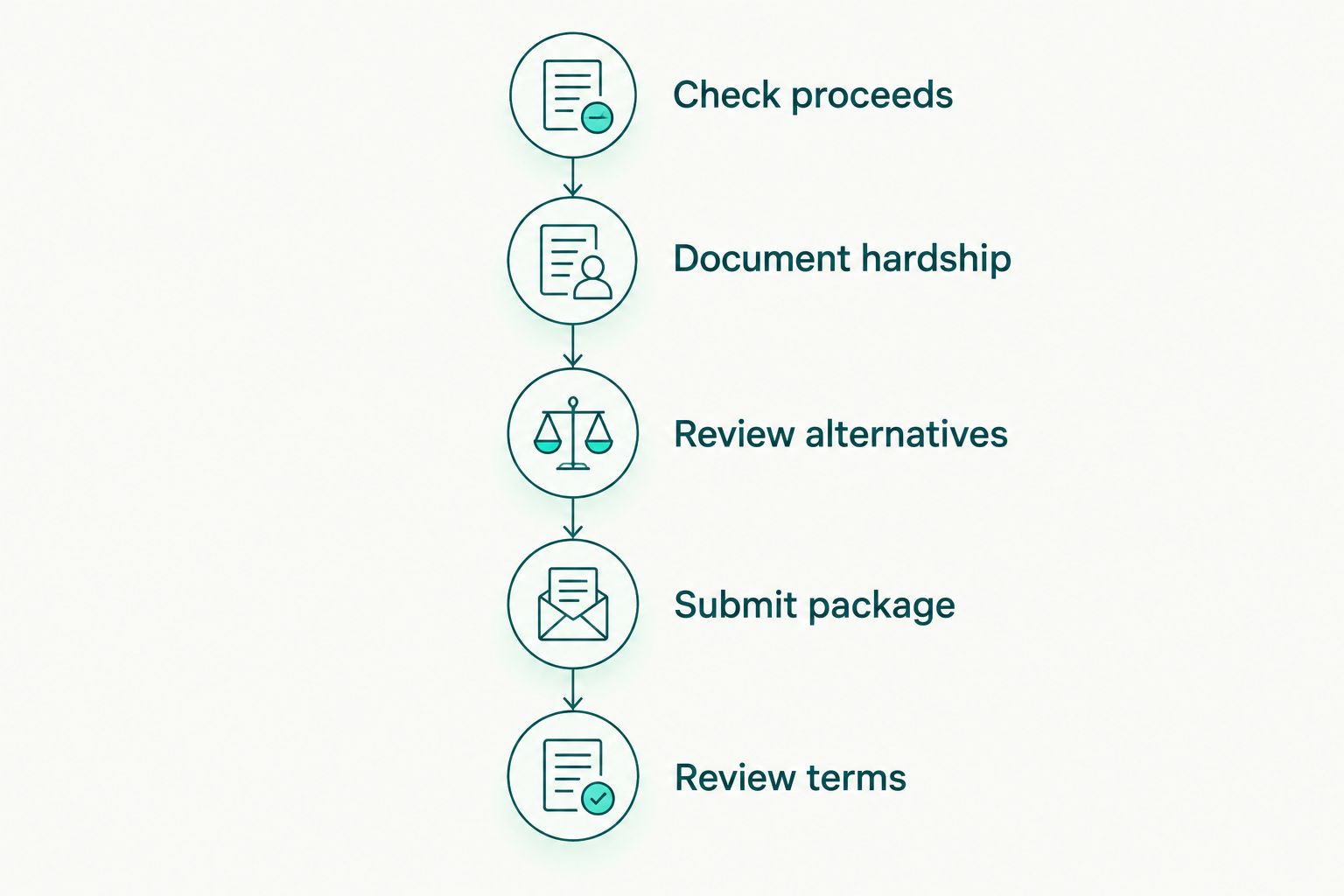
Use this sequence to turn the qualification question into a practical review:
- Check proceeds: Obtain a current payoff and ask your agent for a supported net-proceeds estimate.
- Document hardship: Gather the records that explain your current income, expenses, and financial change.
- Review alternatives: Ask your servicer about options that match whether you want to stay or leave.
- Submit package: Follow the lender's requirements and respond to requests for updated information.
- Review terms: Examine the written approval before committing to closing.
The sequence separates 2 decisions: whether a short sale deserves review, and whether the eventual approval terms are acceptable. Do not confuse getting permission to sell with resolving every remaining obligation.
Shortsalesdoneright provides short-sale processing and lender negotiation services. For agents, that includes preparing the full short-sale package, a dedicated point of contact, and weekly lender updates. As a homeowner, ask how you and your agent will share documents and receive information about the review.
Request help reviewing your options
Get help comparing a short sale with other options and preparing for lender review.
Which route should you choose?
Request a short-sale review when the supported sale proceeds fall short and your documented finances explain why you cannot sustain the loan or cover the gap. If retaining the home is your priority, begin with the servicer's assistance options.
Before accepting approval terms in 2026, ask 3 questions: What happens to any unpaid balance? Which other liens must be resolved? What legal or tax consequences need professional review?
Lender terms and state law vary. A qualified attorney should review legal questions, including responsibility for an unpaid balance; a qualified tax professional should assess potential tax consequences. No processor can promise approval, forgiveness, or a specific credit-score result.
FAQ
Do I qualify for a short sale if I owe more than my home is worth?
Owing more than your home is worth supports a short-sale review, but does not establish approval. The lender evaluates the proposed transaction, your financial circumstances, and its requirements.
Can I qualify for a short sale while my mortgage payments are current?
Ask your servicer whether it will review a short-sale request while your payments are current. Do not deliberately miss payments to seek qualification; document the hardship and explain why the loan is becoming unsustainable.
Does losing my job automatically qualify me for a short sale?
Losing your job does not automatically qualify you for a short sale. It can support a hardship explanation, but the lender also reviews your current finances and the proposed sale.
What documents should I gather for a short-sale review in 2026?
Start with the document list supplied by your lender or processor. Common preparation items include a hardship explanation, income records, a household financial statement, account records, and property or sale information.
Will a short sale erase the mortgage balance I cannot pay?
Do not assume a short sale erases every remaining obligation. Have a qualified attorney review the written approval, any unpaid-balance terms, and applicable state law before closing.
Is a short sale better than foreclosure for me?
The right choice depends on your finances, deadlines, available lender options, and state law. Compare the actual terms and consequences with qualified advisers rather than relying on a blanket claim that one route is always better.
Can Shortsalesdoneright guarantee short-sale approval?
Shortsalesdoneright provides processing and lender negotiation services, not guaranteed approval. The lender decides whether to accept the transaction, and legal and tax questions require qualified professionals.
One last thing
A lender's permission to release its lien and a lender's treatment of the unpaid balance are separate issues. Read the written approval for both before closing. In 2026, the safest next move is still a documented review of your actual loan, finances, and proposed sale—not a qualification checklist treated as a guarantee.