

Best overall: ask what makes the short-sale package complete. Best for deadline risk: ask about foreclosure status. Best for seller protection: ask what happens to the unpaid balance. These are the priority questions agents should ask lenders during a short sale in 2026, followed by questions about decision authority, valuation, and closing terms.
- Prioritize questions agents should ask lenders during a short sale around package completeness, foreclosure status, and written approval terms.
- Shortsalesdoneright provides short-sale processing and lender negotiation for agents who want help managing the lender file.
- Ask who controls approval, what remains outstanding, and which deadlines require action.
- Lender terms and state law vary. Refer debt liability and tax questions to qualified professionals.
Why this matters
A useful lender call ends with a specific next action, not just a status update. Ask what is missing, who must act, and what evidence will confirm progress. Keep the lender's statements separate from your own expectations when updating the seller or buyer's agent.
Shortsalesdoneright provides short-sale processing for agents who want package preparation and lender negotiation handled outside their office. The service includes a dedicated point of contact and weekly lender updates; the lender still controls its approval decision.
For your 2026 files, organize these 6 lender questions around the decision each answer supports. The ranking is a default call order, not a reason to delay an urgent foreclosure question.
What makes the best lender questions
Use these 4 ranking criteria to judge whether a question belongs on your call sheet:
- Actionability: The answer identifies a document, decision, or task you can address.
- Seller protection: The answer exposes terms the homeowner needs professional help understanding.
- Deadline relevance: The answer identifies an event that affects the transaction's timing.
- Written verification: The answer points to a message, checklist, or approval document you can retain.
Avoid questions that invite reassurance without detail. Replace a broad request for progress with a request for the current review stage, the outstanding requirement, and the person responsible for the next action.
Best lender questions at a glance
| Rank | Question focus | Best for | Standout benefit | Key limitation |
|---|---|---|---|---|
| 1 | Package completeness | Starting a usable review | Identifies missing or outdated items | Completeness does not equal approval |
| 2 | Decision authority | Understanding the approval path | Separates the contact person from the decision-maker | Other approvals can remain outstanding |
| 3 | Foreclosure status | Managing an urgent deadline | Identifies whether postponement is confirmed | A pending request is not a confirmed postponement |
| 4 | Property valuation | Responding to a counteroffer | Establishes how to submit supporting evidence | A challenge does not guarantee a revised value |
| 5 | Unpaid balance | Identifying seller liability questions | Separates lien release from debt forgiveness | Legal and tax interpretation requires qualified advice |
| 6 | Closing conditions | Turning approval into closing instructions | Identifies expiration dates and required changes | Changed terms can require further review |
1. Package completeness: best for starting lender review
Ask: What exactly is required for this package to be complete, and what remains outstanding today?
Request the checklist that applies to this loan and submission channel. Then ask the lender to identify each missing, unreadable, unsigned, or outdated item rather than describing the file as incomplete without explanation.
Confirm whether the lender has accepted the seller's authorization to communicate with you or the processor. Receipt and completeness are different checkpoints; ask for confirmation of both.
Best for: Agents preparing a submission or resolving repeated document requests.
Package-completeness question pros:
- Produces a specific correction list.
- Separates delivery confirmation from review readiness.
- Gives the seller clear document instructions.
Package-completeness question cons:
- Additional requests can arise during review.
- A complete file does not establish eligibility or approval.
Before ending the call, repeat the outstanding items and ask where each belongs. For your own checklist, connect those requirements to the MLS listing-to-short-sale-package workflow.
Ask whether replacing a document requires a new upload, a portal message, or another specified action. Follow the lender's instructions rather than sending duplicate packages without direction.
Verdict: Hold any claim that review is underway until the lender confirms the file's actual status.
2. Decision authority: best for understanding the approval path
Ask: Who must approve this short sale, and which decisions can your team make directly?
Your contact can explain the file without controlling every decision. Ask whether another investor, insurer, department, or lienholder must participate, and which approvals remain outstanding.
Use plain follow-ups: who owns the next action, how should you contact that person, and what triggers escalation? Keep the answer tied to this loan rather than assuming every lender uses the same process.
Best for: Agents receiving updates that do not explain what happens next.
Decision-authority question pros:
- Clarifies who owns the next step.
- Distinguishes a recommendation from final approval.
- Creates a useful escalation path.
Decision-authority question cons:
- Your contact cannot necessarily commit another decision-maker.
- A stated review estimate is not a closing commitment.
For a 2026 call log, identify the current decision stage separately from the person answering the phone. Ask what event will move the file into the next stage and how that change will be communicated.
Do not describe the transaction as approved because a negotiator supports it. Ask which written decision establishes approval and what conditions remain.
Verdict: Hold approval announcements until the required written decisions are available.
3. Foreclosure status: best for managing an urgent deadline
Ask: Is a foreclosure sale scheduled, and has any requested postponement actually been confirmed?
Do not assume a short-sale submission stops foreclosure activity. Ask the lender to distinguish a request for postponement from a confirmed change, and request written confirmation of the current status.
If the homeowner has received a foreclosure notice, encourage prompt advice from a qualified attorney in the property's state. Do not interpret the notice or calculate the homeowner's legal deadline yourself.
Best for: Agents handling a file with a foreclosure notice or reported sale date.
Foreclosure-status question pros:
- Brings the most urgent deadline into the conversation.
- Separates a pending request from a confirmed action.
- Identifies a reason for immediate legal advice.
Foreclosure-status question cons:
- A call summary is not proof that a sale was postponed.
- Another department or party can hold relevant information.
Ask who supplies authoritative confirmation and how the seller's attorney can coordinate with that contact. Report the lender's exact status to the seller without turning a pending request into reassurance.
Move this question to the start of the call whenever a scheduled sale is involved.
Verdict: Hold any assurance that foreclosure has stopped until the status is verified.
4. Property valuation: best for responding to a counteroffer
Ask: What supports the requested amount, and how do we submit evidence for reconsideration?
If the lender rejects the offer amount or requests different terms, ask which part of the offer falls short. Separate the property's assessed market position from the lender's required proceeds and other transaction conditions.
Request the process for submitting relevant comparable sales, documented condition issues, or corrections to property information. Ask what the lender will accept before assembling an unsupported rebuttal.
Best for: Agents facing a valuation disagreement or unexplained counteroffer.
Property-valuation question pros:
- Identifies the specific point of disagreement.
- Directs evidence to the accepted review channel.
- Helps explain the response to the buyer's agent.
Property-valuation question cons:
- Supporting evidence does not guarantee reconsideration.
- A revised value does not resolve every approval condition.
Keep your response factual. Explain why a comparable sale is relevant and connect condition evidence to the property, rather than relying on the buyer's willingness to proceed.
Ask whether the existing offer remains under review while the lender considers additional evidence. Do not infer that a challenge extends any deadline.
Verdict: Hold unsupported price promises; submit the evidence the lender agrees to review.
5. Unpaid balance: best for identifying seller liability questions
Ask: Will the written approval address the unpaid balance, and what language describes the seller's remaining obligations?
Permission to release a mortgage lien and forgiveness of the remaining debt are different issues. Ask where the approval addresses each, including any requested seller contribution or separate agreement.
Your role is to obtain the documents and identify unresolved questions. A qualified attorney should explain legal liability; a qualified tax professional should address potential tax consequences.
Best for: Agents helping sellers review proposed approval terms before closing.
Unpaid-balance question pros:
- Surfaces obligations beyond transferring the property.
- Directs attention to the actual written terms.
- Gives professional advisers a specific document to review.
Unpaid-balance question cons:
- A lender representative's explanation is not legal advice.
- One creditor's terms do not settle another creditor's claim.
In 2026, do not tell a seller that a short sale automatically clears every unpaid amount. Lender terms and state law vary, and the approval must be reviewed for the particular transaction.
If the wording is unclear, request clarification before presenting the issue as resolved. Do not substitute a reassuring phone conversation for document review.
Verdict: Hold seller assurances about debt forgiveness until qualified professionals review the written terms.
6. Closing conditions: best for converting approval into instructions
Ask: What must happen before closing, when does approval expire, and which changes require another review?
Read the approval alongside the contract and proposed settlement figures. Ask about the approved buyer, required lender proceeds, permitted disbursements, closing deadline, and documents needed after closing.
Confirm the procedure for requesting an extension before one is needed. Do not assume the lender will accept a changed buyer, amended contract, or revised settlement statement without review.
Best for: Agents coordinating an approved file with the buyer and closing team.
Closing-conditions question pros:
- Converts approval into a closing checklist.
- Identifies differences between approved and proposed terms.
- Establishes how to request changes.
Closing-conditions question cons:
- Approval still carries conditions that must be satisfied.
- Other liens or closing issues can remain unresolved.
Have the closing professional identify conflicts between the approval and the planned disbursements. Send questions through the lender's required channel and retain the response with the file.
The closing date belongs in every relevant party's working checklist, not just in the agent's notes.
Verdict: Hold closing instructions that conflict with the lender's written approval until the conflict is resolved.
How these questions are ranked
This 2026 ranking puts review readiness first, followed by decision ownership, deadline risk, valuation, seller obligations, and closing execution. It applies the criteria of actionability, seller protection, deadline relevance, and written verification.
The order changes with the file. A scheduled foreclosure sale takes priority over package housekeeping; unclear debt language takes priority before the seller accepts approval terms. No question replaces legal advice or guarantees lender approval.
Turn lender answers into a usable follow-up plan
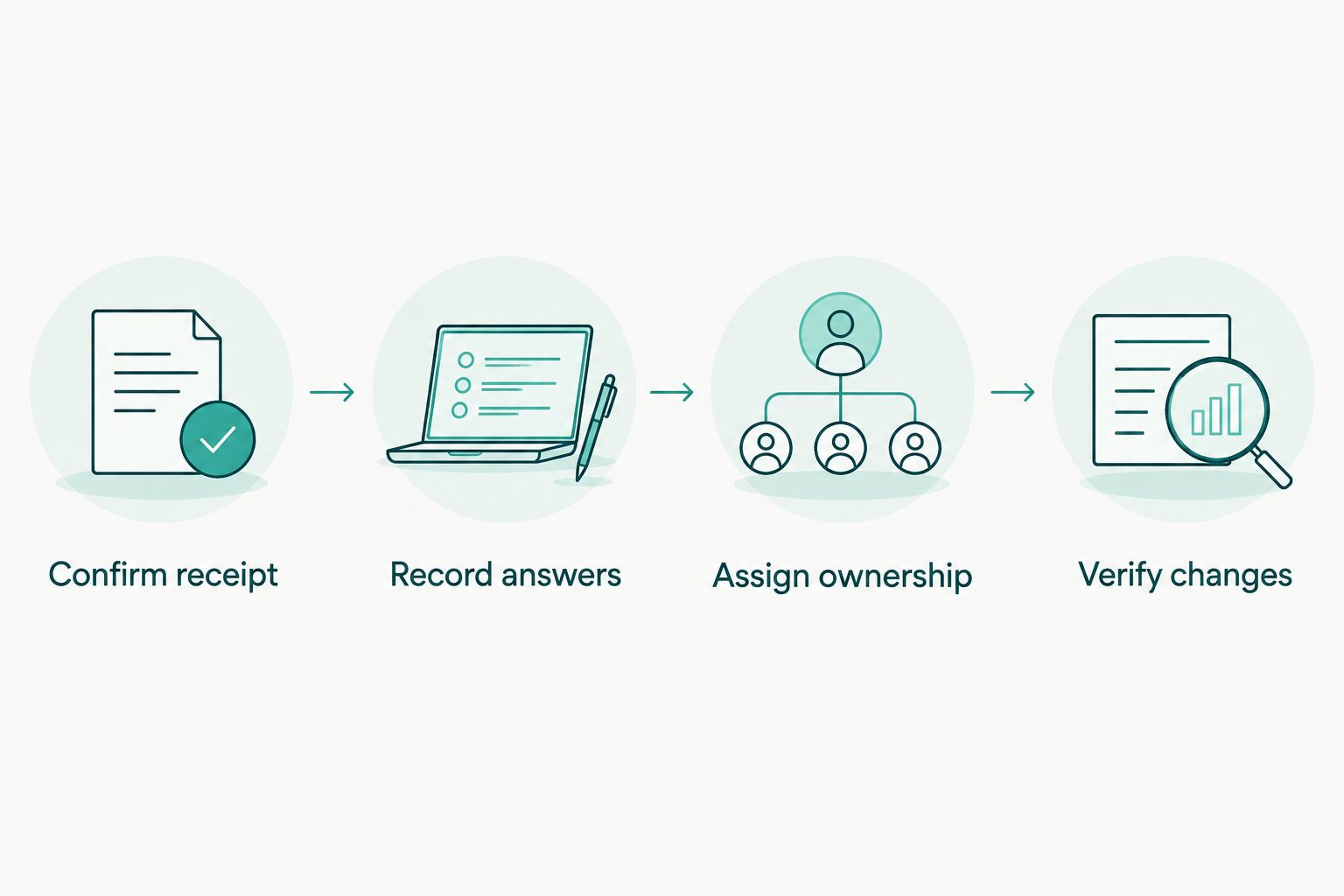
Use this sequence after each substantive lender contact:
- Confirm receipt: Verify that the lender received the specific submission or response.
- Record answers: Separate confirmed facts from pending requests and estimates.
- Assign ownership: Identify who must complete the next action.
- Verify changes: Obtain confirmation when a deadline, requirement, or approval term changes.
Keep 3 call-log fields: confirmed status, next action, and responsible person. Attach the relevant written response so another authorized team member can understand the file without reconstructing the conversation.
Shortsalesdoneright prepares the full short-sale package for agents and provides a dedicated point of contact with weekly lender updates. If you want that processing support, request help through the agent intake form on the site.
Request short-sale processing help
Get help preparing the package and managing lender communication for your listing.
Which lender question should you ask first?
Start with package completeness unless an urgent deadline changes the priority. Without a specific outstanding-items list, your next call risks repeating the same conversation.
Then ask who owns the next decision and what will confirm progress. Shortsalesdoneright supports the processing work; your seller's attorney and tax professional address the legal and tax questions. Keep those responsibilities distinct when explaining the transaction to your client.
FAQ
What are the most important questions agents should ask lenders during a short sale?
Start with package completeness, decision authority, foreclosure status, valuation, unpaid-balance terms, and closing conditions. Ask for a specific next action and written confirmation wherever the answer affects the seller's decisions.
Should I ask the lender whether submitting a short sale stops foreclosure?
Yes, ask about the actual foreclosure status and whether any postponement is confirmed. Do not assume submission stops the process; direct questions about notices and legal deadlines to a qualified attorney in the property's state.
What should I ask when a lender says the short-sale package is incomplete?
Ask for an itemized list of missing, outdated, unsigned, or unreadable documents. Confirm the required submission channel and ask how the lender will acknowledge that the corrections satisfy the request.
Does short-sale approval mean the seller owes nothing afterward?
No, short-sale approval alone does not establish that every remaining obligation is forgiven. Obtain the written terms and have a qualified attorney explain the seller's liability; consult a qualified tax professional about tax consequences.
What should I ask before agreeing to a short-sale closing date?
Ask when approval expires, what conditions remain, and which transaction changes require further review. Coordinate the approval terms with the closing professional before treating the proposed date as settled.
Can an agent outsource short-sale lender communication?
Shortsalesdoneright provides short-sale processing and lender negotiation services for agents. Its services include full package preparation, a dedicated point of contact, and weekly lender updates; lender approval is not guaranteed.
One last thing
For your next 2026 lender call, separate received, complete, and approved in your notes. They answer different questions. Before you update the seller, identify which status the lender actually confirmed and what remains unresolved.