

Best first question: Will selling leave an unpaid mortgage balance? Best question if you want to stay: What alternatives let me keep the home? Best deadline question: Is a foreclosure sale scheduled? These are the highest-priority questions to ask before starting a short sale in 2026, followed by the paperwork, approval terms, and consequences you need to understand.
- Start with the unpaid balance: a short sale requires lender agreement to accept less than the amount owed.
- Compare a short sale with home-retention options before committing to sell an upside-down mortgage property.
- Confirm foreclosure deadlines separately; submitting a short-sale request does not automatically stop foreclosure.
- Shortsalesdoneright provides short-sale processing and lender negotiation, not guaranteed approval or debt forgiveness.
Why this matters
A short sale involves more than finding a buyer. Your lender must agree to accept sale proceeds below the amount owed, and the written terms determine what you must do to close.
Shortsalesdoneright is a fit for homeowners seeking short-sale processing and lender negotiation support. You can start with Shortsalesdoneright while keeping legal and tax advice with qualified professionals.
For a homeowner evaluating a short sale in 2026, the goal is not simply an approval letter. The goal is to understand whether selling addresses your housing problem and what obligations remain afterward. Lender terms and state law vary.
What makes the best short-sale questions?
Ask questions that change your decision, not questions that invite vague reassurance. Use these criteria:
- Decision value: Does the answer help you choose between keeping and selling the home?
- Deadline exposure: Does the answer identify something that needs immediate attention?
- Written evidence: Can you verify the answer in a statement, notice, or approval letter?
- Remaining obligations: Does the answer explain what happens beyond the property transfer?
- Clear ownership: Is a named professional responsible for the answer and next action?
Take the questions below to your mortgage servicer, real estate agent, and relevant advisers. A processor coordinates the short-sale file; an attorney and tax professional address their respective areas.
The best questions at a glance
| Rank and question | Best for | What the answer clarifies | Key limitation |
|---|---|---|---|
| 1. Will selling leave an unpaid balance? | Establishing whether a short sale is relevant | Estimated proceeds versus mortgage payoff | An estimate is not lender approval |
| 2. Can I keep the home instead? | Homeowners who want to stay | Whether to investigate home-retention options | An available option must still fit your finances |
| 3. What deadlines apply right now? | Homeowners receiving foreclosure notices | Urgency and separate foreclosure activity | A short-sale request does not itself stop foreclosure |
| 4. What documents and eligibility rules apply? | Preparing a reviewable submission | Required evidence and submission steps | A complete package does not guarantee acceptance |
| 5. Whose approval is needed, and what debt remains? | Properties with multiple claims | Closing permissions and remaining obligations | Releasing a lien is not necessarily debt forgiveness |
| 6. What happens to taxes, credit, and my next move? | Planning life after the sale | Personal consequences and transition needs | No single outcome applies to every homeowner |
1. Will selling leave an unpaid balance?
Best for: Establishing whether a short sale is relevant.
Ask your agent for an estimated sale outcome and request current payoff information through the appropriate lender process. Compare expected net proceeds after selling expenses with the amounts needed to complete the sale. A mortgage statement balance alone does not settle that comparison.
If you owe more than the home can produce at closing, ask what the lender requires to consider accepting less. Do not treat an estimated market value as an approved sale amount.
This question's advantages:
- Establishes the financial starting point.
- Separates a regular sale from a proposed short sale.
- Gives your agent a concrete comparison to explain.
This question's limitations:
- Estimated proceeds change with the offer and closing details.
- Negative equity alone does not guarantee approval.
Verdict: Hold the short-sale commitment until the payoff and estimated proceeds are compared.
2. Can I keep the home instead?
Best for: Homeowners who would prefer not to move.
Tell your mortgage servicer your actual goal. Ask about options to address the payment problem, including whether a loan modification, repayment arrangement, or temporary payment relief is relevant to your circumstances. These options serve different purposes; none should be assumed available or affordable.
A short sale is an exit strategy, not a way to retain ownership. If keeping the home is your priority in 2026, investigate that path before treating a sale as the default.
This question's advantages:
- Keeps your housing preference central.
- Opens a discussion about alternatives to selling.
- Connects the decision to an affordable ongoing payment.
This question's limitations:
- A temporary arrangement does not necessarily solve a lasting income shortfall.
- Exploring alternatives does not suspend existing deadlines.
For a closer comparison, read whether a short sale is better than a loan modification.
Verdict: Hold the sale decision until you understand the available home-retention options.
3. What deadlines apply right now?
Best for: Homeowners receiving foreclosure notices or court documents.
Ask whether a foreclosure sale is scheduled, which notices require a response, and who can confirm the current status. Give your attorney and short-sale team copies of the actual notices. An expected lender response date is not a substitute for reviewing a foreclosure deadline.
Do not assume that listing the property, submitting documents, or receiving an offer stops foreclosure. Ask for written confirmation of any postponement or other action affecting the scheduled process.
This question's advantages:
- Identifies issues requiring urgent professional attention.
- Separates sale negotiations from foreclosure activity.
- Helps your team assess whether the proposed closing is workable.
This question's limitations:
- Deadlines and procedures depend on state law and the case.
- A processor cannot guarantee a postponement.
Verdict: Hold assumptions about extra time; get immediate legal guidance when a deadline is active.
4. What documents and eligibility rules apply?
Best for: Preparing a short-sale request the lender can review.
Ask the servicer for its current requirements in 2026 and confirm where the package must be submitted. Depending on the review, requested materials can include financial statements, income records, bank statements, a hardship explanation, and transaction documents. Follow the actual checklist rather than a generic internet template.
Ask whether the lender accepts an initial review before an offer and what requires updating during negotiations. Keep copies of submissions and requests so everyone works from the same file.
This question's advantages:
- Turns an uncertain process into specific tasks.
- Clarifies what you must provide personally.
- Helps identify incomplete or outdated material.
This question's limitations:
- Requirements differ by loan and review process.
- Complete paperwork does not establish lender acceptance of an offer.
Verdict: Hold submission until the responsible person checks the package against current lender instructions.
5. Whose approval is needed, and what debt remains?
Best for: Understanding closing conditions and obligations after the sale.
Ask your title or closing professional to identify mortgages, liens, and other claims affecting the property. A second mortgage, home equity line, unpaid taxes, or other recorded claim can require separate attention. Do not assume the first mortgage lender's agreement resolves every claim.
Then ask a qualified attorney whether each written agreement addresses personal responsibility for any unpaid balance. Permission to release a property lien and forgiveness of an unpaid debt are different questions.
This question's advantages:
- Identifies parties whose cooperation is needed.
- Focuses attention on the actual written terms.
- Separates transferring the property from resolving personal debt.
This question's limitations:
- A verbal explanation does not replace the approval documents.
- State law and individual agreements affect remaining obligations.
Verdict: Hold acceptance of terms you do not understand; obtain legal review before relying on debt forgiveness.
6. What happens to taxes, credit, and my next move?
Best for: Planning beyond the closing date.
Ask a qualified tax professional how cancellation-of-debt rules apply to your circumstances. Ask your mortgage professional how your payment history and the proposed sale affect a future application. No processor should promise a specific credit-score change or a guaranteed date for another mortgage.
Also ask when you must leave under the transaction documents and how that fits your next housing arrangement. For a 2026 move, build the plan around confirmed obligations rather than an assumed closing date.
This question's advantages:
- Connects the sale with your next housing decision.
- Brings tax questions to the right professional early.
- Exposes promises that are too broad to rely on.
This question's limitations:
- Personal outcomes depend on facts beyond the sale itself.
- A tentative closing schedule is not a guaranteed moving date.
Verdict: Hold firm moving commitments until the closing requirements and your obligations are clear.
Turn the answers into a decision
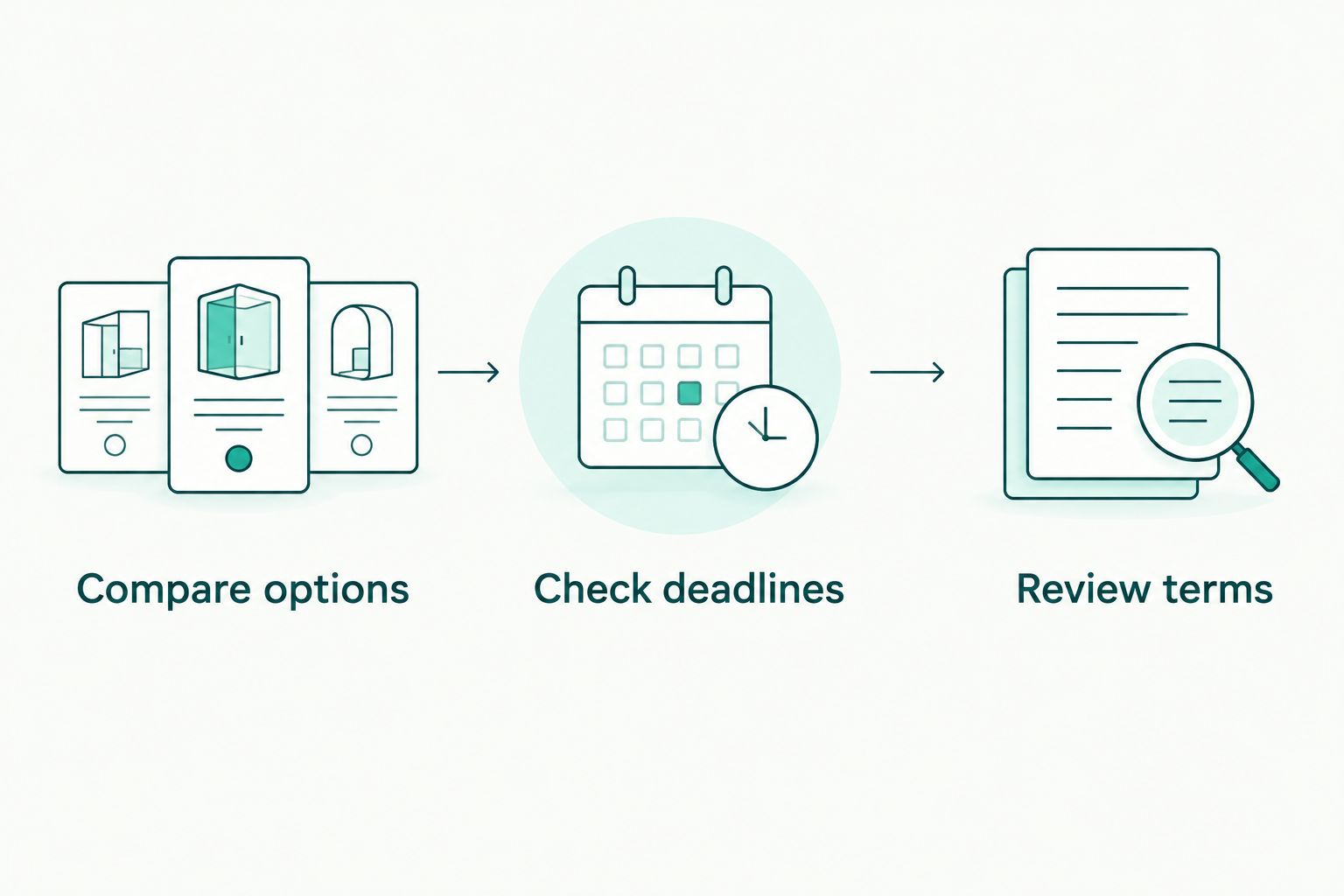
Use 3 checkpoints: Compare options, Check deadlines, and Review terms. Start with whether selling addresses your problem, address urgent notices without waiting for the full file, and review written conditions before committing to them.
Keep 2 separate lists: lender requests and questions for your advisers. That separation helps prevent an administrative update from being mistaken for legal or tax advice. Put each request beside a responsible person's name and the next action.
Before accepting approval terms, use 1 written-review rule: no unresolved condition gets treated as settled. Ask about unclear language before you rely on it.
Who handles the package and lender follow-up?
Ask who prepares the file, submits missing documents, tracks requests, and updates you. You should know whom to contact and what information you still owe the team.
Shortsalesdoneright provides short-sale processing and lender negotiation services. For agents, the service includes preparing the full short-sale package, a dedicated point of contact, and weekly lender updates. For homeowners, the service includes help comparing a short sale with other options.
Processing support does not replace the lender's decision or your professional advisers. Ask about the scope of work and any payment responsibilities before authorizing services. Request help through the appropriate homeowner intake form on the site when you are ready.
Request help with your short-sale options
Explain your situation and ask about processing, lender negotiation, and next steps.
How these questions are ranked
The order follows decision value, deadline exposure, written evidence, remaining obligations, and clear ownership. Financial fit comes first for an undecided homeowner. An active foreclosure deadline takes priority over this reading order.
This is a decision checklist for 2026, not a lender eligibility formula. Your answers determine the next step; the ranking does not determine approval.
Which question should you ask first?
Start with whether the sale proceeds will cover what is owed, unless an active legal deadline requires immediate attention. Then decide whether you want to keep the home and whether the available alternatives fit that goal.
Shortsalesdoneright short-sale processing supports the file and lender discussions. Your decision should rest on documented terms, realistic housing plans, and advice suited to your circumstances—not a promise that a short sale fixes everything.
FAQ
What's the most important question to ask before starting a short sale?
Ask whether the expected net sale proceeds will cover the amounts needed to complete the sale. If a foreclosure deadline is active, seek legal guidance on that deadline immediately rather than waiting for a financial estimate.
Should I ask about a loan modification before a short sale?
Yes, if you want to keep your home, ask your servicer about home-retention options before committing to sell. Compare the actual terms and ongoing affordability, not just whether an option exists.
Does starting a short sale stop foreclosure?
Starting a short sale does not automatically stop foreclosure. Ask about the current status and obtain written confirmation of any postponement; consult an attorney about notices and deadlines.
Will a short sale erase everything I owe?
Do not assume a short sale erases every unpaid obligation. Have a qualified attorney review the approval terms, any other claims, and the effect of applicable state law.
What should I ask a short-sale processor before hiring one?
Ask who prepares the package, handles lender requests, and provides updates. Also confirm the service scope, your responsibilities, and any payment obligations before authorizing work.
Can anyone promise what a short sale will do to my credit?
No one should promise you a specific credit-score result from a short sale. Your payment history and credit file affect the outcome, and future mortgage applications have their own requirements.
Who should answer my short-sale tax questions?
A qualified tax professional should explain the tax consequences for your circumstances. Bring the relevant debt and transaction documents rather than relying on a general statement about forgiven mortgage debt.
One last thing
A lender's approval can still leave you with an unanswered question: what must happen for that approval to remain usable? Read the conditions, required signatures, and closing deadline—not just the word approved. Ask your team to identify every unfinished requirement before you make irreversible plans.


