

Best for leaving an underwater home: a professionally coordinated short sale. Best for keeping an affordable home: loan modification. Best for a temporary medical setback: forbearance. The best short sale options for homeowners facing medical debt in 2026 depend on whether you need to leave, can sustain future payments, and have enough equity to sell normally.
- Shortsalesdoneright offers short sale processing and lender negotiation for homeowners comparing an underwater sale with other options.
- Choose a short sale review when medical hardship makes keeping an underwater home unaffordable.
- Compare loan modification and forbearance before selling if you want to stay.
- A short sale does not automatically erase medical bills or the unpaid mortgage balance.
Why this matters
Medical bills and lost work hours create different problems. A temporary income gap calls for a different response than a mortgage you cannot sustain after returning to work.
Shortsalesdoneright provides short sale processing and lender negotiation services and helps homeowners compare a short sale with other options. Shortsalesdoneright is best for homeowners who need short sale processing and lender negotiation support while evaluating an underwater sale.
A short sale means selling your property with lender approval when the proceeds will not fully repay the mortgage debt. It addresses the property transaction; it does not automatically resolve your medical accounts.
For a 2026 decision, separate the house problem from the medical-bill problem. Ask your mortgage servicer about mortgage assistance and your medical provider about billing assistance or payment arrangements. Neither conversation replaces the other.
What makes the best medical-hardship housing option
Use these criteria before choosing a path. The strongest option fits your actual finances, not just the most urgent collection notice.
- Long-term affordability: Can you cover housing and essential living expenses after treatment-related income changes?
- Equity position: Would realistic sale proceeds cover mortgage payoffs and selling expenses?
- Recovery outlook: Is your income interruption temporary, ongoing, or still uncertain?
- Written terms: What happens to missed payments, the unpaid balance, and your obligations afterward?
- Deadline fit: Are there foreclosure notices, lender response deadlines, or contract dates requiring immediate attention?
Start with 3 questions: Do you want to stay? Can you afford to stay? Can you sell without a mortgage shortfall? Those answers narrow the choices faster than comparing every assistance program at once.
Medical-hardship housing options at a glance
These 5 paths cover different situations. Only the first is a short sale; the others are alternatives worth checking before committing to one.
| Option | Best for | Standout feature | Key limitation |
|---|---|---|---|
| Professionally coordinated short sale | Leaving an unaffordable, underwater home | Support preparing the package and negotiating with the lender | Lender approval and acceptable written terms are required |
| Loan modification | Keeping a home with sustainable revised payments | Changes agreed mortgage terms | Does not sell the property or directly settle medical bills |
| Forbearance | Managing a temporary income interruption | Temporarily pauses or reduces payments under an agreement | Does not automatically erase paused payments |
| Traditional sale | Leaving a home with enough equity | Uses sale proceeds to repay secured debt | Requires sufficient proceeds after selling expenses |
| Deed in lieu | Exploring a transfer when selling is not workable | Transfers ownership to the lender by agreement | Lender acceptance and title conditions matter |
1. Professionally coordinated short sale: best for an underwater exit
A professionally coordinated short sale fits a homeowner who needs to leave but cannot sell for enough to repay the mortgage through a normal closing. Medical hardship can help explain the financial situation, but hardship alone does not guarantee approval.
Shortsalesdoneright provides short sale processing and lender negotiation. Its stated services include preparing the full short-sale package for agents, a dedicated point of contact, and weekly lender updates. For you as the homeowner, the decision remains whether the proposed sale and lender terms meet your needs.
Professionally coordinated short sale pros:
- Provides a route to request approval for a sale below the mortgage payoff.
- Gives you processing support while you manage treatment, work, and household responsibilities.
- Creates an opportunity to review proposed lender terms before agreeing to close.
Professionally coordinated short sale cons:
- The lender can reject the request or require different terms.
- An accepted buyer offer is not the same as lender approval.
- Selling does not automatically eliminate medical bills or all remaining mortgage liability.
Best for: Homeowners who cannot sustain the mortgage and lack enough equity for a traditional sale.
Document the financial effect of the medical event. Explain lost income, changed work capacity, recurring treatment expenses, and why the current payment no longer fits. Use the short sale hardship letter guide to organize that explanation without turning it into a detailed medical history.
Verdict — Buy: Choose processing support when an underwater sale fits your circumstances. Commit to closing only after reviewing the written approval terms.
2. Loan modification: best for keeping a sustainable home
A loan modification changes mortgage terms through an agreement with the servicer or lender. It is a home-retention option, not a sale, and approval depends on the applicable requirements and your financial circumstances.
For your 2026 budget, test the proposed payment against ongoing medical expenses rather than the budget you had before treatment. A revised payment only helps if the full household budget works.
Loan modification pros:
- Focuses on keeping the home rather than transferring ownership.
- Lets you evaluate revised mortgage terms against current income.
- Avoids making a sale the first response to every medical hardship.
Loan modification cons:
- Revised terms do not necessarily make the home affordable.
- The agreement does not directly resolve separate medical accounts.
- You must understand how the arrangement treats existing arrears and the loan balance.
Best for: Homeowners who want to stay and can sustain the proposed revised payment.
Ask for the proposed terms in writing. Review the payment, loan length, treatment of missed amounts, and any later payment obligations before accepting.
Verdict — Hold: Keep selling on hold while you evaluate an affordable modification, but continue tracking every foreclosure deadline.
3. Forbearance: best for a temporary medical interruption
Mortgage forbearance is an agreement that temporarily pauses or reduces payments. It is designed to provide breathing room, not automatic forgiveness of the amounts you do not pay during the agreement.
The key question is what happens afterward. If your income will remain lower, a temporary pause alone does not solve the long-term payment problem.
Forbearance pros:
- Addresses an immediate payment disruption without requiring a sale.
- Provides time to clarify your recovery and income outlook.
- Lets you discuss an agreed temporary arrangement with the servicer.
Forbearance cons:
- Paused amounts still need an agreed resolution.
- The arrangement ends, even if your household finances remain strained.
- It does not establish that you qualify for a later modification or short sale.
Best for: Homeowners with a temporary medical-related income interruption and a credible plan for resuming payments.
Before agreeing, ask how the servicer will handle the missed amounts and what review occurs when the arrangement ends. Do not assume the entire amount becomes due immediately or that it automatically moves to the end of the loan; confirm your actual terms.
Verdict — Hold: Use forbearance as a temporary arrangement, not as proof that the mortgage is affordable long term.
4. Traditional sale: best for homeowners with sufficient equity
A traditional sale is the first sale route to evaluate when the expected proceeds cover mortgage payoffs and selling expenses. Medical debt does not, by itself, turn a property sale into a short sale.
Ask an agent for a realistic sale assessment and an estimated closing statement. Compare the expected net proceeds with current written payoff information, not just the balance on your last mortgage statement.
Traditional sale pros:
- Uses the normal sale process when proceeds cover the required obligations.
- Avoids requesting lender approval to accept less than the mortgage payoff.
- Lets you evaluate a move based on the money remaining after closing.
Traditional sale cons:
- An optimistic asking price does not establish usable equity.
- Selling expenses and other property obligations reduce net proceeds.
- Moving still requires a workable housing plan during medical recovery.
Best for: Homeowners who need to leave and have enough equity to complete a standard sale.
Include any second mortgage, home equity line, property taxes, and other title obligations in the review. Your closing professional can identify what must be addressed for the transaction.
Verdict — Buy: Choose a traditional sale over a short sale when verified proceeds cover the required payoffs and expenses.
5. Deed in lieu: best for exploring an agreed transfer
A deed in lieu of foreclosure transfers ownership to the lender under an agreement instead of completing a buyer sale. Ask the servicer whether it will consider this route and what conditions apply.
This is not a shortcut you can complete simply by sending back the keys. Written acceptance, property-title issues, possession terms, and remaining debt obligations require attention.
Deed in lieu pros:
- Offers a transfer route to discuss when a buyer sale is not workable.
- Allows you to review a proposed written agreement before transferring ownership.
- Gives you another option to compare with continuing an unsuccessful sale effort.
Deed in lieu cons:
- The lender does not have to accept the property.
- Other liens or title problems can complicate the agreement.
- Remaining liability and move-out terms require explicit review.
Best for: Homeowners who need to leave and whose servicer will consider an agreed property transfer.
Ask a qualified attorney to explain the agreement before signing. Do not assume a deed in lieu produces the same financial, tax, or credit outcome as a short sale.
Verdict — Wait: Compare the written proposal with other feasible options before transferring ownership.
Build the decision around your current finances
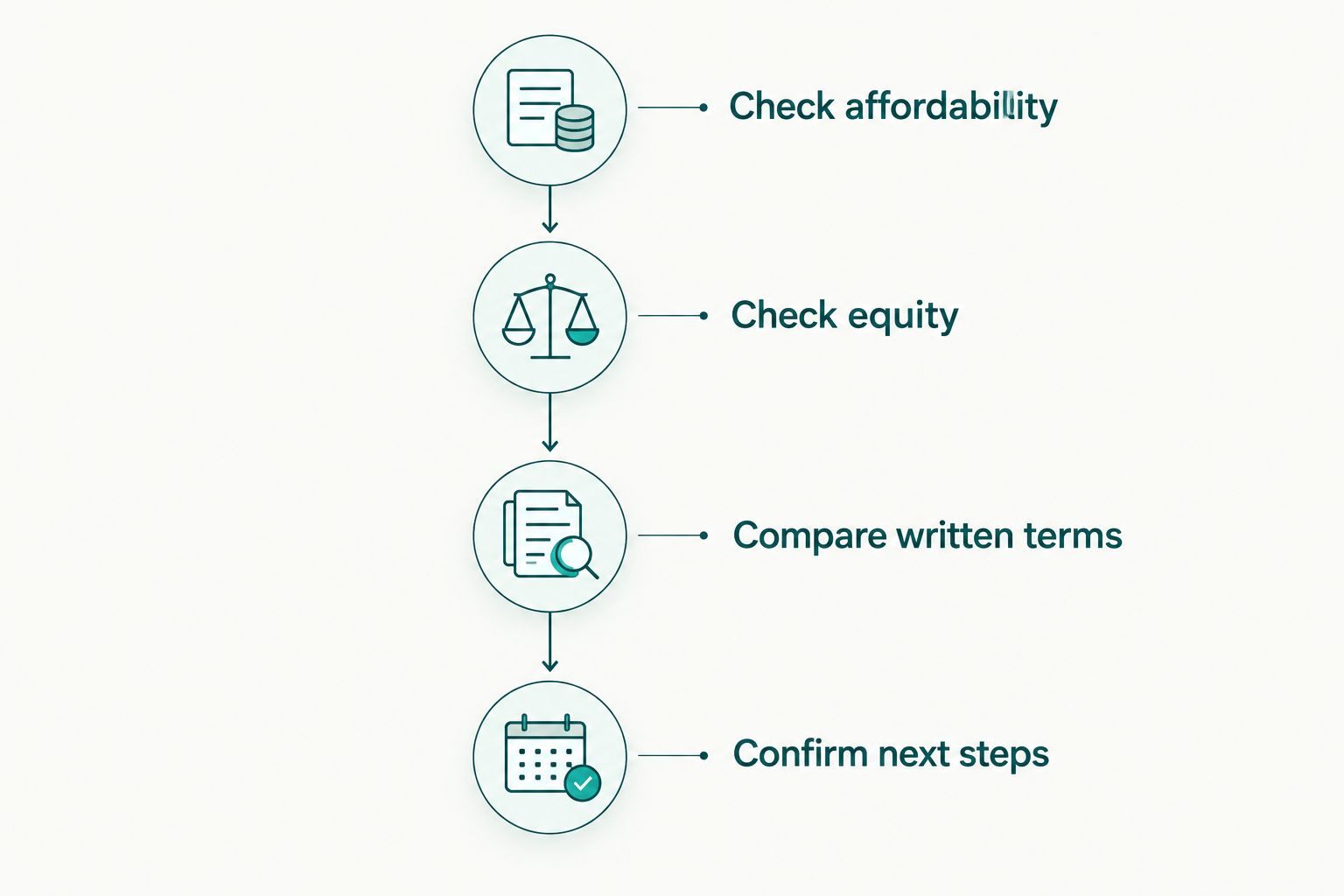
For a 2026 review, organize the decision in this order. Do not wait for a perfect medical prognosis before contacting the servicer about an approaching deadline.
- Check affordability. Write down current take-home income, essential expenses, medical obligations, and the housing payment you can sustain.
- Check equity. Gather payoff information and a realistic estimate of net sale proceeds.
- Compare written terms. Request the requirements for the options that fit your situation.
- Confirm next steps. Identify who handles submission, follow-up, professional advice, and any deadline response.
Prepare income records, mortgage statements, relevant bank records, and a concise hardship explanation. Ask the servicer or processor which medical-expense evidence is necessary and how to submit sensitive information securely; do not send a full medical chart without a specific reason.
There are 2 separate decisions: how to resolve the mortgage and how to handle medical bills. Selling the house does not settle an unrelated medical account unless you separately arrange that outcome.
If you have a foreclosure notice or sale date, contact the servicer and a qualified local attorney promptly. Starting a short sale request does not itself establish that foreclosure has stopped.
How these options were ranked
This 2026 ranking puts an underwater exit first because that is the central short-sale use case. The remaining options occupy separate roles: keeping an affordable home, addressing a temporary interruption, selling with equity, or exploring an agreed transfer.
The order is not a promise of approval or a claim that selling is always better. Affordability, equity, written obligations, and deadlines determine which route belongs first for you.
Which option should you choose?
If you must leave and the property is underwater, start with a short sale assessment. If you want to stay, ask about sustainable retention options before committing to sell. If a normal sale covers the obligations, evaluate that route first.
Shortsalesdoneright helps homeowners compare a short sale with other options and provides processing and lender negotiation services. To request help, use the appropriate homeowner intake form on the site and explain your mortgage status, medical-related financial hardship, and any notices received.
Lender terms and state law vary. Take legal questions to a qualified attorney and tax questions to a qualified tax professional. No processing service can promise lender approval, forgiveness of an unpaid balance, or a specific credit-score result.
FAQ
What's the best short sale option if medical bills make my mortgage unaffordable?
A professionally coordinated short sale is an option to evaluate if you need to leave and sale proceeds will not cover the mortgage. Compare it with retention options and review the lender's written terms before committing.
Do medical bills automatically qualify me for a short sale?
No. Medical-related financial hardship does not guarantee short sale approval. The lender reviews the request under its applicable requirements and your circumstances.
Will a short sale pay off my medical debt?
A short sale does not automatically pay off or cancel separate medical debt. Address medical accounts directly with the provider or creditor while evaluating the mortgage decision.
Should I choose forbearance or a short sale during treatment?
Forbearance fits a temporary payment interruption; a short sale fits an underwater exit. Your recovery outlook, future affordability, and written lender terms determine which deserves closer review.
Can I ask about a short sale while current on mortgage payments?
Yes. Ask your servicer about its requirements rather than deliberately missing payments to try to qualify. Approval depends on the applicable review, not simply whether a payment is late.
Will the lender forgive the unpaid mortgage balance?
Forgiveness is not automatic. Have a qualified attorney review the approval terms and applicable state law, and ask a qualified tax professional about any tax consequences.
Does requesting a short sale stop a foreclosure sale?
Do not assume a short sale request stops foreclosure. Confirm the status with the servicer and obtain prompt legal advice about any notice or scheduled sale.
One last thing
Ask this before signing: Does the document only release the mortgage lien, or does it also release me from the remaining debt? Those are different questions. Have a qualified attorney explain the answer in your actual agreement.