

Best overall: an evidence-backed hardship timeline. Best for explaining affordability: a clear before-and-after budget. Best for writing without outside help: a short, factual outline. These short sale hardship letter tips explain what to include in 2026, what to leave out, and how to keep your letter consistent with the documents your lender reviews.
- The best short sale hardship letter tips connect your hardship, current finances, and request with supporting documents.
- Explain why keeping the home is no longer workable; an upside-down mortgage alone does not explain affordability.
- Shortsalesdoneright provides short sale processing and lender negotiation services for homeowners and real estate agents.
- A hardship letter does not guarantee approval, debt forgiveness, or a particular credit result.
Why this matters
A short sale asks your mortgage lender to approve a sale for less than the amount owed. Your hardship letter explains the circumstances behind that request. It is part of the submission, not a substitute for financial records or the lender’s required forms.
For homeowners, the goal is a clear account of what changed and why the mortgage is no longer workable. Shortsalesdoneright helps homeowners compare a short sale with other options and provides short sale processing and lender negotiation services.
Shortsalesdoneright short sale processing is best for agents who want help preparing the full package and handling lender communication. Homeowners still need to provide accurate facts about their own circumstances.
What makes the best hardship letter approach?
Use these criteria to judge your draft before submitting it:
- Accuracy: Every factual statement matches your circumstances and available records.
- Causation: The letter connects the hardship to your ability to pay the mortgage.
- Financial consistency: Income, expenses, and dates agree with the rest of the package.
- A clear request: The lender can identify what you want reviewed.
- Readable structure: Short paragraphs separate the event, its financial effect, and your request.
- Relevant detail: The letter includes enough context without becoming a personal history.
For a 2026 submission, follow your lender’s current instructions rather than an old online template. A lender-provided hardship form takes priority over a preferred writing format.
Short sale hardship letter tips at a glance
These are ranked writing methods, not competing services. Use them together; each solves a different problem in the same letter.
| Rank | Tip | Best for | Standout feature | Key limitation |
|---|---|---|---|---|
| 1 | Evidence-backed timeline | Explaining what changed | Connects events with dates and records | Dates alone do not explain affordability |
| 2 | Before-and-after budget | Showing the financial effect | Connects hardship with current finances | Figures must match the financial package |
| 3 | Clear short sale request | Identifying the desired outcome | Removes ambiguity about the request | A request does not establish eligibility |
| 4 | Relevant personal context | Explaining unusual circumstances | Adds necessary context without oversharing | Personal detail cannot replace financial evidence |
| 5 | Short factual outline | Writing your own first draft | Keeps the letter focused | Brevity can omit an essential explanation |
| 6 | Package consistency check | Preventing contradictions | Aligns the letter with supporting records | It cannot correct missing or inaccurate records |
| 7 | Final terms review | Separating the request from approval | Keeps the letter from assuming lender concessions | Legal and tax questions need qualified advice |
1. Evidence-backed timeline: best for explaining what changed
Start with the event or circumstances that created the hardship. Then explain when they began and how they affected your ability to keep paying. A job loss, reduced income, illness, or household change needs a financial connection, not just a mention.
Use the level of precision your records support. Do not invent an exact date because a template leaves a blank for one. If the hardship developed gradually, explain that sequence plainly.
Evidence-backed timeline pros:
- Gives the lender a clear sequence to follow.
- Connects your explanation with supporting records.
- Helps separate the original event from its continuing effects.
Evidence-backed timeline cons:
- A chronology does not explain your current budget by itself.
- Unsupported dates create inconsistencies elsewhere in the package.
Best for: Homeowners whose hardship followed an identifiable event or series of changes.
Verdict: Use the timeline as your opening, then explain its financial effect.
2. Before-and-after budget: best for explaining affordability
Describe what changed in your finances. Focus on the income loss, necessary expense increase, or combination that affects the mortgage. Use the same figures and reporting periods that appear in your financial statement.
Distinguish gross income from take-home income. Also distinguish recurring expenses from one-time costs. Mixing these categories makes a letter harder to reconcile with the rest of the submission.
If your income varies, explain the pattern instead of presenting an unusually strong or weak month as normal. Do not estimate a precise amount unless you can support it.
Before-and-after budget pros:
- Connects the hardship with the payment problem.
- Makes the explanation more specific than a general statement of stress.
- Helps you identify discrepancies before submission.
Before-and-after budget cons:
- Financial figures need supporting records.
- Repeating every expense can bury the main explanation.
Best for: Homeowners whose main challenge is reduced income or increased necessary expenses.
Verdict: Use the budget explanation, but keep detailed calculations in the financial documents.
3. Clear short sale request: best for identifying the desired outcome
State that you are requesting consideration of a short sale. Explain why you are seeking that option rather than leaving the lender to infer your goal from a description of hardship.
Being underwater and being unable to afford the mortgage are different issues. If both apply, explain both accurately. Do not state a property value or mortgage balance from memory when the submission contains documented figures.
Mention discussions about other options only if they actually happened. An application, denial, or conversation must not appear in your letter merely because it appears in someone else’s sample.
Clear short sale request pros:
- Identifies the action you want the lender to consider.
- Separates financial hardship from the requested resolution.
- Gives the closing paragraph a specific purpose.
Clear short sale request cons:
- The request does not guarantee lender approval.
- It does not establish the terms of any unpaid balance.
Best for: Homeowners whose draft describes the problem but never states the request.
Verdict: Use a direct request for consideration, not a demand for approval.
4. Relevant personal context: best for unusual circumstances
Include personal details when they explain the financial problem. A household change can require context, but the lender does not need every disagreement or private event that preceded it.
For medical hardship, explain the financial effect and follow the lender’s documentation instructions. Avoid adding unrelated sensitive information. The purpose is to explain affordability, not to disclose your entire medical history.
Keep the tone calm. You can describe a difficult situation honestly without blaming an employer, family member, buyer, or lender. Strong emotion does not replace a clear account of income and expenses.
Relevant personal context pros:
- Explains circumstances that financial records do not explain alone.
- Helps make a complicated situation understandable.
- Keeps the letter personal without making it unfocused.
Relevant personal context cons:
- Excess detail exposes information unrelated to the request.
- Emotional language can obscure the financial explanation.
Best for: Homeowners whose records need a brief explanation of the surrounding circumstances.
Verdict: Use relevant context; skip unrelated personal history.
5. Short factual outline: best for writing your own draft
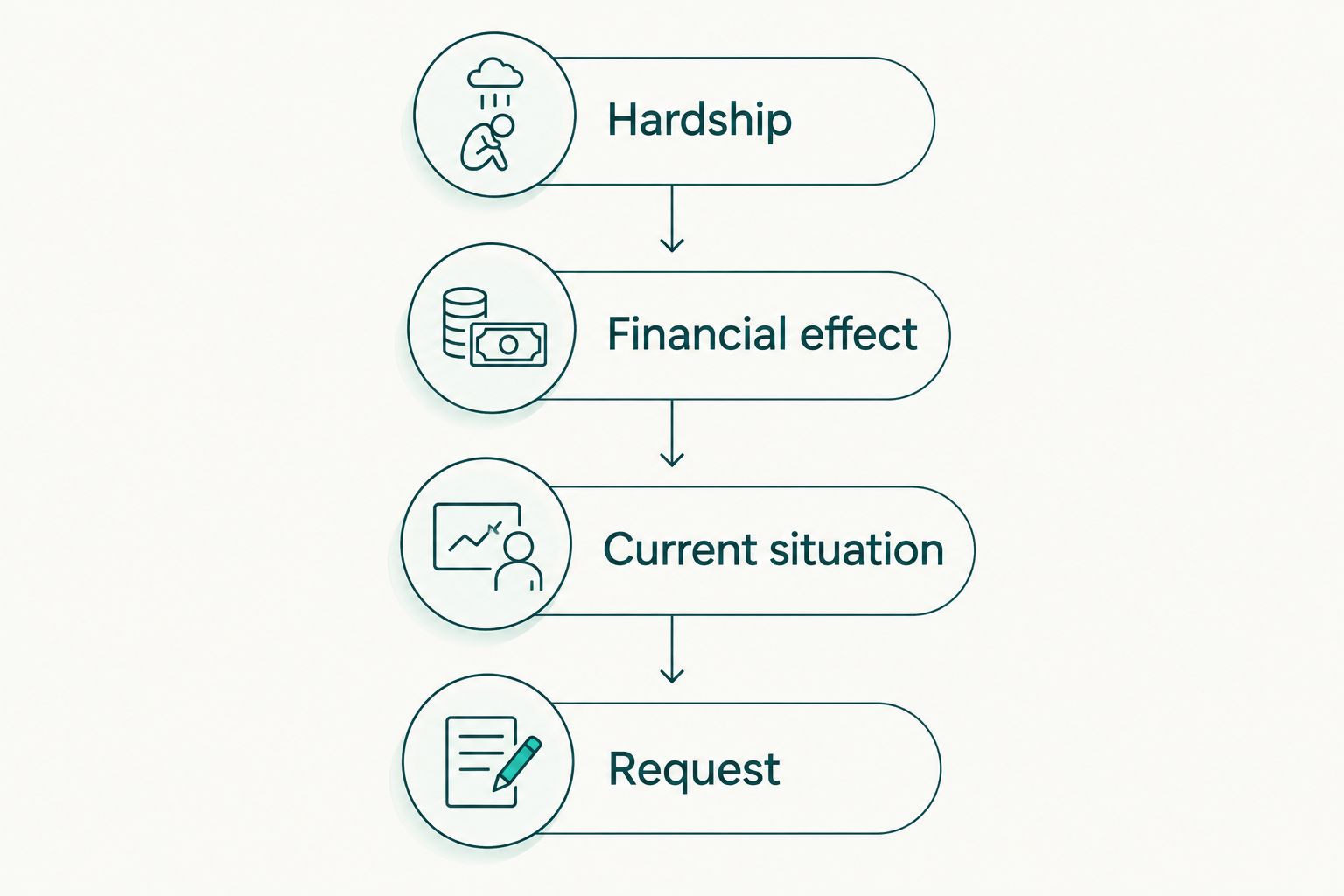
Write the letter in a simple sequence: hardship, financial effect, current situation, request. That structure helps you avoid repeating the same point in several paragraphs.
As an editing target, aim for 1 page if that length explains the facts clearly. This is a writing recommendation, not a lender requirement. Use more space when necessary, and follow any instructions your lender supplies.
In 2026, a dated letter should describe your current circumstances. Review reused language carefully so an earlier draft does not present a past situation as today’s reality.
Short factual outline pros:
- Gives you a manageable starting point.
- Makes repetition easier to remove.
- Helps a reviewer find the main explanation quickly.
Short factual outline cons:
- A rigid length target can remove necessary context.
- A polished template can still contain inaccurate statements.
Best for: Homeowners who want to write the first draft themselves.
Verdict: Use the outline, but let the facts determine the final length.
6. Package consistency check: best for preventing contradictions
Read the letter beside your financial statement and supporting records. Check income, household circumstances, employment status, and the sequence of events. Explain genuine differences rather than quietly changing one document to match another.
For example, a recent income change can explain why an older record differs from your current statement. Identify the change and provide the documentation requested by the lender.
A good letter cannot make an incomplete submission complete. Review the documents to include in a short sale package alongside the lender’s own checklist.
Package consistency check pros:
- Finds conflicting statements before submission.
- Keeps the letter connected to the financial evidence.
- Helps you identify facts that need explanation.
Package consistency check cons:
- A review cannot supply records you have not gathered.
- Matching documents do not guarantee approval.
Best for: Homeowners whose package includes records from different reporting periods.
Verdict: Use this check before submitting any draft.
7. Final terms review: best for avoiding unsupported assumptions
Keep your request separate from the lender’s eventual decision. Asking for a short sale does not mean the lender has agreed to release you from an unpaid balance or accept every proposed term.
Do not describe debt forgiveness, credit effects, or tax treatment as settled facts. Lender terms and state law vary. Direct questions about liability and legal documents to a qualified attorney, and tax questions to a qualified tax professional.
Final terms review pros:
- Prevents the letter from assuming concessions not yet granted.
- Keeps your writing focused on the request.
- Identifies questions that need professional advice.
Final terms review cons:
- Reviewing wording does not resolve legal or tax issues.
- The eventual approval terms still require separate review.
Best for: Homeowners concerned about the consequences of a short sale.
Verdict: Skip unsupported promises; get qualified advice about the actual terms.
How these tips are ranked
The order follows what a reader needs to understand first: what changed, how it affected affordability, and what you are requesting. Context, editing, document checks, and terms review then strengthen that explanation. The ranking reflects writing priorities, not measured approval rates.
Build your letter in a clear sequence
Use these 4 drafting steps for your 2026 letter. Gather the lender’s instructions first, then write from your actual circumstances rather than copying another homeowner’s story.
- Hardship: Identify the event or circumstances and when they began.
- Financial effect: Explain the effect on income, necessary expenses, or mortgage affordability.
- Current situation: Describe the circumstances that apply now.
- Request: Ask the lender to consider a short sale.
After drafting, read the sequence aloud. Each part should add information rather than repeat the previous paragraph.
Answer 3 questions before you send it: What changed? How does that affect the mortgage? What are you asking the lender to consider? If an answer is missing, revise the relevant paragraph rather than adding a longer introduction.
Then make 2 final checks: confirm the facts against your records, and confirm the submission requirements with your lender or processor. These are editing steps, not a replacement for the lender’s checklist.
When to ask for processing help
Writing the letter is only part of preparing a short sale. You also need to gather requested records and respond to lender questions. Ask for help when you need support with that process, not just a more polished paragraph.
Shortsalesdoneright short sale processing includes preparing the full package for agents, a dedicated point of contact, and weekly lender updates. Those services support the submission process; they do not promise approval.
For homeowners, Shortsalesdoneright helps compare a short sale with other options. Request help through the appropriate intake form on the site, and keep legal and tax questions with qualified professionals.
Request short sale help
Get help with short sale processing or compare your homeowner options.
Which hardship letter approach should you choose?
Start with the evidence-backed timeline, then add the financial effect and a clear request. That is the default for an undecided writer. Use the other tips to refine the draft, not to make it sound more dramatic.
For a 2026 submission, accuracy matters more than persuasive flourishes. Explain your circumstances plainly and keep the letter aligned with the package the lender receives.
FAQ
What are the best short sale hardship letter tips?
The best short sale hardship letter tips are to explain what changed, connect it to mortgage affordability, and state a clear request. Keep dates and financial details consistent with supporting records, and follow the lender’s instructions.
How long should my short sale hardship letter be?
Aim for one page as an editing target, not a lender rule. Use enough space to explain the hardship and its financial effect clearly, and follow any lender-specific format requirements.
Does an upside-down mortgage count as a hardship?
An upside-down mortgage describes your equity position, not your ability to make payments. Explain any separate financial hardship accurately and ask the lender what its review requires.
Should I use a hardship letter template in 2026?
Use a template for structure, not for facts. Replace every example with your actual circumstances and follow your lender’s current instructions or required hardship form.
Will a strong hardship letter guarantee short sale approval?
No hardship letter guarantees short sale approval. The lender reviews the submission and proposed transaction, and the letter is only one part of that review.
Does short sale approval mean the unpaid balance is forgiven?
Do not assume short sale approval forgives an unpaid balance. Lender terms and state law vary; have a qualified attorney review the actual terms and consult a qualified tax professional about tax consequences.
Can Shortsalesdoneright help beyond writing the letter?
Shortsalesdoneright provides short sale processing and lender negotiation services. It helps agents prepare the full package and helps homeowners compare a short sale with other options; approval remains the lender’s decision.
One last thing
A hardship letter and an approval document do different jobs. The letter explains your request; the approval document states the lender’s terms. Do not treat a well-written request as evidence that a particular outcome has been agreed.
Keep a copy of your final 2026 letter and the documents submitted with it. If your circumstances change, explain the change accurately rather than leaving an outdated account in the package.