

Best overall: coordinated lender negotiation. Best for limited cash: a no-contribution request. Best when an approved contribution resolves the second lien: a documented settlement. These short sale with second mortgage options address different obstacles; Shortsalesdoneright provides processing and lender negotiation services for homeowners comparing their choices in 2026.
- Shortsalesdoneright provides short sale processing and lender negotiation for homeowners managing first and second mortgage negotiations.
- Compare short sale with second mortgage options by lien release, remaining debt, required contribution, and deadlines.
- A second mortgage lien release does not automatically cancel the unpaid mortgage balance.
- Choose coordinated negotiation when selling; review retention options when keeping the home remains your goal.
Why this matters
An upside-down mortgage means the mortgage debt exceeds the home's value. With a second mortgage, you must also address another lender's claim against the property. An acceptable offer alone does not resolve that claim.
The key question is not just whether the second lender accepts the sale. It is what the lender requires to release the lien and what happens to any remaining debt. Those are separate issues. Lender terms and state law vary, so send legal questions to a qualified attorney and tax questions to a qualified tax professional.
This guide ranks 5 pathways by the problem you need to solve. Some work together rather than replacing one another: coordinated negotiation can include a no-contribution request or a documented settlement. The final pathway is an alternative to selling, not a short-sale approval strategy.
What makes the best short sale option?
Use these criteria to compare your choices in 2026 before you accept a lender's conditions:
- Lien release: The arrangement must address the liens that prevent the property from transferring under the proposed closing terms.
- Remaining debt: Written terms must explain whether an unpaid balance remains your responsibility. Do not treat silence as forgiveness.
- Contribution requirements: Understand whether a lender requests money or a separate repayment obligation. Neither belongs outside the documented approval process.
- Coordination: The first lender's conditions, second lender's conditions, purchase contract, and closing documents must work together.
- Your housing goal: Selling and keeping the home require different decisions. Start with the outcome you actually want.
- Deadline control: A pending request does not establish that foreclosure activity has stopped. Confirm deadlines with the servicer and qualified legal counsel.
Short sale options at a glance in 2026
| Rank and pathway | Best for | Main benefit | Key limitation |
|---|---|---|---|
| 1. Coordinated lender negotiation | Homeowners selling with multiple mortgage claims | Addresses lender conditions as one transaction | Processing support cannot guarantee approval |
| 2. No-contribution request | Homeowners without funds for a requested settlement | Presents the inability to contribute for lender review | The lender can reject the request |
| 3. Documented contribution settlement | Homeowners able to meet an approved settlement condition | Addresses a specific second-lender requirement | Payment alone does not establish debt forgiveness |
| 4. Attorney-led debt review | Homeowners facing unclear liability or disputed terms | Clarifies legal consequences before agreement | Legal review does not replace lender approval |
| 5. Retention review | Homeowners who want to keep the property | Examines alternatives before committing to a sale | A change to one loan does not resolve the other |
1. Coordinated lender negotiation: best for managing multiple approvals
Coordinated lender negotiation treats the short sale as one transaction, not two disconnected conversations. A processor organizes the package, follows lender requests, and tracks conditions that must fit together before closing.
Shortsalesdoneright provides short sale processing and lender negotiation services. Its agent-facing service includes preparation of the full short-sale package, a dedicated point of contact, and weekly lender updates. Homeowners receive help comparing a short sale with other options.
Shortsalesdoneright is best for homeowners seeking short sale processing and lender negotiation support. Keep the homeowner's decision separate from the agent's workflow: you decide whether the terms are acceptable; your agent manages the listing and sale responsibilities.
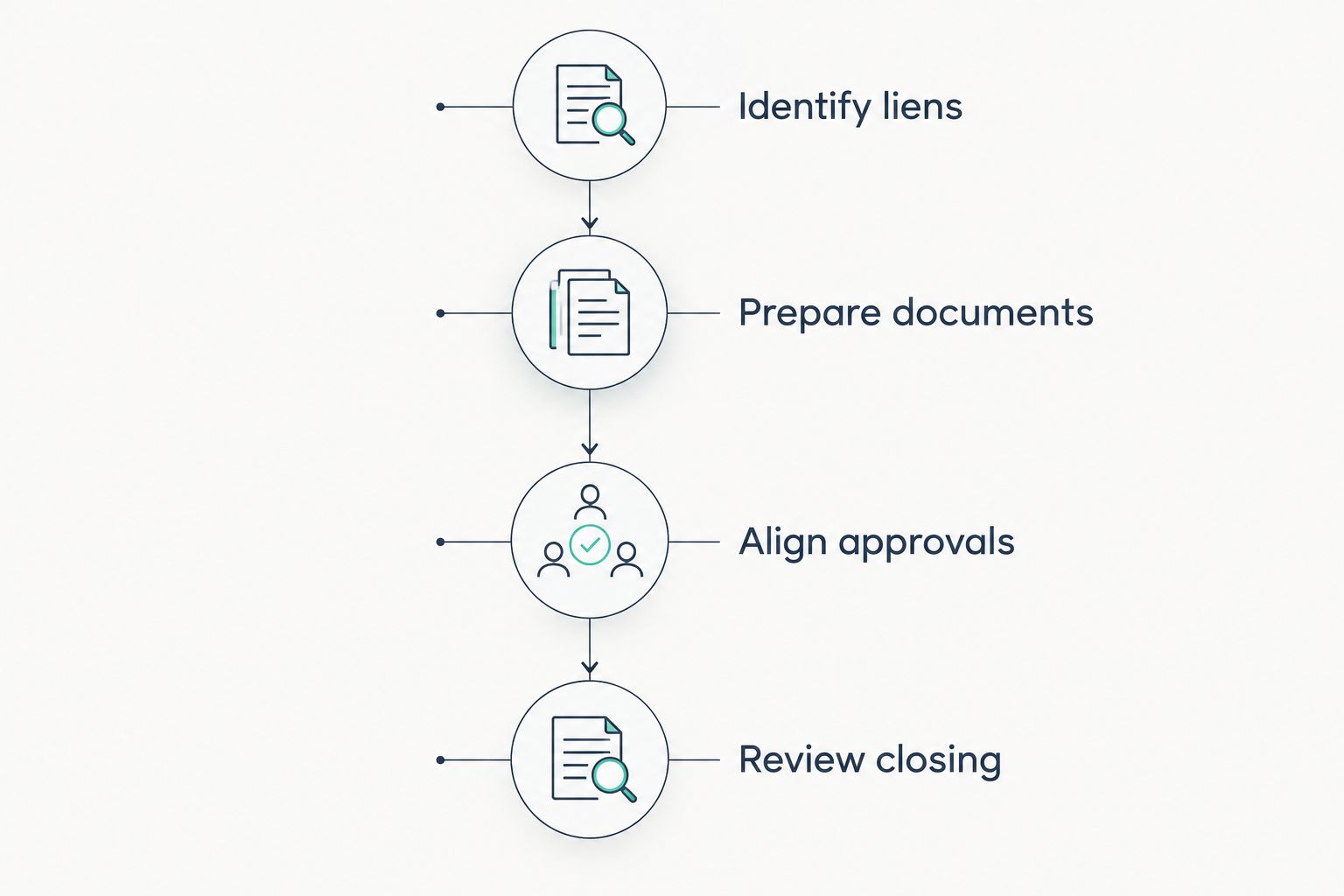
A workable coordination sequence
- Identify liens: Have the closing professional confirm the claims that need attention. Include the second mortgage rather than assuming the first lender handles it.
- Prepare documents: Assemble the financial information and transaction documents requested by the lenders.
- Align approvals: Compare the conditions, deadlines, and permitted payments across the written approvals.
- Review closing: Have the appropriate professionals check that the closing documents reflect the approved arrangement.
These steps organize the process; they do not establish eligibility or stop a foreclosure deadline. Tell the processor and your attorney immediately about any notice that changes the time available.
Coordinated lender negotiation pros:
- Keeps both mortgage claims in the transaction plan.
- Organizes document requests and lender communication.
- Creates a clear point of contact for processing questions.
Coordinated lender negotiation cons:
- Does not guarantee either lender's approval.
- Does not replace independent legal or tax advice.
Best for: Homeowners who intend to sell and need help managing lender requirements.
Verdict: Choose coordinated negotiation as the default when a short sale is your preferred exit.
2. No-contribution request: best for homeowners without settlement funds
A no-contribution request asks the lender to approve the proposed arrangement without requiring a seller contribution. It is a negotiating position, not a right to approval or a promise that the remaining balance disappears.
Support the request with accurate financial information. If you cannot meet a contribution demand, explain that through the lender's required process rather than agreeing to an obligation you cannot fulfill. Use the short sale package document guide to organize your preparation.
Ask for the response in writing. An agreement to release the lien still needs a separate review of what happens to the unpaid debt.
No-contribution request pros:
- Puts your inability to contribute directly into the negotiation.
- Avoids accepting a settlement condition before reviewing your finances.
- Gives the lender supporting information for its decision.
No-contribution request cons:
- The lender can refuse the proposed terms.
- Acceptance does not automatically waive the unpaid balance.
Best for: Homeowners who want to sell but cannot meet a requested contribution.
Verdict: Request no-contribution terms when your documented finances support that request; do not assume acceptance.
3. Documented contribution settlement: best for resolving an approved condition
A documented contribution settlement addresses a lender's request for a payment as part of the short-sale arrangement. Consider it only after you understand the written condition, its treatment in the transaction, and its effect on your remaining obligations.
Keep the payment within the approved, disclosed closing arrangement. Do not make a side agreement because someone says it will make the second lender cooperate. Have the closing professional and your attorney review how the contribution fits the transaction.
For a 2026 decision, focus on the actual approval language rather than a verbal description of what the lender usually accepts. Ask whether the payment secures a lien release, a debt waiver, or another specific result.
Documented contribution settlement pros:
- Addresses a stated lender condition directly.
- Allows the proposed payment to be reviewed before agreement.
- Makes the settlement terms part of the transaction record.
Documented contribution settlement cons:
- Requires resources you must evaluate against your other obligations.
- Does not establish forgiveness unless the applicable terms provide it.
Best for: Homeowners able to meet an approved contribution condition after reviewing its consequences.
Verdict: Consider a contribution only when the written terms explain what it accomplishes.
4. Attorney-led debt review: best for unclear remaining liability
Attorney-led debt review addresses questions that processing alone cannot settle. These include what an approval letter means, whether a lender retains a claim for an unpaid balance, and how state law affects your obligations.
Bring the actual loan documents and proposed approval terms. A generic explanation of short sales cannot establish the legal effect of your agreement. Your attorney needs the documents relevant to your situation.
This pathway supports a short sale rather than replacing negotiation. Use it before signing when a condition is unclear, a repayment obligation appears, or different parties give conflicting explanations.
Attorney-led debt review pros:
- Separates lien release from personal debt liability.
- Addresses state-law questions using your actual circumstances.
- Helps you understand a proposed obligation before accepting it.
Attorney-led debt review cons:
- Does not require a lender to approve the sale.
- Does not replace separate tax advice about cancellation of debt.
Best for: Homeowners facing uncertain debt terms, disputed obligations, or conflicting advice.
Verdict: Get legal review before agreeing to terms you do not understand.
5. Retention review: best for homeowners who want to stay
A retention review examines whether options such as a loan modification or another servicer-approved arrangement fit your goal of keeping the home. It is an alternative to a short sale, not a way to complete one.
Review both mortgage obligations. A change to the first mortgage does not automatically change the second mortgage, and a temporary arrangement is not the same as a permanent solution.
Ask each servicer what review process applies and what documents it requires. Then assess the combined obligations, not just whether one payment becomes easier to manage. If keeping the home is no longer your goal, return to the sale pathways instead.
Retention review pros:
- Matches the process to a homeowner's goal of staying.
- Examines alternatives before committing to a sale.
- Brings both mortgage obligations into the decision.
Retention review cons:
- Availability and terms depend on the applicable lender or program.
- Relief on one loan does not resolve the other loan.
Best for: Homeowners who want to keep the property and need to examine their options.
Verdict: Review retention first when staying is your goal; do not choose a sale simply because you have negative equity.
How these options are ranked
This 2026 ranking follows the decision criteria above: resolving liens, understanding remaining debt, meeting documented conditions, and matching your housing goal. It ranks pathways by their purpose, not by approval rates or claimed lender performance.
Coordinated negotiation comes first because it addresses the full sale process. The next three pathways address specific obstacles within that process. Retention belongs last in this selling-focused guide because it serves a different goal, not because keeping a home is inherently worse.
Which option should you choose?
Choose coordinated lender negotiation if you want to sell and need help handling the first and second mortgage together. Add a no-contribution request when your finances support it, consider a documented contribution only after reviewing the terms, and obtain legal advice when liability is unclear.
Before accepting an arrangement, separate 2 questions: Will the lender release its lien for this closing? Will you still owe any unpaid balance afterward? A favorable answer to the first does not answer the second.
If you want to stay, start with retention review. If you want help comparing an exit, request homeowner assistance through Shortsalesdoneright and use the appropriate homeowner intake rather than the agent-processing route.
Request help with your mortgage options
Get help comparing a short sale with other options and addressing lender negotiation.
FAQ
What's the best short sale option with a second mortgage?
Coordinated lender negotiation is the default for homeowners who want to sell and need to address both mortgage claims. Compare the written lien-release conditions and remaining-debt terms before agreeing.
Can I complete a short sale if I have two mortgages?
A short sale involving two mortgages requires an arrangement that addresses both mortgage liens for closing. The lenders' conditions must fit the transaction, and approval is not guaranteed.
Does releasing the second mortgage lien erase the debt?
A lien release does not automatically erase the unpaid debt. Have a qualified attorney review the written terms and applicable state law to determine what obligations remain.
What if I cannot afford the second lender's requested contribution?
Ask for review of a no-contribution request supported by your financial information. The lender can reject the request, so do not commit to a contribution you cannot fulfill.
Should I negotiate with the second mortgage lender myself?
You can contact your servicer directly, but the second lender's conditions still need to fit the entire sale. Processing support helps coordinate requests; legal questions belong with a qualified attorney.
Does submitting a short sale request stop foreclosure?
Do not assume a short sale request stops foreclosure activity. Confirm the status and deadlines with the servicer and obtain legal advice about notices affecting your property.
Is a loan modification better than a short sale in 2026?
A loan modification serves a homeowner who wants to keep the property; a short sale serves a homeowner seeking a sale under lender-approved terms. Review both mortgage obligations before deciding which goal is workable.
Can a forgiven mortgage balance create a tax issue?
Cancellation of mortgage debt can have tax consequences. A qualified tax professional should review your situation rather than assuming that a short sale makes canceled debt tax-free.
One last thing
Read the approval as a set of conditions, not as a promise that every mortgage problem is over. For your 2026 decision, mark the lien-release language, any remaining-debt language, required payments, and expiration terms. Resolve unclear wording before signing or authorizing closing.