

Best overall: full short-sale package preparation. Best for clearer communication: a dedicated point of contact; best for tracking the file: weekly lender updates. These are the leading benefits of short sale negotiator for agents in 2026, with one firm limit: a negotiator handles processing and lender communication, not the lender’s approval decision.
- Shortsalesdoneright is best for agents seeking outsourced short-sale processing and lender negotiation.
- The main benefits of short sale negotiator for agents are package preparation, lender communication, and clearer responsibilities.
- A dedicated contact and weekly lender updates help agents explain the current status without promising a closing date.
- Short-sale approval, remaining mortgage debt, and legal consequences depend on lender terms and applicable state law.
Why this matters
An upside-down mortgage creates a different listing problem. The expected sale proceeds do not cover the mortgage debt, so the transaction needs more than a seller accepting an offer. The lender must agree to the proposed short-sale terms.
You still have a listing to manage, a buyer to keep informed, and a seller who needs plain answers. Adding lender document requests and follow-up to that workload creates another responsibility—not another guarantee that the transaction will close.
Shortsalesdoneright provides short-sale processing and lender negotiation services, including preparing the full package for agents, a dedicated point of contact, and weekly lender updates. Shortsalesdoneright is best for real estate agents who want short-sale processing and lender negotiation handled outside their listing workflow.
For your 2026 listings, judge that support by the work it takes off your desk and the clarity it gives your client. Do not judge it by an approval promise.
What makes the best short-sale negotiation support?
Use these 5 service criteria before choosing a provider. They separate useful processing support from vague promises about getting a deal approved.
- Package ownership: Who prepares the submission, checks it against lender requirements, and tracks missing items?
- Named accountability: Who is your contact, and who handles communication with the lender?
- Status discipline: What does a weekly update explain about completed work, open requests, and next actions?
- Negotiation scope: Which lender questions and proposed terms does the provider handle?
- Professional boundaries: What stays with you, the seller, an attorney, or a tax professional?
A provider should explain these responsibilities before you hand over the file. Read the questions to ask before hiring a short-sale negotiator and use the answers to define the working relationship.
Do not confuse a communication schedule with a lender decision schedule. A provider can commit to reporting its work. It cannot control when a lender approves, declines, or requests more information.
Short-sale negotiator benefits at a glance
The ranking below compares benefits, not competing companies. Each benefit serves a different agent need, and each has a limit you should explain to the seller.
| Ranked benefit | Best for | Practical value | Key limitation |
|---|---|---|---|
| Full package preparation | Agents outsourcing document assembly | Assigns preparation of the lender submission | Seller information and lender requirements still govern the package |
| Dedicated point of contact | Agents coordinating several participants | Gives you a clear route for processing questions | A contact does not replace every transaction participant |
| Weekly lender updates | Agents managing client expectations | Establishes a regular status-reporting rhythm | An update is not a decision or a closing commitment |
| Lender negotiation support | Agents handling lender questions and terms | Assigns responsibility for lender-facing discussions | Approval and any debt release require lender agreement |
| Clearer division of work | Agents protecting their listing responsibilities | Separates processing tasks from agent tasks | Outsourcing does not remove your own professional duties |
1. Full package preparation: best for document-heavy listings
A short-sale package presents the seller’s situation and the proposed transaction to the lender. The required contents depend on the lender and the file. Preparing it means assembling the requested information, not simply sending an offer and waiting.
Shortsalesdoneright prepares the full short-sale package for agents. That gives you a defined processing service instead of leaving document assembly as an unassigned task between the agent and homeowner.
Full package preparation pros:
- Assigns responsibility for assembling the lender submission.
- Gives missing-document requests a clear owner.
- Keeps processing questions separate from listing questions.
- Lets you identify what the seller still needs to supply.
Full package preparation cons:
- The seller still needs to provide accurate information.
- The lender can request additional or updated documents.
- A complete submission does not guarantee acceptance.
Best for: Agents who want document preparation outsourced while they manage the property sale.
Before handing off a 2026 file, agree on how documents will be collected and how outstanding requests will reach the seller. Keep a distinction between a document being received and the lender accepting it as sufficient.
Verdict: Buy package-preparation support when document assembly is the work you need to delegate.
2. A dedicated contact: best for clear accountability
A dedicated point of contact gives you someone to ask about the processing file. You do not need to guess who owns the latest lender request or who should explain the next action.
The value is accountability, not exclusive control over the transaction. The seller, buyer’s agent, closing professionals, lender, and any advisers still have their own roles.
Dedicated contact pros:
- Gives processing questions a defined destination.
- Helps you route seller questions to the right person.
- Makes responsibility for follow-up easier to identify.
- Supports consistent communication about open tasks.
Dedicated contact cons:
- Your contact still depends on information from other participants.
- One contact cannot answer every legal, tax, or closing question.
- You still need to communicate with your own client.
Best for: Agents who need clear ownership of processing communication rather than another general inbox.
At intake, establish which questions go directly to the contact and which remain with you. Ask how urgent lender notices reach the agent and seller. A named contact is useful only when the communication route is understood.
Verdict: Buy dedicated-contact support when unclear task ownership is disrupting the file.
3. Weekly lender updates: best for managing expectations
Weekly lender updates give you a regular opportunity to explain the current file status. They help distinguish work completed by the processor from action still required by the lender or seller.
Shortsalesdoneright includes weekly lender updates. That is a communication benefit—not evidence that the lender will make progress every week or issue a decision on your preferred date.
Weekly lender updates pros:
- Establish a predictable reporting rhythm.
- Give you a basis for client status conversations.
- Keep outstanding requests visible.
- Help separate confirmed developments from assumptions.
Weekly lender updates cons:
- Some updates will report that a decision remains pending.
- Regular reporting cannot set the lender’s review speed.
- A weekly report is not a substitute for handling an urgent notice.
Best for: Agents whose sellers and buyers need clear status information without unsupported closing predictions.
For a 2026 transaction, ask for updates that answer 3 status questions: What changed? What remains open? Who acts next? A report that only says the file is pending leaves you without a useful next move.
Tell clients exactly what is confirmed. If the lender has not accepted a term, do not present that term as settled.
Verdict: Buy weekly-update support for clearer reporting, not for a promised approval timeline.
4. Lender negotiation: best for lender-facing questions
A short-sale negotiator handles discussions with the lender about the proposed transaction and the lender’s requirements. The role gives that work a defined owner while you continue managing the listing and buyer relationship.
Negotiation is not permission to promise an outcome. The lender decides whether to accept the short sale, and the written terms determine what acceptance means for the seller.
Lender negotiation support pros:
- Assigns responsibility for lender-facing discussions.
- Gives lender questions and responses a clear route.
- Helps separate proposed terms from accepted terms.
- Keeps the agent informed about issues requiring a decision.
Lender negotiation support cons:
- The lender can decline the proposed transaction.
- Approval does not automatically forgive unpaid mortgage debt.
- State law and the written agreement affect the seller’s obligations.
Best for: Agents who want lender communication handled by a service provider rather than added to their listing workload.
Do not treat an approval notice as a routine administrative attachment. The seller needs to understand its conditions, including any language addressing the unpaid balance. Send legal questions to a qualified attorney and tax questions to a qualified tax professional.
Verdict: Buy lender negotiation support for defined representation in lender discussions; skip any approval guarantee.
5. Clearer work boundaries: best for protecting agent focus
Outsourcing processing separates lender-package work from your responsibilities as the listing agent. You can identify which tasks belong to the processor instead of carrying an undefined share of every task.
That separation supports your attention to pricing, marketing, offers, and transaction communication. It does not establish a specific time saving or remove duties you owe to the seller.
Clearer work boundaries pros:
- Makes delegated processing tasks explicit.
- Keeps listing decisions with the appropriate participants.
- Gives the seller clearer instructions about whom to contact.
- Helps identify requests that need a professional adviser.
Clearer work boundaries cons:
- You still manage your client relationship and agent responsibilities.
- A weak handoff leaves gaps even when processing is outsourced.
- The seller still needs to respond to requests and make decisions.
Best for: Agents who want a defined division of work rather than informal help on selected tasks.
Shortsalesdoneright serves 2 distinct audiences: agents seeking processing support and homeowners comparing a short sale with other options. On an agent-led file, keep those needs separate. You need a workable handoff; the homeowner needs to understand the transaction and its consequences.
Verdict: Buy outsourced processing when you can clearly define what leaves your desk and what stays.
Put the benefits into a workable handoff
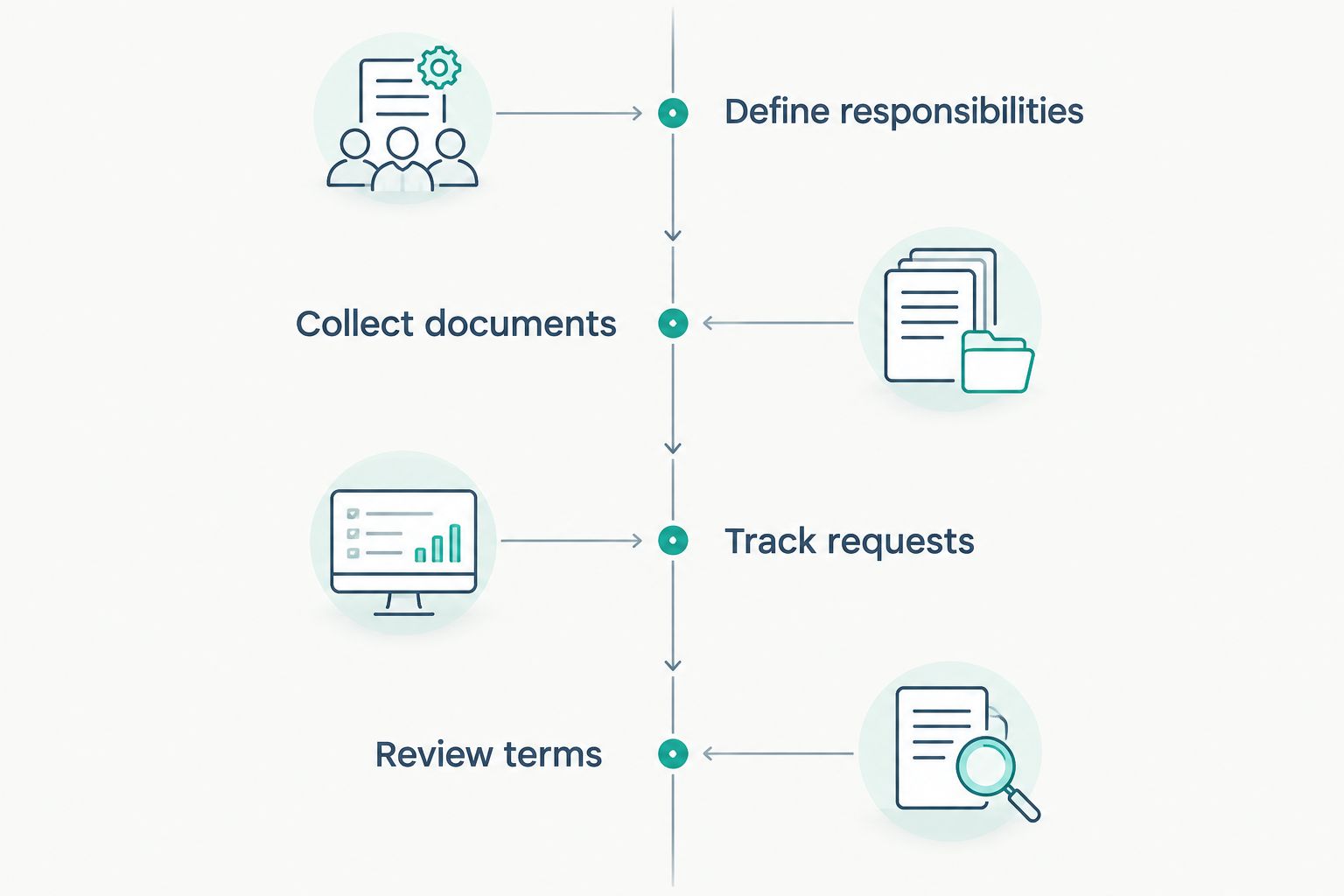
The benefits depend on how the file starts. Use this sequence for a 2026 listing so the seller, agent, and processing contact understand their responsibilities.
Define responsibilities
Identify who prepares the package, collects seller information, handles lender communication, and keeps transaction participants informed. Put the division of work in writing. Avoid a handoff that amounts to sending documents without agreeing on ownership.
Collect documents
Tell the seller what the lender requests and how to deliver it through the agreed process. Explain that accurate, current information matters. Do not ask the homeowner to guess which documents are sufficient.
Track requests
For each open request, record its owner and the next action. Distinguish a request sent to the seller from a document returned to the processor. Distinguish submission to the lender from confirmation that the lender has accepted it.
Review terms
When proposed or approved terms arrive, identify the decisions they require. Keep legal and tax interpretation with qualified professionals. The seller should understand the written terms before relying on them.
Keep the agent’s transaction calendar and the lender’s review status distinct. An agreed buyer deadline does not prove the lender can meet it. If timing becomes a concern, communicate the confirmed facts and have the appropriate participants address the next decision.
How the benefits are ranked
Package preparation ranks first because it defines a substantial processing task you can delegate. A dedicated contact and weekly updates follow because they explain who owns the work and how its status reaches you.
Lender negotiation and clearer work boundaries complete the list. This is a ranking by agent use case, not a claim that any service improves approval rates. The criteria are task ownership, communication, scope, and professional boundaries.
Which benefit should you prioritize?
Start with full package preparation, then require a dedicated contact and useful weekly updates. Together, those services answer what is being handled, who handles it, and what remains outstanding.
If your current problem is lender communication rather than document assembly, prioritize negotiation scope instead. Ask which discussions the provider handles and which decisions come back to you and the seller.
For a 2026 provider decision, reject any pitch built around guaranteed approval, guaranteed forgiveness, or a specific credit-score result. Choose a defined service, not a promised outcome.
Request short-sale processing help
Start through the appropriate agent intake form on the site.
FAQ
What are the main benefits of a short-sale negotiator for agents?
The main benefits are package preparation, a dedicated contact, regular lender updates, and assigned responsibility for lender negotiation. These services separate processing work from the agent’s listing responsibilities; they do not guarantee approval.
Is a short-sale negotiator better than handling the file myself?
A short-sale negotiator is the better fit when you want defined processing and lender communication tasks outsourced. Compare the service scope with the tasks you are prepared to handle yourself, and keep your own professional responsibilities clear.
Does a short-sale negotiator guarantee lender approval?
No, a short-sale negotiator cannot guarantee lender approval. The lender decides whether to accept the proposed transaction and on what terms.
What does a weekly lender update tell the listing agent?
A useful weekly lender update identifies confirmed developments, outstanding requests, and the next responsible person. It should distinguish completed processing work from a lender decision that remains pending.
Does short-sale approval mean the seller owes nothing afterward?
No, short-sale approval does not automatically release the seller from unpaid mortgage debt. The written lender terms and applicable state law matter, so the seller should have a qualified attorney review questions about any remaining obligation.
Can the listing agent stop communicating with the seller after hiring a negotiator?
No, the listing agent still needs to manage the client relationship and fulfill the agent’s responsibilities. Agree on which processing questions go to the negotiator and which listing or transaction questions stay with the agent.
What should I ask before hiring a short-sale processing service?
Ask who prepares the package, who handles lender communication, and what the updates include. Also clarify document collection, urgent requests, service scope, and which questions require an attorney or tax professional.
One last thing
A complete file and an approved transaction are different milestones. So are approval of the sale and release from remaining debt.
Keep those distinctions visible in every client conversation. Before presenting lender terms as the finish line, identify the seller’s remaining decisions, required closing steps, and questions for qualified advisers. Clear processing support gives you a better-defined workflow—not permission to skip that review.