

Best overall: build a household cash-flow plan. Best for lender review: organize your financial records. Best for avoiding an unresolved balance: review the written debt terms. Here is how to prepare financially for a short sale in 2026 without treating approval, debt forgiveness, or your next housing arrangement as guaranteed.
- How to prepare financially for a short sale: document cash flow, organize mortgage records, and review written lender terms.
- Shortsalesdoneright helps homeowners compare a short sale with other options; lender approval is not guaranteed.
- Build a moving budget before committing to a closing date. Do not assume relocation assistance or debt forgiveness.
- Lender terms and state law vary. Take legal and tax questions to qualified professionals.
Why this matters
A short sale involves selling a property for less than the mortgage balance owed, with the lender's agreement. Your financial preparation needs to address both the sale and what happens afterward. An accepted buyer offer does not settle every question about your debt, taxes, or move.
Shortsalesdoneright is best for homeowners seeking short-sale processing and lender negotiation help while comparing their options. You can request help through the homeowner intake form at Shortsalesdoneright.
Keep the decision practical. You need a truthful financial picture, written answers about the proposed terms, and a housing plan you can support.
What makes the best short-sale preparation strategy
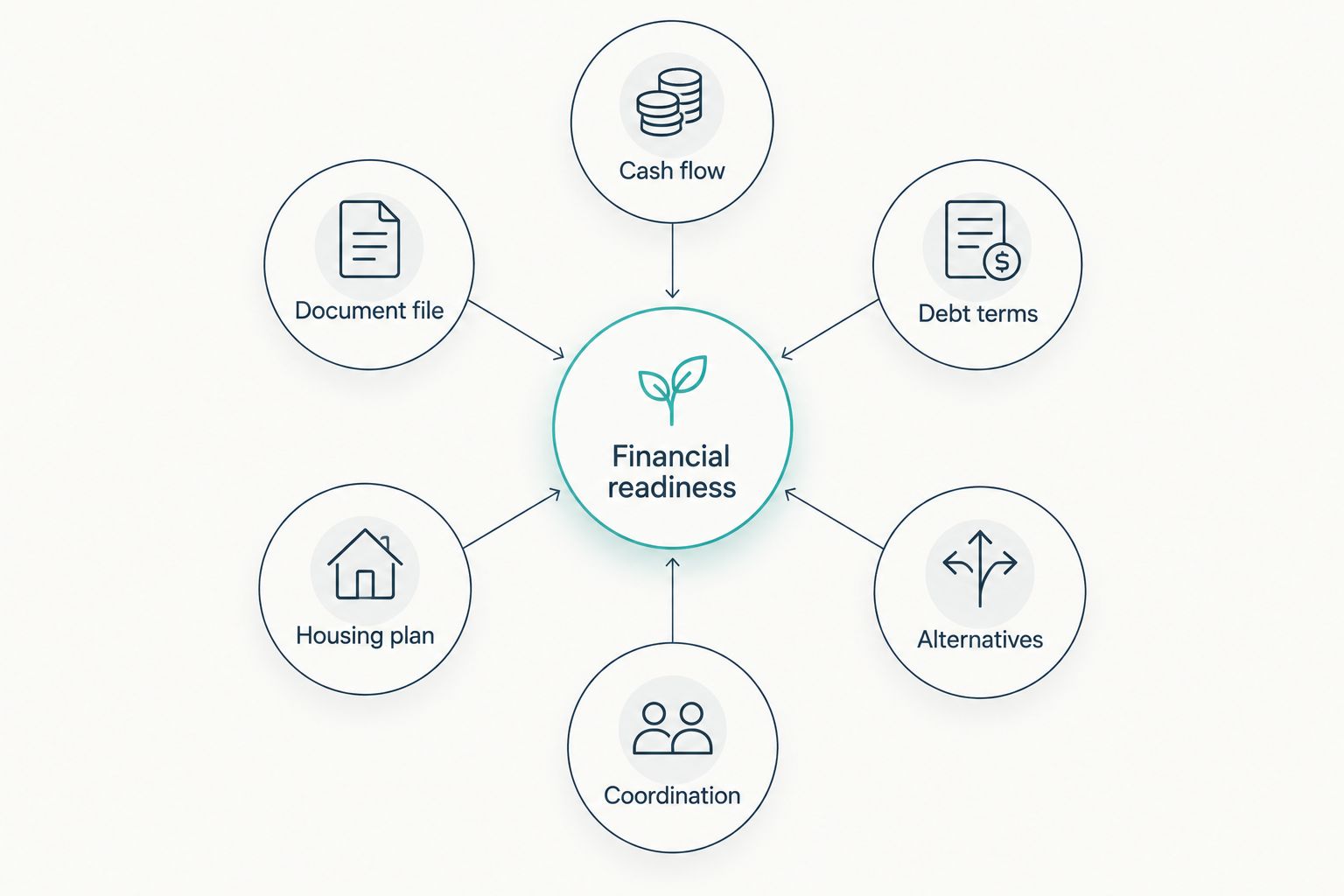
The strongest preparation steps answer different questions. Use these criteria before deciding where to put your attention:
- Cash flow: Does the step show what your household can actually afford?
- Document file: Does it make your financial circumstances clear and consistent?
- Debt terms: Does it identify obligations that need a written answer?
- Housing plan: Does it prepare you for moving and your next monthly budget?
- Alternatives: Does it help you compare selling with keeping the home?
- Coordination: Does it establish who handles requests and tracks deadlines?
These are the working parts of financial readiness. Completing a document file does not replace reviewing debt terms, and getting lender approval does not replace planning your move.
Financial preparation options at a glance
| Rank | Preparation step | Best for | Main benefit | Key limitation |
|---|---|---|---|---|
| 1 | Household cash-flow plan | Understanding immediate affordability | Separates income from essential spending | Does not establish lender eligibility |
| 2 | Organized financial records | Supporting lender review | Makes your financial account easier to verify | The lender can request updated records |
| 3 | Written debt-term review | Understanding remaining obligations | Identifies unresolved balance questions | Requires case-specific legal and tax advice |
| 4 | Moving and housing budget | Preparing for life after closing | Connects the sale to your next living arrangement | Moving dates depend on transaction terms |
| 5 | Side-by-side alternatives review | Deciding whether to sell | Tests whether a short sale fits your goal | Alternatives have separate requirements |
| 6 | Coordinated processing support | Managing lender communication | Gives document requests a clear owner | Support cannot guarantee approval |
1. Household cash-flow plan: best for immediate affordability
Start with money coming in and essential spending going out. Use actual records rather than the budget you hope to reach after the sale. Your 2026 plan should reflect your household's current circumstances, including any recent income change.
Best for: Homeowners who need to understand whether their present housing payment is sustainable.
Review the past 30 days of spending as a starting exercise. If income varies, compare 3 months of income and note why individual months differ; these are planning windows, not lender documentation rules.
Cash-flow plan pros:
- Shows the gap between reliable income and essential expenses.
- Gives you a basis for discussing hardship accurately.
- Helps you judge whether a proposed contribution is affordable.
Cash-flow plan cons:
- A short review period can miss seasonal expenses.
- Your budget alone does not determine whether a lender accepts a short sale.
Include food, transportation, utilities, insurance, medical needs, and other required payments. Keep unpaid bills visible instead of removing them to make the budget balance. Ask your servicer about payment options rather than deciding to miss payments as a qualification strategy.
Verdict: Skip estimates based on memory. Build the budget from records.
2. Organized financial records: best for lender review
Build a financial file that tells the same story as your budget and hardship explanation. Follow the servicer's current checklist; requirements differ by loan and situation. Keep copies of everything you submit.
Best for: Homeowners preparing to explain a loss of income, higher necessary expenses, or another documented financial hardship.
Possible requests include income records, bank statements, tax returns, mortgage statements, and a hardship explanation. Ask which documents and reporting periods apply to your file before submitting sensitive information.
Financial record pros:
- Connects your explanation to supporting evidence.
- Makes inconsistencies easier to catch before submission.
- Creates a reference file for later requests.
Financial record cons:
- Records need updating when circumstances change.
- A complete submission does not guarantee approval.
Make a simple tracker with the document name, statement period, submission date, and recipient. Explain unusual deposits or transfers truthfully when asked. Do not move or conceal assets to make your position appear different.
For a 2026 submission, confirm that the lender is reviewing current information rather than an outdated version of your circumstances. Ask how to send records securely.
Verdict: Skip an unlabelled document dump. Submit a consistent, traceable file.
3. Written debt-term review: best for understanding obligations
A sale and a release from personal responsibility for unpaid debt are different issues. Do not treat permission to sell as proof that every remaining balance disappears. Ask a qualified attorney to review the applicable documents and state-law implications.
Best for: Homeowners concerned about what they might still owe after closing.
Identify each mortgage and other recorded claim affecting the property. A second mortgage, home-equity line, unpaid property taxes, or association claim requires attention rather than an assumption that the first lender resolves everything.
Debt-term review pros:
- Identifies which obligations need separate answers.
- Helps distinguish sale approval from debt-release language.
- Brings legal and tax questions forward before closing.
Debt-term review cons:
- General guidance cannot replace reviewing your actual documents.
- An attorney's legal review does not replace tax advice.
Ask what the approval says about an unpaid balance, whether a seller contribution is required, and whether any separate agreement remains. Have a qualified tax professional assess possible cancellation-of-debt consequences under the rules applicable to your 2026 situation.
Lender terms and state law vary. Do not assume debt forgiveness or a particular tax result.
Verdict: Wait to accept terms you do not understand until the right professionals explain them.
4. Moving and housing budget: best for the transition
Prepare your next housing budget while the short sale is being evaluated. Include the practical requirements of moving, not just the next monthly housing payment. Do not build the plan around assistance that has not been confirmed in writing.
Best for: Homeowners who expect to leave the property and need a workable transition.
Draft a 90-day housing plan as a planning exercise. It is not a forecast of the short-sale timeline. Include where you would live, what documentation a housing provider requests, and what happens if closing shifts.
Housing budget pros:
- Identifies moving-related expenses before you commit.
- Connects your next housing payment to reliable income.
- Gives you a backup if the transaction timetable changes.
Housing budget cons:
- Housing providers set their own screening requirements.
- A proposed closing date is not a guaranteed moving date.
List transportation, storage if needed, utility changes, deposits, and application requirements. Ask prospective housing providers about their process before making commitments. Do not assume a short sale produces a particular credit-score change or guarantees acceptance elsewhere.
Confirm possession and move-out terms with the professionals handling your transaction. Keep your housing plan separate from any unconfirmed relocation assistance.
Verdict: Skip a move that only works if every date and assistance request goes your way.
5. Alternatives review: best for deciding whether to sell
Financial preparation includes checking whether a short sale fits your goal at all. If you want to keep the home, ask the servicer about retention options before treating a sale as the default. If you need to leave, compare exit options and their written terms.
Best for: Homeowners who are underwater but have not decided whether keeping the property is realistic.
A loan modification changes loan terms when approved. A short sale transfers the property to a buyer with the necessary lender agreement. A deed in lieu involves transferring ownership to the lender under an agreement; it is not automatically available or appropriate.
Alternatives review pros:
- Separates your housing goal from the first option offered.
- Brings affordability into the keep-or-sell decision.
- Creates specific questions for the servicer and advisers.
Alternatives review cons:
- Each option has its own eligibility and documentation requirements.
- Comparing options does not pause deadlines or legal proceedings.
For your 2026 decision, ask what payment you could sustain, whether your hardship is temporary, and whether you need to move regardless of the mortgage outcome. If foreclosure papers arrive, obtain legal advice promptly rather than assuming a pending short sale stops the process.
Verdict: Skip choosing a short sale solely because the property is underwater. Check the alternatives.
6. Coordinated processing support: best for managing requests
Assign responsibility for lender requests, document delivery, and follow-up. You still need to supply accurate information and make decisions. Processing support addresses the administrative work; it does not replace your attorney or tax professional.
Best for: Homeowners who want help coordinating the short-sale file and lender communication.
Shortsalesdoneright provides short-sale processing and lender negotiation services. Its service includes a dedicated point of contact and weekly lender updates, and it helps homeowners compare a short sale with other options.
Coordinated support pros:
- Establishes a contact for questions and requested records.
- Gives lender communication a defined follow-up process.
- Helps you keep the sale discussion connected to other options.
Coordinated support cons:
- A processor cannot guarantee a lender's decision.
- You remain responsible for providing accurate records and reviewing commitments.
Ask who communicates with you, how requests are tracked, and which decisions need your authorization. Keep copies of approvals and material communications yourself. An update is useful, but it is not an approval or a change to written terms.
Verdict: Skip handing off the file without understanding your own responsibilities.
Request help with your next step
Ask for help comparing your options and preparing for lender review.
How these preparation steps rank
The ranking puts immediate affordability first, evidence second, and unresolved obligations third. Housing, alternatives, and coordination complete the decision. These are preparation priorities, not promises about lender outcomes or a requirement to complete each step before starting another.
Which preparation step should you start with?
Start with your household cash-flow plan, then gather the records that support it. Review debt terms and housing needs alongside the lender process rather than waiting until closing approaches.
If a foreclosure deadline or legal notice is already involved, contact a qualified attorney promptly. Administrative preparation is not a substitute for advice about an active legal deadline.
FAQ
What's the best first step to prepare financially for a short sale?
Build a current household budget using actual income and expense records. Then gather the documents supporting those figures and request the servicer's short-sale checklist.
Should I stop paying my mortgage to qualify for a short sale?
Do not stop paying solely to try to qualify for a short sale. Ask your servicer about your circumstances and discuss the consequences of missed payments with qualified advisers.
Do I need savings before starting a short sale?
There is no single savings amount that applies to every homeowner's short sale. Document your actual resources, prepare for moving needs, and review any requested contribution before agreeing to it.
Will a short sale erase the mortgage balance I cannot repay?
Do not assume a short sale erases every unpaid balance. Have a qualified attorney review the approval and any separate agreements because lender terms and state law vary.
Will I owe taxes after a short sale in 2026?
Your tax result depends on your circumstances and the applicable tax rules. Ask a qualified tax professional to review possible canceled debt and any relevant exclusions before you rely on a tax outcome.
Can I assume relocation assistance will cover my move?
Do not assume relocation assistance will cover your move. Ask whether assistance applies to your transaction and obtain its conditions in writing before relying on it.
Can someone handle the lender communication for me?
Shortsalesdoneright provides short-sale processing and lender negotiation services, including a dedicated point of contact and weekly lender updates. You still need to provide accurate records, review decisions, and obtain separate legal and tax advice.
One last thing
Ask for written answers about two separate issues: permission to complete the sale and responsibility for any unpaid balance. Keeping those questions separate helps you avoid treating a closing as proof that every financial obligation has ended.


