

A short sale negotiator does not automatically represent both the buyer and seller; communicating with both sides is different from acting as their agent. Whether the same professional can represent both depends on state law, licensing, the services performed, and any required disclosures and informed consent—and some states prohibit dual agency.
- Can a short sale negotiator represent buyer and seller? State law and the actual agency relationship control.
- A lender authorization permits specified communication; it does not automatically establish buyer or seller agency.
- Shortsalesdoneright provides short sale processing and lender negotiation services, not a substitute for independent legal advice.
- Before signing, identify each professional’s client, permitted duties, compensation arrangements, and confidentiality obligations.
Can a short sale negotiator represent both the buyer and seller?
Sometimes, where state law permits the arrangement and its requirements are satisfied. But the title “short sale negotiator” alone establishes no right to represent either party. Start by identifying whether the person processes documents, acts as a real estate agent, provides legal representation, or works for the lender.
A lender-assigned negotiator is different from a processor hired to help submit the homeowner’s request. If that distinction is unclear, review how an agent knows whether a lender has assigned a negotiator before discussing representation.
| Role or arrangement | Best for | What the role covers | Benefit | Limit or conflict |
|---|---|---|---|---|
| Short sale processor | Agents needing package and lender follow-up support | Agreed document preparation, submission, and communication tasks | Separates processing work from other transaction duties | Does not automatically establish agency or legal representation |
| Seller’s agent | Homeowners seeking representation in the sale | Seller representation under the agency agreement and state law | Gives the seller a defined representative | Does not represent the buyer merely by answering questions |
| Buyer’s agent | Buyers seeking representation in the purchase | Buyer representation under the agency agreement and state law | Gives the buyer a defined representative | Cannot control the seller’s lender decision |
| Disclosed dual agent, where lawful | Parties considering a legally permitted shared-agent arrangement | A limited role governed by applicable law and required consent | Keeps agency within one permitted arrangement | Conflicting interests restrict the advice the agent can provide |
| Lender-assigned negotiator | Borrowers and authorized contacts communicating about lender review | Handles the file on the lender’s side | Provides a contact for lender requests and decisions | Is not the buyer’s or seller’s independent advocate |
The same person can hold more than one role, but each role needs separate scrutiny. A real estate license does not make every processing task an agency service, and a processing agreement does not authorize every activity a licensed agent performs.
Why this matters
A buyer wants acceptable purchase terms. A homeowner needs to understand the sale terms and what the lender requires. Those interests overlap when everyone wants a closing, but they are not identical.
For your 2026 transaction, identify who advises each party before confidential information changes hands. A shared email thread is useful for status updates; it is not proof that everyone has independent representation.
Consider a lender counteroffer. The processor can relay the counter, but advising the buyer about increasing the offer and advising the seller about accepting contractual changes raise separate representation questions.
Processing both sides’ paperwork is not representing both sides
A negotiator can communicate with the buyer’s agent, seller’s agent, title company, and lender while performing a limited processing assignment. That communication does not, by itself, create an agency relationship with everyone involved.
The distinction is authority. Collecting a requested document is different from advising a buyer how much to offer, telling a seller which contractual rights to surrender, or interpreting whether an approval letter eliminates personal liability.
What does a lender authorization actually allow?
A lender authorization generally lets the lender communicate with the named third party within the authorization’s terms. Read its scope rather than assuming it grants unrestricted authority.
Permission to discuss the mortgage is not permission to represent the buyer. It also does not, by itself, authorize someone to sign the seller’s contract or provide legal advice.
Does being paid by one side establish representation?
Payment alone does not establish the full agency relationship. Review the representation agreements, service agreement, required disclosures, and applicable law together.
Ask who pays, who receives the payment, and what work the payment covers. Then ask whose interests the professional is engaged to represent; those are related questions, not interchangeable ones.
Why the answer varies
There is no single nationwide permission slip for dual representation in a short sale. These factors determine what needs review:
- State law: Dual-agency restrictions, disclosure duties, and permitted brokerage relationships differ by state.
- Professional license: Check whether the proposed work requires a real estate license, legal license, or another authorization.
- Written scope: Processing, real estate representation, and legal advice are different services. Identify which services the agreement includes.
- Consent requirements: Where dual agency is permitted, follow the applicable disclosure and informed-consent rules. Consent cannot legalize a prohibited arrangement.
- Confidentiality duties: Determine what information the professional can receive, share, and use for each party.
- Lender requirements: Review the lender’s authorization requirements and transaction conditions separately from agency law.
For a 2026 closing, have the responsible broker or a qualified real estate attorney check the proposed arrangement under current state requirements. Do not rely on a form simply because it worked in another state.
How do you check a negotiator’s role before signing?
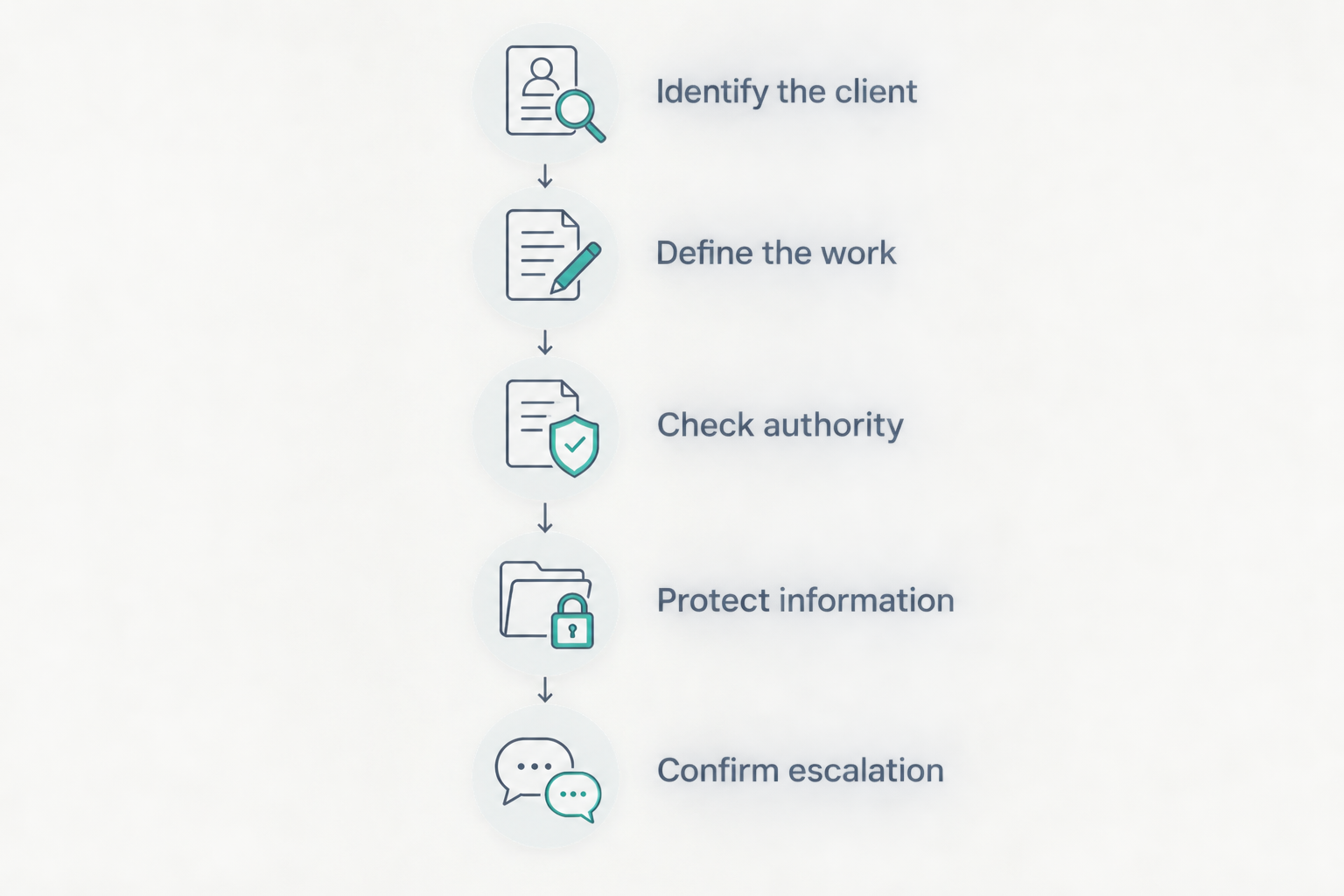
Use this sequence before sharing financial records or accepting advice about the other party’s position. The goal is a clear assignment, not a larger packet of unexplained signatures.
- Identify the client. Ask whom the negotiator serves under each agreement. Name the seller, buyer, agent, brokerage, or lender rather than accepting “everyone” as the answer.
- Define the work. Separate package preparation and lender follow-up from pricing advice, contract negotiation, and legal interpretation. Confirm who handles tasks outside the processing agreement.
- Check authority. Review licensing, agency disclosures, lender authorizations, and any required consent. Ask the broker or attorney to resolve inconsistencies.
- Protect information. Establish who receives hardship documents, financial records, offers, and status updates. Do not assume the buyer needs access to the seller’s financial package.
- Confirm escalation. Decide who handles conflicts, contract changes, disputed instructions, and questions about an unpaid balance. Put the communication responsibilities in writing.
These checks belong before substantive negotiations, not at the closing table. If the arrangement changes during the transaction, revisit the documents before expanding anyone’s role.
What should a homeowner ask before agreeing?
Ask the negotiator to explain the role in plain language: who is helping with lender communication, who represents you in the sale, and who reviews legal consequences. Different professionals can handle those responsibilities.
Your hardship documents and mortgage information deserve a defined handling process. Ask which recipients need each document and how buyer-facing updates will remain separate from your financial records.
Before accepting a short sale approval, obtain qualified advice about any remaining debt and potential tax consequences. Lender terms and state law vary; approval of the sale is not a blanket promise that an unpaid balance disappears.
For homeowners weighing a short sale in 2026, representation is only part of the decision. Ask for help comparing the short sale with other available options before committing to a path.
What should an agent confirm before outsourcing processing?
Outsource a defined workload, not an undefined responsibility. Specify who prepares the package, submits lender requests, tracks responses, updates the seller, and communicates with the buyer’s agent.
Keep advice within the assigned role. If the processor receives a lender counteroffer, establish who relays it and who advises the represented party about the response.
Shortsalesdoneright short sale processing is best for real estate agents seeking full package preparation and lender negotiation support. The service includes a dedicated point of contact and weekly lender updates; it does not guarantee lender approval or replace advice from qualified legal and tax professionals.
For your 2026 files, document who handles the next step after each lender response. A status update should tell the team what changed and who must act without suggesting that the processor represents every recipient.
When should you stop and resolve a conflict?
Pause the affected discussion when instructions or duties conflict. Do not ask a processor to solve a representation problem simply by copying everyone on the same message.
Watch for these situations:
- Competing price instructions: The buyer asks the same professional to argue for a lower price while the seller asks for advice on preserving the existing contract.
- Confidential information requests: Someone requests the seller’s financial records without a clear transaction need and appropriate authority.
- Unclear consent: A professional calls the arrangement dual agency but cannot explain the state requirements or produce the relevant disclosures.
- Debt promises: Someone states that lender approval automatically erases every remaining obligation.
Ask the supervising broker or a qualified attorney to review the specific concern. Depending on state law and the agreements, the response can include clarifying duties, obtaining required disclosures, assigning separate representation, or ending an impermissible arrangement.
Can the buyer use the seller’s short sale processor?
The buyer can communicate through the seller’s authorized processing contact about appropriate transaction matters. That does not mean the processor becomes the buyer’s agent or adviser.
A buyer seeking advice about offer terms, contingencies, or negotiating position should identify a professional engaged to provide that advice. Keep transaction updates separate from confidential strategy discussions.
Does lender approval resolve an agency conflict?
Lender approval does not resolve an agency conflict. The lender’s approval conditions and the professionals’ representation duties are separate matters.
Review both before closing. An approval letter does not replace an agency disclosure, required consent, or legal review of disputed obligations.
Where can you request processing help?
If your role is clear and you need help with the lender-facing work, Shortsalesdoneright provides short sale processing and lender negotiation services. Agents can request processing support; homeowners can request help comparing a short sale with other options through the appropriate intake form.
Describe your role and the help you need when submitting the form. Do not treat an intake request as confirmation that the provider represents both parties or that the lender will approve the transaction.
Request short sale help
Use the appropriate intake form for agent processing support or homeowner assistance.
FAQ
Can a short sale negotiator represent buyer and seller in the same deal?
Only if the actual representation arrangement is permitted under state law and satisfies applicable licensing, disclosure, and consent requirements. The negotiator title alone does not establish agency with either party.
Is talking to both agents considered dual agency?
Talking to both agents does not, by itself, establish dual agency. Review the professional’s conduct, agreements, and applicable state law to identify the actual relationship.
Does signing a lender authorization make the negotiator my agent?
A lender authorization does not automatically create a real estate agency relationship. It permits communication within its terms; representation requires separate analysis.
Does the bank’s negotiator represent the homeowner?
A lender-assigned negotiator handles the file on the lender’s side, not as the homeowner’s independent advocate. Homeowners should identify separately who represents them in the sale.
Can a buyer receive the seller’s hardship documents?
A buyer is not automatically entitled to the seller’s hardship documents. Confirm the purpose, authority, and confidentiality requirements before sharing financial records.
Who should review a short sale dual-agency disclosure?
Ask the responsible broker to explain the disclosure and consult a qualified real estate attorney about legal questions. State law determines whether the arrangement is permitted and what requirements apply.
Does hiring a negotiator guarantee approval or debt forgiveness?
Hiring a negotiator does not guarantee lender approval or forgiveness of an unpaid balance. Have qualified legal and tax professionals review the consequences of the proposed terms.
One last thing
Ask who can advise you when your interests conflict with the other side’s interests. That question reveals more than asking who sends the lender’s emails.
For any 2026 short sale, keep processing support, representation, and legal advice distinct. Shortsalesdoneright short sale processing addresses the lender-facing workload; confirm separately who provides your agency representation and professional legal or tax advice.


