

Yes. A short sale negotiator can work with multiple lenders at the same time, including lenders holding a first mortgage and a second mortgage on the same home. Each lender has its own review requirements and approval authority, so one lender's approval does not replace another's. The negotiator coordinates the requests, but cannot promise approval or forgiveness of an unpaid balance.
- A short sale negotiator multiple lenders arrangement coordinates separate mortgage reviews; it does not create a single approval.
- First mortgage and second mortgage lenders must agree to the terms affecting their loans.
- Shortsalesdoneright provides short sale processing and lender negotiation services for agents and homeowners.
- Check lien releases, remaining debt, and approval deadlines before committing to closing.
Can a short sale negotiator work with more than one lender at once?
Yes. One negotiator can coordinate several lender files, but each lender retains control over its own decision. For a homeowner with 2 mortgage loans on 1 property, that means tracking separate requirements even when the same negotiator handles both conversations.
The key distinction is between shared coordination and shared approval. A negotiator can organize documents, submit information, request decisions, and communicate proposed terms. The negotiator cannot make separate lenders accept the same proposal.
| Lender involved | What the negotiator coordinates | Benefit of shared coordination | Limitation |
|---|---|---|---|
| First mortgage lender | Short sale review, proposed proceeds, supporting documents, and approval conditions | Keeps the main mortgage review connected to the overall transaction | Approval does not settle another lender's requirements |
| Second mortgage or HELOC lender | Proposed payment, required documents, lien release terms, and treatment of remaining debt | Brings the additional mortgage into the same closing plan | Separate consent and acceptable terms are still necessary |
This distinction also matters when one bank services both loans. Do not assume the accounts share a reviewer, approval process, or decision simply because the bank name matches.
Why this matters
A sale cannot close as planned if an unresolved mortgage lien prevents the agreed transfer of title. Discovering the second lender's requirements late leaves the agent, homeowner, buyer, and closing team trying to solve a problem that belonged in the opening review.
For agents, the practical benefit is coordinated follow-up rather than separate, disconnected conversations. For homeowners, it is a clearer picture of what each lender requires before agreeing to the sale.
Shortsalesdoneright provides short sale processing and lender negotiation services for both audiences. A processor handles administrative coordination; qualified legal and tax professionals address the homeowner's legal obligations and tax consequences.
First mortgage and second mortgage: separate decisions
The first mortgage lender reviews the sale under the requirements that apply to that loan. A second mortgage lender or home equity line of credit lender reviews its own position and the proposed treatment of its debt.
Do not treat approval from the first mortgage lender as permission to ignore the second mortgage. Ask what the second lender needs, who can authorize its decision, and what written terms must reach the closing team.
The review should distinguish between releasing a lien against the home and releasing the borrower from remaining debt. Those are different questions. An approval document must be evaluated for what it actually says, not what the homeowner hopes it means.
For a 2026 transaction, have a qualified attorney explain any language about an unpaid balance or continuing personal responsibility. Lender terms and state law vary.
Multiple properties: separate files, not shared approval
A negotiator can also coordinate lenders across different short sale listings. That is different from handling several mortgages attached to the same home.
For separate properties, keep borrower authorizations, financial records, offers, and lender correspondence separated by transaction. A document intended for one homeowner should not enter another homeowner's file.
The benefit is a consistent point of contact across the agent's workload. The limitation is that every property still needs its own review and closing coordination. Ask who covers the files when the main contact is unavailable and how urgent requests reach the responsible person.
Best for agents outsourcing several listings: a clearly assigned contact and a separate status record for every property. Neither arrangement guarantees lender response times.
How to coordinate multiple lenders without losing track
Start with the property and its debts, not with whichever lender answers first. Use this sequence as a working checklist for a 2026 short sale, while following the actual requirements supplied by each lender.
1. Identify liens
Ask the title or closing professional to identify recorded liens affecting the property. Compare that information with the homeowner's mortgage statements and disclosures.
Do not rely only on the statement for the main mortgage. Ask specifically about a second mortgage, a HELOC, and other recorded claims that need attention before closing.
2. Confirm authorization
Confirm what authorization each servicer requires before discussing the homeowner's account. Check the names, account information, signatures, and submission instructions against that lender's requirements.
Authorization permits communication within its scope. It does not give the negotiator power to accept legal obligations for the homeowner or compel a lender to approve the transaction.
3. Submit documents
Prepare a consistent core file, then address each lender's document requests. Financial information, the purchase agreement, and proposed settlement information must tell the same transaction story across submissions.
Keep a record of what was sent and when it was received. For a closer look at the paperwork, review how much documentation a lender requires before reviewing a short sale offer.
4. Track decisions
Track each lender's outstanding request, current contact, proposed terms, and next action separately. Record receipt, review, counteroffer, and written approval as different events.
If one lender requests a change affecting the other lender's proposed payment, flag the conflict. Do not assume an earlier approval covers a revised settlement.
5. Align closing
Send written approvals to the closing professional for review against the planned transaction. Check the property, borrower, buyer, proposed distributions, deadlines, and any conditions that must be satisfied.
If the terms conflict, resolve the conflict before closing. A verbal statement that the file looks acceptable is not a substitute for the written approval and release arrangements the transaction requires.
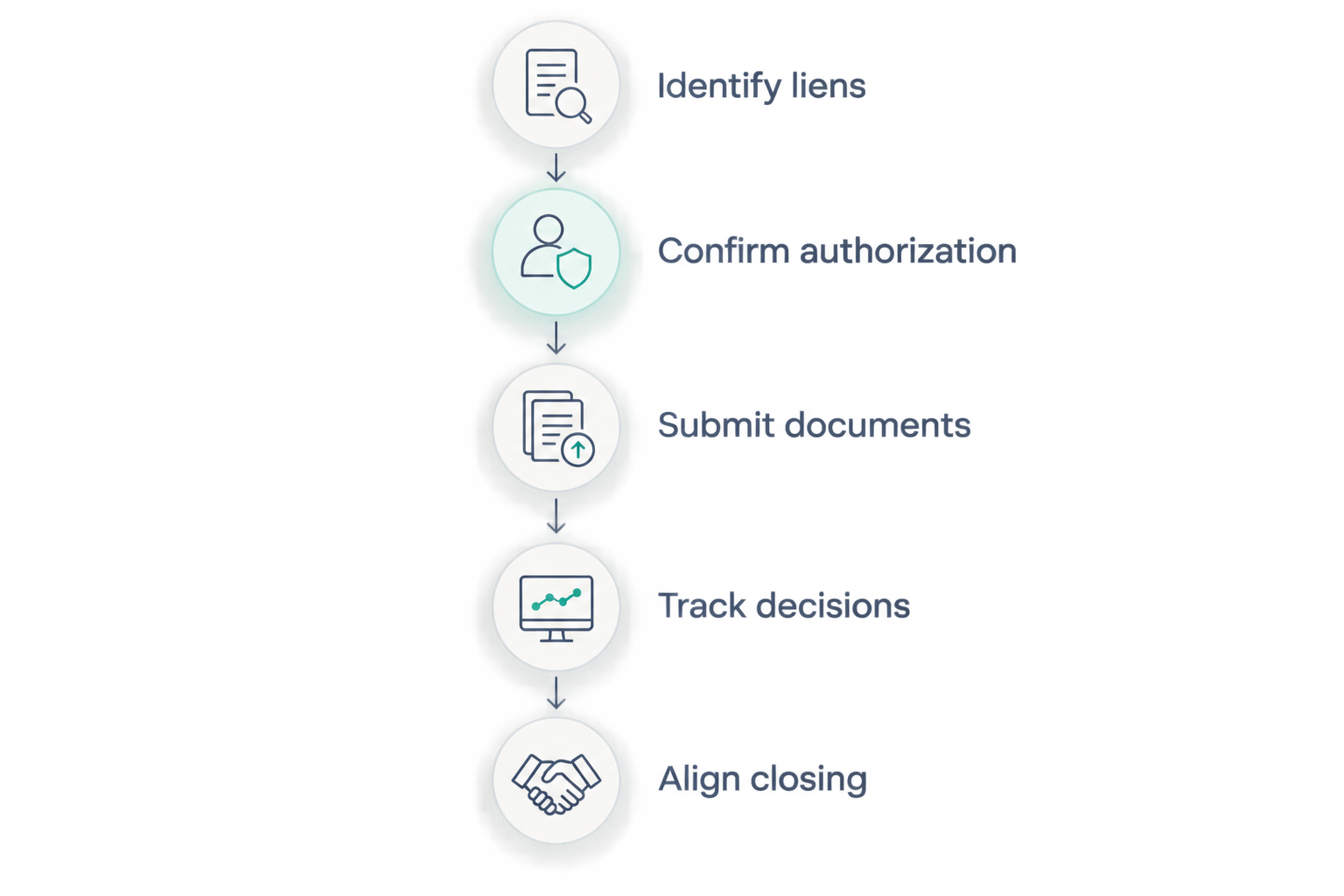
A shared tracker supports this sequence, but it does not replace checking the underlying letters and documents. Give each unresolved issue a named owner and a next action so the file does not stall between contacts.
Why coordination varies between lenders
The number of lenders matters, but the unresolved requirements matter more. A file with clear instructions presents a different coordination task from a file with conflicting terms.
- Document requirements: Each lender sets its own submission requirements. Reusing a core package does not remove lender-specific forms or updates.
- Decision authority: The person receiving documents is not necessarily the person authorized to approve terms. Confirm the contact's role.
- Proposed distributions: The amount allocated to one creditor affects the overall settlement. Conflicting demands need resolution, not separate promises.
- Title issues: Mortgage statements do not replace a title review. Other recorded claims can require separate attention.
- Approval conditions: Written deadlines, buyer details, and settlement conditions need to match the transaction that will actually close.
- Borrower circumstances: Changes to financial information or the proposed sale require accurate updates. Tell the negotiator about changes rather than letting lenders discover inconsistencies.
Ask what remains unresolved, not just whether the lender has responded. A response is useful only when you know what it means for the next decision.
What should an agent expect from the negotiator?
An agent should expect a clear division of work, lender-specific tracking, and communication that identifies the next action. Outsourcing should make responsibilities easier to see, not move the uncertainty into another inbox.
Shortsalesdoneright short sale processing is best for real estate agents who want package preparation and lender follow-up outsourced. The service includes preparing the full short sale package for agents, a dedicated point of contact, and weekly lender updates. Those services support coordination; they do not guarantee lender approval or matching decisions.
For a 2026 listing, ask these questions before assigning the file:
- Who communicates with each lender, and who covers absences?
- Who collects missing documents from the homeowner?
- What information appears in the weekly update?
- How are conflicting lender terms brought to the agent's attention?
- Who sends approval documents to the closing professional?
Keep the homeowner's decisions separate from processing tasks. The homeowner needs to understand proposed obligations, and the agent still needs to manage the listing and transaction within the agent's role.
What should a homeowner check before agreeing?
A homeowner should check what happens to every mortgage, not just whether the house can be sold. Ask for a plain-language explanation of each lender's proposed terms before accepting an obligation.
Request the following information:
- Whether the lender will release its lien for the proposed closing.
- Whether the documents address any remaining debt.
- Whether the lender requests an additional payment or signed obligation.
- Which conditions remain before closing.
- Which questions require an attorney or tax professional.
A short sale is not automatically the right choice for every upside-down mortgage. Discuss whether a home-retention option or another exit option fits your circumstances before committing to the sale route.
If you are ready to request short sale processing or lender negotiation help, use the appropriate agent or homeowner intake form on the company website. Explain that multiple mortgages are involved and identify any notices or deadlines you have received. Do not assume a pending short sale pauses foreclosure activity; get advice about your specific situation.
Can both lenders review the short sale at the same time?
Both lenders can review the short sale during the same period, subject to their submission requirements. Ask each lender what it needs to begin and whether its decision depends on information from the other lender.
Parallel communication does not guarantee simultaneous approval. Track each file separately and communicate any dependency clearly to the homeowner and closing team.
What happens if one lender approves and the other refuses?
One lender's approval does not override another lender's refusal. Ask why the lender declined, whether it will consider revised terms, and how any proposed change affects the existing approval.
The parties must resolve the outstanding lien and approval requirements before proceeding with the planned closing. Have a qualified attorney explain the homeowner's alternatives and any deadline-sensitive risks.
FAQ
Can one short sale negotiator handle my first mortgage and HELOC?
Yes. One negotiator can coordinate the first mortgage and HELOC reviews, but each lender sets its own requirements. Confirm both lenders' written terms and the arrangements needed to release their liens.
Does approval from my first mortgage lender cover my second mortgage?
No. Approval from the first mortgage lender does not substitute for the second mortgage lender's consent. The second lender's lien and any remaining debt must be addressed separately.
What if the same bank holds both of my mortgages?
The same bank name does not establish that both mortgages share an approval. Confirm the review process, responsible contact, and required written decision for each account.
Will a short sale negotiator guarantee that every lender approves?
No. A short sale negotiator coordinates documents and negotiations, but lenders control their approval decisions. No processing arrangement guarantees forgiveness of an unpaid balance.
Does a lien release mean I no longer owe the remaining debt?
A lien release does not by itself establish that the remaining debt is forgiven. Ask a qualified attorney to review the approval and release language under applicable state law.
How does Shortsalesdoneright help agents with short sale processing?
Shortsalesdoneright short sale processing includes preparing the full short sale package for agents, a dedicated point of contact, and weekly lender updates. Lender approval remains outside the processor's control.
Do I need legal or tax advice before accepting short sale terms?
Direct legal and tax questions to qualified professionals before accepting obligations you do not understand. Lender terms, state law, and individual tax circumstances vary.
One last thing
A lender response is not the same as a usable closing approval. Before scheduling a 2026 closing, ask the closing professional whether the written lender terms match the actual settlement and whether all required lien releases are addressed.
That question is more useful than asking whether everyone has said yes. It focuses attention on the documents and conditions that still stand between an approval and a completed sale.


