

Yes, an agent can handle multiple short sale listings at once in 2026 when each file has a clear owner, current documents, and tracked deadlines. The limit is your team's ability to manage overlapping lender requests—not a universal listing count—and outsourcing processing does not remove your brokerage responsibilities or guarantee approval.
- Can an agent handle multiple short sale listings at once? Yes, with assigned responsibilities and reliable deadline tracking.
- Shortsalesdoneright provides short sale processing for agents who want package preparation and lender negotiation support.
- Set capacity by unresolved work and deadline conflicts, not listing count alone.
- Lender terms and state law vary; processing support never guarantees approval or debt forgiveness.
Can an agent handle multiple short sale listings at once?
Yes. Manage each listing as a separate transaction, with its own lender requirements, seller documents, and next action. A shared checklist helps organize the work, but it does not make the files interchangeable.
Start with the MLS listing to short sale package workflow, then assign responsibility for every handoff. Choose a working arrangement before accepting more listings:
| Working arrangement | Best for | Main benefit | Main limitation |
|---|---|---|---|
| Agent handles processing | Agents able to reserve time for document collection and lender follow-up | Direct control over communication and submissions | Processing competes with appointments and client service |
| Brokerage team shares processing | Teams with assigned administrative support | Tasks can be divided across named staff | Handoffs need oversight; shared responsibility can leave gaps |
| Outside short sale processor | Agents seeking help with package preparation and lender negotiation | A separate contact handles the agreed processing work | The agent still coordinates the listing and brokerage obligations |
None of these arrangements creates a guaranteed capacity. Accept another listing only when someone can own its next action without neglecting existing clients.
Why this matters
A short sale listing combines ordinary listing work with lender review. You still need to market the property, advise your seller within your role, communicate with buyers, and coordinate the transaction while the lender considers the proposed sale.
For your 2026 workflow, track active obligations rather than properties alone. A file waiting for a lender response needs different attention from a file with missing financial documents or an approaching contractual deadline.
The practical question is not simply whether you can take another listing. It is whether you can explain what happens next on every file—and who will make it happen.
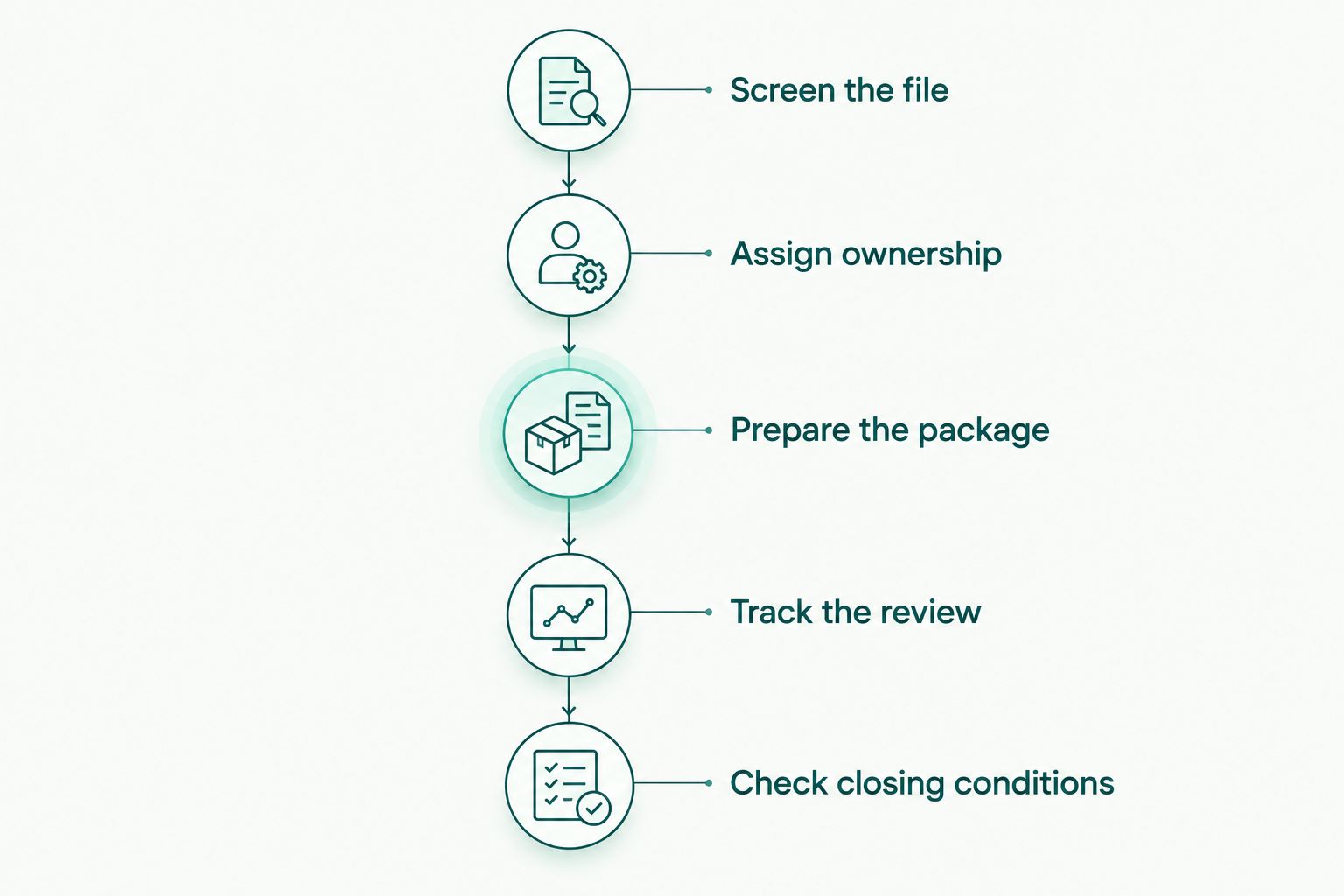
Use these 5 steps before adding another listing
Step 1: Screen the file
Ask the homeowner about the mortgage, other known liens, current notices, and their reason for selling. Collect the relevant documents instead of relying only on a verbal summary.
Separate an ordinary processing task from an issue that needs professional advice. An active foreclosure notice, bankruptcy matter, ownership question, or concern about an unpaid balance requires attention beyond assembling a package.
Do not tell a seller that starting a short sale automatically stops another proceeding. Ask a qualified attorney to address legal deadlines and available protections.
Step 2: Assign ownership
Give each open task 1 named owner. That is an operating recommendation, not a staffing requirement or lender rule.
Record who collects seller documents, checks the package, submits it, follows up with the lender, and updates the agent. Avoid assigning a task to everyone on the team without identifying who must finish it.
Your seller should also know whom to contact. A clear point of contact prevents the homeowner from guessing whether to call the agent, assistant, or processor.
Step 3: Prepare the package
Use the lender's current requirements for that specific file. Common requests include financial information, a hardship explanation, transaction documents, and authorization to communicate, but the required package varies.
Keep a missing-document list with an owner and next follow-up date. Before submission, check signatures, consistency, and whether documents remain current under the lender's requirements.
A saved template is a starting point. It is not proof that the package is complete.
Step 4: Track the review
Record what was submitted, how it was sent, and any acknowledgment received. Distinguish a successful upload from confirmation that the lender considers the file complete.
When a request arrives, attach it to the correct file and assign the response. Record the lender's stated deadline rather than replacing it with a standard date used across all listings.
Keep a communication log that another authorized team member can understand. A history buried in a personal inbox makes coverage harder.
Step 5: Check closing conditions
When written approval arrives, review the conditions with the appropriate parties. Coordinate dates and required documents with the closing professional and your broker.
Do not translate approval of the sale into a promise that every remaining obligation disappears. The seller should direct questions about liability, legal rights, or tax consequences to qualified professionals.
The file remains active until the required transaction work is finished. A lender response is a milestone, not permission to stop tracking the deal.
Why your short sale capacity varies
Your workable listing load depends on the work inside each file. Review these factors before making another commitment:
- Document readiness. Missing or inconsistent information creates collection and correction tasks before a package is ready.
- Lender requirements. Different files can require different submission methods, documents, and follow-up actions.
- Other liens. Additional recorded interests require coordination with the appropriate parties before the transaction can close.
- Overlapping deadlines. Lender requests, contract dates, and legal notices need separate tracking even when they concern the same property.
- Team coverage. An assigned processor helps only when responsibilities and backup coverage are clear.
- Seller communication. A homeowner who needs help gathering records requires a different communication plan from a seller with documents ready.
Do not convert these factors into a made-up listings-per-agent benchmark. Your own unresolved tasks provide a better acceptance test than someone else's claimed volume.
Build a file board you can actually use
Use your 2026 file board to answer a narrow question: what needs action next? A complicated system is not useful if team members stop updating it.
Keep the following fields visible:
- Property and seller identification.
- Current transaction stage.
- Named file owner and backup contact.
- Missing documents and responsible party.
- Latest lender communication and requested action.
- Next deadline and next follow-up date.
- Seller update status.
Keep supporting financial documents in an appropriately protected location with access limited to authorized people. The shared task board should not become an unnecessary copy of the seller's sensitive records.
Schedule 1 weekly file review as a team routine, then handle urgent notices when received. A scheduled review is not a reason to wait on a deadline that needs attention sooner.
Ask the owner to state the blocker and next action for every active file. If that answer is unclear, resolve it before adding more work.
When should an agent outsource short sale processing?
Outsource when package preparation and lender follow-up are displacing work that requires your attention as the listing agent. The decision should address a visible bottleneck, such as unreviewed documents or lender requests without an assigned response.
Shortsalesdoneright is best for real estate agents seeking short sale package preparation and lender negotiation support. Its agent service includes preparing the full short-sale package, a dedicated point of contact, and weekly lender updates.
The benefit is a defined processing role. The limitation is that outside support does not replace your representation of the seller, your broker's supervision, or lender decision-making.
Before choosing a processor for your 2026 listings, confirm:
- Who communicates with the seller about missing documents.
- Who submits documents and records lender responses.
- How urgent requests reach the agent.
- What the regular update includes.
- Which tasks remain with the agent and closing professional.
Use the appropriate agent intake form through Shortsalesdoneright to request help. Describe the current stage and known deadlines so the discussion starts with the actual file needs.
Request help with short sale processing
Discuss package preparation, lender negotiation, and the responsibilities for your active listings.
Can an assistant handle lender follow-up?
An assistant can handle assigned administrative follow-up when properly authorized and working within applicable rules and brokerage policies. Confirm the permitted scope with your broker rather than assuming that access to a file authorizes every activity.
Separate requesting a status update from advising a seller about contract terms, legal exposure, or tax treatment. Route questions outside the assistant's role to the appropriate professional.
What should you tell sellers about lender timing?
Tell sellers the file's verified status, outstanding requests, and next planned action. Do not turn a follow-up date into a promised approval date.
A useful update explains what happened and what the seller needs to do. If the lender has not responded, say that plainly and identify the next follow-up action without predicting the result.
When should you stop accepting new short sale listings?
Pause new intake when existing files have unowned tasks, unclear deadlines, or seller questions that remain unanswered. Adding another property does not solve a processing backlog.
First, identify which work is stalled. Then assign coverage, obtain support, or adjust your commitments with your broker before accepting another listing.
FAQ
Can an agent handle multiple short sale listings at once without a processor?
Yes, an agent can handle multiple short sale listings without a processor when the agent can manage each file's documents, deadlines, and communication. Use assigned tasks and a current file log rather than relying on memory.
Is there a fixed maximum number of short sale listings an agent can take?
There is no universal listing count that establishes an agent's workable capacity. Evaluate file complexity, unresolved tasks, brokerage requirements, and the support available before accepting another listing.
Does hiring a short sale processor guarantee lender approval?
No, hiring a short sale processor does not guarantee lender approval. The lender evaluates the proposed transaction under its requirements, and the outcome remains subject to its review.
What does Shortsalesdoneright do for listing agents?
Shortsalesdoneright provides short sale package preparation and lender negotiation services for agents. The service includes a dedicated point of contact and weekly lender updates; agents retain their listing and brokerage responsibilities.
Should I wait for my weekly review to handle a lender request?
No, handle a lender request according to its deadline and urgency rather than waiting for a scheduled review. Assign an owner and record the required response when the request arrives.
Does a short sale erase the homeowner's remaining mortgage balance?
A short sale does not automatically establish that the homeowner owes no remaining balance. Lender terms and state law vary, so a qualified attorney should review liability questions and a qualified tax professional should address tax consequences.
One last thing
Track exceptions, not just progress. A file marked as submitted still needs an owner for missing information, a new lender request, or an approaching deadline.
Before accepting your next listing in 2026, ask a backup team member to explain the next action on every active file using only your records. If the records cannot answer that question, fix the handoff before expanding your workload.