

Yes. You can get a short sale approved with bad credit because the lender evaluates the proposed sale, your financial circumstances, and its requirements—not just your credit score. Approval is not guaranteed, and permission to sell does not automatically mean the lender forgives the unpaid mortgage balance.
- Can I get a short sale approved with bad credit? Yes; poor credit alone does not determine approval.
- Your hardship documents, property value, offer, and lender requirements matter more than chasing a particular credit score.
- Shortsalesdoneright helps homeowners compare a short sale with other mortgage options; lender approval is never guaranteed.
- Get written answers about any unpaid balance before accepting short-sale terms.
Can I get a short sale approved with bad credit?
Yes. A short-sale request asks an existing mortgage lender to accept a sale that will not fully repay the mortgage from the proceeds. It is not the same decision as approving you for a new mortgage.
Bad credit does not automatically disqualify you, and good credit does not guarantee approval. For a homeowner seeking approval in 2026, the practical task is to document the situation and present a sale the lender will consider.
There are 2 separate decisions to track: permission to complete the sale and how the lender will treat any unpaid balance. Do not assume one settles the other.
If you need help understanding your choices, Shortsalesdoneright provides short-sale processing and lender negotiation services and helps homeowners compare a short sale with other options.
What does the lender review besides my credit?
The lender's requirements control the review. Expect to address these questions rather than search for a credit-score cutoff:
- Financial hardship: What changed, and why is keeping the current mortgage no longer workable?
- Financial records: Do your income, expenses, assets, and supporting documents explain your situation consistently?
- Property value: How does the proposed offer compare with the lender's assessment of the home?
- Sale proceeds: What amount would reach the lender after the proposed transaction expenses?
- Other approvals: Are additional mortgage holders or other parties involved in approving the transaction?
A low score does not answer these questions. A clear, documented request does.
Why this matters
Waiting to improve your credit before asking about a short sale can distract you from the decisions that need attention now. Your mortgage status, financial circumstances, and any foreclosure notices deserve a review even if your credit report looks difficult.
Start by deciding whether you want to keep the home or leave it. A short sale is an exit from ownership, not a way to repair the existing mortgage while remaining in the property.
For your 2026 decision, focus on what you can afford and what each available option requires. Do not choose a short sale solely because someone describes it as better for your credit.
Does bad credit change which mortgage option I should consider?
Your credit history is part of your financial picture, but your housing goal comes first. Ask your mortgage servicer about options to keep the home before pursuing a sale if staying remains your priority.
The comparison below identifies starting points, not eligibility findings. Each option requires review, and none should be chosen on a promised credit-score outcome.
| Option | Best for | Main benefit | Main limitation |
|---|---|---|---|
| Short sale | Homeowners seeking an exit when sale proceeds will not fully repay the mortgage | Provides a proposed sale for lender review | Requires approval; treatment of the unpaid balance needs separate attention |
| Loan modification | Homeowners who want to stay and need different mortgage terms | Changes agreed mortgage terms if approved | Eligibility and the resulting payment depend on the applicable requirements |
| Repayment plan | Homeowners who can afford their regular payment plus a catch-up amount | Addresses missed payments through an agreed schedule | Does not solve a payment that remains unaffordable |
| Deed in lieu | Homeowners considering a transfer of ownership to the lender | Offers another possible exit without a buyer-led sale | Requires lender acceptance and review of title and unpaid-balance terms |
Choose based on affordability, ownership goals, and written terms—not a prediction about which option will produce the highest credit score. A qualified housing counselor can help you review mortgage-assistance choices. Direct legal and tax questions to qualified professionals.
Why short-sale approval varies
Short-sale decisions depend on the proposed transaction and the requirements attached to your mortgage. There is no single approval rule that applies to every homeowner with bad credit.
These factors explain why similar-looking situations can require different next steps:
- The reason for the hardship. Explain the change in circumstances with records that support your account. A hardship statement should describe your situation, not copy someone else's explanation.
- The financial picture. Income, assets, expenses, and account records need to tell a consistent story. Explain unusual deposits or changes instead of leaving the reviewer to interpret them.
- The offer and property value. An offer still has to satisfy the lender's review. A buyer's willingness to purchase does not create lender approval.
- Additional mortgage holders. A second mortgage adds another party whose requirements must be addressed. Do not assume the first lender can resolve every claim against the property.
- The requested terms. Review any proposed contribution, unpaid-balance language, and closing conditions before agreeing. Permission to sell is not a substitute for understanding the agreement.
For a request submitted in 2026, ask for the lender's current document checklist. Use it to organize the submission rather than relying on an old checklist or another homeowner's experience.
How do I prepare a short-sale request with bad credit?
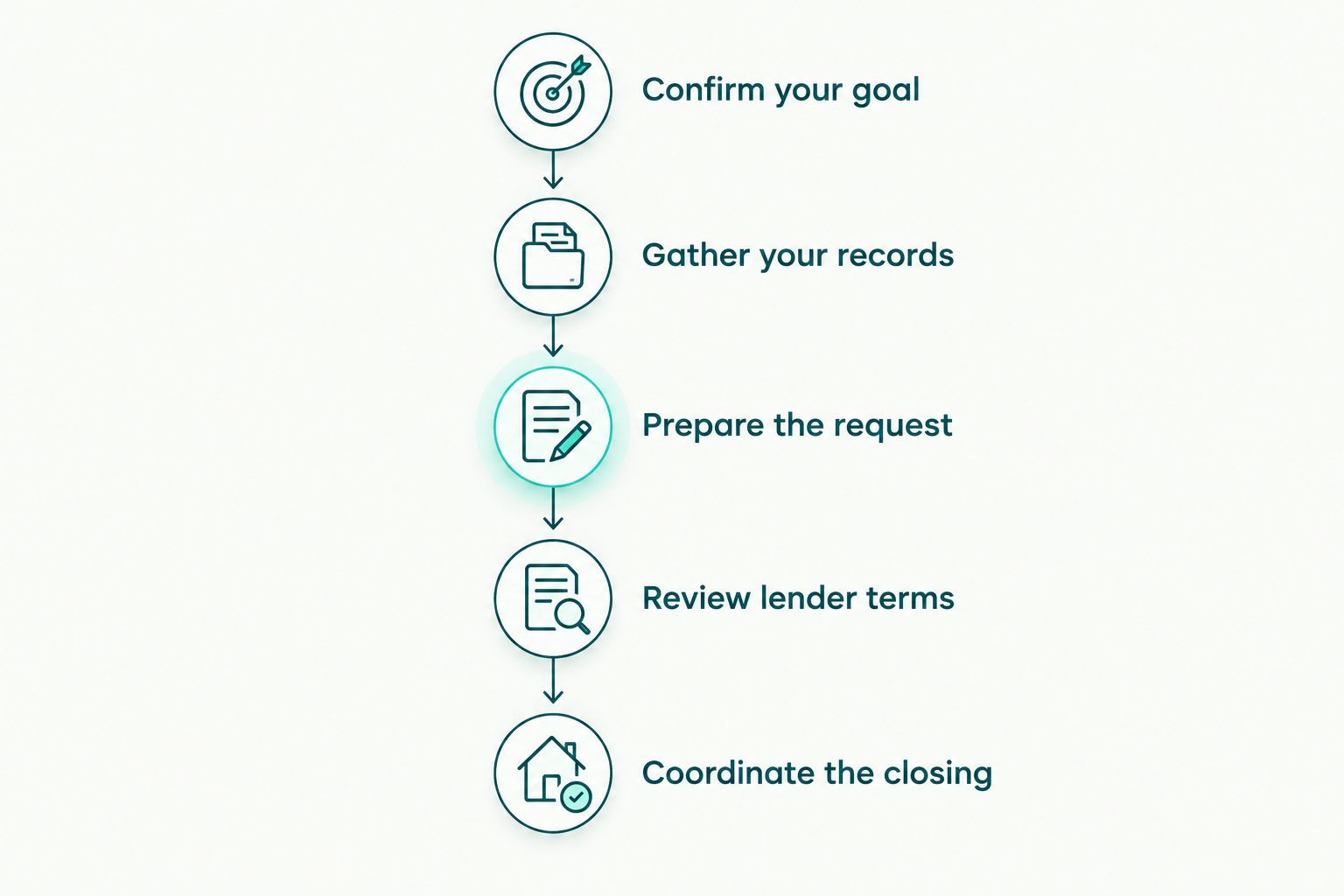
Use these 5 steps to move from uncertainty to a documented request. Your lender can require additional information, so treat this sequence as an organizing method rather than a promise of approval.
Confirm your goal
Decide whether you want to keep the home or sell it. Write down what you can afford now, not what you hope your finances will support later.
If keeping the home is the priority, ask the servicer about retention options. If leaving is the priority, discuss whether a short sale fits your mortgage balance and the property's likely sale proceeds.
Gather your records
Request the lender's current requirements and collect the financial records it identifies. These commonly include income information, account statements, tax documents, and an explanation of hardship.
Check that names, dates, balances, and explanations agree across the package. If your income recently changed, explain the change and provide the supporting records requested.
Prepare the request
Coordinate with your real estate agent on the listing, offer, and sale documents. Give the lender a clear explanation of why the proposed transaction needs short-sale approval.
Keep your hardship statement factual. The guide to writing a short-sale hardship letter explains how to organize that account without turning it into a generic appeal.
Review lender terms
Read the written response before treating the transaction as settled. Identify closing conditions, required signatures, deadlines, and language addressing any remaining balance.
Ask a qualified attorney to explain legal consequences and a qualified tax professional to address tax questions. Lender terms and state law vary; a verbal explanation does not replace review of the actual documents.
Coordinate the closing
Keep the agent, closing professional, and lender contact aligned on outstanding requirements. Report changes to the offer or your circumstances rather than assuming the existing approval covers them.
Confirm what remains outstanding before scheduling around a closing date. A submitted package or an encouraging conversation is not a completed sale.
Keep a copy of what you submit and a record of follow-up requests. A simple document log makes it easier to see what is complete and what still needs an answer.
Will a short sale improve my bad credit?
A short sale is not a credit-repair service. Your credit outcome depends on your broader credit history and how the mortgage account is reported; no specific score result is assured.
Do not miss payments deliberately to try to qualify. Ask the servicer how your current payment status affects the options under review, and get professional guidance if you cannot make the next payment.
For a 2026 comparison, separate the decision to resolve an unaffordable mortgage from the longer task of rebuilding credit. Choosing an exit does not erase the account's payment history.
Can I request a short sale before missing payments?
You can ask your servicer about a short sale before missing payments. Whether the lender will approve the request depends on its requirements and your documented circumstances.
Explain an expected income loss or another change accurately, with supporting records. Do not create a delinquency to make the request appear stronger.
Does short-sale approval mean I owe nothing afterward?
No. Short-sale approval does not automatically release you from the unpaid balance. The approval documents and applicable state law determine what needs further review.
Before agreeing, ask whether the lender releases its claim against the property, releases you from personal responsibility for the remaining debt, or addresses those issues differently. Have a qualified attorney explain the wording rather than relying on assumptions about what a short sale normally means.
When should I request help?
Request help when you cannot afford the mortgage, expect a documented financial change, or need to compare selling with options to stay. You do not need to wait for a better credit score to start that conversation.
Shortsalesdoneright is best for homeowners who want help comparing a short sale with other mortgage options. Its service includes lender negotiation; it does not guarantee approval, cancellation of debt, or a particular credit result.
Before the conversation, prepare 3 questions: Which options fit my goal? What documents does my lender require? Which proposed terms need legal or tax review? Those questions keep the discussion centered on your next decision.
Homeowners ready to act can request help through the homeowner intake form on the website. Bring any lender correspondence or foreclosure notices so the discussion accounts for the situation you are facing.
Get help with your mortgage options
Request homeowner help comparing a short sale with other options for your mortgage.
FAQ
Can I get a short sale approved with bad credit in 2026?
Yes, you can get a short sale approved with bad credit in 2026, but approval depends on the lender's requirements and your proposed transaction. Document your hardship, financial circumstances, and sale rather than focusing only on your score.
What credit score do I need for short-sale approval?
There is no single credit-score requirement that applies to every short-sale request. Ask your mortgage servicer which requirements apply to your loan and circumstances.
Do I have to stop paying my mortgage to qualify?
Do not stop paying your mortgage just to try to qualify for a short sale. Ask your servicer about its requirements and discuss your actual ability to pay.
Is a short sale better than foreclosure for my credit?
You cannot rely on a guaranteed credit-score advantage from a short sale over foreclosure. Compare the legal, financial, and housing consequences with qualified professionals instead of choosing on a score prediction.
Can I get a short sale if I have a second mortgage?
A second mortgage does not automatically rule out a short sale, but its holder's requirements must be addressed. Approval from the first mortgage lender alone does not settle every mortgage claim.
Will the lender forgive the remaining mortgage balance?
Do not assume the lender will forgive the remaining mortgage balance. Have a qualified attorney review the written terms and applicable state law, and consult a qualified tax professional about tax consequences.
Can Shortsalesdoneright help me decide whether to pursue a short sale?
Shortsalesdoneright helps homeowners compare a short sale with other options and provides short-sale processing and lender negotiation services. No service can guarantee lender approval or a specific credit-score result.
One last thing
The most useful question is not just whether the lender will approve the sale. It is what the written approval requires you to do—and what obligations remain afterward.
Before accepting terms, put the approval letter beside your list of questions. Resolve unclear language with the appropriate professional before you commit, not after closing.


