

You can decide not to pursue another short sale after a denial, but you do not initiate foreclosure against your own home; the lender or its authorized party does. A denied short sale does not automatically start foreclosure, transfer ownership, or erase your mortgage debt. Before you stop pursuing alternatives, confirm the foreclosure status, review the denial reason, and get advice about any unpaid balance under your state's law.
- Foreclosure after short sale denied is not automatic; confirm the lender's current action and any sale date.
- Shortsalesdoneright helps homeowners compare short-sale options; legal and tax questions belong with qualified professionals.
- A revised short sale, loan modification, or deed in lieu requires separate review and is not guaranteed.
- Get written terms about any remaining debt before accepting a mortgage exit.
Can I pursue foreclosure if my short sale is denied?
You can stop seeking short-sale approval, but foreclosure remains a lender-driven legal process—not a homeowner application. If your mortgage is in default, the lender can pursue foreclosure subject to applicable requirements. If you are current, a short-sale denial alone does not establish that foreclosure is underway.
Separate these issues before choosing your next move:
- Denial reason. Obtain the written decision and ask whether the lender will consider corrections, a revised offer, or another application.
- Foreclosure status. Identify any filed case, notices, response deadlines, and scheduled sale date.
- Remaining debt. Ask what happens to any unpaid mortgage balance under the proposed outcome.
For help comparing the short-sale path with other options, request homeowner assistance through the appropriate intake form on the Shortsalesdoneright website. Keep legal deadlines separate from any service inquiry.
Why this matters
A denial answers a question about a particular short-sale request. It does not answer every question about your home, mortgage, or legal rights. You still need to know whether the problem was the offer, the paperwork, the loan's requirements, or another obstacle.
In 2026, the practical rule is straightforward: do not treat a short-sale conversation as confirmation that foreclosure has stopped. Ask for written confirmation of any postponement, and have a qualified local attorney explain the status of your case.
Waiting without checking creates a separate problem. You cannot make an informed decision about another offer or a different exit while guessing about the deadline.
What should I do immediately after a short-sale denial?
Start with records, not another application. Gather the denial, your latest mortgage statement, and every foreclosure-related notice in one place. Give your agent and attorney the same documents so they are not working from different versions of events.
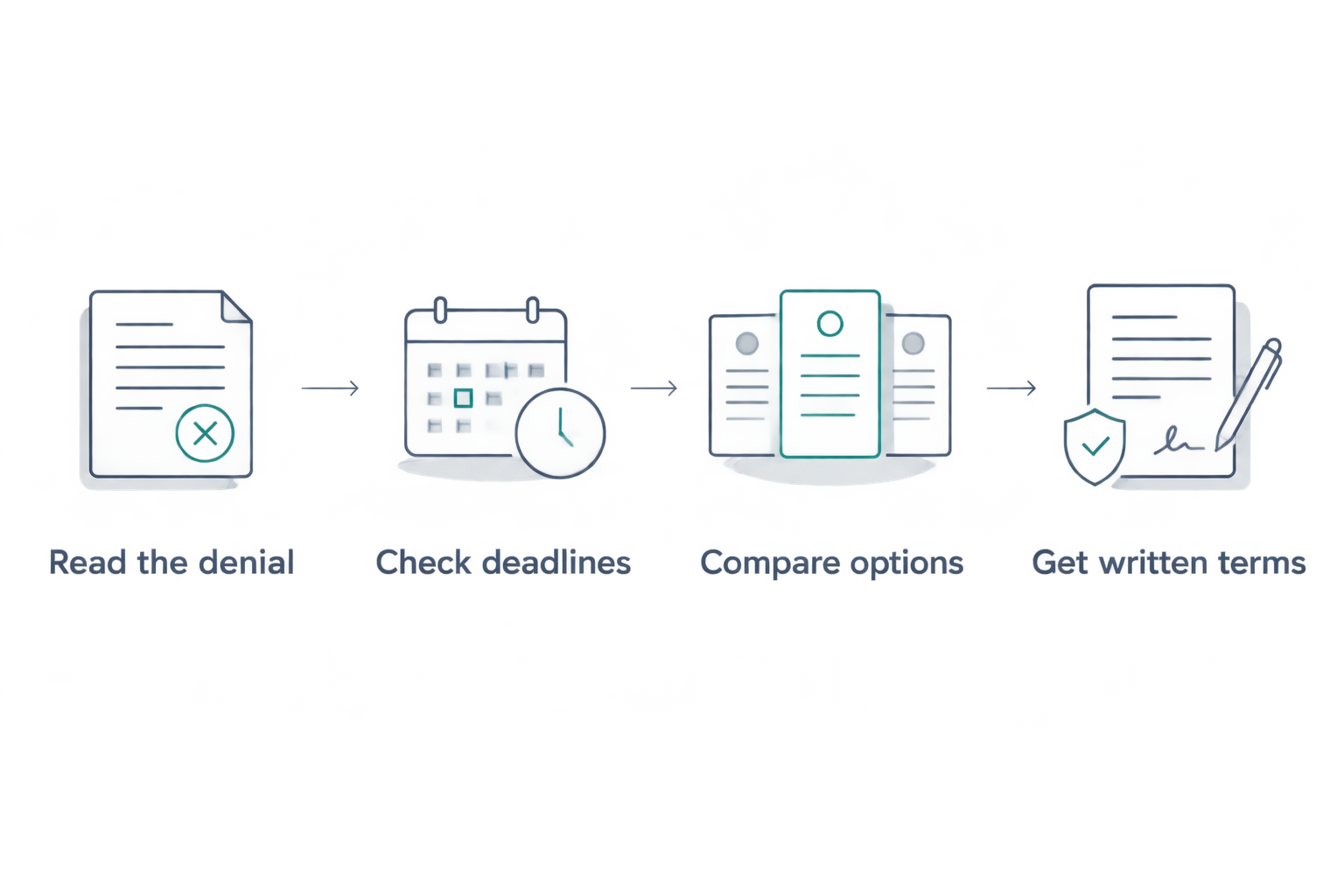
Follow these 4 steps
- Read the denial. Ask the servicer to identify the specific reason and whether the decision applies to the offer, the package, or your eligibility. Request the response in writing.
- Check deadlines. Read court papers and sale notices. Ask a local foreclosure attorney which dates require action; do not rely on the buyer's closing schedule.
- Compare options. Decide whether your goal is to keep the home or leave it. Ask the servicer which alternatives it will review and what each requires.
- Get written terms. Before signing an agreement, confirm the property-transfer terms and treatment of any unpaid debt. Have legal and tax questions reviewed separately.
Your working file should also include a contact log. Record who you spoke with, what they requested, and what they confirmed. A useful log distinguishes a request to postpone a sale from confirmation that a postponement occurred.
Which options should I compare after a denial?
Choose the path that fits your goal and the actual lender terms—not the label that sounds least stressful. The options below are decision paths, not promises of eligibility or approval.
| Option | Best for | Potential benefit | Main limitation |
|---|---|---|---|
| Revised short sale | Homeowners seeking a sale when the denial issue can be addressed | Gives the lender a changed offer or corrected package to review | Requires approval; another submission does not itself confirm a foreclosure pause |
| Loan modification | Homeowners who want to stay and can support revised payments | Changes loan terms if approved | Eligibility and payment terms require lender review |
| Deed in lieu | Homeowners seeking a negotiated transfer rather than a buyer-led sale | Offers a different way to transfer the property if accepted | Lender acceptance, title issues, and remaining-debt terms need review |
| Foreclosure | Homeowners evaluating the consequences when a negotiated exit is not completed | Does not depend on finding a short-sale buyer | The legal process controls the transfer; remaining-debt and possession questions vary |
Foreclosure is not a recommended shortcut. It is an outcome to understand with legal advice. Do not assume it is faster, less expensive, or more protective of your credit than another option.
Revised short sale: best for an addressable denial
A revised submission makes sense when something material can change. That might be a corrected document, a different offer, or evidence addressing the lender's valuation concern. Ask exactly what the lender will reconsider before asking the buyer to wait.
The benefit is a renewed chance at a negotiated sale. The limitation is uncertainty: a revised package still needs approval, and the foreclosure timeline needs separate attention. Review the top reasons lenders reject short-sale offers to organize questions about your decision.
Loan modification: best for keeping the home
A modification is worth discussing when you want to stay and need different mortgage terms. Be ready to explain your current income, expenses, and ability to make payments.
The benefit is pursuing home retention rather than a sale. The limitation is that approval and workable terms are not assured. In 2026, ask for the requirements that apply to your specific loan rather than relying on another homeowner's experience.
Deed in lieu: best for exploring a negotiated transfer
A deed in lieu involves asking the lender to accept a voluntary property transfer instead of completing foreclosure. It is not something you accomplish by mailing back keys or leaving the property.
The benefit is another possible negotiated exit. The limitation is that the lender must accept it, and other liens can complicate the arrangement. Have an attorney review the agreement, including what it says about unpaid debt.
Why foreclosure after a short-sale denial varies
There is no single nationwide sequence that follows every denial. These factors determine which questions you need answered:
- State law. Foreclosure procedures, response rights, possession rules, and potential liability for unpaid debt differ by state.
- Current case status. A homeowner with a scheduled sale faces a different situation from someone who has received no foreclosure filing or sale notice.
- Denial reason. An incomplete package calls for a different response from an offer the lender will not accept.
- Loan requirements. The servicer's available review paths depend on the requirements governing the mortgage.
- Other property claims. Additional mortgages, tax claims, or other liens affect what must be resolved for a negotiated transfer.
- Written lender decisions. A denial, approval, postponement, and debt-release agreement address different issues. Do not substitute one for another.
For a 2026 decision, use current statements, current notices, and current written responses. Old conversations do not establish today's foreclosure status.
Can I try another short sale after the lender says no?
A denied short sale does not automatically rule out another submission. Ask whether the lender permits reconsideration or a new request, what must change, and whether there is enough time to complete that review.
A new buyer does not solve every denial. If the obstacle concerns your financial documentation or another lien, changing the offer alone leaves that issue unresolved. Have your agent identify the actual obstacle before restarting marketing or negotiations.
Does a denied short sale pause foreclosure?
A short-sale denial is not a foreclosure postponement. Whether a review or application creates protections depends on the applicable rules and your circumstances; a local attorney should assess those protections.
Ask for written confirmation of the current sale status. If you already have a scheduled foreclosure sale in 2026, contact a qualified foreclosure attorney promptly rather than waiting for the next lender update.
Will I still owe money after foreclosure?
Foreclosure does not guarantee that every unpaid balance disappears. Whether a lender can seek a remaining balance depends on state law, the loan, the foreclosure process, and other relevant facts.
The same caution applies to a short sale or deed in lieu. Permission to transfer the property is not necessarily a release from the debt. Ask an attorney to explain the actual agreement and a qualified tax professional to assess any tax consequences.
Where short-sale processing help fits
Shortsalesdoneright short-sale processing is best for homeowners who want help assessing a short sale and handling lender negotiations. The service helps homeowners compare a short sale with other options. It does not replace a foreclosure attorney or tax adviser.
For agents, Shortsalesdoneright prepares the full short-sale package and provides a dedicated point of contact and weekly lender updates. Those services address transaction coordination; they do not promise lender approval, debt forgiveness, or a particular credit result.
If you want help after a denial, start with the written decision and any sale notice. Explain whether your priority is staying in the home or arranging an exit. That keeps the conversation focused on your circumstances rather than another generic submission.
Request help reviewing your next move
Ask about your short-sale denial and compare the next steps for your situation.
FAQ
Can I choose foreclosure after my short sale is denied?
You can decide not to pursue another short sale, but you do not initiate foreclosure against your own home. The lender or its authorized party pursues that process under applicable law; get legal advice before deciding to stop pursuing alternatives.
Will the bank foreclose immediately after denying my short sale?
A short-sale denial does not by itself establish an immediate foreclosure date. Check your notices, ask for the current case status, and have a local attorney explain any deadlines.
Should I stop paying my mortgage after a denied short sale?
Do not treat a short-sale denial as an instruction to stop paying your mortgage. Discuss your finances and the consequences of missed payments with your servicer and a qualified adviser before making that decision.
Can I stay in my house after a short-sale denial?
A short-sale denial alone does not transfer ownership or set a move-out date. Your right to remain depends on the property's legal status and applicable state law; do not ignore court papers or possession notices.
Is a deed in lieu automatically approved after a short-sale denial?
A deed in lieu is not automatically approved after a short-sale denial. The lender must review and accept that arrangement, and the written agreement needs review for property-transfer and remaining-debt terms.
Will foreclosure hurt my credit less than a denied short sale?
You cannot determine a specific credit result by comparing those labels alone. A denial is not a completed property disposition, and your payment history and reported account information also matter.
Who can help me understand a denied short sale in 2026?
A short-sale processing service can help with the lender-review process, while a qualified local attorney explains foreclosure rights and deadlines. Use a qualified tax professional for tax questions; no service can promise lender approval or a specific credit result.
One last thing
Ask whether the lender is releasing the property, releasing you from the debt, or both. Those are different questions. A document that permits a transfer should not be treated as proof that every remaining obligation is resolved.
Before choosing your next move, have the written terms explained in plain language. Lender terms and state law vary. You need an answer about your mortgage and your documents—not a promise based on someone else's closing.


