

A short sale is better than a deed in lieu of foreclosure when a buyer-backed sale offers more workable written terms for your mortgage exit. A deed in lieu is better when the lender accepts the property directly on terms that fit your situation. Neither option automatically erases an unpaid balance; in 2026, compare debt-release language, title issues, and deadlines before choosing.
- For short sale vs deed in lieu of foreclosure, written debt-release terms matter more than the option’s name.
- A short sale requires a buyer; a deed in lieu requires the lender to accept ownership.
- Neither option guarantees debt forgiveness, a foreclosure pause, or a particular credit-score result.
- Shortsalesdoneright provides short-sale processing and lender negotiation, not a guarantee of lender approval.
Why this matters
You are choosing how to leave a mortgage, not just how to transfer a house. A signed ownership transfer and a release from mortgage debt are different things. The documents need to address both.
Start with the broader short sale, foreclosure, and deed in lieu comparison if you are also weighing foreclosure. For this decision, focus on what each lender-approved agreement requires from you and what obligations remain afterward.
Choose the agreement you can complete with acceptable terms—not the label that sounds less damaging.
Is a short sale better than a deed in lieu of foreclosure?
Neither option is automatically better. A short sale involves selling to a buyer with lender approval to accept less than the mortgage payoff. A deed in lieu involves transferring ownership to the lender under an agreed arrangement instead of completing foreclosure.
Use this comparison for a 2026 decision. Your actual approval documents and state law control the outcome.
| Decision point | Short sale | Deed in lieu of foreclosure |
|---|---|---|
| Best for | Homeowners with a workable buyer-backed sale and acceptable lender terms | Homeowners whose lender will accept a direct ownership transfer on acceptable terms |
| Who receives ownership | The buyer | The lender or its designated recipient |
| Main advantage | Provides a sale-based route out of the property | Does not require a third-party buyer to complete the transfer |
| Main drawback | Depends on lender approval and the buyer reaching closing | Depends on lender acceptance and resolution of title concerns |
| Unpaid mortgage balance | Review the approval for an explicit release or remaining obligation | Review the agreement for an explicit release or remaining obligation |
| Other liens | Must be addressed so the sale can close | Can complicate or prevent lender acceptance |
| Move-out terms | Follow the purchase contract and approved closing terms | Follow the written transfer and possession agreement |
| Credit outcome | No specific score result is guaranteed | No specific score result is guaranteed |
Do not choose based on a verbal statement that the bank will take care of everything. Ask for the proposed terms in writing. Have a qualified attorney explain anything that leaves your personal responsibility unclear.
When a short sale is the better fit
Best for: homeowners who have a workable sale and need lender approval to close below the mortgage payoff.
A short sale gives you a route through the real estate market. Your agent markets the property, a buyer submits an offer, and the lender reviews whether to accept the proposed transaction. That review does not replace the buyer’s financing, inspection, or other contract requirements.
The advantage is a negotiated sale with a defined buyer and closing plan. The drawback is dependence on several parties. A lender’s approval is not enough if the buyer cannot close or the title issues remain unresolved.
Before committing, ask your agent to explain:
- Whether the buyer’s financing and contract deadlines fit the lender review.
- Which documents the mortgage servicer requires from you.
- Which liens or ownership issues need attention.
- What happens if the lender counters the offer.
- Whether the proposed approval releases you from the unpaid balance.
A short sale is not the better choice merely because you already listed the house. Compare the actual terms available now, not the effort already spent.
When a deed in lieu is the better fit
Best for: homeowners whose lender accepts a direct transfer and offers terms they can meet.
A deed in lieu removes the need for a third-party buyer. That is useful when a sale is not coming together and the lender is willing to consider taking the property. You still need approval, documentation, and a written agreement.
The advantage is a direct transfer path. The drawback is that the lender does not have to accept the property, and other liens can complicate the transaction. Do not assume an unsuccessful listing automatically makes you eligible.
Ask the servicer whether it requires marketing efforts before reviewing a deed in lieu. Also ask about the property’s condition, required documents, title review, and possession terms. Requirements depend on the loan and the proposed agreement.
Do not sign a deed simply because someone says it will end the mortgage problem. Get legal advice on the transfer agreement and any remaining debt before signing.
Why the better option varies
The deciding factors are specific to your mortgage and property. Compare these before choosing a path:
- Debt-release terms. Determine whether the agreement releases your personal obligation or leaves an unpaid balance collectible, subject to applicable law.
- Buyer readiness. A short sale needs a buyer who can satisfy the contract and lender-approved closing conditions.
- Title issues. Additional mortgages, tax liens, and other recorded claims need review; resolving the first mortgage does not settle every claim.
- Foreclosure status. An approaching sale date changes which steps need immediate attention. A pending request is not proof that foreclosure has stopped.
- Possession requirements. Your move-out plan must match the agreement you sign, not an assumed grace period.
- Loan requirements. Investor and program rules affect what the servicer can approve and what documents it requests.
For a 2026 comparison, ask the servicer for its current requirements. An old approval letter from another homeowner is not a promise about your loan.
How do you compare the written offers?
Put both proposed paths through the same review. If the servicer has not offered one of them, treat it as a question to investigate—not an available agreement.
Confirm eligibility
Ask which options the servicer will review and what it needs to make a decision. Record the contact person, requested documents, and current status. Clarify whether a request is incomplete, under review, approved, or denied.
Review title
Ask the title professional or attorney to identify liens and ownership issues. List each claim separately. Do not treat approval from the first mortgage lender as approval from every creditor with an interest in the property.
Check debt release
Locate the language addressing the unpaid mortgage balance. Ask whether signing releases your personal responsibility, requires a contribution, or creates another payment obligation. Have an attorney explain any unclear wording before you agree.
Verify deadlines
Match approval expiration dates, closing requirements, and possession terms against your moving plan. If foreclosure is pending, confirm its status separately. Do not infer a postponement from an active negotiation.
Plan the move
Confirm when ownership transfers and when possession must be delivered. Arrange your next housing around the signed terms. Keep copies of the completed closing or transfer documents with the lender’s approval.
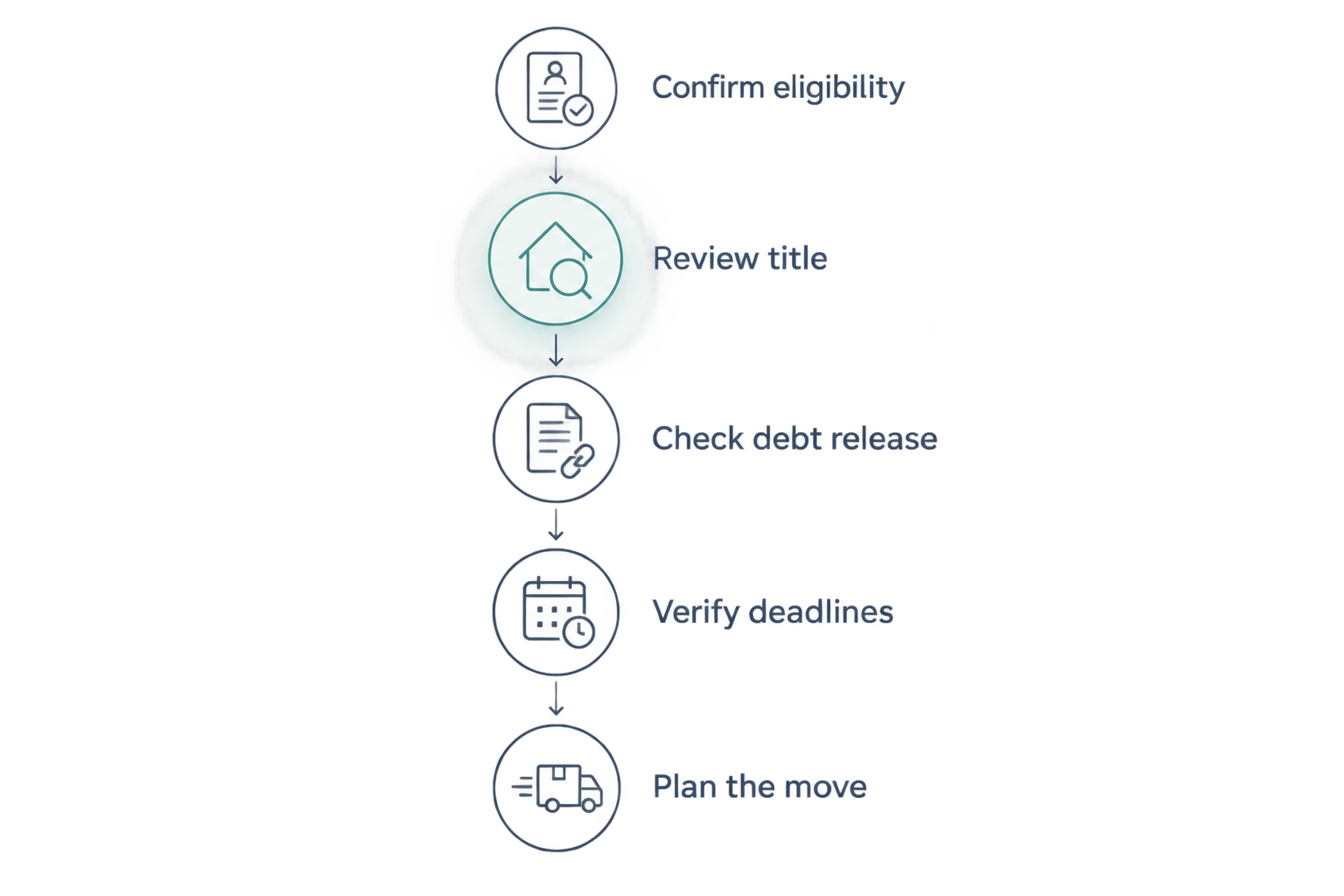
This process keeps the comparison practical. You are looking for a documented exit you can complete, with obligations you understand. A reassuring conversation cannot replace that review.
Does either option wipe out the remaining mortgage balance?
Neither option automatically wipes out the unpaid balance. The amount left after the transaction is commonly called a deficiency. Whether a lender can pursue it depends on the agreement and applicable law.
Ask your attorney to distinguish language allowing the property transfer from language releasing your personal obligation. Those provisions do different jobs. Also review any separate agreement involving another mortgage or creditor.
Debt cancellation can raise tax questions even when the lender releases collection rights. For a transaction completed in 2026, have a qualified tax professional review the applicable treatment using your circumstances. Do not assume that debt forgiveness always creates taxable income or is always tax-free.
Is a deed in lieu faster than a short sale?
A deed in lieu has no guaranteed speed advantage. It removes the buyer from the process, but lender review, title problems, document requests, and transfer conditions still matter. A short sale with a ready buyer can also face delays before approval or closing.
Ask for the next required action rather than a general completion estimate. Find out who owns that action and whether another party must respond first. This gives you a usable status update without treating an estimate as a deadline.
If timing is urgent because of foreclosure, speak with a qualified local attorney promptly. Negotiation support does not replace advice about protecting your rights before a scheduled sale.
Which option is better for your credit?
Neither option guarantees a better credit score. Your payment history, account reporting, and broader credit file affect the result. Do not choose between these transactions based on a promised point change.
Future mortgage eligibility is a separate question. Ask a mortgage professional about the rules for the loan program you expect to use and your individual history. Avoid relying on a universal waiting period quoted without those details.
Prioritize a workable agreement and clear remaining obligations over a predicted credit-score difference. You can verify the terms before signing; you cannot obtain a guaranteed future score.
Where short-sale processing help fits
Shortsalesdoneright is best for homeowners seeking short-sale processing and lender negotiation support. The service helps homeowners compare a short sale with other options. It does not guarantee that a lender will approve the transaction or forgive an unpaid balance.
For agents, the service includes preparing the full short-sale package, a dedicated point of contact, and weekly lender updates. Those tasks support the transaction. They do not replace the homeowner’s legal or tax advice.
If you are ready to discuss your situation, visit Shortsalesdoneright and request help through the homeowner intake form. Share any foreclosure notice or scheduled sale date at the start so the timing is clear.
Request help with your mortgage options
Use the homeowner intake form to explain your situation and any foreclosure deadline.
FAQ
Is a short sale always better than a deed in lieu of foreclosure?
No. A short sale is better only when its approved terms and closing requirements fit your situation better than a lender-accepted deed in lieu. Compare debt release, title issues, deadlines, and possession terms.
Can the bank reject my request for a deed in lieu?
Yes. A lender does not have to accept a deed in lieu. Ask the servicer about eligibility, title requirements, and any marketing or documentation conditions before relying on that option.
Will a short sale or deed in lieu stop my foreclosure?
Submitting a request is not proof that foreclosure has stopped. Confirm the foreclosure status with the servicer and ask a qualified local attorney about your rights and deadlines.
Can I still owe money after giving the house back?
Yes, transferring the property does not by itself establish that your personal debt is released. Have an attorney review the written agreement and applicable state law before signing.
What if I have a second mortgage or a HELOC?
An additional mortgage or HELOC requires separate review. Do not assume the first lender’s approval releases another lender’s lien or your payment obligation.
Will I owe taxes after a short sale or deed in lieu in 2026?
Tax treatment depends on your circumstances and the rules applicable to the transaction. Ask a qualified tax professional to review any canceled debt and relevant tax documents; neither option guarantees a tax-free outcome.
Can Shortsalesdoneright guarantee my short sale will be approved?
No. Shortsalesdoneright provides short-sale processing and lender negotiation services, but the lender decides whether to approve the transaction and on what terms. Legal and tax questions belong with qualified professionals.
One last thing
A document that releases the lender’s claim against the property is not necessarily a document that releases you from the debt. Ask your attorney to point to the exact language addressing your personal obligation. Do the same for every additional mortgage involved.
Before signing in 2026, keep a complete copy of the approval and transfer documents. Your goal is not just to hand over the keys. It is to understand what ends—and what, if anything, remains your responsibility.


