

Yes, you can sell your house to avoid foreclosure if the sale closes before you lose the legal right to sell and resolves the mortgage debt or obtains the lender’s required consent. If the proceeds will not cover what you owe, a short sale requires lender approval. Listing the house, accepting an offer, or submitting a short-sale application does not automatically stop foreclosure.
- Can I sell my house to avoid foreclosure? Yes, but the closing deadline and mortgage payoff determine your options.
- A short sale requires lender approval when sale proceeds cannot cover the mortgage debt.
- Shortsalesdoneright provides short-sale processing and lender negotiation support, not guaranteed approval or debt forgiveness.
- Confirm foreclosure deadlines and unpaid-balance terms before relying on a sale to resolve your mortgage.
Why this matters
A buyer’s offer is not protection against foreclosure. You need a closing plan that fits the actual foreclosure deadline, not just a listing agreement or a hopeful lender conversation.
For homeowners with an upside-down mortgage, Shortsalesdoneright provides short-sale processing and lender negotiation services. This 2026 guide explains how to separate a sale that pays off the mortgage from one that needs the lender’s permission to accept less.
Can I sell my house to avoid foreclosure?
Yes. Start by confirming how much debt the sale must resolve, how much the property can realistically sell for, and how long you retain the right to sell. Then establish whether an ordinary closing is possible or a short-sale review is necessary.
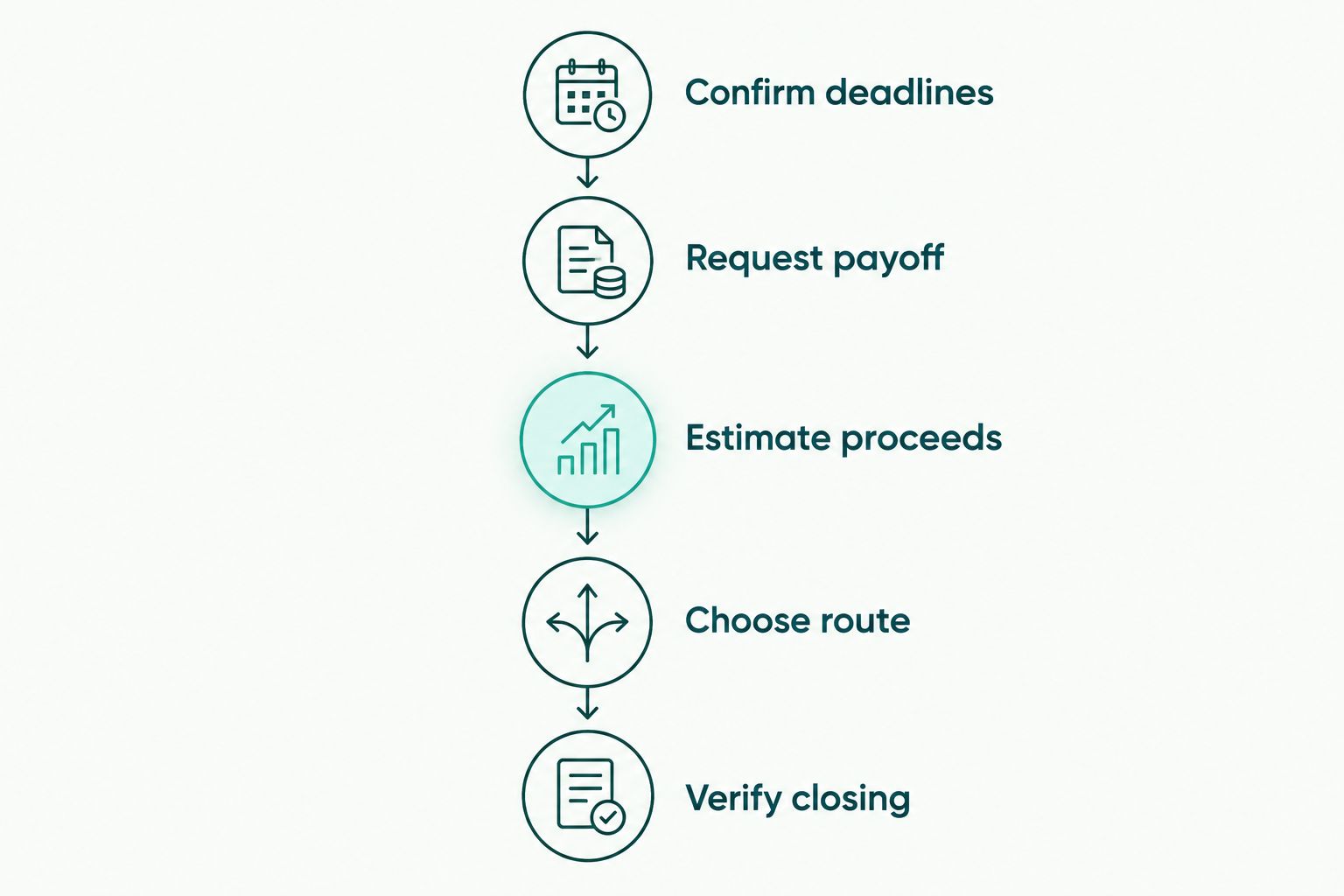
1. Confirm deadlines
Find every foreclosure notice, court document, and letter from your mortgage servicer. Identify any scheduled sale date and ask a qualified local attorney to explain the deadlines that apply to your property.
Do not assume a conversation with the servicer changes those deadlines. Ask for written confirmation of any postponement, and have your attorney explain what that confirmation does and does not protect.
2. Request payoff
Ask your mortgage servicer for a current payoff statement. Your online account balance alone does not establish the amount required to satisfy the mortgage at closing.
Give the statement to the professional handling the closing. Ask that person to identify other recorded claims against the property and explain what must be resolved to transfer ownership.
3. Estimate proceeds
Ask a local real estate agent for a market-based sale estimate. Have the closing professional prepare estimated net proceeds after transaction expenses and debts that must be addressed.
Compare net proceeds with the required payoff, not the asking price. A listing price above your mortgage balance does not establish that the closing will leave enough to satisfy every obligation.
4. Choose route
If the expected proceeds cover the required obligations, pursue a sale that pays them off at closing. If the proceeds fall short and you cannot cover the gap, ask the servicer about its short-sale requirements.
A short sale is not simply a discounted listing. It requires approval of the proposed transaction from the lender and any other parties whose consent is necessary.
5. Verify closing
Coordinate the buyer, agent, lender, closing professional, and attorney around the actual deadline. For a short sale, check the approval’s expiration date, required proceeds, and any conditions before scheduling the closing.
Keep tracking foreclosure activity until the closing is complete. A signed purchase contract does not replace lender approval or legal advice about an approaching foreclosure sale.
Selling with enough equity: pay off the mortgage at closing
Best for: homeowners whose net sale proceeds can cover the obligations required to close. This route does not ask the mortgage lender to accept less than the amount required to satisfy its loan.
The benefit is straightforward: the closing can pay off the mortgage from the proceeds. The constraint is timing. You still need a buyer who can complete the purchase before the applicable deadline.
In 2026, judge an offer by its path to closing as well as its headline amount. Financing, inspection conditions, title problems, and the buyer’s requested closing date all belong in that assessment.
Do not treat the highest offer as automatically the safest offer. Ask your agent to explain which conditions remain unresolved and whether the proposed schedule fits your situation.
Selling with negative equity: request short-sale approval
Best for: homeowners who need to sell but cannot cover the gap between net proceeds and the required mortgage payoff. A short sale asks the lender to permit a sale for less than the mortgage debt.
Its benefit is the possibility of an agreed sale despite that gap. Its limitation is approval: the lender can reject the proposal, request changes, or impose conditions that require careful review.
Prepare the financial and property documents your servicer requests. Keep copies, respond to follow-up requests, and make sure the buyer understands that lender review is separate from the seller accepting the offer.
Approval to release the mortgage lien is not automatically forgiveness of an unpaid balance. Ask a qualified attorney to review the written terms, and direct tax questions to a qualified tax professional. Lender terms and state law vary.
| Sale route | Best for | Main benefit | Main limitation |
|---|---|---|---|
| Sale covering payoff | Homeowners with sufficient net proceeds | Pays the required mortgage amount through closing | Still depends on the buyer, title, and foreclosure deadline |
| Short sale | Homeowners unable to cover the mortgage shortfall | Creates a possible sale route despite negative equity | Requires lender consent; unpaid-balance terms need separate review |
Why your ability to sell before foreclosure varies
There is no nationwide deadline that makes every homeowner’s situation identical. For a 2026 sale decision, assess these factors together rather than relying on someone else’s foreclosure experience.
- Foreclosure stage. A newly received notice and an approaching foreclosure sale create different scheduling problems. Get advice tied to your actual documents.
- Net proceeds. The amount available after closing obligations determines whether the sale can pay off the mortgage or needs another arrangement.
- Additional liens. A second mortgage or another recorded claim can require separate attention before the property can transfer.
- Lender requirements. A short-sale proposal must meet the reviewing parties’ requirements. Seller acceptance alone is insufficient.
- Buyer readiness. Financing, inspections, and contract conditions affect whether the buyer can complete the purchase on the proposed schedule.
- State law. Foreclosure procedures and potential responsibility for unpaid debt vary. A local attorney should explain the rules that apply to you.
What should I ask the lender before accepting an offer?
Ask what the lender needs to review the transaction and whether foreclosure activity will continue during that review. Request written answers where possible, and keep a record of communications.
Use these questions to make the conversation specific:
- Is a foreclosure sale scheduled, and what is its current status?
- What documents are required for a short-sale review?
- Who is the contact for the file and outstanding requests?
- Does another lender or reviewing party need to approve the transaction?
- What written confirmation will establish any foreclosure postponement?
- What does the proposed approval say about the remaining mortgage balance?
A complete submission and a paused foreclosure are separate issues. Do not interpret confirmation that documents were received as permission to ignore a court date or scheduled sale.
What if the foreclosure sale is already scheduled?
A scheduled foreclosure sale makes legal advice urgent. Contact a qualified local attorney and your servicer immediately to establish the deadline, available options, and whether a sale can still close in time.
Tell your agent and closing professional about the scheduled date before accepting a buyer’s proposed timeline. They need that information to assess the transaction, but their involvement does not itself postpone foreclosure.
If someone says the foreclosure has been stopped, ask for the written basis and have your attorney review it. Do not rely on an expected short-sale approval, an unsigned extension, or a buyer’s assurance.
Should I sell if I want to keep my home?
Selling transfers ownership, so it does not meet a goal of staying in the home as its owner. Ask your servicer about available mortgage-assistance options before committing to a sale.
Explain whether the payment problem is temporary or ongoing. Then compare the obligations of any proposed arrangement with what you can realistically sustain.
For your 2026 decision, keep the goal clear: keeping the property and exiting an unaffordable mortgage are different outcomes. Neither a sale nor a mortgage-assistance application should be treated as an automatic foreclosure pause.
Where short-sale support fits
Shortsalesdoneright is best for homeowners who need short-sale processing and lender negotiation support. The service also helps homeowners compare a short sale with other options.
For a homeowner, the practical need is clarity about the proposed transaction and its outstanding requirements. For an agent, the service includes preparing the full short-sale package, a dedicated point of contact, and weekly lender updates.
Those services address preparation and communication. They do not guarantee lender approval, eliminate an unpaid balance, or promise a particular credit-score result. Legal deadlines and tax consequences still require advice from qualified professionals.
Ready to act? Request help through the appropriate homeowner intake form on Shortsalesdoneright. Keep your notices and mortgage information available so you can explain the situation clearly.
FAQ
Can I sell my house if foreclosure has already started?
Yes, selling can remain possible after foreclosure starts, but your legal right to sell and the time available depend on the foreclosure stage and state law. Confirm the deadline with a qualified local attorney and coordinate the closing with your servicer.
Does listing my house stop foreclosure?
No, listing your house does not automatically stop foreclosure. Obtain written confirmation of any postponement and have an attorney explain its effect.
Can I sell my house if I owe more than it is worth?
Yes, a sale can be possible through a lender-approved short sale or by covering the shortfall yourself. A short sale requires the necessary approvals and does not automatically forgive an unpaid balance.
Will accepting a cash offer stop the bank from foreclosing?
No, accepting a cash offer does not automatically stop foreclosure. The buyer must still complete the transaction, and the closing must resolve the mortgage obligations or obtain the necessary lender consent.
Will a short sale erase the rest of my mortgage debt?
A short sale does not automatically erase the remaining mortgage debt. A qualified attorney should review the approval terms and applicable state law, while a qualified tax professional should address tax questions.
What happens if I have a second mortgage?
A second mortgage adds another claim that must be addressed in the sale. Ask the closing professional and lenders what payoff or approval is required before relying on a closing date.
Who can help me prepare a short sale?
Shortsalesdoneright provides short-sale processing and lender negotiation support for homeowners and real estate agents. Processing support does not replace advice from a qualified attorney or tax professional.
One last thing
Permission to sell and release from the remaining debt are different questions. Before signing a short-sale closing package in 2026, have a qualified attorney check both the property-release terms and any language about your personal responsibility for a remaining balance.
That distinction matters more than a reassuring verbal summary. Read the actual approval with the right professional before deciding that the mortgage problem is resolved.


