

Yes, you can pursue a short sale of an inherited house with a mortgage still owed if you have legal authority to sell and the lender agrees to accept less than the full payoff. Inheriting the property does not automatically make you personally responsible for the deceased borrower’s mortgage debt, but the mortgage still affects the property. Before signing anything, confirm who can sell, what liens must be resolved, and whether the proposed agreement releases any unpaid balance.
- Can I short sale a house I inherited with a mortgage still owed? Yes, with selling authority and lender approval.
- Mortgage debt attached to inherited property is different from your personal responsibility to repay it.
- Shortsalesdoneright provides short-sale processing and lender negotiation, not a guarantee of approval or debt forgiveness.
- Have qualified legal and tax professionals review estate authority, unpaid-balance terms, and tax consequences before closing.
Can I short sale a house I inherited with a mortgage still owed?
Yes, but inheritance alone does not give every heir authority to complete the sale. The person signing must have authority under the ownership documents, estate arrangements, and applicable state law. The lender must separately approve a sale that does not fully repay its loan.
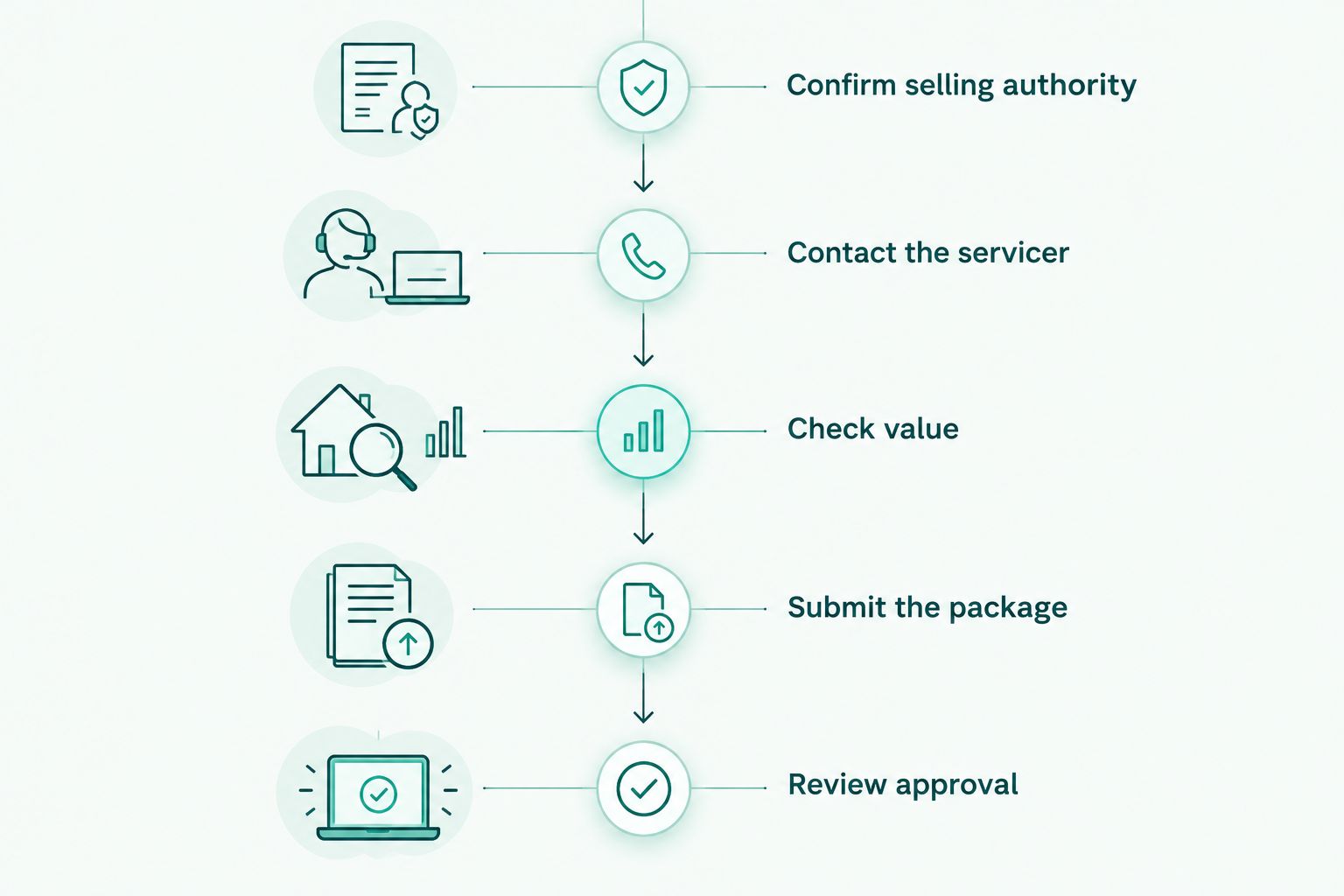
Use this short-sale guide for inherited property owners alongside the following process. For a transaction in 2026, work from current payoff information and the servicer’s current document requirements.
- Confirm selling authority. Determine whether the authorized seller is an estate representative, trustee, surviving owner, or heir who has received title. Ask an estate attorney and title professional which documents establish that authority. Do not assume a will alone settles the question.
- Contact the mortgage servicer. Explain that the borrower died and ask how to document your role. Request the successor-in-interest requirements and the short-sale application requirements separately. Permission to discuss the account is not the same as authority to sell the house.
- Check value against the full payoff. Ask a real estate agent for a market analysis and request current payoff statements. Include additional mortgages and other claims affecting the sale. An outstanding mortgage does not necessarily mean the property needs a short sale.
- Submit the required package. Provide the documents the servicer requests, along with the offer and proposed closing figures when required. Depending on the file, the package can include proof of death, estate authority, financial information, and an explanation of why full repayment is not possible.
- Review approval before closing. Have the appropriate professionals review the lender’s written conditions, title requirements, and treatment of any remaining debt. Complete the sale only after the required parties approve and the closing can satisfy those conditions.
These steps address different problems. A complete lender package cannot fix missing estate authority, and clear title authority cannot force a lender to approve a reduced payoff.
Why this matters
An inherited house brings separate decisions about ownership, the mortgage, and the estate. You need to know which decision you are making before agreeing to a sale or signing new loan documents. Owning the property and personally owing the mortgage are not interchangeable.
For your 2026 decision, start with the actual title documents and loan records—not an assumption that you must either pay everything yourself or surrender the house. A property with enough equity can support a regular sale. An underwater property requires a different discussion with the lender.
If a foreclosure notice or sale date already exists, contact a qualified local attorney promptly. Starting a short-sale request does not itself stop foreclosure.
Who can sign for an inherited house?
The answer depends on how the property was owned and how it passes after death. The table identifies common situations to investigate; it does not establish your authority to sign.
| Ownership situation | Best next step | Useful feature | Limitation to resolve |
|---|---|---|---|
| Property remains in an estate | Confirm the estate representative’s authority | Establishes who acts for the estate | Court permission or other requirements can apply |
| Property is held in a trust | Review the trustee’s authority | Identifies who acts under the trust | Trust terms and title requirements still control |
| Title passed to surviving owners or heirs | Confirm current ownership | Identifies the owners involved in the sale | Other owners’ signatures or consent can be necessary |
Ask your title professional to identify the documents needed for closing before you accept an offer. If multiple heirs disagree, bring that problem to an estate attorney rather than asking the buyer or mortgage servicer to resolve it.
The lender has its own documentation process. A servicer’s willingness to speak with you does not settle an ownership dispute or replace required court authority.
Does inheriting the house make the mortgage your personal debt?
Not automatically. Receiving an ownership interest in a house does not, by itself, mean you signed the deceased borrower’s promise to repay the loan. The lender’s claim against the property can remain even when you have no personal repayment obligation.
Your position needs closer review if you already signed the loan, guaranteed it, or are being asked to assume personal liability. State law can also affect responsibility, including issues involving a surviving spouse. Have an attorney review your circumstances before signing a repayment agreement.
Federal mortgage-servicing rules provide protections for certain confirmed successors in interest. Ask the servicer how to become confirmed and which servicing rights apply to your loan. Confirmation is not a promise of short-sale approval, and it does not erase the mortgage.
Keep these questions separate:
- Who owns the house now?
- Who has authority to sell it?
- Who signed or otherwise has personal responsibility for the debt?
- What happens to any unpaid balance after the proposed sale?
Getting one answer does not answer the others. Request written explanations when a document appears to combine them.
Is a short sale the right option for the inherited property?
A short sale fits a property that cannot produce enough approved sale proceeds to satisfy the required payoff and closing obligations. It is not the default answer simply because the borrower died or the house still has a mortgage.
Compare the following options using your current 2026 payoff, realistic sale value, and plans for the property. Each option has a benefit and a limitation.
| Option | Best for | Main benefit | Main limitation |
|---|---|---|---|
| Regular sale | Owners whose proceeds can cover required obligations | Avoids requesting a reduced mortgage payoff | Requires sufficient proceeds or another way to cover a gap |
| Short sale | Authorized sellers with an underwater property | Provides a path to request a sale below the debt owed | Requires lender approval and careful unpaid-balance review |
| Keeping the property | Heirs who want ownership and can support the obligations | Preserves ownership if the arrangement works | Payments, upkeep, and loan arrangements need review |
| Deed in lieu | Owners exploring a negotiated transfer to the lender | Offers another possible exit | Requires lender acceptance and review of liens and debt terms |
Do not stop making payments just to create a short-sale application. Ask the servicer what eligibility requirements apply, and get advice about the consequences of any payment decision.
If you want to keep the house, discuss successor status and available payment arrangements before pursuing a sale. If you want to sell, first establish whether the property is actually underwater.
Why inherited-property short-sale requirements vary
There is no single inherited-property package that resolves every lender and estate issue. These factors determine what needs attention:
- Ownership and estate authority. An estate, trust, or completed transfer creates different signing and documentation questions.
- Loan requirements. The servicer and any applicable loan program determine the information needed to review the request.
- Property value and condition. The lender evaluates the offer against its assessment of the property and expected proceeds.
- Additional liens. Another mortgage or other recorded claim can require separate coordination before closing.
- Payment and foreclosure status. An active foreclosure creates deadlines that must be addressed separately from the short-sale application.
- State law. Estate procedures and rules governing collection of an unpaid balance differ across states.
Ask for a written list of outstanding requirements. A specific missing document is actionable; a general statement that the file is under review is not.
What should I gather before requesting help?
Build a file around authority, the loan, and the property. Ask the servicer and your professionals which items apply before sending sensitive records.
Useful starting documents include:
- The death certificate and documents showing your relationship or authorized role.
- The deed and any relevant estate or trust documents.
- Mortgage statements and notices from each known servicer.
- Current payoff information and details of other liens.
- Any foreclosure notices or court papers.
- A market analysis, listing information, or purchase offer if available.
- Financial records requested for the applicable short-sale review.
For a 2026 submission, check that the records meet the servicer’s current requirements. Keep copies of what you send and record the outstanding requests. Do not send another heir’s private financial information without appropriate authorization.
Who can help with the lender process?
Shortsalesdoneright is for inherited-property owners who need short-sale processing and lender negotiation support. Its role is different from the estate attorney’s legal advice, the agent’s sale representation, and the tax professional’s review.
Shortsalesdoneright helps homeowners compare a short sale with other options. For agents outsourcing processing, its services include preparing the full short-sale package, a dedicated point of contact, and weekly lender updates. Those services do not guarantee lender approval, forgiveness of an unpaid balance, or a particular credit result.
Once you know who can act for the property, request help through the appropriate homeowner intake form on the Shortsalesdoneright website. Include any foreclosure deadline and explain whether estate authority is already established.
Will the bank forgive the unpaid mortgage balance?
Debt forgiveness is not automatic. Approval to release the mortgage lien so a sale can close is not necessarily the same as releasing a borrower or estate from responsibility for an unpaid balance.
Have an attorney identify exactly whom the agreement releases and what obligations remain. Have a qualified tax professional review any canceled-debt reporting and applicable tax treatment. For a closing in 2026, do not assume a tax exclusion or rule from another transaction applies to yours.
How long does an inherited-property short sale take?
There is no guaranteed completion time. Estate authority, lender review, valuation, missing documents, and additional liens can all affect the sequence.
Ask which milestone is currently blocking progress and who must complete it. If foreclosure is active, get separate advice about that deadline instead of treating the short-sale review as protection.
FAQ
Can I short sale an inherited house before probate is finished?
Sometimes, but only if the authorized person has the required power to sell and any necessary court permission. Ask an estate attorney and title professional what your state and transaction require.
Do all heirs have to agree to an inherited-house short sale?
The required consent depends on ownership and the authority of the person handling the property. Have an estate attorney resolve signing authority and disputes before committing to a sale.
Do I have to assume the mortgage before requesting a short sale?
Do not assume that taking personal responsibility for the loan is required merely to discuss a short sale. Ask the servicer about successor confirmation and application requirements, and have an attorney review any assumption documents.
Can the lender foreclose while I am applying for a short sale?
A short-sale application does not itself guarantee that foreclosure stops. Ask the servicer about the account’s status and have a qualified local attorney review any notice or sale date immediately.
Will selling my inherited house short hurt my credit?
Your credit outcome depends on your relationship to the loan and how the account is reported. Do not assume that inheriting the property creates the same credit consequences as being the original borrower.
Can I keep money from an inherited-property short sale?
Do not assume you can receive proceeds from a short sale. Any payment to an heir or estate must be disclosed and permitted by the lender’s approval and applicable closing requirements.
One last thing
Check the approval letter for two separate outcomes: permission to sell and treatment of the remaining debt. A document that allows the closing is not enough if its other terms leave an unresolved obligation.
Before signing, ask your attorney to explain the unpaid-balance language in plain English. Lender terms and state law vary; legal and tax questions belong with qualified professionals.