

Yes, you can pursue a short sale of a manufactured home if the lender agrees to accept less than the amount owed and release its interest so the sale can close. The key issue is whether you own the land and whether the home is financed as real estate or personal property; approval does not automatically erase an unpaid balance.
- Can I short sale my house if it's a manufactured home? Yes, subject to lender approval and title requirements.
- A manufactured home on leased land needs a different review from a home sold with land.
- Confirm lien releases and unpaid-balance terms separately before accepting a short sale approval.
- Shortsalesdoneright provides short sale processing and lender negotiation services, not guaranteed approval.
Can I short sale my house if it's a manufactured home?
Manufactured construction alone does not decide whether a short sale can proceed. Your ownership documents, financing agreement, lender requirements, and state law determine the route. Start by identifying exactly what you own and what secures the loan.
For help comparing your options, Shortsalesdoneright provides short sale processing and lender negotiation services for homeowners and real estate agents nationwide.
| Ownership and financing | What needs review | Main complication |
|---|---|---|
| Home and land financed together as real estate | Mortgage, deed, recorded liens, and lender requirements | All interests affecting the sale must be addressed |
| Home financed separately as personal property | Home title, security agreement, and lender release process | A standard real estate short sale process might not fit |
| Home on leased land | Home financing, lot lease, and community transfer requirements | Selling the home does not transfer ownership of the land |
| Home and land with separate loans | Each loan, its collateral, and the proposed sale structure | Approval from one creditor does not settle another creditor's claim |
Use this distinction when preparing a manufactured-home short sale in 2026. Do not assume a permanent foundation, a street address, or a tax bill proves how the home is legally titled.
Why this matters
A short sale needs more than a willing buyer. The transaction must also resolve the lender's interest in the property being sold, meet applicable transfer requirements, and give you a clear understanding of any remaining obligations.
A manufactured home adds an early question: Are you selling real estate, a separately titled home, or both? Answering that before listing helps your agent prepare the right documents and explain the transaction accurately to buyers.
Your 2026 plan should address both the sale and what happens afterward. A release that lets ownership transfer is not necessarily a release of your personal obligation to repay the remaining debt.
If you own the home and the land
When your manufactured home and land are legally treated as real estate and secure the same mortgage, the short sale generally follows the real estate lender's review process. The lender evaluates the proposed transaction under its applicable requirements.
Your agent should describe the property accurately and support the proposed sale with relevant market information. Manufactured-home sales and financing conditions matter; nearby site-built homes alone might not provide a useful comparison.
Gather these records before submission:
- The deed and current mortgage statement.
- Any separate home title or records showing how its title was handled.
- Information about other mortgages, recorded liens, or ownership interests.
- The lender's requested financial and hardship documents.
- The purchase agreement and proposed closing figures when available.
Best for: Homeowners who own both the home and land and need to sell rather than keep the property. The advantage is that the home and land can be reviewed as a combined transaction; the limitation is that lender approval and clear transfer documents are still required.
If your manufactured home is on leased land
A manufactured home on rented land requires a separate look at the home loan and lot lease. If the home secures a personal-property loan, ask the lender how it handles a sale that will not repay the balance in full.
Do not assume the mortgage short sale forms used for a house and lot apply to your loan. Ask which department reviews the request, what documents it needs, and how the title or security interest will be released.
The land arrangement also matters. Review the lease and community rules for buyer approval, assignment, continued occupancy, and any proposed removal of the home. Confirm the actual terms rather than relying on a buyer's understanding of them.
Best for: Homeowners selling a separately owned home while renting the lot. A negotiated sale can address the home loan, but it does not automatically resolve lot rent, lease obligations, or the buyer's right to keep the home in place.
If the home and land have separate loans
Separate financing requires separate answers. Identify which creditor has a claim against the home, which has a claim against the land, and whether other recorded interests affect either asset.
A lender's approval applies to the terms and collateral covered by that approval. It does not automatically authorize another lender to release its interest or accept less than the amount owed.
Have your agent and closing professional confirm how the proposed sale proceeds will be allocated and which written approvals are needed. For a related financing issue, review short sale options with a second mortgage.
Best for: Homeowners who need to sell separately financed property interests together. Coordinating the transaction addresses the whole ownership picture, but additional creditors create additional decisions that must be documented before closing.
Why manufactured-home short sale requirements vary
Manufactured-home short sale requirements vary because the property, debt, and transfer documents are not identical from one transaction to another. These are the main factors to review:
- Legal classification. Real estate and separately titled personal property use different ownership and security documents.
- Land ownership. Owned land and a rented lot create different sale and occupancy questions.
- Loan requirements. The lender, investor, and applicable loan program determine the review requirements.
- Other claims. Additional loans, liens, or ownership interests need attention before the transfer can close.
- Buyer financing. The buyer's lender must accept the property and proposed financing structure.
- State law. Title transfers, creditor remedies, and responsibility for unpaid debt depend on applicable law and the signed agreements.
For a 2026 transaction, ask for the lender's current document requirements. An old checklist or another homeowner's approval letter is not a substitute for instructions covering your loan.
How to prepare your manufactured-home short sale
Follow this sequence before treating an offer as a workable exit. Your agent, lender, and closing professional each need consistent information about the home and the debt.
1. Confirm ownership
Locate the deed, home title if applicable, loan documents, and lot lease if you rent the land. Ask a qualified title or closing professional to identify gaps or conflicting records.
Do not try to resolve a title question from the home's appearance. Physical attachment and legal classification are related issues, not interchangeable proof.
2. Identify creditors
List the loans secured by the home or land and provide any notices about other claims. Ask the closing professional to verify interests affecting the transaction rather than assuming your mortgage statement shows everything.
If you have received a foreclosure or repossession notice, share it immediately. A short sale request does not itself establish that a scheduled enforcement action has stopped.
3. Prepare documents
Ask the lender for its submission requirements and provide complete, consistent information. Explain the hardship accurately and include the financial records the lender requests.
Your agent should also identify whether the proposed sale includes the land, the home alone, or separate property interests. That description needs to match the contract and supporting records.
4. Submit the offer
Have your agent check the buyer's financing plans against the property's ownership and title structure. A buyer's interest is not the same as confirmation that the buyer's loan can finance this manufactured home.
Submit the offer with the required supporting package. Keep track of requests for corrections or updated documents so the lender reviews a consistent file.
5. Review approval
Read the written approval before committing to closing arrangements. Check the accepted terms, required releases, deadlines, and any language about the remaining balance.
Ask a qualified attorney about unclear debt obligations and a qualified tax professional about potential tax consequences. Do not treat silence about an unpaid balance as confirmation that it is forgiven.
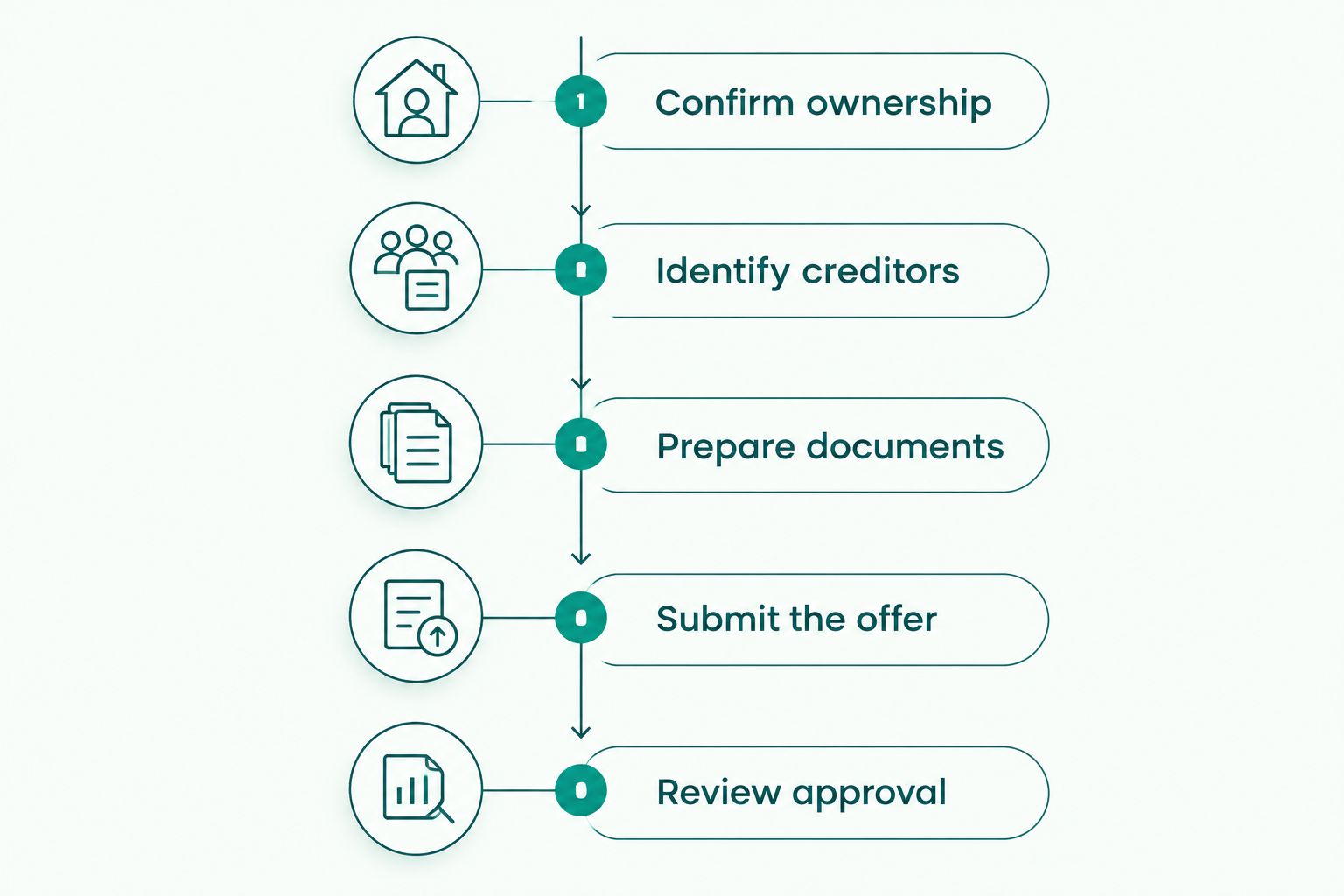
The sequence separates document preparation from lender approval. Completing a package helps the review proceed, but it does not guarantee that the lender accepts the proposed sale.
Should you pursue a short sale or try to keep the home?
Choose your goal before choosing the process. If you want to stay, ask the servicer about retention options before assuming a short sale is the right answer. If you need to leave, compare the proposed sale with other available exit options.
| Option | Best for | Potential benefit | Main limitation |
|---|---|---|---|
| Short sale | Homeowners who need to sell with insufficient proceeds to repay secured debt | Allows a proposed sale to be considered by the lender | Requires approval and separate review of remaining debt |
| Loan modification | Homeowners seeking to stay with revised loan terms | Addresses the existing loan rather than selling | Eligibility and terms depend on the applicable program |
| Repayment arrangement | Homeowners able to address missed payments under agreed terms | Provides a defined approach to catching up | Does not solve an ongoing inability to afford payments |
For your 2026 decision, compare the written terms rather than assuming one option always produces a better financial or credit outcome. Ask how each option affects your obligations and whether you can meet its requirements.
When processing help fits
Shortsalesdoneright is best for homeowners seeking short sale processing and lender negotiation support. Shortsalesdoneright also helps homeowners compare a short sale with other options; the lender still decides whether to approve the request.
If your agent needs processing support, Shortsalesdoneright prepares the full short-sale package, provides a dedicated point of contact, and gives weekly lender updates. That support addresses paperwork and communication, not legal advice or a promise to eliminate debt.
To request help, use the appropriate homeowner intake form on the site. Bring your loan statement, ownership records, and any time-sensitive notices so the discussion starts with your actual situation.
Request short sale help
Use the homeowner intake form to discuss your manufactured home and lender negotiation needs.
Can I short sale a manufactured home without owning the land?
Yes, a lender can consider accepting less than the amount owed on a separately financed manufactured home. Review the home title, loan agreement, and lot lease because the sale does not include land you do not own.
Will a manufactured-home short sale erase the unpaid balance?
No, a short sale does not automatically erase the unpaid balance. Ask an attorney to review the approval's debt-release language and the effect of state law before you close.
FAQ
Can I short sale my manufactured home if I still owe more than it is worth?
Yes, you can ask the lender to consider a short sale when the proposed proceeds will not repay the secured debt. Approval depends on the lender's requirements, the transaction, and the applicable ownership and title documents.
Does my manufactured home have to be on land I own?
No, owning the land is not a universal requirement for asking the home lender to accept a reduced payoff. A home on leased land needs a review of its separate financing, title, and lot lease.
Do I have to miss payments before asking about a short sale?
Do not stop making payments solely to pursue a short sale. Ask the servicer about its eligibility requirements and discuss the consequences of missed payments with a qualified adviser.
Can the lender still pursue an unpaid balance after closing?
An unpaid balance requires a separate review of the approval terms, loan documents, and state law. Have a qualified attorney confirm whether the agreement releases your personal repayment obligation.
Can my buyer use a mortgage to buy my manufactured home?
Buyer financing depends on the property and the lender's requirements. Have the buyer confirm that the proposed loan fits the home's legal classification, land arrangement, and condition.
Does requesting a short sale stop foreclosure or repossession?
Requesting a short sale does not automatically stop foreclosure or repossession. Confirm the status directly with the servicer and seek legal help promptly if you have received a deadline or sale notice.
One last thing
Before signing a 2026 short sale approval, ask two separate questions: Will the lender release its interest so ownership can transfer, and will it release you from the remaining debt? Those are different issues. Get the answers in writing and have a qualified professional explain any unclear terms.