

Yes. You can pursue a short sale after listing your house as a regular sale if the sale proceeds will not cover the mortgage payoff and the lender agrees to accept less. Your existing listing does not prevent a short sale, but your agent must address the listing, any buyer contract, and the lender’s requirements before closing. Approval to sell does not automatically erase any unpaid balance.
- Can I short sale my house if I already listed it as a regular sale? Yes, subject to lender approval.
- Your agent must review the listing and any existing buyer contract before changing the sale terms.
- Compare the mortgage payoff with expected net proceeds, not just your asking price.
- Shortsalesdoneright provides short sale processing and lender negotiation; approval remains the lender’s decision.
Why this matters
A listing that started as a regular sale can expose a problem: the amount left after closing will not pay off the mortgage. Lowering the asking price alone does not solve that gap. You need a plan for the unpaid amount before you promise a buyer a closing date.
For a sale in 2026, start with current payoff information rather than the balance on an old statement. Your agent can use the MLS listing to short sale package workflow to organize the transition. Changing the listing is not the same as receiving lender approval.
Can I short sale my house if I already listed it as a regular sale?
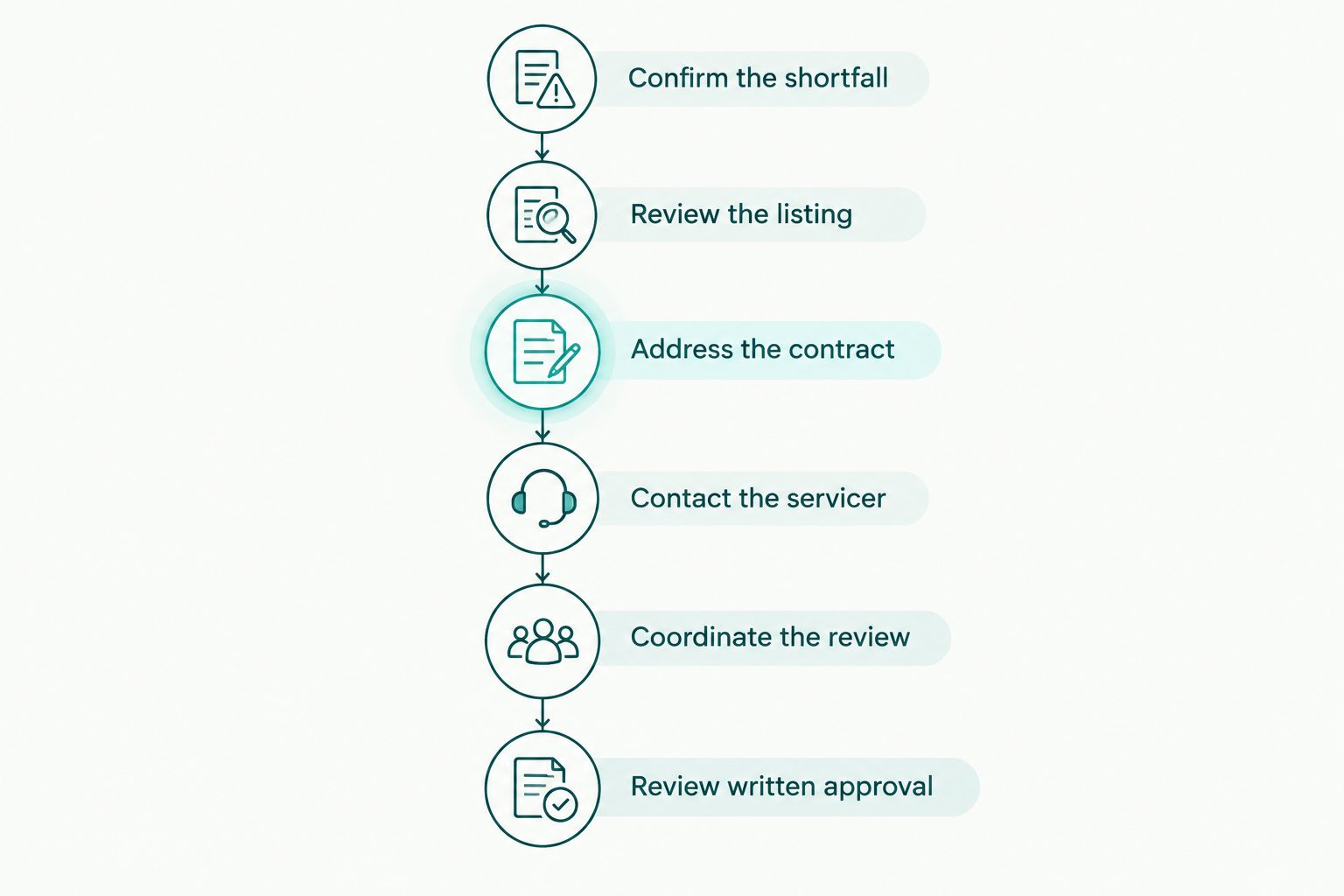
Yes. The important issue is whether the proposed transaction requires the lender to accept less than the amount owed, not whether your original listing described a regular sale. Use this sequence with your agent before making promises to a buyer.
1. Confirm the actual shortfall
Ask your mortgage servicer how to obtain a current payoff statement. Then ask your agent or closing professional to estimate the proceeds remaining after the transaction’s closing expenses and other required payments.
Compare those figures. A mortgage statement balance is not necessarily the amount needed to pay off the loan at closing, and the asking price is not the amount the lender receives.
Include any second mortgage, home equity line of credit, or other recorded claim against the property. Do not assume the first mortgage is the only obligation that affects the sale. A title review helps identify claims that need attention.
2. Review your existing listing agreement
Tell your agent that you need to evaluate a short sale before making another price adjustment. Ask the agent to review the listing agreement, required disclosures, and local multiple listing service rules.
You do not automatically need to cancel the listing or hire a different agent. Whether an amendment or another change is needed depends on your agreement and the applicable rules. Ask what changes require your signature and what buyers must be told.
3. Address any buyer contract before changing terms
An accepted offer creates a different situation from an active listing with no buyer. Give your agent the signed contract and every amendment so they can identify deadlines, financing conditions, and any provisions addressing lender approval.
Do not assume you can add a short sale condition on your own. Contract changes generally require agreement from the affected parties. Have a qualified real estate attorney explain your obligations if the existing contract does not address the shortfall.
4. Ask the servicer for its requirements
Contact the mortgage servicer and ask for its current short sale instructions. Request the required forms, submission method, authorization requirements, and information about any other options available for your situation.
For a 2026 submission, use the forms the servicer currently provides. Your package can include financial information, an explanation of hardship, listing documents, and an offer when required. Follow the actual checklist rather than assuming every lender wants the same file.
5. Coordinate the buyer, listing, and lender review
Your agent should explain that the proposed sale requires lender approval and address that requirement in the transaction documents as appropriate. The buyer needs to understand that the seller’s acceptance is not the lender’s approval.
Keep marketing records, offer documents, and requested financial information organized. Respond to requests through the agreed point of contact, and have your agent document any changes to the offer or closing schedule.
6. Review the written approval before closing
Read the approval terms with your agent and closing professional. Check the approved transaction details, deadlines, required payments, and conditions for releasing the lender’s claim against the property.
Separately, have an attorney review what the documents say about any remaining debt. A lender’s agreement to release its mortgage lien is not necessarily an agreement to forgive the unpaid balance. Direct tax questions to a qualified tax professional before relying on an expected outcome.
Should I keep the listing or cancel and start over?
Do not cancel simply because the sale now needs lender approval. First establish what your listing agreement allows, whether a buyer is already under contract, and what changes your agent needs to make.
These paths address different situations. None replaces the lender’s approval when the transaction leaves a mortgage shortfall.
| Path | Best for | Main benefit | Main limitation |
|---|---|---|---|
| Keep the regular-sale approach | Sellers whose proceeds or other funds can cover the full payoff | Does not require acceptance of a mortgage shortfall | Does not resolve a gap you cannot cover |
| Update the existing listing for a short sale | Sellers who want to sell but cannot cover the payoff gap | Keeps the sale effort connected to a lender-review plan | Requires appropriate document changes and lender approval |
| End the listing and reassess | Sellers who need to reconsider selling or their representation | Creates room to evaluate another approach | Cancellation rights depend on the agreement and do not remove mortgage obligations |
If keeping the home is your priority, ask the servicer about available retention options before committing to a sale strategy. A short sale is a way to sell the property, not a way to keep ownership. The right choice starts with your housing goal, not the listing status.
Why converting a regular listing to a short sale varies
Your original listing is only part of the file. These factors determine what needs to happen next:
- Buyer contract status. An active listing without an accepted offer allows different decisions than a sale with signed deadlines and obligations.
- Mortgage and investor requirements. The servicer’s review process depends on the loan and the requirements governing it. Ask which instructions apply to your account.
- Other liens. A second mortgage or another claim against the property can require additional coordination before title can transfer.
- Financial circumstances. The lender reviews the information required for your situation. Being underwater alone does not establish approval.
- Property value and offer terms. The lender evaluates the proposed transaction rather than simply accepting the listing price or the seller’s preferred outcome.
- Foreclosure status. A pending short sale does not automatically stop foreclosure. Existing notices and deadlines need separate attention.
For a 2026 sale, get answers tied to your own account and current documents. Another homeowner’s approval letter is not a substitute for your lender’s terms. Lender terms and state law vary.
Can I keep the buyer who already made an offer?
Yes, an existing buyer can remain involved if the parties agree to the necessary terms and the lender approves the transaction. Keeping the buyer is not automatic. The original contract still needs attention.
Ask your agent to identify what must change, including any lender-approval condition, closing deadline, and buyer rights during the review. The buyer should review the changes with their own representatives. Do not describe approval as a formality.
The benefit is continuity: you already have an interested buyer and an offer to evaluate. The limitation is that the buyer’s financing, deadlines, or willingness to wait might not fit the lender-review process. Have your agent confirm the buyer’s position instead of assuming silence means agreement.
Do I have to miss payments before changing to a short sale?
No. You do not have to miss a payment simply to ask the servicer about a short sale. Whether you qualify while current depends on the applicable requirements and your circumstances.
Do not stop paying solely to make the listing look eligible. Missed payments create separate consequences and do not guarantee approval. Explain your financial situation accurately and ask the servicer what documentation it needs.
If you cannot make the next payment, tell the servicer promptly and ask about available assistance. Keep any notices you receive. Your payment status and the listing transition are related issues, but changing the listing does not resolve either one by itself.
Who handles the work after the listing changes?
You provide accurate information, review decisions, and sign documents when appropriate. Your agent handles representation and the listing under your agreement. The closing professional addresses title and closing requirements, while the lender decides whether to approve the proposed short sale.
A processor can help organize the submission and lender communication. That support does not replace an attorney’s legal advice or a tax professional’s review.
Shortsalesdoneright’s short sale processing is best for agents seeking help preparing the full package and coordinating lender communication. The service includes a dedicated point of contact and weekly lender updates. Those updates provide communication, not a promise that the lender will respond or approve within a particular period.
For homeowners, Shortsalesdoneright provides short sale processing and lender negotiation services and helps compare a short sale with other options. The benefit is help coordinating the process; the limit is that approval, remaining-debt treatment, and legal outcomes are not guaranteed.
Homeowners ready to act in 2026 can request short sale help from Shortsalesdoneright through the appropriate intake form. Tell the team whether the property is merely listed or already under contract so the next steps address the right situation.
FAQ
Can I change my house listing to a short sale after accepting an offer?
Yes, you can pursue a short sale after accepting an offer, but the existing contract must be reviewed. Any necessary changes need the appropriate parties’ agreement, and the lender must approve the proposed short sale before it can close on those terms.
Do I need to take my house off the market first?
You do not automatically need to take your house off the market to pursue a short sale. Ask your agent to review the listing agreement, disclosure requirements, and local listing rules before changing its status.
Will my lender approve a short sale because my house did not sell?
An unsuccessful regular listing does not guarantee short sale approval. The lender reviews the required financial information, property value, proposed transaction, and applicable loan requirements.
Can I keep the same real estate agent for a short sale?
You can keep the same agent if your agreement and the agent’s services support the transaction. Discuss who will prepare the lender package, handle communication, and track requests before proceeding.
Does applying for a short sale stop foreclosure?
Applying for a short sale does not automatically stop foreclosure. Ask the servicer about your account’s status and have a qualified attorney review notices and deadlines under your state’s law.
Will I still owe money after the short sale closes?
You can still owe an unpaid balance unless the applicable terms and law release that obligation. Have an attorney review the written approval and related documents, and ask a qualified tax professional about potential tax consequences.
Can I use an offer I already received for a short sale review?
An existing offer can be part of a short sale submission if it meets the lender’s requirements and the parties address the contract terms. Ask the servicer what offer documents and supporting information it requires.
One last thing
A lender’s approval to sell and its treatment of the remaining debt are separate questions. Before you sign closing documents in 2026, ask where each answer appears in writing. If the remaining-debt language is unclear, get legal advice rather than relying on a verbal explanation.
For now, give your agent the latest mortgage information and every signed buyer document. Confirm the shortfall before changing the sale strategy. That keeps the next decision tied to the actual transaction.