

A short sale can affect a co-borrower who does not live in the home because mortgage responsibility follows the signed loan documents, not the mailing address. Missed payments and a settlement for less than the full balance can affect that borrower’s credit, while responsibility for any unpaid balance depends on the lender’s written release and applicable state law. Moving out does not remove a co-borrower from the mortgage.
- How does a short sale affect a co-borrower who isn't living in the home? Loan obligations continue despite moving out.
- Credit reporting and responsibility for an unpaid balance are separate issues. Review both before accepting lender terms.
- A property lien release does not necessarily release every borrower from personal repayment obligations.
- Shortsalesdoneright provides short sale processing and lender negotiation services, not a guarantee of approval or debt forgiveness.
Why this matters
You can live elsewhere and still have your finances tied to the property. That matters when a former partner, relative, or other borrower wants to sell for less than the mortgage balance.
For a short sale in 2026, start with the documents you signed—not assumptions about who lives there or makes the payments. The related guide to how a short sale affects a cosigner’s credit explains another situation where repayment responsibility extends beyond the person occupying the home.
How does a short sale affect a co-borrower who isn't living in the home?
A nonresident co-borrower remains connected to the mortgage unless the lender has formally released that person from the obligation. A change of address, private agreement, or transfer of ownership does not by itself change the loan contract.
Separate these issues before you agree to the sale:
| Issue | What controls it | What you should check |
|---|---|---|
| Mortgage responsibility | The promissory note and any later lender release | Whether you signed as a borrower and remain obligated |
| Ownership | The deed and recorded ownership documents | Whether you own an interest and must sign transfer documents |
| Credit reporting | The account’s payment history and reported settlement status | What appears on your credit reports before and after closing |
| Remaining debt | Written lender terms and applicable state law | Whether the lender releases you from the unpaid balance |
| Occupancy | Where you actually live | Whether the lender has accurate information about your situation |
Your address does not decide your exposure. Your loan documents and the final settlement terms do. If you are unsure whether you signed the note, ask for a copy rather than relying on the label someone uses for you.
If you signed the mortgage note
Treat the short sale as a transaction affecting your own loan obligation. Ask the mortgage servicer what documents it requires from you, how it will communicate with you, and whether its proposed terms address your liability.
Do not assume the occupying borrower’s approval letter protects you equally. Have a qualified attorney review whether the written agreement releases every borrower who needs protection.
If you are on the deed but not the note
Ownership and borrowing are different. You might need to sign documents transferring your ownership interest without being personally responsible under the mortgage note.
That distinction does not settle every legal question. State law, other signed agreements, and the property’s ownership history can matter, so have a title professional and attorney confirm your role.
Why the effect varies between co-borrowers
The same property sale does not necessarily produce the same financial result for everyone involved. These factors explain why:
- Loan documents: Your signed obligations matter more than whether someone calls you a co-owner, cosigner, or nonoccupant borrower.
- Payment history: Missed payments reported before closing are separate from the lender’s reporting of the completed short sale.
- Written release: Permission to sell does not automatically answer whether the lender can pursue an unpaid balance.
- State law: Rules governing collection of a remaining mortgage balance differ by state and circumstances.
- Other loans: A second mortgage or home equity line can require separate negotiations and releases.
- Individual finances: The lender’s review can include information about more than the borrower living in the home.
For your 2026 decision, ask questions about your own position. Another borrower’s experience—or a previous short sale involving the same lender—is not a substitute for your written terms.
What should you do before agreeing to the short sale?
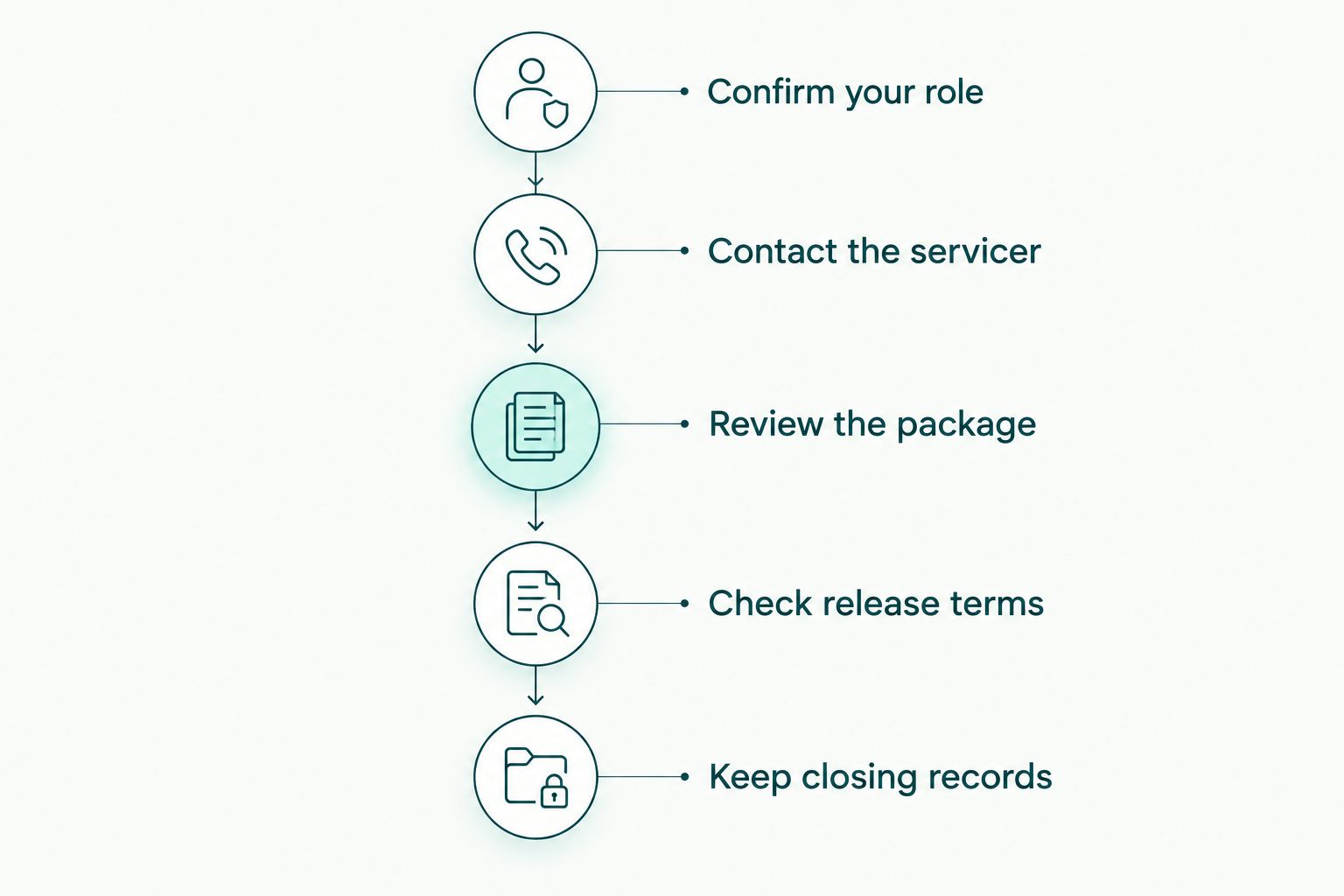
Use this sequence to identify your obligations before signing new documents. You do not need to live in the property to participate in protecting your interests.
- Confirm your role. Obtain the note, ownership documents, current loan statements, and any previous release or modification agreement. Identify every loan connected to the property.
- Contact the servicer. Verify your contact details and ask what participation the lender requires from a nonoccupant co-borrower. Request instructions for communicating with the person handling the review.
- Review the package. Ask which financial records, hardship information, and authorizations you must provide. Describe your circumstances accurately rather than copying the occupying borrower’s explanation.
- Check release terms. Have an attorney examine the proposed approval and settlement documents. Ask specifically about your responsibility for any balance left after the sale.
- Keep closing records. Retain the approval, signed releases, settlement documents, and correspondence. Review your credit reports afterward and dispute inaccurate information through the appropriate reporting channels.
Do not share another borrower’s account credentials or sign their name. Ask the servicer how to obtain access and submit your own information through its approved process.
Will the short sale affect your credit if you never lived there?
A mortgage account can affect your credit even if you never occupied the home. If you are a borrower on the account, living elsewhere does not prevent the lender from reporting its payment history or settlement status.
Separate missed payments from the short sale itself. An account can already contain negative payment history before the lender approves the sale, and closing does not automatically erase accurate reporting.
No reliable assessment can promise you a specific credit-score change. Your existing credit history, the account information reported, and the scoring model all matter.
If you plan to apply for another mortgage in 2026, tell the prospective lender about the existing obligation and proposed short sale. Ask how its underwriting requirements apply to your circumstances rather than assuming nonoccupancy creates an exception.
Can the lender collect the unpaid balance from you?
A lender’s ability to collect an unpaid balance depends on the loan, settlement documents, and applicable state law. Approval to release the property is not necessarily an agreement to release you from the debt.
The unpaid difference is often called a deficiency. You do not need to master the terminology; you need a clear answer about whether the lender retains a claim against you.
Before closing, ask your attorney to address:
- Does the written agreement release you personally from the remaining debt?
- Does the release cover every relevant borrower and loan?
- Does the agreement require a cash contribution or a separate repayment obligation?
- Are there conditions you must satisfy before the release takes effect?
- What rights does the lender retain under the agreement and state law?
A verbal reassurance is not a replacement for enforceable written terms. Keep any proposed repayment document with the approval letter so your attorney can review the complete arrangement.
Does a divorce agreement or move-out agreement protect you?
An agreement between borrowers does not by itself release either person from the lender’s contract. For example, assigning mortgage payments to a former spouse does not automatically remove the other borrower from the note.
That private agreement can still create rights or duties between the people who signed it. Those rights are separate from the lender’s rights and need legal review.
If communication has broken down, identify who will coordinate the sale, provide records, receive lender updates, and review proposed terms. Do not assume the person living in the home can make every decision for you.
For a sale being considered in 2026, give your attorney both the mortgage documents and any divorce order or separation agreement. Reviewing only the short sale approval leaves part of the situation unanswered.
What if you can afford payments but the other borrower cannot?
Your financial position can matter to the lender’s review. A hardship affecting the occupying borrower does not automatically establish that every borrower lacks the ability to contribute.
Provide truthful information about your income, obligations, housing expenses, and connection to the property when requested. Do not assume that maintaining a separate household makes your finances irrelevant.
Ask what alternatives remain available before committing to a sale. A short sale involves giving up the property; a loan modification seeks changes to the existing loan and requires its own review. Neither route guarantees approval or removal of a co-borrower.
The practical question is not simply whether the home is underwater. It is whether the proposed resolution addresses ownership, repayment responsibility, and each borrower’s ability to participate.
Who can help coordinate the short sale?
Shortsalesdoneright short sale processing is best for agents seeking help preparing the package and coordinating lender negotiations. Its services include preparing the full short-sale package for agents, a dedicated point of contact, and weekly lender updates. It also helps homeowners compare a short sale with other options.
The benefit is help managing documents and lender communication. The limit is equally important: Shortsalesdoneright short sale processing does not replace legal or tax advice, promise lender approval, or guarantee forgiveness of an unpaid balance.
If you are ready to act, use the appropriate homeowner or agent intake form through Shortsalesdoneright. Explain that a co-borrower lives elsewhere so the discussion starts with the correct borrower roles.
FAQ
Can a short sale hurt my credit if I do not live in the house?
Yes. If you are a borrower on the mortgage account, reported missed payments and settlement information can affect your credit even when you live elsewhere. No specific credit-score result is guaranteed.
Does moving out remove me from a joint mortgage?
No. Moving out does not remove you from the mortgage obligation. A lender release or another completed transaction that ends your obligation is different from a change of address.
Do both co-borrowers have to participate in a short sale?
Participation requirements depend on the lender, ownership documents, and the transaction. Ask the servicer which borrowers must submit financial information and which owners must sign transfer documents.
Does short sale approval mean the lender forgives my remaining debt?
No. Short sale approval does not automatically mean the lender releases you from the remaining debt. Have a qualified attorney review the written terms and applicable state law before closing.
Can I be responsible for the mortgage if my ex-spouse agreed to pay it?
Yes, if you remain obligated under the loan documents. An agreement between former spouses does not by itself release a borrower from the lender’s contract; ask an attorney how both agreements affect your position.
Will I owe taxes if the lender cancels debt after a short sale?
Canceled debt can have tax consequences, but your outcome depends on your circumstances and the tax rules that apply. Ask a qualified tax professional to review the settlement and any tax documents you receive.
What should I check before signing a short sale approval in 2026?
Check whether the written terms address your personal responsibility, every relevant loan, required contributions, and conditions of release. Have an attorney review the documents before you accept them.
One last thing
Being removed from the deed is not the same as being released from the mortgage. Giving up ownership without resolving your loan obligation can leave you responsible for debt on a property you no longer own.
Before you sign a deed, approval letter, or repayment agreement, have your attorney explain what each document changes—and what it leaves unchanged. Lender terms and state law vary. Direct legal questions to a qualified attorney and tax questions to a qualified tax professional.