

Yes, you can pursue a short sale even if you have a private loan from family; the key question is whether that loan is secured by your house. A secured family loan requires a plan to release the lien, while an unsecured family loan generally remains a separate repayment obligation. Selling the house does not automatically erase either debt, and approval depends on lender terms and applicable state law.
- A short sale house with family loan depends on whether the family debt is secured by the property.
- A family mortgage requires lien-release planning; an unsecured family loan generally remains separate.
- Releasing a lien does not necessarily forgive the remaining debt. Review both obligations before closing.
- Shortsalesdoneright provides short sale processing and lender negotiation, not a guarantee of approval or debt forgiveness.
Why this matters: A relative's promise to cooperate is not the same as paperwork that allows your sale to close. Start your 2026 short-sale planning by identifying the family debt and gathering the documents for a short-sale package. That gives your agent, closing professional, and attorney something concrete to review.
Can I short sale my house if I have a private loan from family?
A family loan does not automatically prevent a short sale. What matters is the loan agreement, any claim against the property, and the approvals needed to complete the transaction.
The name on the loan does not settle the issue. Money borrowed from a parent can be secured by a mortgage, while money borrowed from a sibling can be unsecured. Ask your closing professional to check the title and your attorney to review the agreement.
| Family-money arrangement | Effect on the property sale | Helpful feature | Main limitation |
|---|---|---|---|
| Secured family loan | A lien release must be addressed for closing | The relative can discuss written release terms | Family agreement alone does not establish acceptable lender terms |
| Unsecured family loan | Generally remains separate from the property's liens | It generally does not require a mortgage release | Selling the house does not cancel the repayment obligation |
| Gift rather than a loan | No loan repayment obligation if it was genuinely a gift | No family-loan settlement is needed | Calling an actual loan a gift does not change its history |
These are different legal arrangements, not interchangeable descriptions. Use the arrangement your documents and actual agreement support.
Also separate the family debt from your mortgage shortage. Owing a relative money does not, by itself, make your home sale a short sale. The short-sale issue arises when a mortgage lender is asked to accept less than the amount required to pay off its loan and release its claim against the property.
If your family loan is secured by the house
A family loan secured by a mortgage or deed of trust must be addressed as part of the closing plan. Your relative's willingness to accept less can help negotiations, but the release still needs proper documentation.
Ask your closing professional to identify the recorded claim and obtain the applicable payoff or settlement instructions. Ask your attorney what documents are needed to release it under your state's rules.
Do not assume your relative holds a second-position lien simply because the family loan came later. Recording history, other claims, and state law affect priority. That priority can affect negotiations over sale proceeds.
Best next step for a secured family loan: Confirm the lien, the claimed balance, and the relative's proposed release terms before relying on a closing date.
For a 2026 transaction, work from current title information and current written instructions. An old balance statement or a family email agreeing to help is not a substitute for the documents your closing professional requires.
Releasing the lien and releasing you from the debt are different
A lien release removes a claim against the property. A release from personal repayment addresses whether you still owe money after the sale.
Your relative might agree to release the lien while expecting repayment later. Alternatively, the relative might agree to settle the debt completely. Do not treat those outcomes as the same agreement.
Have an attorney review language about any remaining balance. The mortgage lender's approval letter does not, by itself, settle a separate family loan.
If your family loan is unsecured
An unsecured family loan generally does not require a mortgage release at closing because the loan is not secured by the home. You still need to disclose the debt accurately when the mortgage lender requests information about your liabilities and finances.
Do not leave the loan off a financial statement because the creditor is a relative. Provide the agreement, payment history, and current balance when requested. Explain informal arrangements honestly rather than creating documents that misstate what happened.
Best next step for an unsecured family loan: Keep the debt separate from the property's liens, but include it accurately in the lender's financial review.
The benefit is a simpler property-title issue. The limitation is that the sale generally leaves the family repayment obligation unresolved. If your relative later obtained a judgment or another claim against the home, ask an attorney and closing professional to reassess the situation.
Why the answer varies for family loans
The relationship between borrower and lender is only part of the picture. These factors determine what needs attention:
- Security documents: A mortgage or deed of trust creates different closing requirements from an unsecured repayment agreement.
- Title findings: Recorded mortgages, judgments, and other claims affect what must be addressed before ownership transfers.
- Lender requirements: The mortgage lender's approval terms govern the proposed short-sale settlement, including approved distributions.
- Family settlement terms: A relative's agreement to release a lien does not necessarily release the remaining debt.
- State law: Rules affecting enforcement, lien releases, and remaining repayment obligations vary.
- Buyer relationship: A relative who wants to buy the home introduces a separate relationship that must be disclosed and reviewed.
For your 2026 review, put these factors in writing. A clear debt summary helps everyone discuss the same obligations instead of relying on different memories of a family arrangement.
How do I prepare a short sale with a family loan?
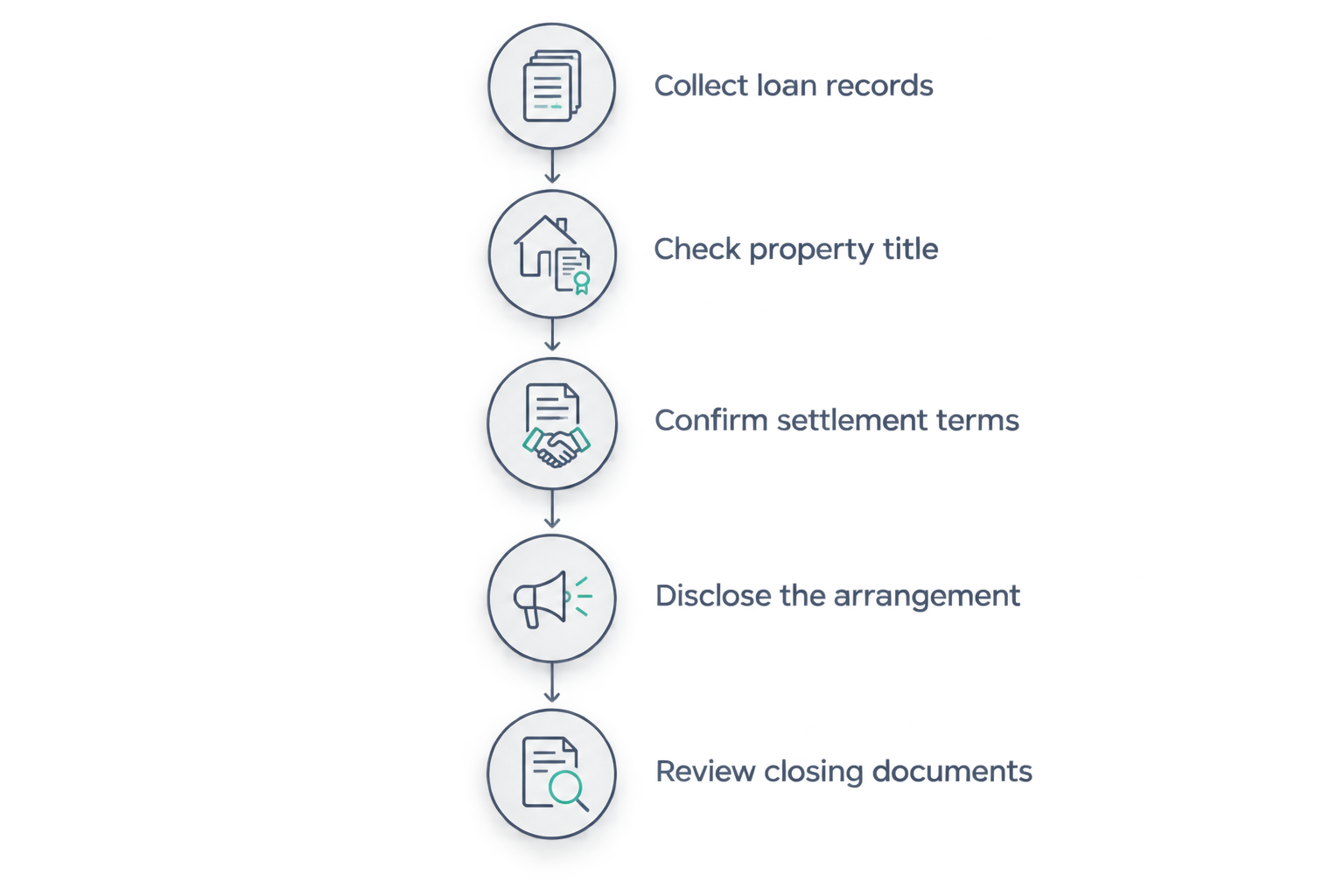
Use these 5 steps to organize the family-loan issue before negotiations depend on it. This is a preparation sequence, not a promise that a lender will approve the sale.
- Collect loan records. Gather the signed agreement, any mortgage or deed of trust, transfer records, payment history, and correspondence about repayment. If the arrangement was verbal, describe it accurately and ask an attorney how to document the existing facts.
- Check property title. Have your closing professional identify recorded claims. Ask your attorney to address any uncertainty about whether the family agreement affects the property.
- Confirm settlement terms. Ask what your relative expects: payment through closing, repayment later, or cancellation of some or all of the debt. Get legal help putting the proposed agreement in writing.
- Disclose the arrangement. Give your agent or processor the information needed for the lender's review. Disclose proposed payments and relevant relationships; do not create a separate, undisclosed repayment arrangement.
- Review closing documents. Have the appropriate professionals check lender approval, lien-release requirements, the settlement statement, and any remaining repayment obligation before you sign.
The order matters. You need to know what the family loan is before deciding how to present its proposed treatment to the mortgage lender.
Keep a single current file for your 2026 transaction. When a balance, proposed payment, or release term changes, tell the people handling lender submissions and closing so they can check whether documents need updating.
Questions to resolve before signing
Ask these 3 questions about each debt affected by the sale:
- Does the proposed agreement release the claim against the house?
- Does it also release me from personal repayment?
- Do the lender approval and closing documents reflect the same arrangement?
A verbal assurance does not answer those questions. Ask your attorney to explain any language you do not understand before you commit to it.
Can I repay my family member before the short sale closes?
Do not move money to a relative without first discussing the payment with your attorney and the team handling the lender submission. A payment changes your financial position and needs accurate treatment in the transaction.
A documented debt is not permission to make an undisclosed payment. If repayment is proposed through closing, your closing professional needs to confirm that the payment fits the applicable approval terms and settlement documents.
Avoid assuming that repayment outside closing is unrelated to the sale. Explain the proposed timing, source of funds, and agreement to your attorney. If bankruptcy is being considered, tell bankruptcy counsel about family payments before making them.
The practical rule for 2026 is simple: disclose the proposal before acting, not after money has moved.
Can my family member buy the house in the short sale?
A family member buying your house is a different issue from a family member lending you money. Disclose the relationship before treating the offer as a workable short-sale plan.
Short-sale programs can impose restrictions on related-party transactions. Some require certifications about relationships between the parties and prohibit undisclosed agreements. The applicable lender or program must confirm whether the proposed transaction is permitted.
Do not assume your relative can buy the home and privately agree to transfer it back or let you retain ownership benefits. Have the entire arrangement reviewed, including any connection between the purchase and the existing family debt.
Where processing help fits—and where legal advice belongs
Shortsalesdoneright is best for homeowners seeking short sale processing and lender negotiation support. The service helps homeowners compare a short sale with other options; it does not replace legal advice about a family loan.
For agents, Shortsalesdoneright prepares the full short-sale package and provides a dedicated point of contact and weekly lender updates. For you as the homeowner, the immediate task is to provide accurate records and explain the family arrangement early.
The limitation is clear: processing support cannot promise lender approval, cancellation of an unpaid balance, or a specific credit-score result. Lender terms and state law vary. Direct legal questions to a qualified attorney and tax questions to a qualified tax professional.
If you are ready to act, visit Shortsalesdoneright and request help through the appropriate homeowner intake form. Explain whether the family loan is secured, unsecured, or still needs review.
FAQ
Can I short sale my house if I owe my parents money?
Yes, owing your parents money does not automatically prevent a short sale. Determine whether their loan is secured by the property, disclose it accurately, and address any required lien release.
Does my family member have to forgive the loan?
Your family member does not automatically have to forgive the loan because you pursue a short sale. The proposed settlement must address any required lien release, while a separate agreement and applicable law determine whether personal repayment remains.
What if I borrowed family money but never signed a contract?
An unsigned family arrangement still needs honest disclosure and legal review. Gather transfer records, payment history, and communications, then ask an attorney how the arrangement is treated under state law.
Will my mortgage lender pay my family loan from the sale?
Do not assume the mortgage lender will permit sale proceeds to repay your family loan. Proposed distributions need review under the applicable approval terms and must be reflected accurately in the closing documents.
Can my relative remove the lien and let me repay later?
A relative can propose releasing a lien while keeping a repayment obligation, but the arrangement needs legal review and appropriate disclosure. A lien release and cancellation of the debt are different outcomes.
Will I owe taxes if my family member cancels the loan?
The tax treatment depends on the facts and the legal character of the cancellation. Ask a qualified tax professional to review the family arrangement and any mortgage debt cancellation separately.
One last thing
Ask for separate answers about the house and the debt. A document that allows your home to transfer does not necessarily settle what you owe afterward.
Before closing, ask your attorney to identify the language that releases the property and the language that addresses personal repayment. If either answer is unclear, resolve it before signing—not through a family conversation after the sale.