

Yes. You can pursue a short sale with unpaid property taxes in 2026, but the tax balance must be addressed in the closing plan. Your mortgage lender's approval does not erase a property tax lien or guarantee that sale proceeds will cover it. Before accepting a closing date, have the title or closing professional identify the tax claim and confirm how it will be resolved.
- Can I short sale my house if I have unpaid property taxes? Yes, but the closing must address those taxes.
- Mortgage approval does not automatically release property tax liens or stop a tax sale.
- Shortsalesdoneright provides short sale processing and lender negotiation, not guaranteed approval or tax forgiveness.
- Get a current tax payoff, a title review, and written confirmation of the proposed payment arrangement.
Can I short sale my house if I have unpaid property taxes?
Unpaid property taxes do not automatically rule out a short sale. An unresolved tax claim can prevent the proposed closing from proceeding. The key question is not simply whether you owe taxes. It is whether the transaction can satisfy the requirements for transferring the property.
Start with these 3 records: the current tax payoff, the title report, and the proposed settlement statement. Together, they show what is owed, what affects ownership, and how the proposed sale distributes the money.
| Record | What it tells you | What it does not establish |
|---|---|---|
| Tax payoff | The amount required to resolve the tax account through a stated date | Whether your mortgage lender accepts that payment from proceeds |
| Title report | Recorded claims and requirements affecting the property | That every listed claim has already been resolved |
| Proposed settlement statement | How the sale proceeds would be distributed | Final approval from every party whose consent is required |
For help comparing your next steps, Shortsalesdoneright provides short sale processing and lender negotiation services for homeowners and real estate agents.
Why this matters
A mortgage short sale and a delinquent property tax account involve separate obligations. Getting the mortgage lender to accept less than its full balance does not settle the taxing authority's claim.
That distinction matters before you sign documents, not just before closing. If the proposed distribution leaves a tax claim unresolved, the transaction needs another acceptable arrangement. Otherwise, you risk working toward a closing that cannot happen on the proposed terms.
For a 2026 sale, use current account information rather than an older bill. Ask the collecting office whether additional charges, collection activity, or a tax sale affect the account.
How do I handle unpaid property taxes during a short sale?
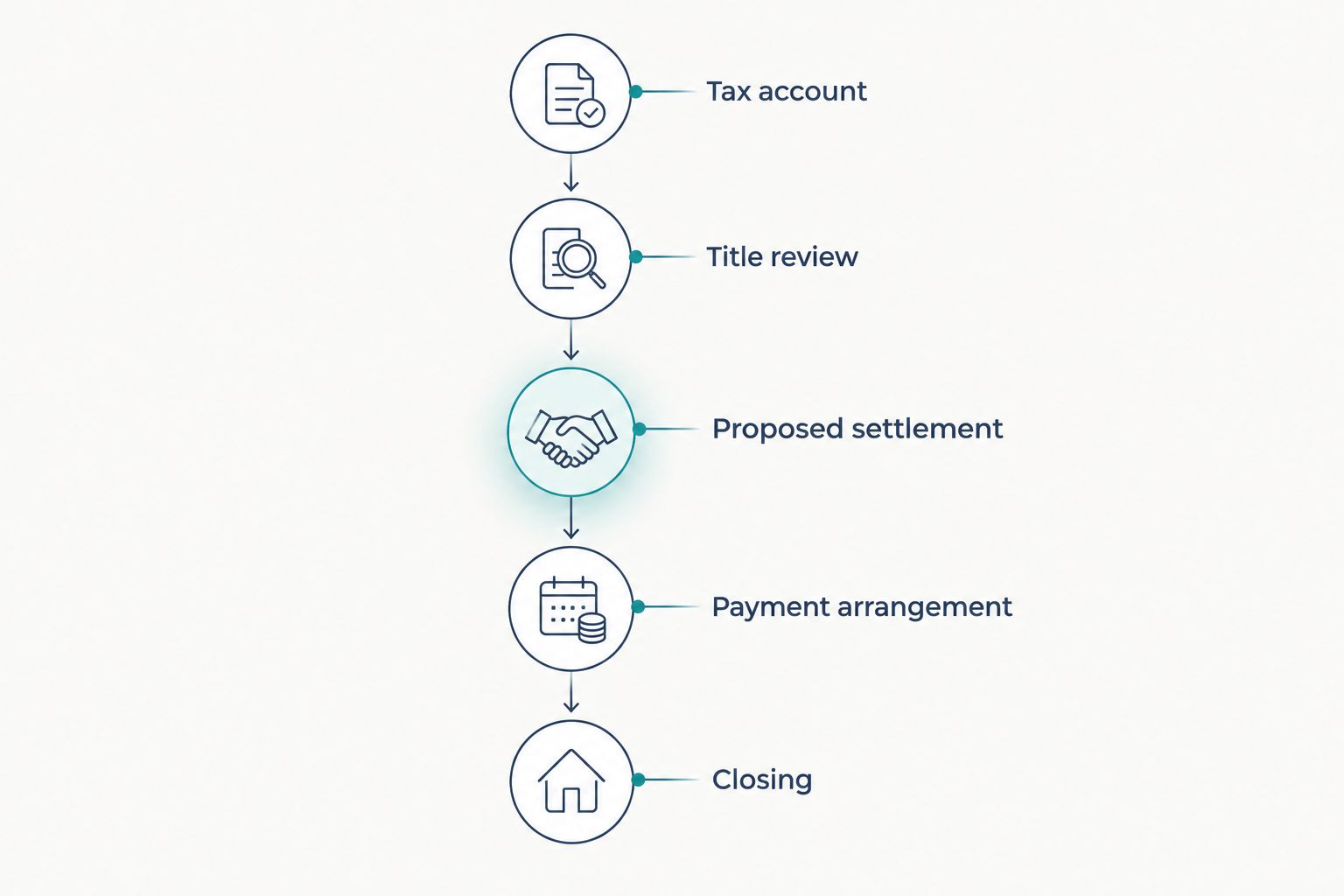
1. Confirm the tax account
Contact the office or entity currently collecting the property taxes. Request a written payoff or redemption amount, as applicable, and ask how long that figure remains valid.
Identify every affected tax period and parcel. If a tax certificate or other collection interest has been transferred, ask who now provides the payment instructions and required release documents. Your closing professional should verify those instructions independently.
2. Have title reviewed early
Ask the title company or closing attorney to identify property tax claims and other matters that must be addressed for closing. Do not assume the mortgage statement lists everything attached to the property.
Tell the closing professional about any tax notices you received. A notice in your possession can contain a deadline that needs attention before the rest of the short sale package is ready.
3. Put the taxes into the proposed settlement
Your agent or closing professional should show the proposed tax payment in the settlement figures submitted for lender review. Taxes reduce the money available for other distributions when paid from sale proceeds.
Disclose the tax balance before the lender approves the proposed distribution. A tax obligation discovered later can require revised figures and another review. Do not leave it outside the paperwork because you expect someone else to handle it.
4. Confirm the payment arrangement
Ask who will pay the tax claim, where that money comes from, and what documentation confirms the claim is resolved. If someone proposes a reduced payment, installment arrangement, or buyer payment, have the relevant parties review it before relying on it.
An informal agreement is not a substitute for the documents needed to close. Your attorney should review any arrangement that leaves you responsible for an obligation after the sale.
5. Recheck before closing
Have the closing professional update time-sensitive payoff figures and compare the final settlement statement with the lender's approval terms. Confirm that any required changes have been accepted.
Keep the final settlement statement and tax payment documentation. These records serve different purposes from the mortgage approval letter, so retain each document rather than treating one as proof of everything.
Who pays the unpaid property taxes at closing?
The payment source must be established in the approved transaction documents. Do not assume that the mortgage lender pays the taxes separately or that the buyer automatically takes responsibility.
The following are possible arrangements to discuss, not promises that your transaction qualifies for them. Their suitability depends on the lender's terms, available funds, title requirements, and applicable law.
| Arrangement | Best for | Benefit | Limitation |
|---|---|---|---|
| Payment from proceeds | Transactions where the approved distribution includes the tax payoff | Addresses taxes through the closing | Leaves less money for the mortgage lender and other obligations |
| Homeowner contribution | Homeowners with funds who accept the proposed terms | Supplies money outside the sale proceeds | Requires available funds and review of the full agreement |
| Buyer contribution | Transactions where the buyer agrees and financing permits | Adds a possible payment source | Requires disclosure and acceptance by the relevant parties |
| Separate tax arrangement | Accounts where the collecting authority permits an applicable arrangement | Creates another route to discuss | Does not automatically satisfy title or lender requirements |
Never send money based only on a verbal promise that it will save the sale. Request written instructions and confirm how the payment affects both the tax account and the closing.
Why the outcome varies
There is no single nationwide answer about how an unpaid tax balance fits into every short sale. These factors determine what your team needs to resolve:
- State and local rules. Tax collection procedures, lien rights, and redemption requirements vary.
- Collection status. An overdue bill and a tax account already in an enforcement process require different questions.
- Lender terms. The mortgage lender reviews the proposed proceeds and payment distribution.
- Other property claims. Additional mortgages, judgments, or association claims can complicate the settlement.
- Available funds. The transaction needs an acceptable source for every required payment.
- Deadlines. A scheduled tax sale or mortgage foreclosure requires immediate attention separate from routine package preparation.
For your 2026 closing plan, ask for a written list of unresolved items. A general statement that the file is progressing does not tell you whether the tax issue is cleared.
What if a tax sale is already scheduled?
Do not assume a pending short sale stops a tax sale. Contact the collecting office and a qualified local real estate attorney promptly to establish the deadline, your rights, and the action required.
Ask whether the notice concerns a tax lien sale, a tax deed sale, or another collection procedure. Those terms are not interchangeable, and the consequences depend on local law and the account's status.
Give the notice to your agent and closing professional as well. Everyone needs the same deadline, but an attorney should answer questions about ownership rights, redemption, or stopping enforcement. A short sale processor cannot promise that submitting a package protects the property.
What if my mortgage payment includes tax escrow?
An escrow account does not prove the property tax account is current. Ask your mortgage servicer for the escrow payment history and compare it with the collecting office's records.
If the records disagree, request a written explanation. You need to establish whether the taxes were paid, remain outstanding, or require a correction before using the amount in the settlement figures.
Do not count an expected escrow refund as money available to close without confirmation. Ask the servicer how the escrow balance will be treated and have the closing professional account for it correctly.
Can I sell without doing a short sale?
Check the full transaction figures before assuming you need mortgage short sale approval. An unpaid tax bill alone does not establish that your mortgage lender must accept less than it is owed.
Ask your agent and closing professional to compare the expected sale proceeds with the mortgage payoff, taxes, other required payments, and closing expenses. If the transaction can satisfy those obligations, the mortgage lender might not need to approve a reduced payoff.
If you want to keep the property, discuss available retention options with your servicer and qualified advisers instead. The short sale versus loan modification guide explains the different goals of selling and seeking changed mortgage terms.
Get help without losing track of the tax issue
Shortsalesdoneright's short sale processing service is best for homeowners and agents seeking help with package preparation and lender negotiation. For agents, the service includes preparing the full short sale package, a dedicated point of contact, and weekly lender updates. Homeowners receive help comparing a short sale with other options.
That support does not replace a title examination, legal advice, or tax advice. Lender approval, forgiveness of an unpaid mortgage balance, and a particular credit-score result are not guaranteed.
For a 2026 review, gather your latest mortgage statement, property tax notices, and any scheduled sale notices. Ask Shortsalesdoneright about your options through the homeowner intake form on its website; your agent should use the agent intake form for processing help.
Request help with your short sale
Explain your unpaid property taxes and ask about short sale processing and lender negotiation.
FAQ
Can I short sale my house if I have unpaid property taxes in 2026?
Yes, you can pursue a short sale with unpaid property taxes in 2026, but the closing plan must address the tax claim. Your lender's approval does not automatically resolve property tax liens.
Does short sale approval wipe out my property tax debt?
No, mortgage short sale approval does not by itself wipe out property tax debt. Have the closing professional confirm the payment and any documents needed to resolve the tax claim.
Will the bank pay my back property taxes?
Do not assume the bank will pay your back property taxes separately. Ask whether the lender accepts a tax payment from the sale proceeds and what the approved settlement requires.
Can the buyer pay my unpaid property taxes?
A buyer contribution is an arrangement to discuss, not an automatic solution. It must be disclosed and accepted wherever lender, financing, title, or legal requirements apply.
Does applying for a short sale stop a tax sale?
Do not treat a short sale application as a tax sale postponement. Confirm the deadline with the collecting office and ask a qualified local attorney what action is required to protect your rights.
Are unpaid property taxes the same as taxes on forgiven mortgage debt?
No, unpaid property taxes and possible income taxes on canceled mortgage debt are separate issues. Ask a qualified tax professional to review the income tax consequences under the rules that apply to you.
Who should review my short sale tax problems?
Use the collecting office to confirm the tax account, the closing professional to address title and settlement requirements, and qualified legal and tax professionals for advice. Lender terms and state law vary.
One last thing
Ask for proof of resolution, not just proof of payment. A payment receipt shows money was sent; the closing professional should also confirm that the tax-related title requirement has been satisfied.
Before signing your 2026 closing documents, ask one plain question: What tax obligation, if any, remains my responsibility after this sale? Get the answer in writing and take any unresolved legal or tax issue to a qualified professional.