

Yes. If your short sale buyer backs out, you can continue pursuing a short sale with another buyer, but the lender must confirm how it will review the replacement offer; an existing approval does not automatically transfer to a new buyer.
- If a short sale buyer backs out, confirm the lender’s replacement-offer requirements before promising another closing.
- An approval letter does not automatically cover a replacement buyer or changed contract terms.
- A pending short sale does not itself stop foreclosure; verify deadlines separately.
- Shortsalesdoneright provides short sale processing and lender negotiation support, not a guarantee of approval.
Can I short sale my house if the buyer backs out mid-process?
A buyer leaving does not automatically end your ability to pursue a short sale. It does end the assumption that the original transaction will close as planned. Your next move depends on the purchase contract, the lender’s review status, and any foreclosure deadlines.
The distinction matters most when the lender has already approved the sale. Approval applies to the transaction described in the approval letter, subject to its conditions. A replacement contract needs the lender’s review rather than an assumption that the old decision still applies.
For a 2026 transaction, start with the current written instructions in your file. If approval has already arrived, review how a short sale can collapse after lender approval before treating that letter as permission to close with someone else.
What to do next
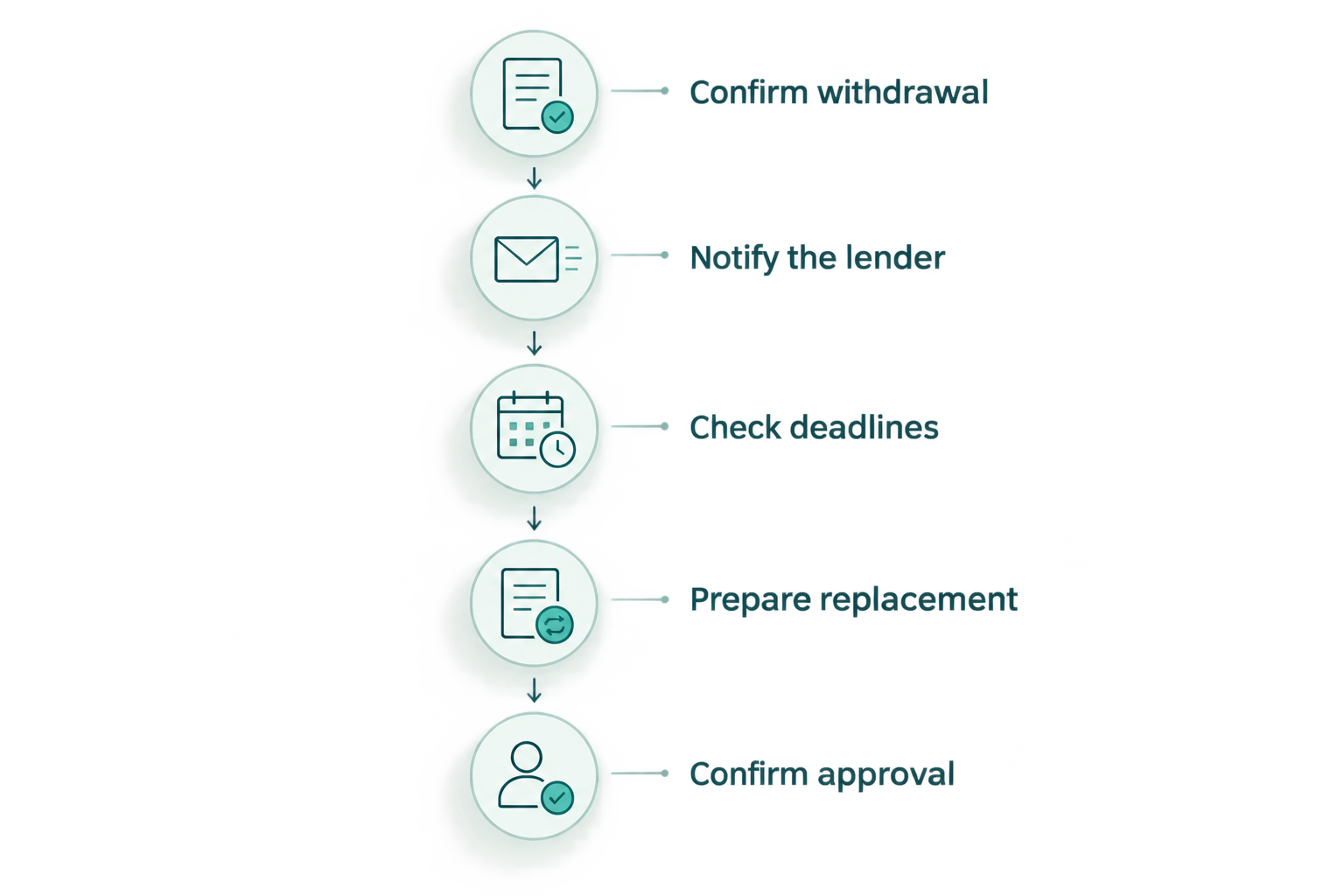
- Confirm withdrawal. Have your agent obtain the buyer’s written notice and review the contract’s cancellation requirements. Do not rely on a verbal message alone.
- Notify the lender. Your authorized agent or negotiator should explain that the buyer has withdrawn and ask what happens to the existing review.
- Check deadlines. Identify the contract deadlines, approval expiration, and any scheduled foreclosure sale. Keep these separate.
- Prepare replacement. Ask which documents the lender needs for another buyer and which seller documents need updating.
- Confirm approval. Before closing, obtain written lender approval covering the replacement transaction and its terms.
These steps organize the response. They do not guarantee that the lender will keep the file open or accept another offer.
Why this matters
A short sale involves separate decisions: whether the buyer remains under contract, whether the lender accepts the sale terms, and whether the transaction can close before applicable deadlines. Progress on one does not settle the others.
Do not confuse a replacement offer with a completed recovery. Another buyer gives you a transaction to submit. You still need acceptable financing, completed contract requirements, and the necessary lender approvals.
For homeowners managing a failed transaction in 2026, the immediate goal is clarity. Ask your agent for a written status summary showing what ended, what remains active, and what requires a new decision.
If the buyer leaves before lender approval
Before approval, tell the lender or servicer that the submitted offer is no longer moving forward. Ask whether the file can remain open while your agent seeks another buyer, or whether a replacement offer requires a new submission.
Do not assume either answer. The lender’s process determines which documents remain usable and which need updating.
Your agent should also confirm when the property can return to active marketing under the contract and local listing rules. A buyer’s stated intention to leave is not a substitute for resolving the existing agreement.
Ask for written answers to these questions:
- Will the lender retain the existing file?
- What replacement-contract documents are required?
- Which financial documents need refreshing?
- Does the existing property valuation remain acceptable?
- Who should receive the replacement submission?
Keep usable work, but do not assume every document carries over. An organized file helps your agent identify the gaps without resubmitting outdated information as current.
If the buyer leaves after lender approval
Read the approval letter before making promises to another buyer. Check the named parties, required proceeds, closing deadline, and other conditions. Then ask the lender what it requires to consider a replacement transaction.
A new buyer offering the same purchase amount does not establish that every approved term remains satisfied. Financing, requested concessions, closing expenses, and the proposed closing date can change the transaction the lender evaluates.
For a replacement closing in 2026, confirm that the lender’s written approval covers the actual buyer and final terms. If an extension is needed, request it; do not treat the request itself as an extension.
Do not close using an approval that does not cover the transaction being completed. Have the closing professional confirm that the approval instructions match the closing documents.
If more than one lender or lienholder must consent, ask which approvals need revision. An updated decision from one party does not answer for another.
If a foreclosure sale is already scheduled
A buyer’s withdrawal is especially urgent when a foreclosure sale date exists. Contact your agent, lender or servicer, and a qualified foreclosure attorney promptly. Confirm the current sale status rather than relying on an older update.
A pending short sale does not itself stop foreclosure. Neither does finding another buyer. Any postponement must be verified through the appropriate party and applicable state process.
Keep the legal deadline separate from the lender’s short-sale review timeline. A negotiator handling the sale cannot replace legal advice about your rights or emergency remedies.
When reviewing your options in 2026, ask what must happen before the scheduled sale, who has authority to act, and how you will receive confirmation. Lender terms and state law vary; there is no nationwide deadline that safely answers every homeowner’s situation.
Should you replace the buyer or reconsider the short sale?
The right next move depends on whether selling still fits your situation and whether another transaction can meet the lender’s requirements. Compare the paths before signing a replacement agreement.
| Path | Best for | Main benefit | Main limitation |
|---|---|---|---|
| Submit a replacement offer | Homeowners who still need to sell and have a credible new buyer | Keeps a sale-based exit under consideration | Requires lender review and does not preserve the old closing deadline automatically |
| Resume marketing | Homeowners who still want to sell but have no replacement buyer | Lets the agent seek another suitable offer | Finding a buyer does not guarantee lender acceptance |
| Reassess retention or other exit options | Homeowners whose goals or finances have changed | Checks whether a different approach fits the current situation | Each option has separate eligibility rules and consequences |
Do not choose solely because you have already invested effort in the short sale. Ask whether the next step still serves your housing needs and financial situation.
For example, wanting to remain in the home calls for a different discussion than needing to relocate. Tell your agent and servicer which outcome you are seeking before restarting negotiations.
Why the restart process varies
No fixed restart period applies to every short sale buyer withdrawal. These factors determine what needs attention:
- Review stage. A file awaiting an initial decision presents different questions from a transaction with an issued approval letter.
- Replacement terms. Changes to financing, concessions, proceeds, or the closing date require attention in the replacement submission.
- Document currency. The lender determines whether financial records or other materials need updating.
- Required approvals. Additional mortgages or other liens can require separate decisions before closing.
- Legal deadlines. A foreclosure sale date or contract deadline can limit the available response time.
- Contract status. The original buyer’s withdrawal must be handled under the signed agreement before the seller assumes the property is clear for another contract.
For a 2026 restart, ask for requirements tied to your actual file, not a general estimate from another sale. The useful answer is the next required action and its deadline.
What should you ask a replacement buyer?
Ask your agent to evaluate the replacement buyer’s ability to complete this transaction, not simply the buyer’s willingness to sign. A buyer who understands the lender-review process can make an informed decision about proceeding.
Discuss financing status, available funds, contract contingencies, inspection concerns, and the proposed closing date. Your agent should communicate known conditions without promising a lender response date that has not been confirmed.
The replacement buyer should also understand that an earlier approval is not automatically their approval. Set that expectation before the new contract becomes the basis for another lender submission.
Keep the screening practical:
- Has the buyer reviewed the property’s condition?
- What financing or documentation remains outstanding?
- Does the proposed contract allow for the required lender review?
- Who will communicate changes and obtain written responses?
A credible replacement offer needs a workable path to closing, not just an attractive headline amount. Your agent can assess those terms while the lender decides whether to accept them.
Can the lender use the same short-sale package?
The lender decides which parts of the existing package remain acceptable. Your hardship explanation, financial records, property information, and earlier correspondence should stay organized, but some materials will need replacement or updating if the lender requires it.
Ask for a document list rather than guessing. Keep a dated copy of each submission and the lender’s response so everyone works from the same version.
Can you keep the buyer’s earnest-money deposit?
The purchase contract, the buyer’s reason for withdrawing, applicable contingencies, and state law determine the deposit issue. A buyer backing out does not automatically entitle you to keep the money.
Ask your agent or a qualified real estate attorney to review the agreement and required release procedure. Do not treat disputed deposit funds as money available for your next move.
Will a replacement buyer erase an unpaid mortgage balance?
A replacement buyer does not determine whether you remain responsible for an unpaid balance after the sale. That question depends on the lender’s written terms and applicable law.
Ask a qualified attorney to review any remaining-debt language before you accept the approval. Direct tax questions to a qualified tax professional; permission to sell is not a promise about your tax result.
When short-sale processing support fits
Shortsalesdoneright is best for homeowners seeking short sale processing and lender negotiation support. The service also helps homeowners compare a short sale with other options, which matters when a failed purchase changes the original plan.
For the listing agent, Shortsalesdoneright’s short sale processing includes preparing the full package, a dedicated point of contact, and weekly lender updates. That addresses submission and communication work; it does not replace the agent’s responsibility for marketing, buyer communication, or contract coordination.
The limit is clear: processing support cannot promise lender approval, forgiveness of an unpaid balance, or a specific credit-score result. If you are ready to request help, use the appropriate homeowner intake form available through Shortsalesdoneright.
FAQ
Can I still sell if my short sale buyer backs out?
Yes, you can continue pursuing a short sale with another buyer, subject to lender review and applicable deadlines. Ask whether the existing file can remain open and what the replacement submission requires.
Does short-sale approval transfer to a new buyer?
Short-sale approval does not automatically transfer to a new buyer. Obtain written lender approval that covers the replacement transaction before closing.
Do I have to start the whole short sale over?
The lender determines whether your existing file can continue or a new submission is required. Ask which documents remain acceptable and which need updating.
Will finding another buyer stop foreclosure?
Finding another buyer does not itself stop foreclosure. Confirm any postponement separately and consult a qualified attorney about an approaching sale date.
Can I keep the deposit when a short sale buyer cancels?
Your right to the deposit depends on the purchase contract, the cancellation circumstances, and state law. Have your agent or attorney review the applicable terms before seeking release of the funds.
Should I accept a backup offer during a short sale?
Ask your agent whether a backup offer fits your existing contract and local requirements. A backup offer still needs the required lender approval before it can close.
Will another buyer get the same lender terms?
A replacement buyer is not automatically entitled to the earlier lender terms. Changes to the contract or the approval’s expiration can require another lender decision.
One last thing
Track the purchase contract, lender approval, and foreclosure status separately. Each answers a different question, and none substitutes for the others.
Ask your agent for a written update with the responsible contact and next action for each. That gives you a clearer basis for deciding whether to pursue another buyer or reconsider your options.


