

A short sale can take months to close because the lender must review the proposed sale before the transaction can finish. A signed purchase agreement does not mean the lender has approved the short sale, and approval still leaves financing, title work, and closing conditions to resolve. For a short sale in 2026, base your moving plans on confirmed milestones—not an estimated closing date alone.
- How long does a short sale take to close? Lender review and closing conditions determine the timeline.
- A signed purchase agreement is not short-sale approval; confirm the lender’s written terms before treating closing as settled.
- Shortsalesdoneright short-sale processing is best for agents who want package preparation and lender follow-up handled.
- Homeowners should track lender review and any foreclosure deadline separately; a pending short sale does not guarantee a postponement.
Why this matters
A short-sale timeline affects more than your moving date. You need to coordinate document requests, the buyer’s financing, the lender’s decision, and any existing foreclosure deadlines without assuming that one process pauses another.
For homeowners, the immediate task is understanding the next decision and what it requires. Agents need a clear file status, a responsible contact, and a buyer who understands that seller acceptance and lender approval are different milestones. You can request help through the appropriate homeowner or agent intake form on Shortsalesdoneright.
A useful timeline names the next milestone, who controls it, and what remains outstanding. That is more actionable than a closing date with no explanation behind it.
How long does a short sale take to close?
The timeline depends on where the file stands. A property described as a short sale might still need an offer, have an offer awaiting lender review, or already have written approval with conditions. Those situations are not interchangeable.
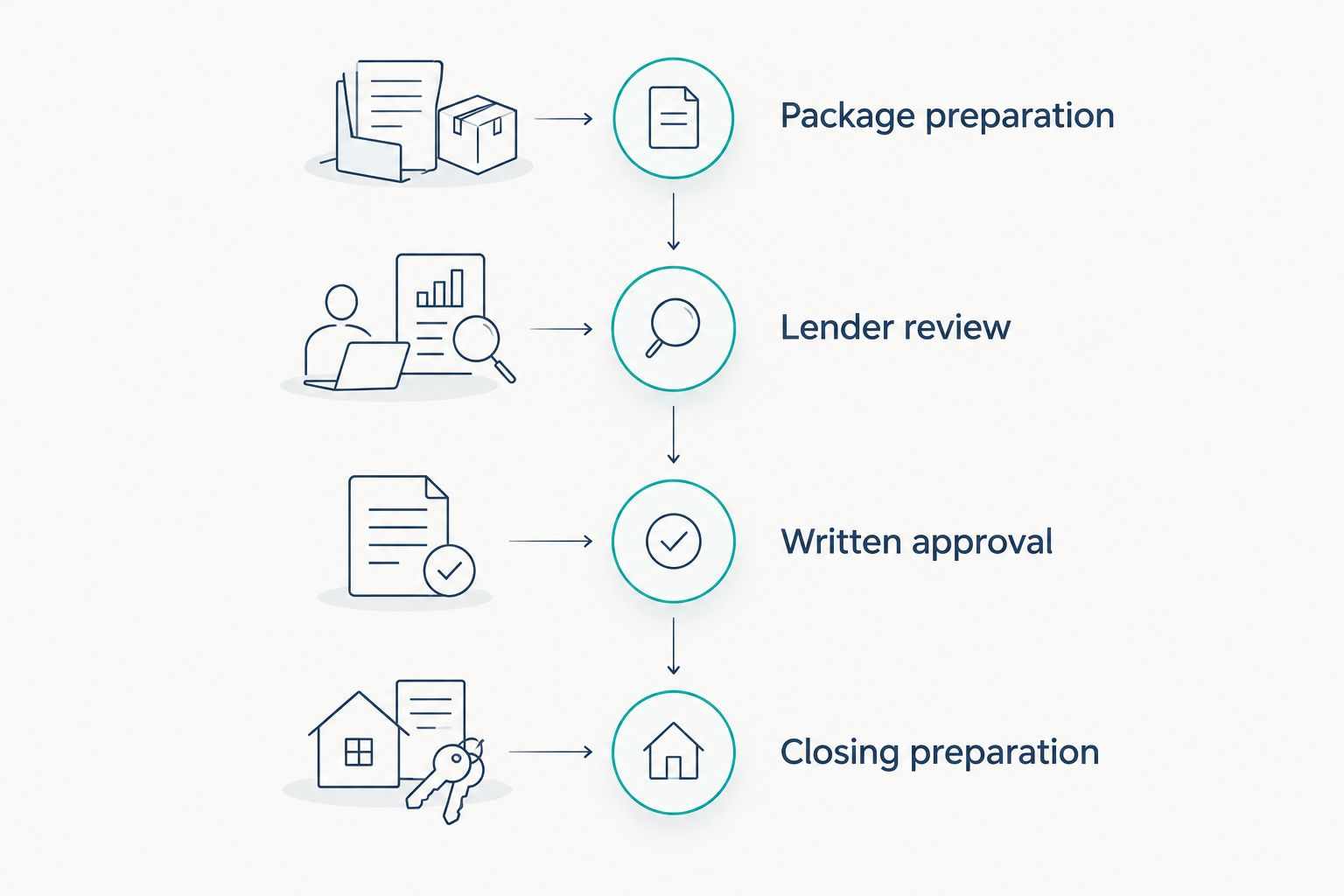
Use these milestones to assess a short sale in 2026:
- Package preparation. The homeowner and agent assemble the information the lender requests. This generally includes financial information, an explanation of hardship, sale documents, and authorization for the lender to communicate with the designated representative.
- Lender review. The lender evaluates the proposed transaction and requests any additional information it needs. Property valuation and the amount the lender would receive are part of that review.
- Written approval. The lender issues its decision and, if approved, specifies the terms. Read the conditions and deadline rather than relying on a verbal description of approval.
- Closing preparation. The parties complete remaining contract requirements, buyer financing, title work, and the lender’s approval conditions. The closing must match the approved transaction or receive any necessary further approval.
The practical question is not just how long the property has been listed. Ask how long the lender has had the requested package, whether it considers the submission complete, and which decision is pending.
Package preparation: confirm what the lender needs
A file is not ready merely because documents have been sent. Confirm what the lender requested, which documents were submitted, and whether anything needs correction or updating.
Homeowners should give the designated contact accurate information and respond to requests promptly. Agents should keep the offer and proposed transaction documents consistent. Conflicting names, amounts, or contract terms create questions that need answers before the file can progress.
Use a document checklist rather than relying on memory. The guide to documents to include in a short-sale package provides a place to organize that work; the lender’s actual requirements control the submission.
Lender review: identify the outstanding decision
During review, ask for a specific status rather than accepting that the file is being processed. Is the lender waiting for documents, reviewing property value, evaluating the offer, or preparing a decision?
Those answers identify different next steps. A missing document requires action from the person supplying it. A pending lender decision requires follow-up, but another copy of the same package does not replace that decision.
Keep a record of requests and responses. Record what was requested, who must provide it, and whether receipt has been confirmed. This gives the next conversation a clear starting point.
Written approval: read the conditions before setting expectations
Written approval is not permission to ignore the remaining terms. Check the approved transaction, required closing date, permitted payments, and any other conditions in the letter.
Pay particular attention to language about the unpaid mortgage balance. Agreement to the sale and release of the mortgage lien do not automatically answer every question about the remaining debt. Have a qualified attorney explain the documents and applicable state law.
If the parties cannot meet the approval deadline, ask about an extension before it expires. Do not assume the original approval remains effective after a missed deadline or a material change to the transaction.
Why short-sale closing timelines vary
The main timing issue is coordination. Several parties have different responsibilities, and one unresolved requirement can prevent the transaction from reaching closing.
These factors deserve attention when planning a short sale in 2026:
- Package completeness. Missing, inconsistent, or outdated documents leave the lender without information it requested. Confirm what remains outstanding instead of assuming submission means completion.
- Property valuation. The lender’s assessment of the property and proposed proceeds affects its response to the offer. Ask whether a valuation-related issue remains unresolved.
- Additional liens. A second mortgage or another lien can require separate attention before the property transfers. Identify these issues early through the appropriate title review.
- Offer changes. A changed buyer, revised sale terms, or a different proposed payout can require further review. Communicate changes before treating the existing approval as sufficient.
- Buyer readiness. The buyer still needs to meet financing and contract requirements. Lender approval of the short sale does not approve the buyer’s mortgage.
- Approval conditions and deadlines. The transaction must satisfy the written approval terms. A condition that remains unresolved near closing needs a direct response, not an assumption.
Separate what you can act on from what requires another party’s decision. You can return requested documents, flag a contract change, and ask for confirmation. You cannot promise when the lender will approve the sale.
How can you keep a short sale moving?
The strongest approach is to prevent avoidable gaps while keeping expectations realistic. No checklist guarantees lender approval, but a clear file and assigned responsibilities make outstanding work easier to address.
For homeowners: keep the next request manageable
Ask your contact for a written list of anything needed from you. Supply accurate documents through the agreed method, and flag changes in your financial circumstances rather than letting the file describe an outdated situation.
Keep lender correspondence and legal notices. Send relevant notices to your representative promptly, but do not assume that forwarding them resolves a deadline. If a foreclosure date or court response is involved, speak with a qualified attorney about the action required.
Before committing to a moving date, distinguish between a target and a confirmed closing arrangement. Ask which conditions remain open and what happens if the closing date changes.
For agents: assign ownership to every open item
Maintain one current status record for the transaction. It should identify outstanding documents, the latest lender request, the next follow-up, and any approval deadline. Keep the buyer’s agent informed without presenting an estimate as a commitment.
Shortsalesdoneright’s short-sale processing services include preparing the full package for agents, a dedicated point of contact, and weekly lender updates. That support addresses document preparation and communication; it does not guarantee approval or a particular closing date.
Shortsalesdoneright is best for real estate agents who want short-sale package preparation and lender follow-up handled. The limit is equally clear: processing support does not replace the lender’s decision or legal and tax advice.
For everyone: make updates specific
A useful update explains what changed, what remains open, and who acts next. If nothing changed, the update should still identify the pending request or decision.
Ask questions that produce an actionable answer:
- Has the lender confirmed receipt of the requested documents?
- What specific item or decision is holding up the file?
- Who is responsible for the next action?
- What deadline requires attention before the next update?
A regular update is valuable because it keeps responsibilities visible. It is not evidence that approval is close.
Can a short sale close faster after lender approval?
Written approval removes a major uncertainty, but it does not finish the transaction. The remaining timeline depends on the approval conditions, buyer financing, title issues, and other contract requirements.
Ask the closing professional to work backward from the lender’s deadline. Confirm what must be completed and whether any unresolved item puts that deadline at risk. If an extension is needed, raise it while there is still an opportunity to request one.
Does submitting a short sale stop foreclosure?
Submitting a short-sale package does not guarantee that foreclosure stops. Treat the short-sale review and any foreclosure process as separate matters unless the relevant postponement or other protection has been confirmed.
Lender terms and state law vary. If you have a scheduled sale, court paperwork, or another legal deadline, ask a qualified attorney what applies to your situation. Do not wait for the next routine processing update to address an urgent notice.
Should you accept an offer with a firm moving deadline?
A firm moving deadline does not make the lender’s review predictable. Before relying on that date, ask whether the lender has approved the transaction and whether the remaining requirements fit the proposed schedule.
For agents, discuss timing expectations before they become a dispute. For homeowners, avoid treating an accepted offer as assurance that the sale will finish before a lease starts, a relocation occurs, or another personal deadline arrives.
FAQ
How long does a short sale take to close after an offer is accepted?
An accepted offer does not establish a reliable closing date because the lender still must review and approve the proposed short sale. Confirm whether the requested package is complete and what decision remains pending.
Does short-sale approval mean the house is ready to close?
Short-sale approval does not mean every closing requirement is complete. Buyer financing, title work, contract conditions, and the lender’s written terms still need attention.
Can I make the bank approve a short sale faster?
You cannot guarantee a faster lender decision. You can address avoidable delays by providing accurate documents, answering requests promptly, and confirming what remains outstanding.
Will a second mortgage affect my short-sale timeline?
A second mortgage can add another approval or lien-resolution issue to the transaction. Identify the additional lender and confirm its requirements rather than assuming the first lender’s approval covers it.
Does the lender forgive the remaining balance after a short sale?
Do not assume the lender forgives the remaining balance after a short sale. The written agreement and applicable law matter; ask a qualified attorney about potential liability and a qualified tax professional about tax consequences.
Can a short-sale processor guarantee a closing date?
A short-sale processor cannot guarantee the lender’s approval or a closing date. Shortsalesdoneright provides package preparation and lender communication support without replacing the lender’s decision.
What should I ask before planning my move?
Ask whether written lender approval exists, what conditions remain, and whether the closing arrangements are confirmed. Keep any foreclosure or legal deadline under separate review with the appropriate professional.
One last thing
A closing estimate is only as useful as the unresolved work behind it. Before making your next commitment in 2026, ask one question: What must happen next, and who is responsible for making it happen?
That answer gives you a practical next move. If you need processing help or want to compare a short sale with other options, use the appropriate agent or homeowner intake form. Keep legal and tax questions with qualified professionals, and remember that lender terms and state law vary.


