

Yes, you can pursue a short sale with a judgment lien on your house, but the lien must be resolved in a way that allows the sale to close and the buyer to receive acceptable title. Your mortgage lender's short-sale approval does not, by itself, release a separate judgment lien or forgive the debt behind it.
- For a short sale house with judgment lien, mortgage approval alone does not clear the judgment lien.
- Get a title review before negotiating a settlement or promising a closing date.
- A lien release and forgiveness of the underlying debt are different terms; review both.
- Shortsalesdoneright provides short-sale processing help; ask a qualified attorney to assess judgment-lien rights.
Can I short sale my house if there's a judgment lien on it?
Yes. A judgment lien creates another issue to resolve, not an automatic ban on a short sale. The deciding questions are whether the lien actually attaches to your property, what the creditor requires to release it, and whether the proposed closing satisfies all applicable requirements.
For a 2026 sale, start with a current title review rather than an old credit report. Your closing professional needs to identify recorded claims and determine what must happen before ownership changes. The guide to connecting your title company to a short-sale closing explains that coordination.
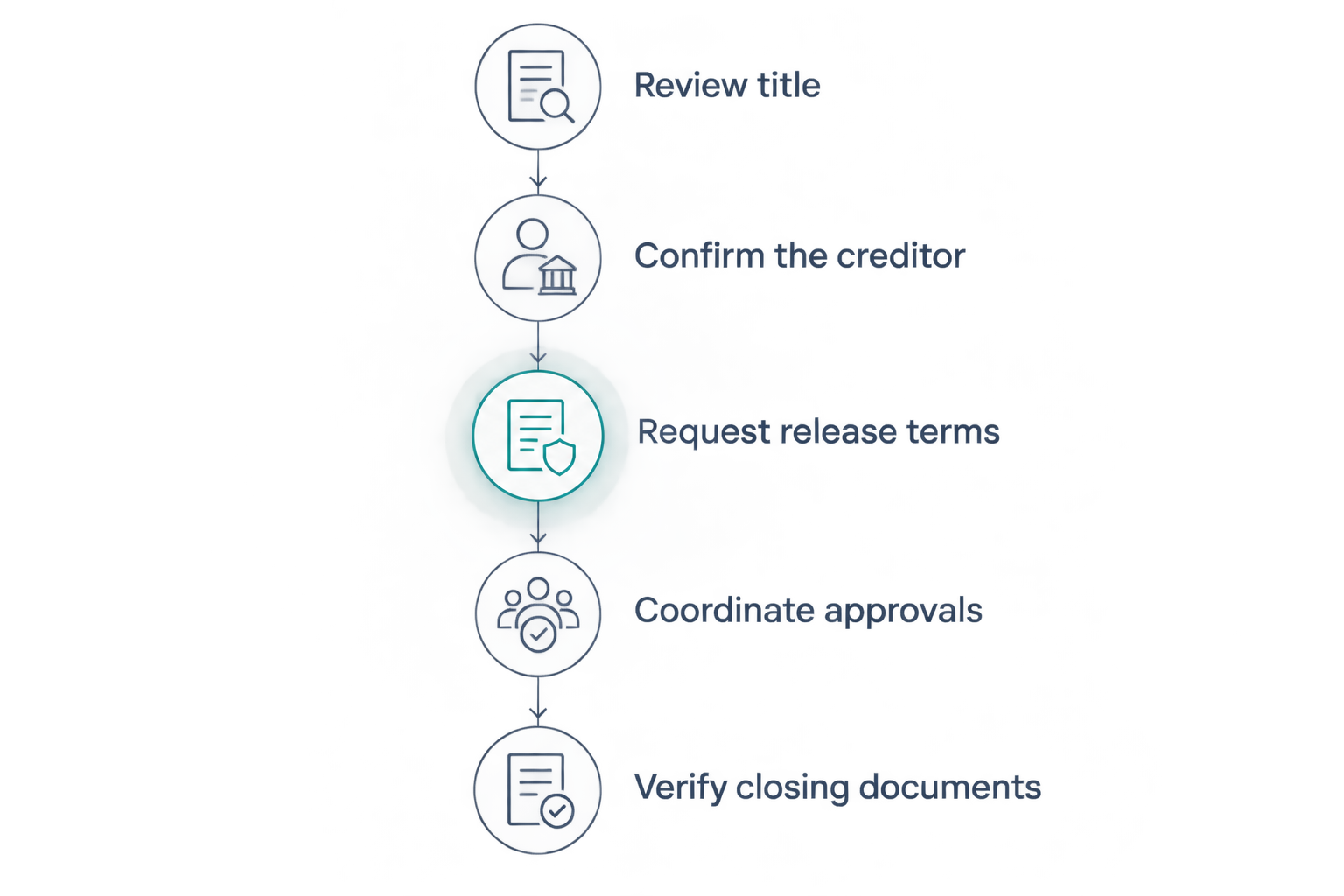
Use these 5 steps to organize the review. They are a preparation sequence, not a promise that a creditor will accept a settlement.
- Review title. Ask the title company or closing attorney to identify the recorded judgment, creditor, recording information, and any other claims affecting the property. Have an attorney address whether the judgment creates an enforceable lien against your ownership interest under state law.
- Confirm the creditor. Get current contact information and written confirmation of who has authority to negotiate and sign a release. A collection notice does not necessarily establish who can provide the document your closing professional needs.
- Request release terms. Ask what the creditor requires to release the property from the lien. Have your attorney distinguish a property-only release from a settlement that also resolves your personal obligation.
- Coordinate approvals. Give the proposed terms to the people handling the mortgage short sale and closing. Any payment from sale proceeds needs to fit the lender's written approval and the closing documents.
- Verify closing documents. Before signing, have the closing professional confirm the required release documents, signatures, payment instructions, and recording arrangements. Review whether any debt remains after the property transfers.
These steps work together. A settlement letter that does not satisfy title requirements can leave a closing blocked even when the mortgage lender has approved the sale.
Why this matters
An upside-down mortgage already means the proposed sale proceeds will not cover the mortgage payoff. A judgment lien adds a separate creditor whose rights need review. There is no automatic pool of money available to satisfy that creditor.
Find the lien issue before you commit to a closing date. Early review gives your agent and closing professional a chance to identify missing documents and conflicting terms while the transaction is still being structured.
A 2026 short-sale plan also needs a separate check of any foreclosure or court deadlines. Submitting a short-sale package does not itself establish that a scheduled legal action has stopped. Obtain written confirmation of any postponement from the responsible party, and take deadline questions to an attorney.
A lien release is not the same as debt forgiveness
A judgment is a court determination of an obligation. Whether and how that judgment becomes a lien against real estate depends on state law and the required procedures. Do not assume every judgment attaches to every property you own.
A lien release addresses the creditor's claim against the property. It does not necessarily eliminate the underlying judgment or your personal responsibility for the unpaid debt. The wording matters.
For example, an agreement might allow a particular property to transfer while preserving collection rights against the debtor. An agreement resolving the judgment itself addresses a different question. Your attorney should explain exactly what the proposed document accomplishes.
Ask these 3 questions before accepting terms:
- Does this document release the property from the judgment lien?
- Does it also resolve the judgment debt, or does a balance remain enforceable?
- What documents and recording steps must be completed for closing?
Do not treat a mortgage lender's letter as an answer to those questions about another creditor. Each obligation needs its own review.
What are the ways to address a judgment lien?
The right approach depends on the judgment, your ownership interest, the creditor's terms, and state law. The comparison below identifies routes to discuss with your attorney and closing professional; it does not establish that any particular route is available in your case.
| Approach | Best for | Benefit | Limitation |
|---|---|---|---|
| Negotiated lien release | An enforceable lien where the creditor will discuss terms | Can create a path to transferring the property | A release does not necessarily settle the remaining debt |
| Full satisfaction | A judgment that can be paid through a disclosed, approved arrangement | Resolves the judgment when properly documented | Funding and closing approval still need confirmation |
| Legal challenge or exemption review | A disputed lien, ownership issue, or potential state-law protection | Tests whether the claim legally affects the property | Requires legal analysis; success is not assured |
| Reassessing the sale | A transaction without an acceptable lien-resolution path | Avoids committing to terms that cannot close | Does not itself resolve the mortgage or judgment |
Do not choose an approach from the table without checking its effect on both title and personal debt. A route that permits a sale can still leave obligations after closing.
Do not make an undisclosed side payment to get a creditor's agreement. Give proposed payments and their funding sources to the closing professional and mortgage servicer for review before committing.
Why judgment-lien outcomes vary
There is no nationwide settlement formula for a short sale with a judgment lien. The same proposed sale can raise different issues depending on the property, judgment, and applicable law.
- State law and property protections. Rules governing judgment liens, exemptions, enforcement, and ownership interests differ. An attorney must apply the rules to your facts.
- Lien priority. The order and legal priority of claims affect the creditor's position. Recording dates are relevant, but they are not a substitute for a legal priority review.
- Available proceeds and permitted payments. Your mortgage lender's approval sets terms for the short sale. A separate creditor's requested payment must be reconciled with those terms.
- Creditor authority and cooperation. The person discussing a settlement must have authority to approve the terms and provide acceptable release documents.
- Other owners and claims. Co-ownership, additional mortgages, taxes, or other recorded matters can change the work required to deliver acceptable title.
- Existing deadlines. A scheduled foreclosure sale or court deadline requires attention independently of settlement discussions.
For a 2026 transaction, request current written terms. Do not assume an earlier payoff statement or settlement offer remains valid through the planned closing.
What documents should I gather first?
Start with 4 document groups for the judgment-lien review. Your mortgage servicer will have its own short-sale documentation requirements, so this is not a complete short-sale package.
- Judgment records. Gather the judgment, recorded lien documents, case information, and any satisfaction or release already issued. Keep the full documents, not just a balance shown online.
- Creditor correspondence. Include collection notices, settlement proposals, payment records, and contact details. Preserve envelopes or notices that contain deadlines.
- Property and mortgage records. Collect the deed, current mortgage statements, and the title report when available. Disclose additional owners and known claims to the closing professional.
- Sale and approval records. Keep the purchase contract, proposed closing statement, mortgage approval letters, and any requested changes together. Everyone reviewing the lien needs the same proposed transaction terms.
Tell your agent about the judgment even if you believe it was paid or does not affect the house. That gives the closing professional an opportunity to verify the record rather than discover a disagreement just before signing.
For your 2026 file, keep a dated copy of each submission and response. A clear record helps distinguish a pending request from an actual written agreement.
What if the judgment creditor refuses to release the lien?
A refusal can prevent the proposed short sale from closing if the lien remains an unresolved title requirement. Ask for the creditor's position in writing, then have your attorney and closing professional identify the actual obstacle.
The next move depends on the reason. Missing authority, disputed ownership, unacceptable release language, and a rejected settlement are different problems. Do not respond to all of them by simply increasing an offer.
Before agreeing to revised terms, confirm that the mortgage lender permits the proposed arrangement. If there is no workable resolution, reassess the sale and other options with qualified advisers rather than promising the buyer an unsupported closing date.
Will foreclosure automatically wipe out the judgment lien?
Do not assume foreclosure will eliminate either the lien or your personal debt. The result depends on lien priority, the foreclosure process, required notices, and state law.
A claim against the property and a collection right against a person are separate issues. Ask an attorney what the specific foreclosure would mean for each before treating foreclosure as a solution to the judgment.
The same caution applies to other alternatives. A loan modification addresses mortgage terms; it does not automatically resolve an unrelated judgment lien. Compare options using your actual documents, not a blanket claim that one choice clears every debt.
Get processing help without skipping legal review
Shortsalesdoneright short-sale processing is best for agents who want package preparation and lender follow-up outsourced. The service includes preparing the full short-sale package, a dedicated point of contact, and weekly lender updates. Those tasks do not replace legal advice about judgment liens.
For homeowners, Shortsalesdoneright short-sale services include help comparing a short sale with other options. If you are ready to act, request help through the appropriate homeowner intake form on the Shortsalesdoneright site. Tell the team about the judgment and any scheduled deadlines at the start.
Lender terms and state law vary. Take legal questions to a qualified attorney and questions about cancellation of debt or other tax consequences to a qualified tax professional. No processing service can promise lender approval, forgiveness of an unpaid balance, or a particular credit-score result.
Request help with your short sale
Explain your mortgage situation, judgment lien, and any scheduled deadlines through the homeowner intake form.
FAQ
Can I list my house for a short sale before the judgment lien is resolved?
An unresolved judgment lien does not automatically prevent listing, but you need a workable title-resolution plan to close. Tell your agent about the judgment and request an early title review before making commitments about closing.
Does my mortgage lender's approval remove a judgment lien?
No. Mortgage short-sale approval does not by itself release a separate judgment lien. The closing professional must confirm how the judgment lien will be addressed.
Can a judgment creditor accept less than the amount owed?
A judgment creditor can agree to a settlement, but acceptance is not guaranteed. Get the agreement in writing and have an attorney review whether it releases only the property or also resolves the debt.
Will I still owe money after the judgment lien is released?
You can still owe money if the agreement releases the property but preserves the underlying judgment debt. Ask your attorney to identify any remaining personal obligation before you sign.
Can I pay the judgment creditor outside the closing?
Do not make an undisclosed payment outside the closing. Have your attorney, closing professional, and mortgage servicer review the proposed payment and its source before you agree to it.
Does applying for a short sale stop a foreclosure date?
Applying for a short sale does not itself establish that a foreclosure date has been postponed. Verify the status with the responsible party and get legal advice about approaching deadlines.
Do I need an attorney if I already have a short-sale processor?
Use a qualified attorney for questions about lien validity, exemptions, release language, and remaining liability. A processor handles transaction preparation and lender follow-up, not a substitute legal opinion.
One last thing
The most useful question is not just whether the creditor will accept a payment. It is what the signed agreement leaves behind. Before your 2026 closing, ask your attorney to explain the property release and any remaining debt separately, in plain language.
Then ask the closing professional to confirm that the required documents match the agreement. An encouraging phone call is not the same as a documented path to closing.