

Yes, you can generally stay in your home during a short sale process, provided you still have the legal right to occupy it and meet the possession terms of your sale agreement. Starting a short sale in 2026 does not automatically stop foreclosure or excuse mortgage payments. Your move-out date depends on the sale contract, lender requirements, and any applicable court orders or state law—not simply on when you submit your paperwork.
- Can I stay in my home during a short sale process? Generally yes, subject to possession rights and sale terms.
- A pending short sale does not automatically stop foreclosure or cancel mortgage payments.
- Confirm your move-out deadline in writing before arranging housing or handing over keys.
- Shortsalesdoneright provides short-sale processing and lender negotiation support; legal questions belong with a qualified attorney.
Can I stay in my home during a short sale process?
Submitting a short-sale request does not, by itself, require you to move out. You can generally continue living in the property while your agent markets it and the lender reviews the proposed sale. But occupancy and lender approval are separate issues.
Shortsalesdoneright helps homeowners compare a short sale with other options. That support does not replace advice about your legal right to remain in the property.
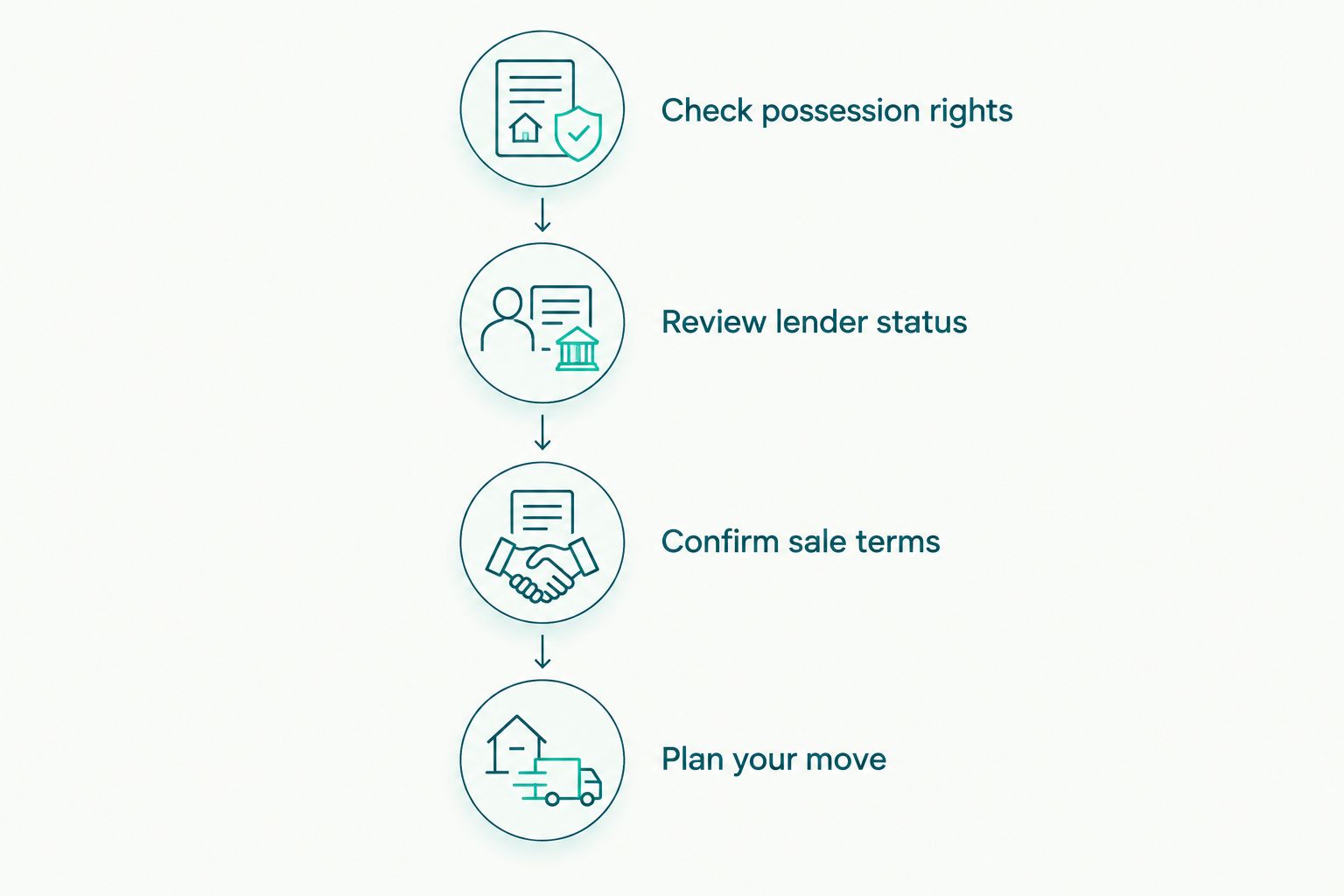
Use this sequence to establish where you stand:
- Check possession rights. Identify any foreclosure notices, court orders, or other documents affecting your right to remain.
- Review lender status. Ask whether foreclosure activity is continuing and request written confirmation of any postponement.
- Confirm sale terms. Have your agent explain when the purchase agreement requires you to deliver possession.
- Plan your move. Match your housing arrangements to the documented deadline, with a backup if the closing changes.
These steps answer different questions. A lender reviewing your short-sale package is not the same as a buyer agreeing that you can stay after closing.
Why this matters
You need somewhere to live while the sale is unresolved. Moving too early can leave you managing an empty property and another household. Waiting without checking your documents can leave you unprepared for a possession deadline.
Build your 2026 housing plan around written terms, not an expected approval date. Keep the lender's review, any foreclosure proceedings, and the buyer's possession agreement on separate lines of your checklist. Progress on one does not settle the others.
The practical goal is simple: know what lets you stay today, what changes that position, and whom to contact when a deadline moves.
Staying until the sale closes
Best for: homeowners who want to remain in place while pursuing a sale. Staying can avoid an immediate move while the outcome is unresolved. It also lets you monitor the property's condition and coordinate access with your agent.
The trade-off is disruption. You still need to manage showings, inspections, requested documents, and your household's eventual move. Remaining in the home does not remove financial obligations or protect you from foreclosure activity.
Before agreeing to an offer, ask your agent to explain the possession clause in plain language. Find out whether the buyer expects an empty property at closing, whether a final walkthrough is required, and how a delayed closing affects the planned handover.
Do not treat an estimated closing date as permission to stay indefinitely. A short sale needs lender approval, but your obligations to the buyer also depend on the signed agreement.
Moving before the sale closes
Best for: homeowners whose housing or personal circumstances require an earlier move. Leaving before closing can separate your household's relocation from an uncertain transaction. It does not finish the short sale or end your responsibilities as the owner.
An empty property needs a plan. Tell your insurer about the change in occupancy and ask what coverage conditions apply. Coordinate property checks, utilities, access, and maintenance with the appropriate people rather than assuming your agent handles everything.
Do not leave keys behind and consider the transaction complete. Confirm who can enter the property and how you will receive lender requests after moving. Update your mailing address where required so important notices do not sit unopened.
If you are considering an early move in 2026, ask your agent and a qualified attorney how that decision affects your particular transaction. Lender terms and state law vary.
Staying after the sale closes
Best for: homeowners seeking a specifically negotiated transition period. Staying after closing requires agreement; it is not an automatic feature of a short sale. Do not rely on a buyer's informal reassurance.
A post-closing occupancy arrangement can raise questions about the lender's approval conditions, insurance, responsibility for damage, and the date you must leave. Your agent should confirm whether the proposed arrangement fits the transaction. An attorney should review the legal terms.
The benefit is a defined transition if everyone necessary agrees. The drawback is another agreement with obligations you must understand and meet.
Never assume lender approval includes permission to remain after ownership transfers. Check the approval letter and sale documents before committing to that plan.
Which occupancy plan fits your situation?
Your preferred moving date matters, but it does not override a contract or legal deadline. Compare the practical benefits and limits before choosing a plan.
| Occupancy plan | Best for | Main benefit | Main limitation |
|---|---|---|---|
| Stay during the sale | Homeowners who want to remain while the sale is reviewed | Avoids an immediate relocation | Requires access coordination and attention to possession deadlines |
| Move before closing | Homeowners who need to relocate independently of the sale | Separates moving arrangements from closing | Ownership responsibilities continue while the property is unsold |
| Request post-closing occupancy | Homeowners needing an agreed transition | Creates a documented handover arrangement if accepted | Requires review and agreement; permission is not automatic |
If your actual goal is to keep the home permanently, say so before committing to a sale. A short sale transfers the property to a buyer; it is not a home-retention solution. Ask your mortgage servicer about retention options and consider help from a HUD-approved housing counselor.
Why your move-out date varies
There is no universal move-out date for every short sale. These factors determine what you need to check:
- Your sale contract. The possession clause sets the agreed handover terms between you and the buyer, subject to applicable law.
- Lender approval conditions. Read the written conditions rather than assuming an approved sale accepts every arrangement you discussed.
- Foreclosure status. An active proceeding introduces deadlines separate from the short-sale review.
- State law and court orders. These affect possession rights and the process that applies to your property.
- Closing changes. A delayed sale can affect moving arrangements, but it does not automatically change every contractual deadline.
- Any post-closing agreement. Additional occupancy needs clear terms and appropriate review before you rely on it.
For your 2026 moving plan, keep a copy of each document that establishes a deadline. Ask which document controls if dates conflict. Do not resolve that conflict by choosing the latest date yourself.
What should you keep doing while you live there?
Treat the property as your home and an active sale listing. Keep communication open with your agent, respond to document requests, and report damage or changes in condition promptly.
Maintain the property and address insurance, association obligations, and utilities according to your actual agreements. Ask before canceling anything needed for safety, inspections, or the sale. Moving out does not automatically cancel those obligations either.
For showings, agree on an access process with your agent. Explain work schedules, pets, accessibility needs, or other practical restrictions early. The goal is predictable access without pretending you no longer live there.
Keep lender and foreclosure notices together. Send important notices to the professional helping you promptly, but do not assume forwarding a notice replaces your own duty to respond.
What should you ask before setting a moving date?
Before booking a move in 2026, get clear answers to these questions:
- What document establishes my current possession deadline?
- Is foreclosure activity continuing while the short sale is reviewed?
- Has any postponement been confirmed in writing?
- When does the buyer receive possession under the contract?
- What happens to that date if closing is delayed?
- Who needs to approve any request to stay after closing?
- Who will tell me when the lender's status or conditions change?
Ask your agent to separate confirmed milestones from estimates. The short-sale timeline guide can help you organize the transaction stages, but your own documents determine your deadlines.
Shortsalesdoneright is best for homeowners seeking short-sale processing and lender negotiation support, not legal advice. The service can help you compare options; a qualified attorney should address possession rights, foreclosure proceedings, and legal obligations.
If you are ready to act, request help through the homeowner intake form on the site. Explain whether you still occupy the property and identify any notices or scheduled deadlines.
Get help with your next step
Request homeowner help with short-sale processing and lender negotiation.
Does starting a short sale stop foreclosure?
Starting a short sale does not automatically stop foreclosure. Specific servicing protections or a written postponement can affect the process, but you should not assume either applies merely because documents were submitted. Ask your servicer for the current status and get legal help promptly if a foreclosure sale is scheduled.
Do I still need to make mortgage payments while I stay?
A short-sale request does not cancel your mortgage payment obligation. Ask your servicer about your account and available assistance rather than stopping payments because you expect a sale. Missed payments can have financial and credit consequences; no specific credit-score outcome is guaranteed.
Can the lender approve the sale but still pursue an unpaid balance?
Short-sale approval does not automatically release you from an unpaid balance. Have a qualified attorney review the approval language and explain how state law applies. Ask a qualified tax professional about possible tax consequences before treating the sale as a complete financial resolution.
FAQ
Can I stay in my home while the bank reviews a short sale?
You can generally stay while the lender reviews a short sale if you retain the legal right to occupy the home. Check any foreclosure deadlines and the possession terms of your sale agreement separately.
Do I have to move out as soon as I list my home for a short sale?
Listing your home for a short sale does not, by itself, require you to move out. Coordinate showings with your agent and check whether another legal or contractual deadline affects occupancy.
Can I stay in the house after the short sale closes?
You cannot assume you can stay after closing. Any post-closing occupancy needs appropriate agreement and review for consistency with lender conditions, insurance requirements, and applicable law.
Will applying for a short sale stop my foreclosure date?
Applying for a short sale does not automatically stop a foreclosure date. Ask your servicer for written confirmation of the status and consult a qualified attorney about protections that apply to your circumstances.
Should I stop paying my mortgage during a short sale?
Do not stop paying solely because you have requested a short sale. The request does not cancel your payment obligation; discuss your circumstances with your servicer and qualified advisers.
What happens if I move before my short sale is approved?
Moving does not end your ownership responsibilities or complete the short sale. Confirm insurance requirements, property care, access arrangements, and how you will receive lender requests and legal notices.
Who can help me decide whether to stay or move?
Your real estate agent can explain sale logistics, and a qualified attorney can explain possession rights and legal deadlines. Shortsalesdoneright provides short-sale processing and lender negotiation services and helps homeowners compare a short sale with other options.
One last thing
Ask for the possession deadline, not just the closing date. Those questions sound similar, but only one directly addresses when you must hand over the home.
Before making a housing commitment, put the answer beside your lender's written conditions and any foreclosure notices. If those documents do not align, get the conflict resolved before relying on a moving date. Lender terms and state law vary; legal and tax questions belong with qualified professionals.


