

You can buy another house after a short sale once you meet your next mortgage program’s waiting period and qualification rules; there is no single deadline for every borrower. Fannie Mae’s standard conventional waiting period is 4 years, while FHA generally requires 3 years, with exceptions under specific conditions. Finishing the waiting period does not guarantee approval: your payment history, income, debts, and documentation still matter.
- How long after a short sale can I buy another house? Fannie Mae generally requires 4 years; FHA generally requires 3.
- Documented exceptions exist, but a hardship alone does not establish eligibility for an earlier mortgage.
- Shortsalesdoneright helps homeowners compare short-sale options; a mortgage lender must assess eligibility to buy again.
- Keep your closing documents and lender agreement so your next lender can verify the short sale.
Why this matters
A short sale affects more than your moving date. Before you accept an agreement, understand what it says about the unpaid mortgage balance and keep the records your next lender will need. Permission to sell for less than the mortgage balance is not automatically forgiveness of the remaining debt.
Shortsalesdoneright is best for homeowners seeking short-sale processing and lender negotiation support. That service addresses the sale you need to resolve; a mortgage lender separately decides whether you qualify to purchase again. Keep those decisions separate when planning your next move.
How long after a short sale can I buy another house?
For a 2026 purchase plan, start with the mortgage program rather than a general promise that you can buy again after a certain number of years. The following published agency guidelines provide the baseline for the programs shown; your lender must apply the rules to your file.
| Mortgage path | Standard short-sale waiting period | Best for | Main limitation |
|---|---|---|---|
| Fannie Mae conventional loan | 4 years | Borrowers planning a conventional purchase after the standard waiting period | Other credit, income, debt, and loan requirements still apply |
| FHA loan | 3 years | Borrowers whose circumstances meet FHA requirements | The waiting period alone does not establish eligibility |
| Fannie Mae documented exception | 2 years | Borrowers who can document qualifying extenuating circumstances | Ordinary financial difficulty does not automatically qualify |
| FHA current-payment exception | No required waiting period under the qualifying exception | Borrowers who meet FHA’s specific prior-payment conditions | Not a general shortcut for borrowers who stopped paying |
The source references are Fannie Mae’s Selling Guide, section B3-5.3-07, covering significant derogatory credit events, and HUD’s Single Family Housing Policy Handbook 4000.1, covering FHA short sales. Use these as the starting references for a 2026 lender review, not as a mortgage approval.
Ask the lender to identify the rule being applied and the date that controls eligibility. A loan application, FHA case-number assignment, and mortgage closing are different milestones. Do not assume that reaching an anniversary means every step can happen that day.
Fannie Mae conventional loans: 4 years
Fannie Mae’s standard waiting period after a short sale is 4 years. This is the conventional guideline described here, not a statement that every conventional mortgage product has identical requirements.
The benefit is a clear planning baseline. The limitation is that elapsed time does not replace underwriting: the lender still reviews your credit, income, assets, debts, and the property you want to buy.
For your 2026 planning, keep evidence showing when the short sale was completed. Give the lender the closing settlement statement and any requested supporting records rather than relying on the date an account disappeared from a credit-monitoring app.
Ask whether the lender has additional requirements beyond the agency guideline. A lender’s own credit policy can affect the loan it offers, even when you meet the agency’s minimum waiting period. Get that answer before paying for inspections or making a purchase commitment.
FHA loans: 3 years
FHA generally requires 3 years after a short sale before a borrower is eligible for a new FHA-insured mortgage. FHA guidance also contains exceptions, so the borrower’s payment history and circumstances matter.
FHA is worth discussing when you want a lender to assess that program’s requirements. Its limitation is straightforward: an FHA waiting-period rule does not remove the need for acceptable credit, documented income, sufficient funds, and an eligible property.
For a 2026 FHA application, ask the lender how the short-sale completion date relates to FHA case-number assignment. Do not substitute your expected moving date for the eligibility milestone the program uses.
Also ask what documentation the lender needs concerning the old mortgage. A closing statement helps establish what happened, but the lender can require additional records to evaluate the transaction and your payment history. Gather those records before selecting a home.
Fannie Mae’s documented exception: 2 years
Fannie Mae permits a 2-year waiting period after a short sale when qualifying extenuating circumstances are documented. Its guidance describes circumstances beyond the borrower’s control that caused a sudden, significant, and prolonged reduction in income or a catastrophic increase in financial obligations.
The benefit is an earlier eligibility path for a qualifying borrower. The limitation is the evidence requirement. A hardship letter used during the short sale does not, by itself, establish that you meet the next mortgage program’s exception.
Ask the lender what records support the cause, timing, and financial impact of the event. Then ask what evidence establishes that the situation has been resolved. Do not build a purchase contract around the exception until the lender has reviewed the relevant documents.
FHA’s current-payment exception: no required waiting period
FHA guidance includes a no-wait exception for borrowers who were current on their mortgage and installment debts when the short sale occurred and met the required payment history during the preceding 12 months. This exception is not available simply because the short sale closed successfully.
The benefit is that a qualifying borrower does not have to follow the standard short-sale waiting period. The limitation is that the payment-history conditions are specific, and the borrower must still meet the remaining FHA requirements.
If you believe this applies, ask an FHA lender to review the actual payment records. Do not stop making payments to pursue a future mortgage strategy, and do not assume that making payments alone establishes eligibility. Decisions about an unaffordable mortgage need an assessment of your full situation.
Why the waiting period varies
Your next mortgage depends on more than the words “short sale” in a credit report. These factors determine which rules apply and whether you satisfy them:
- Mortgage program. Fannie Mae and FHA use different standard waiting periods and exception requirements.
- Short-sale completion date. The lender needs reliable documentation of the event and the applicable eligibility milestone.
- Payment history. Payments before the sale matter for specific exceptions; later payment history also affects underwriting.
- Documented circumstances. An exception requires evidence that matches the program’s conditions, not just a description of financial stress.
- Current finances. Income, debts, available funds, and credit must support the new mortgage.
- Lender requirements. The lender must confirm both agency eligibility and its own lending requirements.
For a 2026 homebuying plan, turn those factors into a written checklist. Ask which requirement is satisfied, which remains open, and which document will resolve it. That gives you a usable next step instead of a vague instruction to wait.
What should I do before applying for another mortgage?
Prepare the file before you begin serious house hunting. You want the lender to evaluate the short sale early, not discover an unresolved question after you have committed to a property.
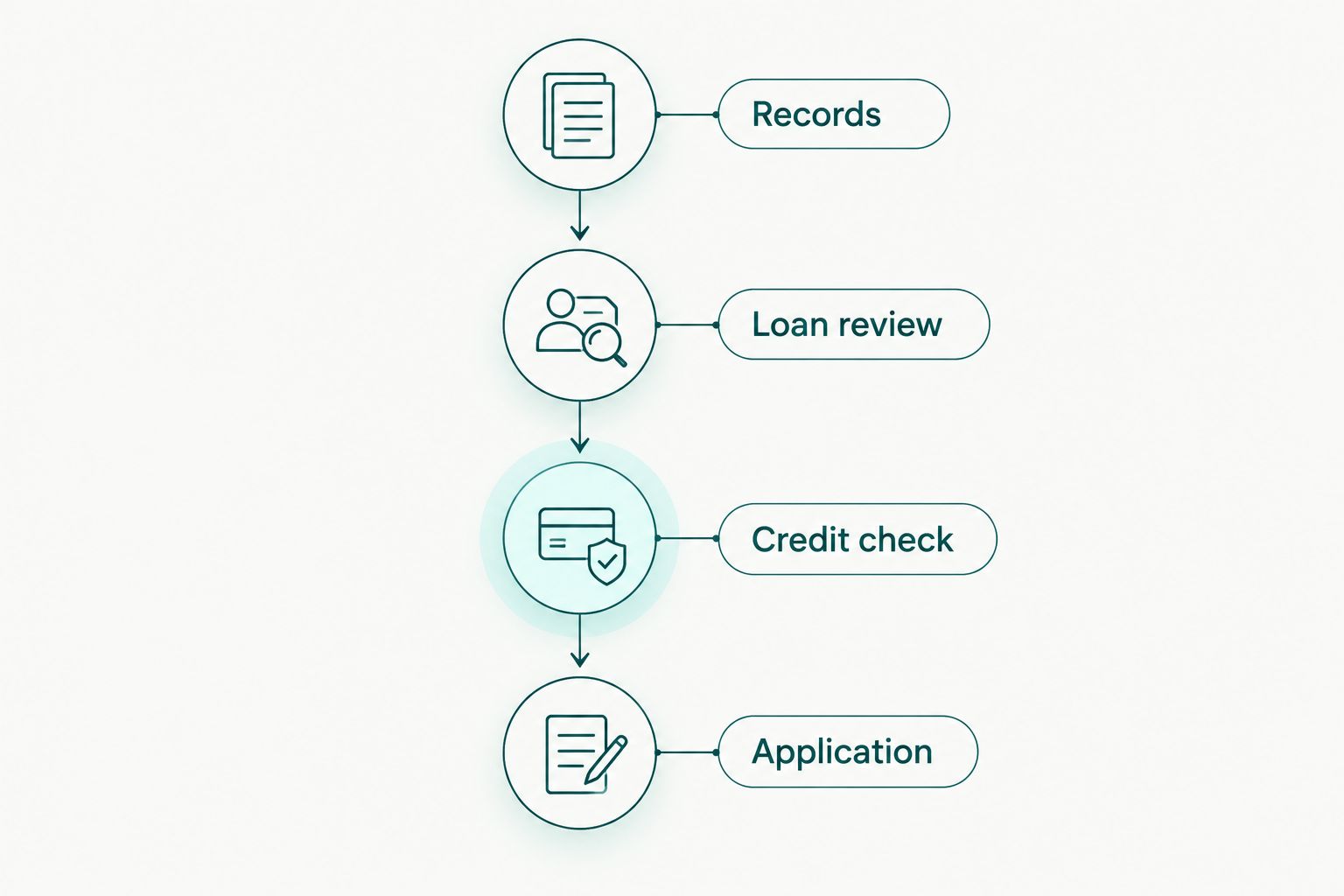
- Records. Collect the short-sale agreement, closing settlement statement, and documents addressing the remaining balance. Keep payment records if you intend to request an exception.
- Loan review. Ask a mortgage lender to identify the program, standard waiting period, possible exception, and controlling eligibility date. Request a list of outstanding conditions.
- Credit check. Review your credit reports for accurate account status and event dates. Dispute errors through the appropriate reporting process and keep supporting evidence.
- Application. Provide current income, debt, and asset documents when you are ready for underwriting. Disclose the short sale accurately and answer follow-up requests promptly.
This sequence separates a record problem from an eligibility problem. Correcting an inaccurate date is different from satisfying a waiting period; improving your finances is different from qualifying for an exception.
Keep copies of everything you submit. If a lender asks for clarification, respond with the relevant agreement, statement, or payment record rather than relying on a verbal explanation alone.
Documents to keep after the short sale
Save a complete closing file somewhere you can access after moving. Your listing agent, closing professional, or servicing contact can help identify records from the transaction, but you remain responsible for supplying what the next lender requests.
- The final short-sale approval or agreement from each participating mortgage lender.
- The closing settlement statement showing the completed transaction.
- Any written terms addressing the unpaid balance.
- Mortgage and installment payment records relevant to an exception request.
- Records supporting qualifying extenuating circumstances, if applicable.
- Correspondence explaining corrections to credit reporting or account status.
Do not interpret an ambiguous balance provision on your own. Lender terms and state law vary. Have a qualified attorney address legal obligations and a qualified tax professional address potential tax consequences.
Can I buy another house immediately after a short sale?
FHA has a no-wait exception for qualifying borrowers, but there is no blanket right to immediate financing after a short sale. The exception depends on specific payment-history conditions and satisfaction of the remaining lending requirements.
Paying cash does not involve a mortgage program’s waiting period. It also does not resolve any outstanding obligation from the earlier transaction. Before committing funds, clarify the terms of the short-sale agreement and obtain appropriate legal advice.
Does a better credit score shorten the waiting period?
A better credit score does not, by itself, shorten Fannie Mae’s standard 4-year short-sale waiting period. Credit eligibility and the waiting period are separate requirements.
Keep accounts current and review reporting accuracy, but do not treat a score increase as approval to buy. Ask your lender to assess the whole application rather than targeting a score without confirming the applicable loan rules.
Is a short sale better than foreclosure for buying again?
A short sale is not a guaranteed shortcut to another mortgage. The next loan program evaluates the actual event, its timing, and the borrower’s circumstances.
Compare the agreement, housing needs, unresolved debt, and legal implications before choosing a path. The short sale, foreclosure, and deed-in-lieu comparison provides a starting point for those questions. A qualified attorney should explain the consequences under your state’s law.
If you are still deciding whether to pursue a short sale
Your immediate task is to understand the proposed sale, not to secure a promise about a future mortgage. Ask what documents are needed, who handles lender communication, and what the written agreement says about the balance after closing.
Shortsalesdoneright provides short-sale processing and lender negotiation services and helps homeowners compare a short sale with other options. Processing support does not guarantee lender approval, debt forgiveness, or a particular credit-score result.
If you are ready to discuss your situation, request help through the homeowner intake form on the website. Bring your mortgage information and explain whether you want to remain in the home or need to sell.
Request help with your short sale
Get help comparing your options and understanding the short-sale processing steps.
FAQ
How long after a short sale can I buy another house in 2026?
Fannie Mae generally requires 4 years after a short sale, while FHA generally requires 3 years. Documented exceptions exist, and a mortgage lender must confirm your eligibility under the applicable program.
Can I get a conventional mortgage 2 years after a short sale?
Fannie Mae permits a 2-year waiting period when qualifying extenuating circumstances are documented. The lender must evaluate the evidence and all other mortgage requirements.
Can I get an FHA loan immediately after a short sale?
FHA has a no-wait exception for borrowers who meet specific current-payment and prior-payment-history conditions. Closing a short sale alone does not qualify you for the exception.
Does paying my bills on time erase the short-sale waiting period?
Paying bills on time does not automatically erase a short-sale waiting period. Payment history supports your application and matters for certain exceptions, but the program’s other requirements still apply.
What paperwork should I save after my short sale?
Save the short-sale agreement, closing settlement statement, and documents addressing the remaining balance. Keep payment records and hardship evidence if you expect to request a mortgage-program exception.
Does a short sale mean I no longer owe the unpaid balance?
A short sale does not automatically mean the unpaid balance is forgiven. Lender terms and state law vary; ask a qualified attorney to review the agreement and a tax professional to address tax questions.
Can Shortsalesdoneright approve my next mortgage?
Shortsalesdoneright provides short-sale processing and lender negotiation services, not approval of your next mortgage. A mortgage lender must assess your waiting period, credit, income, debts, and other qualification requirements.
One last thing
Keep the closing file even after the old mortgage account is closed. Your next lender needs evidence of the transaction, not just proof that you stopped owning the home. Before you leave the closing process behind, confirm that you have the final agreement, settlement statement, and written balance terms.


