

A short sale is not automatically cheaper than foreclosure; the better financial outcome depends on the debt you remain responsible for, the lender’s written terms, and state law. Compare the full outcome—not just what you must pay before moving—including any unpaid mortgage balance, possible tax consequences, and your next housing costs.
- Is short sale cheaper than foreclosure? Not automatically. Compare remaining debt, written lender terms, taxes, and moving obligations.
- Shortsalesdoneright helps homeowners compare a short sale with other options and provides lender negotiation services.
- Short-sale approval does not automatically release you from responsibility for an unpaid mortgage balance.
- Get legal and tax advice before accepting terms; lender requirements and state law vary.
Why this matters
When you are already struggling with mortgage payments, the option requiring less money immediately can look like the clear winner. But an unresolved balance or an unexpected obligation after the home transfers can change that comparison.
Shortsalesdoneright helps homeowners compare a short sale with other options. For your 2026 decision, start with the lender’s actual terms and your household budget—not a blanket claim that either path costs less.
Is short sale cheaper than foreclosure?
A short sale is financially preferable only when its actual terms leave you with a better overall outcome. Foreclosure is not automatically the cheaper alternative simply because you are not arranging a sale yourself.
The comparison below separates the potential benefit from the limitation. Neither column promises debt forgiveness or a particular credit result.
| Decision point | Short sale | Foreclosure |
|---|---|---|
| Main financial question | What obligations remain under the lender’s approval terms? | What obligations remain under applicable law and the loan documents? |
| Potential benefit | You can review proposed sale terms before deciding whether to proceed. | You do not need to secure a buyer for a voluntary sale, though legal deadlines still require attention. |
| Main drawback | Approval is uncertain, and the process requires documents and cooperation. | You lose control over the sale process and must respond to applicable deadlines. |
| Unpaid mortgage balance | Do not assume approval releases you from personal responsibility. | Do not assume foreclosure erases personal responsibility. |
| Taxes | Debt cancellation can raise tax questions; ask a qualified tax professional. | Debt cancellation and the property transfer can raise tax questions; get individual advice. |
| Best for | Homeowners pursuing an agreed sale after reviewing the lender’s conditions. | Not a savings recommendation; homeowners facing foreclosure need advice about deadlines and remaining options. |
Your immediate cash requirement is only part of the decision. A sale that looks manageable at closing still needs careful review if the lender reserves rights against you afterward.
For a more detailed look at the homeowner side of the transaction, read how much a short sale costs the homeowner.
What should you compare before choosing either path?
Build a written comparison using the same categories for both outcomes. Do not put a confirmed obligation in one column and an assumption in the other.
Responsibility for the unpaid mortgage balance
The amount a lender accepts from a sale and your personal responsibility for the remaining debt are separate issues. Ask an attorney whether the written documents release you from that responsibility or leave it unresolved.
This distinction matters in a 2026 short-sale review just as much as the proposed closing terms. Permission to sell is not the same thing as a clear release from an unpaid balance.
Money you must provide
Ask for a written explanation of any contribution or expense you would be expected to cover. Identify who receives it, when it becomes due, and what happens if the transaction does not close.
Do not assume every expense will be covered by sale proceeds or approved by the lender. Equally, do not assume you must personally cover an item simply because someone mentions it during a conversation.
Other claims against the property
A second mortgage, a home equity line of credit, or another claim against the property can complicate a sale. Each relevant obligation needs attention; the first mortgage lender’s decision does not answer every other creditor’s question.
Ask your agent, closing professional, and attorney which approvals or releases the transaction requires. Keep questions about your personal liability separate from questions about transferring clear ownership.
Taxes and your next home
Ask a qualified tax professional how the proposed outcome affects your circumstances. Do not treat debt cancellation as automatically taxable or automatically excluded from tax.
Also write down the practical costs of leaving: moving, securing another home, and maintaining necessary services during the transition. These are household obligations to plan for, not reasons to assume foreclosure or a short sale always wins.
Why the financial outcome varies
There is no single nationwide answer for every upside-down mortgage. Your 2026 comparison depends on facts specific to your loan, property, and circumstances.
- Lender terms. A proposed approval can include conditions that change your obligations. Review the actual document rather than relying on a verbal summary.
- State law. Rules affecting foreclosure and attempts to collect an unpaid balance vary. An attorney licensed in your state should explain how those rules apply.
- Additional creditors. Other mortgages and property-related claims can require separate attention. One lender’s consent does not settle every obligation.
- Your tax situation. The treatment of canceled debt depends on applicable law and individual facts. A tax professional should evaluate the proposed outcome.
- Your timeline. A pending foreclosure deadline changes how much time you have to assess and complete another option. A short-sale request does not itself guarantee a delay.
- Your housing plan. Your ability to move, secure replacement housing, and manage the transition affects whether a proposed agreement is workable.
These factors explain why another homeowner’s experience is not a reliable financial forecast for you. Use their story to identify questions, not to predict your result.
How do I compare my options before signing?
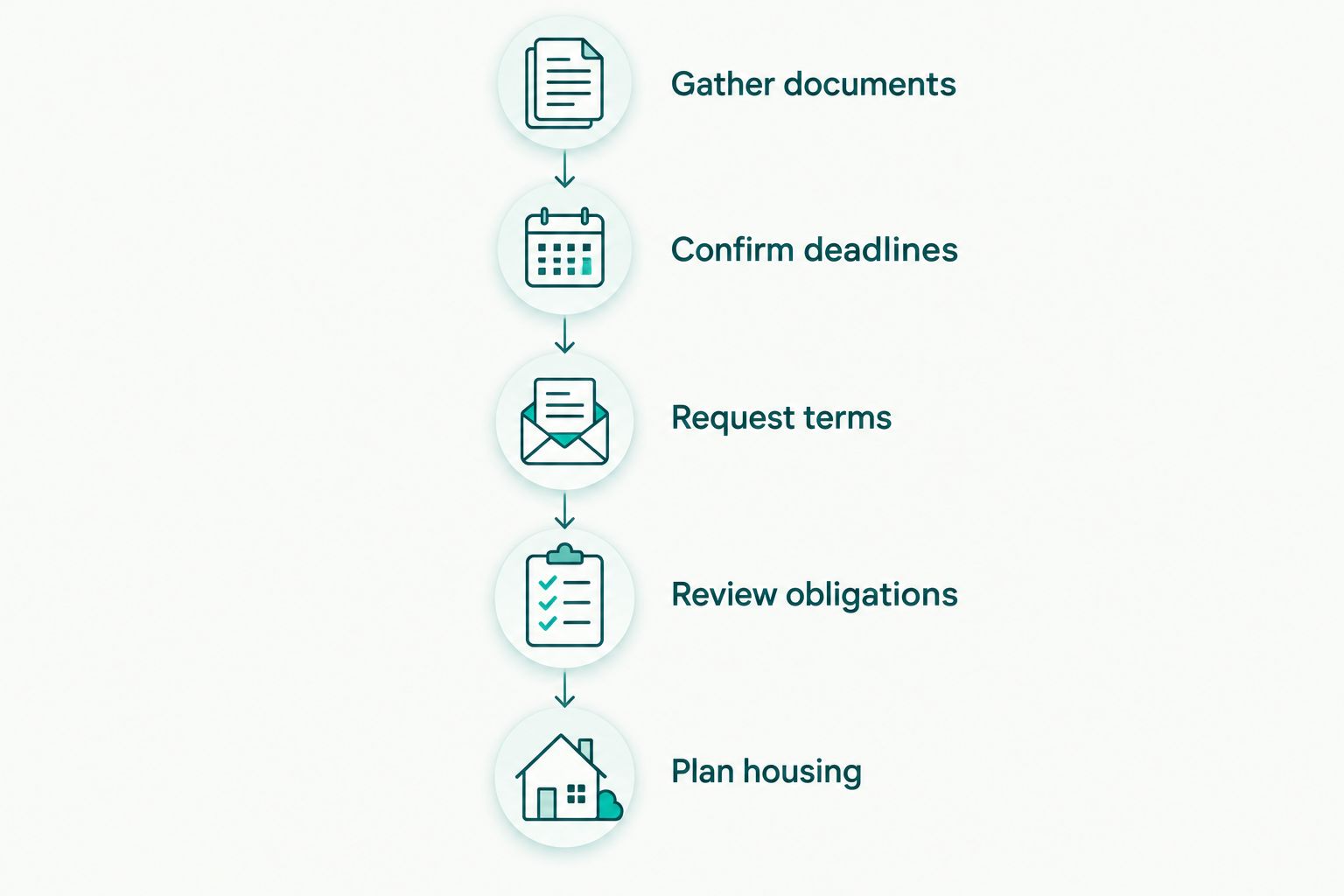
Use these 5 steps to turn a stressful choice into a document-based decision. The goal is not to predict every outcome; it is to identify what is confirmed, what remains open, and who must answer each question.
- Gather documents. Collect mortgage statements, lender correspondence, hardship information, and any foreclosure notices. Include records for other loans or claims connected to the property.
- Confirm deadlines. Identify any scheduled sale date, response deadline, or court requirement. Ask a qualified attorney what action those dates require.
- Request terms. Ask what the lender requires to review a short sale and what proposed approval conditions would mean for you. Keep copies of written responses.
- Review obligations. Have legal and tax professionals address remaining debt, other claims, and tax consequences. Ask them to distinguish confirmed terms from unresolved questions.
- Plan housing. Check whether you can meet the proposed closing and move-out obligations. Do not accept a plan that depends on assistance or timing nobody has confirmed.
Keep a short list of unresolved questions beside your documents. A missing answer about personal responsibility for debt deserves attention before you sign, even when the transaction appears close to completion.
Shortsalesdoneright is best for homeowners seeking short-sale processing and lender negotiation help. The service can help you compare a short sale with other options, but it does not replace legal or tax advice and cannot promise lender approval.
For help with your 2026 situation, request assistance through the homeowner intake form on the website. Explain whether you have received a foreclosure notice so the discussion starts with your actual circumstances.
Request help with your options
Use the homeowner intake form to explain your mortgage hardship and any foreclosure notices.
Will I still owe money after a short sale?
A short sale does not automatically cancel your responsibility for the unpaid balance. Your lender’s written terms and applicable law determine what requires further review.
Start with these 2 documents: the short-sale approval letter and the proposed closing statement. They serve different purposes; neither should be treated as a substitute for legal advice about remaining debt.
The approval letter sets out the lender’s conditions. The closing statement shows how the transaction’s money is allocated. Ask your attorney whether separate language or documentation is needed to address your personal responsibility after closing.
If there is another mortgage, ask about that lender separately. A favorable answer from the first lender does not establish the second lender’s position.
Does foreclosure mean I can walk away owing nothing?
Foreclosure does not automatically mean you owe nothing afterward. State law, the loan, and the circumstances determine whether an unpaid balance can remain your responsibility.
Do not use a foreclosure notice as a complete explanation of your rights or obligations. Have an attorney review it alongside your loan documents and explain any deadlines that require a response.
If someone tells you to stop communicating because the bank will simply take the home, get qualified advice before acting on that statement. Losing ownership and resolving every related financial obligation are different events.
Is a short sale better if I want to keep my home?
A short sale does not let you keep ownership of the home. If staying is your priority, ask your mortgage servicer about available home-retention options before committing to a sale.
Compare only options you can realistically sustain. A plan that keeps you in the property temporarily but leaves the underlying payment problem unresolved needs careful review.
For a 2026 decision, be clear about your goal: retaining the home, arranging an agreed sale, or responding to an approaching foreclosure deadline. Those goals require different questions and different professional guidance.
FAQ
Is short sale cheaper than foreclosure for every homeowner?
No. A short sale is not automatically cheaper than foreclosure. Compare written lender terms, remaining debt, tax consequences, and your housing transition before choosing a path.
Will the bank forgive the remaining balance after my short sale?
Do not assume the bank will forgive the remaining balance. Ask a qualified attorney to review the lender’s written terms and explain whether you are released from personal responsibility.
Does applying for a short sale stop foreclosure?
A short-sale application does not itself guarantee that foreclosure stops. Confirm the status of any scheduled sale or legal deadline with your servicer and a qualified attorney.
Will a short sale hurt my credit less than foreclosure?
You cannot rely on a guaranteed credit-score advantage from a short sale. Your payment history and how the account is reported affect the outcome; do not choose based on a promised score change.
Should I stop paying my mortgage to qualify for a short sale?
Do not stop paying solely to try to qualify for a short sale. Ask your servicer about its requirements and get advice about the consequences before changing your payment behavior.
Can I compare a short sale with options that let me stay?
Yes. Ask your servicer about available home-retention options if keeping the home is your goal. A short sale transfers ownership and should not be confused with a plan to keep the property.
Who should review the paperwork before I agree to a short sale?
A qualified attorney should review legal obligations, and a qualified tax professional should address tax consequences. Your agent and short-sale processor handle different parts of the transaction and do not replace those advisers.
One last thing
The most useful question is not simply whether the bank will accept a sale. It is what you will still be responsible for after the transaction ends.
Before agreeing, ask these 3 questions: What must I provide? What debt remains my responsibility? What happens if the sale does not close? Request written answers where appropriate, then review them with the right professional.
Shortsalesdoneright can help with short-sale processing and lender negotiation while you assess your options. Keep the final decision grounded in the documents: lender terms and state law vary, and no processing service can promise approval, debt forgiveness, or a specific credit-score result.