

Condo owners’ short-sale planning is the process of seeking lender consent to sell a unit for less than the mortgage balance, with the aim of resolving an unaffordable ownership situation. A condo short sale also requires attention to association balances, assessments, liens, and buyer financing—not just the mortgage.
- A condo short sale requires lender approval; association debts and other liens need separate attention.
- Shortsalesdoneright provides short-sale processing and lender negotiation support for homeowners weighing an upside-down mortgage.
- Compare keeping the condo with selling before committing to a short sale.
- Review unpaid-balance terms with qualified legal and tax professionals before closing.
Why a condo short sale matters for owners
An upside-down mortgage means your mortgage balance exceeds your condo’s current value. That alone does not establish whether a short sale fits your situation. Your ability to keep paying, your lender’s requirements, and your other options all matter.
Condo ownership adds another layer. Association dues, special assessments, and transfer requirements can affect the amount needed to close. A buyer’s financing can also depend on the condominium project, not just the buyer’s finances.
Shortsalesdoneright is best for condo owners seeking short-sale processing and lender negotiation support. You can start with Shortsalesdoneright and request help through the homeowner intake form.
For your 2026 decision, separate three questions: Can you afford to keep the unit? Can a sale cover the amounts needed to close? If not, what terms will the lender and other relevant parties accept?
How to prepare for a condo short sale
Establish your position
Start with records you can collect yourself. Obtain your mortgage information, review your association account, and ask a local real estate agent for a current market assessment. An online estimate is not a substitute for reviewing comparable condo sales and your unit’s condition.
Distinguish the mortgage statement balance from the amount required to pay off the loan. Also distinguish regular dues from overdue charges and special assessments. These amounts answer different questions.
Use 1 shared tracking sheet to record each balance, its source, and when it was confirmed. This is an organizational recommendation, not a lender requirement. Keep sensitive documents in a secure location rather than attaching everything to a group email.
- Request mortgage payoff information through the servicer’s process.
- List any second mortgage or home equity loan.
- Obtain the association’s account statement.
- Gather notices concerning assessments, collections, or liens.
- Ask your agent to review relevant comparable sales.
Compare your alternatives
Decide whether your goal is to keep the condo or leave it. If you want to stay, ask your mortgage servicer about assistance options before treating a sale as the only answer. A loan modification changes loan terms if approved; it does not require selling the unit.
If you need to move, compare a regular sale, a short sale, and a deed in lieu of foreclosure. A deed in lieu involves transferring ownership to the lender by agreement. It is not automatically available, and other liens can complicate it.
Choose based on written terms, not the name of the option. For a 2026 comparison, use current balances and current household finances. Old estimates can hide a changed association balance or a new affordability problem.
- State whether keeping the condo is your priority.
- Ask the servicer which assistance options it will review.
- Check whether available funds would make a regular sale possible.
- Compare any required contribution with your actual resources.
- Take legal and tax questions to qualified professionals.
Organize your records
Build the file before an interested buyer creates pressure to move quickly. Your servicer sets its documentation requirements; a generic checklist is only a starting point. Financial records should explain your current situation consistently.
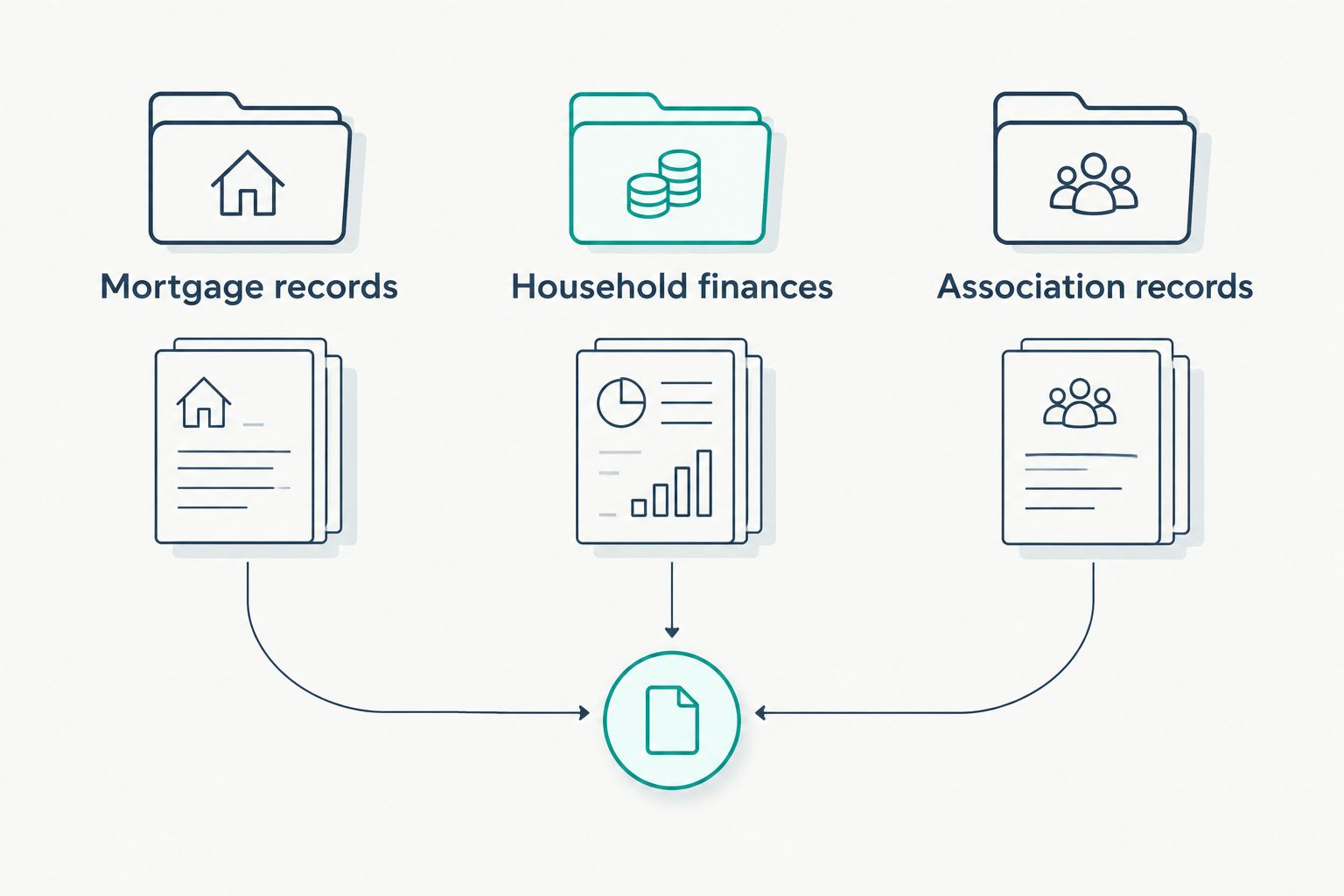
For a manageable filing system, use 3 document folders: Mortgage records, Household finances, and Association records. Keep the latest requested version clearly identified. A hardship explanation should describe what changed and how that change affects your ability to pay, without exaggeration.
The guide to documents to include in a short-sale package provides a starting framework. Shortsalesdoneright’s condo short sale support includes processing and lender negotiation; its services also help homeowners compare a short sale with other options.
- Save the servicer’s current application instructions.
- Collect requested income and asset records.
- Prepare an accurate household expense summary.
- Gather association statements and assessment notices.
- Explain missing or inconsistent records before submission.
Resolve association questions
Contact the association or its management company early. Ask what is owed, what documentation is needed for a transfer, and whether any collection matter has been referred elsewhere. Your closing professional or attorney should help identify liens and the steps needed to transfer title.
A mortgage lender’s approval does not settle the association account. Likewise, an association statement does not establish that every title issue is resolved. Keep those workstreams separate until the responsible professionals confirm the closing requirements.
Association obligations and lien treatment depend on governing documents and state law. Do not assume a rule described for another state applies to your condo in 2026. Ask for an explanation tied to your property and circumstances.
- Request an itemized balance rather than a verbal estimate.
- Ask about approved and pending special assessments.
- Identify transfer documents and association review requirements.
- Send collection or lien notices to your closing professional.
- Confirm who will address each unresolved charge.
Coordinate the offer
Work with your listing agent on a price supported by current market evidence. The lender evaluates the proposed transaction under its own requirements. A signed purchase contract is not the same as short-sale approval.
Condo buyers also need to investigate their financing. Their lender can require project information, association documents, or other review. Ask your agent to coordinate those questions early rather than assuming a buyer’s preapproval resolves the condominium review.
Shortsalesdoneright’s condo short sale services provide a dedicated point of contact and weekly lender updates. That support helps organize communication; it does not guarantee approval or control a buyer’s lender. Keep responsibility for pricing, legal advice, and financing questions with the appropriate professionals.
- Confirm how the contract addresses required lender approval.
- Have your agent document the basis for the offer price.
- Identify who supplies requested condominium documents.
- Keep a record of lender requests and responses.
- Track contract deadlines separately from lender review.
Check closing terms
Read every approval letter before agreeing to close. The permitted sale proceeds, required contributions, expiration dates, and treatment of the remaining mortgage balance need attention. Do not interpret permission to release a mortgage lien as an automatic release from every payment obligation.
Bring 2 written questions to your attorney: Does this agreement release personal responsibility for the unpaid balance? What obligations remain after closing? Ask a qualified tax professional separately about the tax consequences of your transaction.
For a 2026 closing, confirm that the transaction still matches the current approvals. A changed closing date, revised contribution, or altered distribution of proceeds needs review. Do not rely on an earlier conversation to resolve a different written term.
- Read approval letters from each relevant lender.
- Review unpaid-balance language with your attorney.
- Confirm how association charges will be handled.
- Reconcile the closing statement with approved terms.
- Keep signed agreements and final closing records.
Compare your condo options
The best option matches your goal and the terms you can actually obtain. Keeping your condo, selling it, and transferring it to a lender solve different problems. None should be selected solely because someone calls it easier.
Use this comparison to frame conversations with your servicer and advisers. It is not a determination that you qualify for any particular option.
| Option | Best for | Main benefit | Key limitation |
|---|---|---|---|
| Regular sale | Owners whose proceeds and available funds cover closing obligations | Does not require a mortgage short-payoff approval when all obligations are paid | An equity shortfall still needs a funding source |
| Loan modification | Owners who want to stay and need different loan terms | Can address mortgage affordability if approved | Requires servicer approval and does not itself settle association arrears |
| Condo short sale | Owners who need to sell but cannot cover the mortgage payoff | Provides a route to seek an agreed sale below the mortgage balance | Requires lender consent and coordination of other closing obligations |
| Deed in lieu | Owners considering an agreed transfer directly to the lender | Offers a possible alternative to marketing and selling | Requires lender agreement; other liens can complicate acceptance |
| Foreclosure | Owners evaluating the consequences if no other resolution is completed | Does not require finding a buyer yourself | Follows a legal process with consequences that depend on the loan and state law |
Foreclosure is a process to understand, not a recommended shortcut. A pending short-sale request does not itself establish that foreclosure activity has stopped. If you receive a legal notice, contact a qualified attorney promptly and verify deadlines independently of the sale discussions.
Common mistakes condo owners make
Treating dues as background expenses
Association charges are separate from the mortgage. Leaving them out of the financial picture makes it harder to understand what the transaction must resolve. Get an updated statement and share it with the people handling the closing.
Assuming hardship means approval
A genuine hardship does not guarantee that a lender will accept an offer. The lender reviews the transaction under its requirements. Submit accurate records and respond to requests without treating the outcome as settled.
Confusing a buyer’s approval with project approval
A buyer’s mortgage preapproval does not answer every question about financing a condo purchase. Have your agent ask the buyer’s lending team about project review and needed documents. Keep private buyer information with the appropriate parties.
Ignoring notices during negotiations
Do not set aside court papers, collection letters, or association notices because someone is speaking with the bank. Different parties control different obligations. Keep notices organized and ask the right professional what action is required.
Equating a closed sale with debt forgiveness
Closing transfers ownership under the transaction’s terms. It does not justify a blanket claim that every unpaid balance disappears. Get the remaining-obligation answer in writing and have an attorney review it.
FAQ
Can I do a condo short sale if I owe association dues?
Owing association dues does not by itself answer whether a condo short sale can close. Identify the balance, any liens, and the required treatment of those obligations with your closing professional and a qualified attorney.
Does my condo association approve the short sale?
Your mortgage lender decides whether to accept less than the mortgage payoff. The association can have separate transfer requirements and outstanding charges that need attention under its documents and state law.
Can I stay in my condo while requesting a short sale?
A short-sale request does not itself decide your right to remain in the condo. Review your ownership situation, any legal proceedings, and the purchase contract with the appropriate professionals before setting a move-out date.
Is a condo short sale better than a loan modification?
A condo short sale serves an owner seeking to sell, while a loan modification serves an owner seeking to keep the property under changed loan terms. Compare affordability, eligibility, and written terms rather than treating either option as universally better.
Will a short sale stop my foreclosure?
Do not assume a short-sale request stops foreclosure. Ask the servicer about the status of foreclosure activity and consult a qualified attorney about notices and deadlines.
Will I still owe money after a condo short sale?
Your remaining obligations depend on the written agreements, the debts involved, and state law. Have a qualified attorney review unpaid-balance terms and ask a tax professional about any tax consequences.
Who can help me organize a condo short sale?
Shortsalesdoneright provides short-sale processing and lender negotiation services for homeowners and real estate agents. Its support does not replace legal or tax advice, and lender approval is not guaranteed.
One last thing
Ask what remains after closing—not just what gets the sale approved. A completed transfer and a resolved personal obligation are different questions. That distinction belongs in your 2026 decision before you commit, not after you move.
Ready to act? Request help through the homeowner intake form. Bring your mortgage statement, association account information, and any legal notices so the discussion starts with your actual situation. Lender terms and state law vary; direct legal and tax questions to qualified professionals.
Request help with your condo
Get help comparing your options and organizing the short-sale process.


