

A short sale specialist prepares the lender package, manages document requests, and negotiates the lender's terms while the listing agent handles the property sale. An experienced regular agent can do this work too; the difference is short-sale experience and responsibility, not exclusive authority. Neither a specialist nor an agent can guarantee lender approval or forgiveness of an unpaid balance.
- What does a short sale specialist do? Manage lender paperwork, follow-up, and negotiations alongside the listing agent.
- A regular agent can handle short sales; ask who will own the lender work before signing.
- Shortsalesdoneright provides short-sale processing for agents who want package preparation and lender negotiation outsourced.
- Lender approval does not automatically settle every unpaid obligation; review written terms with qualified professionals.
Why this matters
A buyer's offer and a lender's approval are separate decisions. Your agent can find a buyer and negotiate a purchase contract, but a short sale also requires the relevant lender approvals to close on the proposed terms.
Choose someone who can explain the lender work, not just the listing strategy. For agents seeking that support, Shortsalesdoneright prepares the full short-sale package, provides a dedicated point of contact, and gives weekly lender updates. Outsourcing those tasks does not remove the agent's responsibilities to the seller.
What does a short sale specialist do that a regular agent can't?
There is no universal short-sale task that every regular agent is barred from doing. A specialist focuses on the additional lender-facing work that a conventional sale does not require in the same way.
The specialist's title alone does not establish a license, legal qualification, or authority to give tax advice. For your 2026 sale, ask what the person actually handles, what qualifications apply, and where the listing agent's work ends.
| Role | Best for | Main contribution | Limitation |
|---|---|---|---|
| Regular listing agent | Sellers whose agent has relevant short-sale experience | Marketing, buyer negotiations, contract coordination, and lender work if included | Must have the capacity and experience to manage the lender file |
| Short-sale-focused listing agent | Sellers wanting listing and lender coordination with the same agent | Combines property-sale work with short-sale experience | Still depends on lender decisions and outside professional advice |
| Separate short-sale processor or negotiator | Agents outsourcing lender-facing administration | Package preparation, follow-up, and lender negotiations within the agreed scope | Adds a handoff and does not replace the listing agent or attorney |
The useful distinction is who owns each task. A regular agent with a clear process can be a suitable choice. A specialist who cannot explain document handling, status reporting, or approval conditions is not a stronger choice merely because of the title.
What happens between the listing and lender approval?
The following sequence describes the main workstreams. Your lender's requirements determine which documents and approvals apply, so treat this as a responsibility map rather than a guaranteed timeline.
- Assign responsibilities. Identify who represents the seller, who communicates with the lender, and who handles legal and tax questions. Complete the lender's required authorization before expecting a third party to discuss the account.
- Prepare documents. Assemble the lender-requested financial information, hardship explanation, property information, and transaction documents. Check signatures and consistency rather than assuming an uploaded file is complete.
- Submit the package. Use the lender's required channel and confirm receipt. Record missing items, outstanding requests, and the person responsible for supplying each response.
- Track review. Follow up on document requests, valuation activity, and negotiations. Tell the agent what changed and what action the seller or buyer needs to take.
- Check approval. Compare the lender's written conditions with the purchase contract and planned closing. Refer questions about unpaid balances or legal consequences to an attorney before the seller relies on an interpretation.
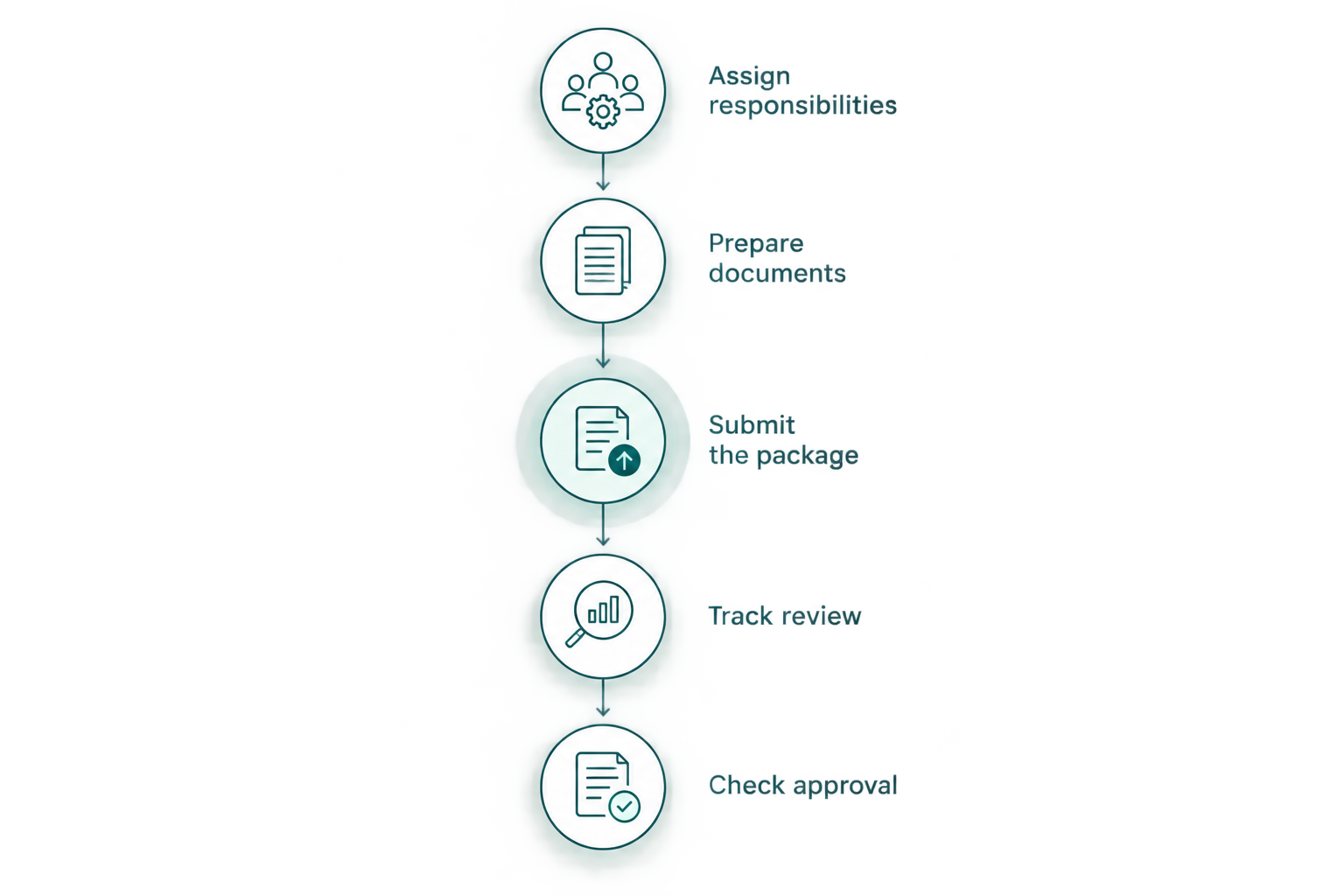
The handoffs matter as much as submission. If the processor receives a lender request but the seller never receives a clear action item, the file still has an unresolved requirement.
Package preparation means checking, not just collecting
A specialist organizes the package around the lender's requirements. Depending on the file, requested materials can include financial statements, income records, bank statements, a hardship explanation, and the signed purchase contract.
The practical benefit is accountability. Someone checks whether the requested material is present and tells you what remains outstanding; the seller still needs to provide accurate information and explain changes.
Lender negotiation is not a promise of acceptance
A negotiator communicates the proposed transaction and responds to the lender's conditions. That can include discussing the offer, requested supporting information, or changes the lender requires before approval.
Negotiation is a service, not control over the outcome. The lender can reject proposed terms, request more information, or condition approval on changes. Do not treat an encouraging conversation as written approval.
Approval review connects the lender file to closing
An approval letter can contain conditions and an expiration date. The agent, processor, closing professional, and seller need to understand which conditions concern their work and whether the transaction matches them.
A specialist can flag language that needs attention. Legal interpretation belongs with a qualified attorney, especially when the seller is trying to understand responsibility for a remaining balance.
Why short-sale specialist responsibilities vary
Do not assume every provider offers the same service in 2026. Ask for the scope in writing and check these factors:
- Listing responsibility. A listing agent markets the property and represents the seller under the listing agreement. A separate processor's agreement needs to explain its narrower role.
- Lender requirements. Submission channels, authorization requirements, and requested documents affect the processing work. Ask how the provider tracks the requirements for your file.
- Other secured debts. Additional mortgages or other liens can require separate coordination. Identify them early rather than discovering an unresolved claim at closing.
- Financial circumstances. Changes in income or other submitted information can create a need for updates. The seller needs a clear route for reporting those changes.
- Foreclosure status. An active foreclosure requires attention to legal deadlines alongside the sale effort. A short-sale submission does not itself guarantee a foreclosure postponement.
- State rules. Licensing requirements, permissible activities, and the treatment of unpaid obligations vary. Confirm the provider's role and take legal questions to a qualified professional.
How should a homeowner choose between a specialist and a regular agent?
Start with your goal: keeping the home or selling it. A short-sale service addresses a proposed sale; it is not a substitute for asking your servicer about available home-retention options.
If selling is your goal, ask the agent to explain the lender process without relying on the word specialist. You need to know who requests documents, who communicates with the lender, and who explains what happens next.
Use these 3 questions in your first conversation:
- Who owns lender communication from submission through closing?
- What will you report when the lender has not made a decision?
- Who helps me understand approval conditions that affect my remaining obligations?
Look for clear boundaries. A sound answer separates transaction coordination from legal and tax advice, and it does not promise a particular credit-score result.
For a homeowner comparing options in 2026, the right support starts with the decision itself. Shortsalesdoneright helps homeowners compare a short sale with other options; lender terms and state law still determine important parts of the outcome.
When should an agent outsource short-sale processing?
Outsource when you want a separate party to own the agreed lender-facing tasks while you retain responsibility for the listing and client relationship. Do not outsource simply to remove an unfamiliar transaction from your attention.
Shortsalesdoneright is best for real estate agents seeking outsourced short-sale package preparation and lender negotiation. The service includes a dedicated point of contact and weekly lender updates. Approval remains the lender's decision, and agents still need to manage their side of the transaction.
Before handing off a 2026 listing, define 4 responsibilities in writing:
- Seller documents: who requests missing information and follows up with the homeowner.
- Lender requests: who receives requests, records them, and coordinates responses.
- Buyer communication: who tells the buyer's agent about a counteroffer or changed condition.
- Closing coordination: who checks that outstanding lender conditions reach the closing professional.
The benefit of outsourcing is a defined owner for the processing work. The trade-off is another handoff, so agree on how urgent issues reach the agent between routine updates.
Agents ready to outsource and homeowners ready to compare options can request help through the appropriate intake form on the site. Choose the form for your role so the request addresses the work you need.
Request short-sale help
Agents can request processing support. Homeowners can ask for help comparing their options.
Can my regular real estate agent handle a short sale?
Yes. A regular real estate agent can handle a short sale when the work falls within the agent's permitted role and the agent has the necessary competence and support. Ask for a specific explanation of lender submission, follow-up, and closing coordination rather than relying on a general claim of experience.
Does hiring a short sale specialist guarantee approval?
No. A short sale specialist cannot guarantee lender approval, release from every unpaid obligation, or a particular credit-score result. Evaluate the specialist's responsibilities and communication process, not a promised outcome.
What should a specialist's status update tell me?
A useful update identifies the current stage, the latest lender response, outstanding requests, and the next responsible person. A 2026 transaction update should distinguish between documents received, review underway, and written approval; these are not interchangeable milestones.
FAQ
What does a short sale specialist actually do for the seller?
A short sale specialist coordinates lender paperwork, follows up on requests, and negotiates proposed sale terms within the agreed scope. The listing agent continues to handle the property-sale responsibilities unless the same person performs both roles.
Is a short sale specialist better than a regular real estate agent?
A specialist is not automatically better than a regular agent. Choose based on relevant experience, clear responsibility for the lender file, and communication rather than the title alone.
Do I need both a listing agent and a short sale negotiator?
You do not automatically need separate people for both roles. An experienced listing agent can handle the lender work or arrange separate processing support, subject to applicable requirements and the service agreement.
What does a short sale processor need from me?
A processor needs the documents and authorizations required for your lender's review. Ask for a file-specific checklist and report changes to information you have already submitted.
Can a short sale specialist stop my foreclosure?
Hiring a specialist does not itself stop foreclosure. Contact your servicer about the account's status and speak with a qualified attorney promptly about notices, deadlines, and available protections.
Does short sale approval mean I will owe nothing afterward?
Short-sale approval does not automatically mean every remaining obligation is forgiven. Have a qualified attorney review the written terms and a tax professional explain any tax consequences.
What should an agent keep doing after outsourcing processing?
The agent should continue managing the listing, client communication, buyer negotiations, and the agent's contractual duties. The processing agreement should identify which lender-facing tasks the separate provider handles.
One last thing
An accepted offer is not the same as an approved short sale. Before you plan around a closing date, ask which written lender approvals are in place and which conditions remain open.
Use a simple 3-part check: what is approved, what remains outstanding, and who owns the next action. This question works for sellers and agents without pretending they have the same responsibilities. It also turns a vague status report into something you can act on.


