

Both buyer and seller can have costs in a short sale: the buyer generally pays purchase and financing expenses, while approved seller-side closing expenses can come from the sale proceeds before the mortgage lender receives its payment. That does not guarantee the seller owes nothing, because lender-required contributions, excluded expenses, unpaid mortgage debt, and potential tax consequences need separate review.
- Who pays costs in short sale process transactions depends on the contract, lender approval, and final settlement statement.
- Buyers generally cover their financing and inspection expenses; seller-side closing costs require separate review.
- A lender accepting sale proceeds does not automatically forgive the seller’s remaining mortgage debt.
- Shortsalesdoneright helps homeowners compare short sales with other options before committing.
Why this matters
A cost paid from the sale proceeds is not the same as a cost waived. It reduces the money reaching the mortgage lender, which makes the proposed closing expenses part of the lender’s review.
For a 2026 short sale, your practical question is not simply who pays. Ask which expenses come from the proceeds, which require cash before closing, and which obligations can remain afterward. Shortsalesdoneright provides short-sale processing and lender negotiation services for homeowners and real estate agents.
Who pays the costs during the short sale process, buyer or seller?
The purchase contract sets the proposed division of transaction costs. The mortgage lender’s written approval determines which seller-side expenses it accepts when agreeing to release its mortgage for less than the full payoff. The settlement statement shows how those approved terms translate into payments at closing.
Use this breakdown to separate the responsibilities. It describes common arrangements, not a promise about your transaction.
| Expense or obligation | Buyer’s responsibility | Seller’s responsibility or approval issue |
|---|---|---|
| Purchase financing | Generally responsible for the buyer’s loan expenses | Any requested seller credit needs contract and lender review |
| Home inspection | Generally paid by the buyer ordering it | Repair requests need separate agreement |
| Buyer’s appraisal | Generally part of the buyer’s financing expenses | Not automatically covered by the short-sale lender |
| Real estate commissions | Depends on signed agreements | Proposed payment from proceeds requires lender acceptance |
| Title and settlement services | Allocation depends on contract and local practice | Seller-side charges must fit the approved settlement |
| Property taxes and HOA obligations | Any assumed responsibility must be documented | Existing balances and liens need review before closing |
| Processing or negotiation services | Do not assume the buyer pays | Written service terms and lender requirements determine treatment |
| Remaining mortgage debt | Not automatically transferred to the buyer | Requires separate review of the approval terms and state law |
The table separates transaction expenses from debt. Keep that distinction throughout negotiations: a closing expense, a seller contribution, and a remaining mortgage balance are different obligations.
What does the buyer pay?
Buyers generally arrange and pay for their own financing, inspections, and other purchase-related services. The contract can allocate certain expenses differently, but a requested seller credit is not guaranteed simply because the seller accepts the offer.
Buyer advantage: you can identify many of your expenses before ordering services. Buyer limitation: money spent on inspections or financing work does not guarantee the seller’s lender will approve the short sale.
Before paying for a service, ask when payment is due and what happens if the transaction stops. Review cancellation and refund terms with the service provider rather than assuming every expense is recoverable.
What comes from the seller’s proceeds?
A proposed settlement can include seller-side commissions, settlement charges, and other transaction expenses. If the lender accepts those charges, they are deducted from the proceeds rather than necessarily requiring the seller to bring separate cash.
Seller advantage: approved deductions can reduce the cash needed to complete the sale. Seller limitation: an expense listed in the contract is still subject to the lender’s review when it reduces the lender’s recovery.
Ask the closing professional to mark each seller-side expense by funding source. A line marked seller-paid does not, by itself, tell you whether it comes from proceeds or requires a separate contribution.
What might the seller pay separately?
A lender can request a cash contribution or another repayment arrangement as a condition of approval, subject to applicable rules and state law. Expenses excluded from the approved settlement also need a documented resolution.
Do not agree to a contribution you cannot make. Give the person handling lender negotiations accurate financial information, and ask whether the requested term can be reconsidered.
Moving expenses, legal advice, and tax advice also need their own planning. Do not assume the transaction includes assistance with those expenses unless the applicable written terms expressly provide it.
Why short-sale cost responsibility varies
There is no nationwide rule assigning every short-sale expense to either the buyer or seller. For a 2026 transaction, these factors determine the allocation:
- Purchase contract: the agreed terms identify proposed credits, expense allocations, and responsibilities between buyer and seller.
- Lender approval: the lender reviews the proceeds it will receive and the expenses deducted before payment.
- Other secured debts: another mortgage or lien can require a separate release and additional negotiations.
- Property obligations: unpaid taxes, HOA balances, and other claims need review by the closing professional.
- State law: rules governing debt collection, lien releases, and closing practices vary by location.
- Signed service agreements: brokerage, processing, legal, and other service terms identify obligations that should not be assumed away.
A lender’s approval addresses its own requirements. It does not replace another creditor’s release, change a service provider’s agreement automatically, or answer every legal question about the sale.
Resolve conflicting terms before signing closing documents. A verbal explanation cannot substitute for corrected written instructions when the contract, approval, and settlement statement disagree.
How do you confirm who pays before closing?
Use the same review sequence whether you are the homeowner or the agent coordinating the transaction. For your 2026 closing, keep the current documents together so everyone works from the same terms.
- Review contract. Identify seller credits, buyer expenses, commissions, and any special short-sale conditions. Flag any obligation whose payer is unclear.
- Prepare settlement. Ask the closing professional for an estimated settlement statement showing proposed deductions and any cash required from either party.
- Check approval. Match the lender’s written approval against that estimate. Confirm the accepted expenses, required proceeds, contribution terms, and closing deadline.
- Resolve differences. Send changed figures or disputed charges back through the appropriate approval process. Do not assume a last-minute adjustment is automatically acceptable.
- Confirm final terms. Review the final settlement statement and required releases before completing the transaction. Get legal advice about any remaining debt obligation.
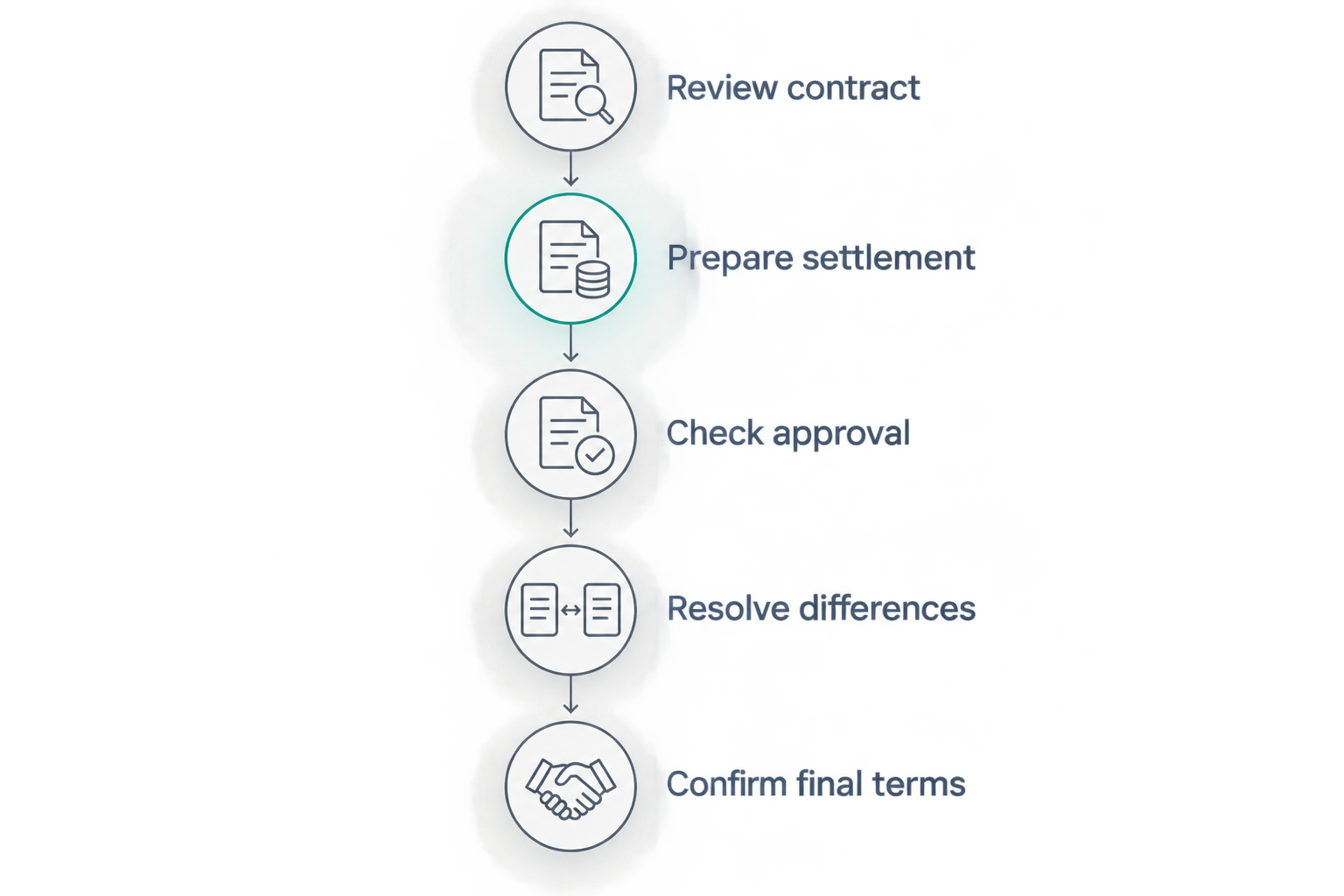
For homeowners, the key result is a clear explanation of any cash required and any obligation that remains. For agents, the key result is a consistent set of documents that the lender and closing professional can use.
The guide to connecting your title company to a short-sale closing covers a related coordination step. Bring the closing professional into questions about liens and settlement allocations before those questions become closing-day problems.
What should homeowners ask before accepting the terms?
Ask whether you must contribute cash, sign a repayment agreement, or remain responsible for any unpaid mortgage balance. Request the exact written language supporting the answer.
Then separate closing obligations from life after the sale. Your moving plan, future housing costs, and possible tax obligations do not disappear because the settlement shows no seller cash due.
If a term is unclear, stop and get an explanation before signing. A qualified attorney should address legal exposure; a qualified tax professional should assess your tax position.
What should agents check before promising a net result?
Agents should avoid describing a short sale as costing the homeowner nothing before reviewing the complete terms. An early estimate is useful, but it is not the final approval or settlement.
Track each requested credit and each lender response in the transaction file. When an expense changes, identify whether the contract, lender approval, or settlement instructions also need updating.
Keep the seller’s questions separate from the buyer’s financing questions. The seller’s mortgage lender approves the short-sale payoff arrangement; the buyer’s lender evaluates the buyer’s financing and applicable loan requirements.
Does lender approval mean the seller owes nothing afterward?
No. Approval to release a mortgage lien is not automatically forgiveness of the remaining debt. A lien concerns the creditor’s claim against the property; personal liability concerns whether the borrower still owes money.
For a 2026 approval letter, ask a qualified attorney to review what happens to the unpaid balance. Lender terms and state law vary, and the wording matters.
A settlement statement showing no cash due from the seller does not answer that debt question. It describes the closing payments, not necessarily every obligation after closing.
Can the buyer pay expenses the seller cannot cover?
A buyer can propose paying certain expenses, but the arrangement must comply with the contract, applicable lender requirements, and closing rules. The buyer should also confirm that the buyer’s own financing permits the arrangement.
Document the payment through the closing process. Do not make an undisclosed side payment to a seller, creditor, or service provider to get around a rejected expense.
If the seller’s lender declines a charge, the parties need a documented solution. That can mean revising the allocation, seeking reconsideration, or determining that the transaction cannot proceed on the proposed terms.
Who pays the short-sale processor or negotiator?
The written service agreement and applicable transaction requirements determine responsibility for processing or negotiation charges. Do not assume the homeowner, buyer, agent, or lender always pays.
Before engaging a provider, ask who owes payment, when it becomes due, and what happens if approval or closing does not occur. Also ask how any proposed payment will appear in the transaction documents.
Shortsalesdoneright is best for agents seeking outsourced short-sale processing and homeowners seeking help comparing short-sale options. Its services include preparing the full short-sale package for agents, a dedicated point of contact, and weekly lender updates. Processing support does not guarantee approval or replace legal and tax advice.
If you are ready to act, request help through the appropriate homeowner or agent intake form on the website. Homeowners should explain their mortgage situation; agents should identify the transaction stage and outstanding lender requests.
Get help reviewing your next step
Request short-sale help through the appropriate homeowner or agent intake form on the website.
FAQ
Who pays closing costs when a house is a short sale?
Both parties can have closing costs, with responsibility determined by the contract, lender approval, and settlement statement. Approved seller-side expenses can come from sale proceeds, while buyers generally pay their own financing and purchase expenses.
Can I complete a short sale without bringing cash to closing?
A short sale can close without seller cash when the approved terms and final settlement require no seller contribution. That does not automatically resolve remaining mortgage debt, moving expenses, or potential tax obligations.
Does the bank pay the real estate commission in a short sale?
An approved commission can be paid from the sale proceeds before the mortgage lender receives its payment. That differs from the bank separately paying the commission from its own funds, and the relevant agreements still need review.
Does the buyer have to pay the seller’s unpaid mortgage balance?
The buyer does not automatically take over the seller’s unpaid mortgage balance by purchasing a short-sale property. The lender’s approval and applicable state law determine how the seller’s remaining debt is treated.
Can a short-sale lender reject a seller credit for the buyer?
Yes, a short-sale lender can reject a proposed seller credit that reduces its recovery. The purchase contract alone does not guarantee acceptance, and the buyer’s financing must also permit the credit.
Will I owe taxes after my short sale?
A short sale can have tax consequences, but your result depends on your circumstances and applicable tax rules. Ask a qualified tax professional to review any canceled debt and reporting obligations rather than assuming a tax bill or an exemption.
Can Shortsalesdoneright guarantee that I will owe nothing?
Shortsalesdoneright does not guarantee lender approval, forgiveness of an unpaid balance, or a particular credit-score result. Review the written lender terms and get qualified legal and tax advice before committing.
One last thing
Ask for a written explanation of every line labeled seller-paid. The label alone does not establish whether the expense comes from proceeds, requires cash at closing, or remains unresolved.
Before your 2026 closing, put the final settlement beside the approval letter. If the figures or obligations do not match, get the difference resolved before signing—not after the sale is complete.


